Loading...
Alfonso VIII of Castile vs King Hyeonjong of Goryeo
Alfonso VIII of Castile leads by 4.2 pts · 2 figures compared
…
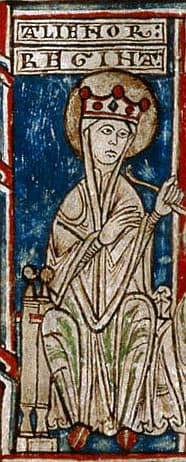
Alfonso VIII of Castile
Emperor · Medieval
61.0Total

King Hyeonjong of Goryeo
Emperor · Medieval
56.8Total
Basic Information
Born
1155
992
Died
1214
1031
Era
Medieval
Medieval
Nationality
Castile
Korea
Occupation
Emperor
Emperor
Civilization
Western
Eastern
Score Comparison
Military (10%)
60.0
47.5
Political (20%)
72.0
68.0
Influence (20%)
56.7
56.4
Legacy (20%)
55.0
50.0
Leadership (15%)
68.0
68.0
Strategy (15%)
61.2
50.0
TOTAL
61.0
56.8
Alfonso VIII of Castile — Complete Timeline
1170 AD
Marriage to Eleanor of EnglandPolitical Action
Alfonso VIII married Eleanor of England, daughter of Henry II and Eleanor of Aquitaine. This marriage brought Castile into the Plantagenet sphere of influence and produced several children who married into other European royal houses.
MarriageAllianceCastile
Impact: regionalconstructive
1195 AD
Battle of AlarcosWar◆ Major
Alfonso VIII's Castilian army was decisively defeated by the Almohad Caliph Abu Yusuf Yaqub al-Mansur at Alarcos. The defeat led to the loss of several frontier fortresses and a period of Almohad dominance in Iberia.
ReconquistaBattleDefeat
Impact: regionaltragic
1208 AD
Founding of the University of PalenciaCultural◆ Major
Alfonso VIII founded the University of Palencia, one of the first universities in Europe. The institution attracted scholars from across Europe and promoted the study of theology, law, and the liberal arts in Castile.
EducationUniversityCulture
Impact: regionalconstructive
1212 AD
Battle of Las Navas de TolosaWar
Alfonso VIII led a coalition of Castilian, Aragonese, Navarrese, and Portuguese forces to a decisive victory over the Almohad Caliph Muhammad al-Nasir at Las Navas de Tolosa. This battle broke Almohad power in Iberia and opened the way for the Christian reconquest of Andalusia.
ReconquistaBattleTurning Point
Impact: regionalconstructive
King Hyeonjong of Goryeo — Complete Timeline
993 AD
First Khitan Invasion of GoryeoWar◆ Major
The Liao dynasty (Khitan) invaded Goryeo with a large army. King Hyeonjong, advised by General Seo Hui, negotiated a settlement. The Khitan withdrew after Goryeo agreed to end relations with Song China, but the border was not ceded.
Khitan InvasionDiplomacyLiao-Goryeo War
Impact: regional
1010 AD
Second Khitan Invasion of GoryeoWar◆ Major
Emperor Shengzong of Liao invaded Goryeo after Hyeonjong refused to pay homage. The Khitan captured the capital Gaegyeong. Hyeonjong fled to Naju. The invasion ended with a Khitan withdrawal after a failed siege of a fortress.
Khitan InvasionCapital CapturedFlight
Impact: regionaldestructive
Construction of Cheolli JangseongReform◆ Major
Following the Khitan invasions, King Hyeonjong ordered the construction of a massive defensive wall in northern Goryeo. The Cheolli Jangseong (Thousand Li Wall) was built to fortify the border against future invasions from the Liao dynasty.
DefenseFortificationBorder
Impact: nationalconstructive
1016 AD
Promulgation of the Goryeo CodeReform◆ Major
King Hyeonjong oversaw the compilation and promulgation of a comprehensive legal code, the Goryeo Code. This code systematized laws and administrative regulations, strengthening central governance and legal consistency across the kingdom.
Legal CodeAdministrationCentralization
Impact: nationalconstructive
1018 AD
Third Khitan Invasion of GoryeoWar
The Liao dynasty launched a third invasion. General Gang Gam-chan led Goryeo forces to a decisive victory at the Battle of Gwiju. The Khitan army was nearly annihilated, ending the Liao invasions and securing Goryeo's independence.
Battle of GwijuGang Gam-chanVictory
Impact: regionalconstructive
Expert Analysis
Origins
Alfonso VIII of Castile was born in 1155, the son of Sancho III of Castile and Blanche of Navarre. His father died when Alfonso was three, plunging Castile into a regency marked by noble infighting. Alfonso was raised in the court of his uncle, King Ferdinand II of Leon, and later in the town of Ávila, where he learned the arts of war and governance. His early experiences ingrained a sense of resilience and the necessity of strong central authority.
King Hyeonjong of Goryeo, born in 992, was the son of King Mokjong. After Mokjong's murder in 1009, Hyeonjong was placed on the throne by military leader Gang Jo, who also led a coup. Hyeonjong's early life was shaped by court intrigue and the constant threat of Khitan invasions from the Liao dynasty. He was educated in Confucian classics and Buddhist scriptures, preparing him for a role that required both diplomatic acumen and military strategy.
Rise to Power
Alfonso VIII's rise was marked by the recovery of royal authority. After a turbulent regency, he declared himself of age in 1169 at 14. He immediately faced challenges from the Kingdom of Leon and the Almohad Caliphate. His marriage to Eleanor of England in 1170 brought him into the Plantagenet alliance, strengthening his position. His key turning point was the Battle of Las Navas de Tolosa in 1212, where he led a coalition that shattered Almohad power in Iberia. This victory elevated him to the status of a Christian champion.
Hyeonjong's rise was abrupt. After Gang Jo's assassination in 1010, Hyeonjong became king during the First Khitan Invasion. He fled the capital but negotiated a withdrawal through diplomacy with General Seo Hui. The Second Khitan Invasion in 1011 saw the fall of Gaegyeong, forcing Hyeonjong to flee again. His resilience during these crises solidified his authority. The turning point was the Third Khitan Invasion in 1018, where General Gang Gam-chan defeated the Khitan at the Battle of Gwiju, securing Goryeo's independence.
Leadership & Governance
Alfonso VIII governed through a blend of military campaigning and institutional building. He founded the University of Palencia in 1208, one of Europe's first universities, attracting scholars and fostering learning. He also codified laws and strengthened the crown against the nobility. However, his military score of 60.0 reflects his early defeat at Alarcos in 1195, where his overconfidence led to disaster. In contrast, his leadership score of 68.0 highlights his ability to recover and forge coalitions.
Hyeonjong's governance focused on defense and legal codification. He ordered the construction of the Cheolli Jangseong, a massive defensive wall, and promulgated the Goryeo Code, systematizing laws. His political score of 68.0 reflects his diplomatic skill in negotiating with the Khitan and maintaining internal stability despite invasions. His leadership score of 68.0 matches Alfonso's, but his military score of 47.5 indicates his reliance on generals like Gang Gam-chan rather than personal command.
Triumph & Tragedy
Alfonso VIII's greatest triumph was Las Navas de Tolosa (1212), a turning point in the Reconquista that opened Andalusia to Christian conquest. His tragedy was the Battle of Alarcos (1195), where his rash attack led to a crushing defeat and the loss of several fortresses. The defeat humbled him and taught him the value of coalition warfare.
Hyeonjong's triumph was the successful defense against the Khitan invasions, culminating in the Battle of Gwiju (1019). His tragedy was the sack of Gaegyeong in 1011 during the Second Invasion, which exposed the kingdom's vulnerability and forced him to flee. The destruction of the capital was a national humiliation.
Character & Destiny
Alfonso VIII was determined and resilient, learning from his defeats. His character is marked by a shift from impulsive youth to a cautious, coalition-building monarch. Historical assessments note his piety and patronage of the Church, which helped legitimize his rule. His destiny was to be the king who broke Almohad power.
Hyeonjong was pragmatic and diplomatic, preferring negotiation when possible. His willingness to flee rather than fight to the death preserved his dynasty but also showed a survival instinct. He is remembered as a wise administrator who prioritized legal and defensive infrastructure. His destiny was to stabilize Goryeo during its greatest external threat.
Legacy
Alfonso VIII's legacy is tied to Las Navas de Tolosa, which shifted the balance of power in Iberia. His founding of the University of Palencia contributed to the intellectual revival of Europe. He scored 55.0 in legacy, reflecting his role in the Reconquista but limited long-term institutional impact compared to later monarchs.
Hyeonjong's legacy includes the Goryeo Code, which influenced Korean law for centuries, and the Cheolli Jangseong wall. His successful defense against the Khitan preserved Goryeo's independence. He scored 50.0 in legacy, as his achievements were primarily defensive and administrative, without expanding territory.
Conclusion
Alfonso VIII had a greater impact than King Hyeonjong. His victory at Las Navas de Tolosa was a transformative event in medieval European history, weakening the Almohad Caliphate and enabling the Christian reconquest of Spain. Hyeonjong's successes were defensive and preservationist, maintaining the status quo against invasions. Alfonso's total score of 61.0 exceeds Hyeonjong's 56.8, reflecting his higher military and strategic contributions. While Hyeonjong was an effective administrator, Alfonso's actions changed the course of Iberian history, making him the more consequential ruler.
Rankings
🥇
Alfonso VIII of CastileLeader
Mil: 60.0Pol: 72.0Inf: 56.7
61.0
🥈
King Hyeonjong of Goryeo
Mil: 47.5Pol: 68.0Inf: 56.4
56.8
+4.2 behind
How This Comparison Works
Algorithm
Each figure is scored on 6 dimensions (0—100 scale) based on structured historical data: Military (10%), Political (20%), Influence (20%), Legacy (20%), Leadership (15%), Strategy (15%). The weighted total produces the final ranking.
Data Sources
Scores are computed from structured sub-indicators in the database. Scale factors adjust for era (Ancient ×0.85, Modern ×1.0) and civilization size (Eastern ×1.05, Other ×0.80) to account for differences in population and military scale.
Maximum 3 Figures
Comparisons are limited to 2—3 figures to ensure readability and statistical meaningfulness.
Error Margins
±5 points per dimension — Sub-scores are derived from historical records with inherent uncertainty. Two figures within 5 points on a dimension should be considered roughly equivalent in that area.
Total Score Accuracy
±3 points overall — The weighted combination of 6 dimensions produces a total score with approximately ±3 points of uncertainty. Differences of less than 3 points are not statistically significant— the figures are effectively tied.
Known Limitations
- Historical records are incomplete and uneven across civilizations
- Figures from oral-tradition societies may be underrepresented
- Occupation labels can misclassify multi-role figures
- Scores measure capability and impact, not moral character
- Quantitative scoring is a comparison tool, not absolute truth
Capability Radar
Military (10%) — Battles & Warfare
Battles
65
65
Win Rate
50
60
Expansion
55
30
Political (20%) — Governance & Reform
Reform
65
55
Diplomacy
75
65
Economy
60
50
Influence (20%) — Cultural & Global Reach
Cultural
60
45
Global
65
35
Legacy (20%) — Historical Impact
Historical
75
55
Longevity
70
50
Leadership (15%) — Power & Stability
Tenure
70
70
Stability
55
55
Strategy (15%) — Tactics & Innovation
Strategy
75
60
Tactics
70
55
Reform
60
50
Similar Comparisons
Comments & Discussion
No comments yet. Be the first to share your thoughts!