Loading...
Alfonso VIII of Castile vs Muhammad Shah I Bahmani
Alfonso VIII of Castile leads by 6.7 pts · 2 figures compared
…
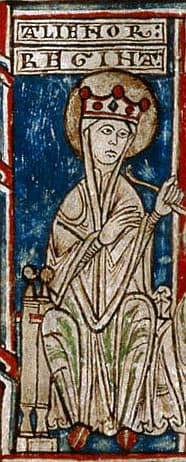
Alfonso VIII of Castile
Emperor · Medieval
61.0Total
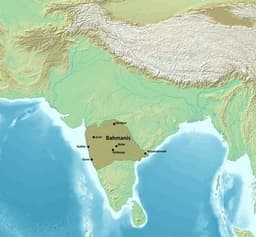
Muhammad Shah I Bahmani
Emperor · Medieval
54.3Total
Basic Information
Born
1155
1358
Died
1214
1375
Era
Medieval
Medieval
Nationality
Castile
India
Occupation
Emperor
Emperor
Civilization
Western
Indian
Score Comparison
Military (10%)
60.0
25.0
Political (20%)
72.0
62.7
Influence (20%)
56.7
60.0
Legacy (20%)
55.0
49.2
Leadership (15%)
68.0
66.0
Strategy (15%)
61.2
51.7
TOTAL
61.0
54.3
Alfonso VIII of Castile — Complete Timeline
1170 AD
Marriage to Eleanor of EnglandPolitical Action
Alfonso VIII married Eleanor of England, daughter of Henry II and Eleanor of Aquitaine. This marriage brought Castile into the Plantagenet sphere of influence and produced several children who married into other European royal houses.
MarriageAllianceCastile
Impact: regionalconstructive
1195 AD
Battle of AlarcosWar◆ Major
Alfonso VIII's Castilian army was decisively defeated by the Almohad Caliph Abu Yusuf Yaqub al-Mansur at Alarcos. The defeat led to the loss of several frontier fortresses and a period of Almohad dominance in Iberia.
ReconquistaBattleDefeat
Impact: regionaltragic
1208 AD
Founding of the University of PalenciaCultural◆ Major
Alfonso VIII founded the University of Palencia, one of the first universities in Europe. The institution attracted scholars from across Europe and promoted the study of theology, law, and the liberal arts in Castile.
EducationUniversityCulture
Impact: regionalconstructive
1212 AD
Battle of Las Navas de TolosaWar
Alfonso VIII led a coalition of Castilian, Aragonese, Navarrese, and Portuguese forces to a decisive victory over the Almohad Caliph Muhammad al-Nasir at Las Navas de Tolosa. This battle broke Almohad power in Iberia and opened the way for the Christian reconquest of Andalusia.
ReconquistaBattleTurning Point
Impact: regionalconstructive
Muhammad Shah I Bahmani — Complete Timeline
1360 AD
Reorganization of Bahmani administrationReform◆ Major
Muhammad Shah I Bahmani restructured the Bahmani administration by dividing the sultanate into four provinces (tarafs), each governed by a tarafdar. This system improved tax collection and military organization.
Administrative ReformProvincial System
Impact: regionalconstructive
1365 AD
War with Vijayanagara over Raichur DoabWar◆ Major
Muhammad Shah I Bahmani fought a war against the Vijayanagara Empire for control of the Raichur Doab. The conflict ended with a treaty that temporarily ceded the region to Vijayanagara.
WarVijayanagaraTerritorial Dispute
Impact: regional
1367 AD
Construction of the Jami Masjid at GulbargaCultural
Muhammad Shah I Bahmani commissioned the construction of the Jami Masjid in Gulbarga, a large congregational mosque. The mosque became a center for Islamic worship and learning in the Bahmani capital.
ArchitectureReligion
constructive
1370 AD
Suppression of the rebellion of Bahram KhanPolitical Action
Muhammad Shah I Bahmani crushed a rebellion led by the noble Bahram Khan, who had challenged his authority. The revolt was put down with force, and Bahram Khan was executed.
RebellionInternal Conflict
Impact: nationaldestructive
Expert Analysis
Origins
Alfonso VIII of Castile (born 1155) was the son of Sancho III of Castile and Blanche of Navarre. Orphaned at age three, he spent his early years under the regency of the Lara family, who exploited the throne for their own gain. His upbringing was marked by political instability and noble infighting, which shaped his later determination to centralize royal authority. Alfonso received a knightly education but also patronage of learning, later founding the University of Palencia (1208), one of Europe's first universities.
Muhammad Shah I Bahmani (born c. 1320?) was the second sultan of the Bahmani Sultanate, succeeding his father, Alauddin Bahman Shah. His early life is less documented, but he emerged as a capable administrator after the sultanate's founding in 1347. The Bahmani state was a breakaway from the Delhi Sultanate, and Muhammad Shah inherited a realm needing consolidation amid rivalry with the Vijayanagara Empire.
Rise to Power
Alfonso VIII's rise to power began when he came of age in 1169, seizing control from the regents. He asserted royal authority by defeating rebellious nobles and expanding Castilian territory. His marriage to Eleanor of England (1170) allied him with the powerful Plantagenet dynasty. By the 1190s, he was the leading Christian king in Iberia, organizing coalitions against the Almohads. His early military campaign against the Almohads ended disastrously at the Battle of Alarcos (1195), where his army was crushed by Caliph Abu Yusuf Yaqub al-Mansur. This defeat set back Christian expansion but galvanized Alfonso to seek broader alliances.
Muhammad Shah I rose to power upon the death of his father in 1358. He faced immediate challenges: disloyal nobles and external threats from Vijayanagara. He consolidated authority by crushing a rebellion led by Bahram Khan (c. 1360s) and then reorganized the administration. His key achievement was dividing the sultanate into four provinces (tarafs), each governed by a tarafdar, which improved tax collection and military mobilization. This restructuring allowed him to focus on the long-standing conflict over the Raichur Doab with Vijayanagara.
Leadership & Governance
Alfonso VIII governed through a blend of feudal lordship and emerging royal bureaucracy. He patronized the Church and founded the University of Palencia, scoring 72.0 in political skills. His leadership was tested after Alarcos; he reformed his army and secured alliances with Aragon, Navarre, and Portugal. In contrast, his governance was often hampered by noble factions, but he maintained control through marriage alliances and land grants. His strategy score of 61.2 reflects his ability to recover from defeat and build a winning coalition.
Muhammad Shah I's governance was more administrative. He scored 62.7 politically, focusing on centralization through the taraf system. Each province had a governor who collected taxes, maintained order, and raised troops. This system reduced the power of hereditary nobles and increased state efficiency. He also built the Jami Masjid at Gulbarga (1367), emphasizing Islamic legitimacy. His military score was low (25.0) because his campaigns were limited and indecisive: the war with Vijayanagara ended with a treaty that temporarily secured the Raichur Doab but did not achieve lasting dominance.
Triumph & Tragedy
Alfonso VIII's greatest triumph was the Battle of Las Navas de Tolosa (1212), where he led a coalition of Castilian, Aragonese, Navarrese, and Portuguese forces to a decisive victory over the Almohad Caliph Muhammad al-Nasir. This battle broke Almohad power in Iberia and opened the way for Christian reconquest of Andalusia. His tragedy was the defeat at Alarcos (1195), which cost him territory and prestige. Yet his perseverance turned a major setback into eventual success.
Muhammad Shah I's triumph was the administrative reorganization that stabilized the Bahmani Sultanate for decades. His suppression of Bahram Khan's rebellion solidified his rule. However, his military failure to decisively defeat Vijayanagara meant the Raichur Doab remained contested. His legacy is mixed: he built institutions but failed to expand territory significantly.
Character & Destiny
Alfonso VIII was determined and resilient, learning from defeat. He was a pious Christian king who saw himself as a defender of the faith. His marriage to Eleanor brought English cultural influences. Historians note his patronage of learning as a sign of foresight. His character—persistent and diplomatic—led to the coalition that achieved Las Navas.
Muhammad Shah I was pragmatic and administrative, focusing on internal consolidation. He was ruthless against rebels but lacked the military ambition of his successors. His character shaped a stable but stagnant sultanate; his destiny was to be a consolidator rather than an expander.
Legacy
Alfonso VIII's legacy is monumental: Las Navas de Tolosa is considered the turning point of the Reconquista. His founding of the University of Palencia influenced Spanish education. He is remembered as a key figure in Castilian history, with a legacy score of 55.0. Muhammad Shah I's legacy is more localized: the Bahmani administration influenced later Deccan sultanates. His mosque at Gulbarga remains a landmark, but his overall impact was limited compared to Alfonso's.
Conclusion
Alfonso VIII of Castile had a greater historical impact due to his role in the decisive battle that reshaped Iberian history. His total score of 61.0 vs Muhammad Shah I's 54.3 reflects this. While Muhammad Shah I was an effective administrator, Alfonso's victory at Las Navas de Tolosa changed the course of the Reconquista and European history. Taking a clear position: Alfonso VIII's influence on the medieval world was more far-reaching.
Rankings
🥇
Alfonso VIII of CastileLeader
Mil: 60.0Pol: 72.0Inf: 56.7
61.0
🥈
Muhammad Shah I Bahmani
Mil: 25.0Pol: 62.7Inf: 60.0
54.3
+6.7 behind
How This Comparison Works
Algorithm
Each figure is scored on 6 dimensions (0—100 scale) based on structured historical data: Military (10%), Political (20%), Influence (20%), Legacy (20%), Leadership (15%), Strategy (15%). The weighted total produces the final ranking.
Data Sources
Scores are computed from structured sub-indicators in the database. Scale factors adjust for era (Ancient ×0.85, Modern ×1.0) and civilization size (Eastern ×1.05, Other ×0.80) to account for differences in population and military scale.
Maximum 3 Figures
Comparisons are limited to 2—3 figures to ensure readability and statistical meaningfulness.
Error Margins
±5 points per dimension — Sub-scores are derived from historical records with inherent uncertainty. Two figures within 5 points on a dimension should be considered roughly equivalent in that area.
Total Score Accuracy
±3 points overall — The weighted combination of 6 dimensions produces a total score with approximately ±3 points of uncertainty. Differences of less than 3 points are not statistically significant— the figures are effectively tied.
Known Limitations
- Historical records are incomplete and uneven across civilizations
- Figures from oral-tradition societies may be underrepresented
- Occupation labels can misclassify multi-role figures
- Scores measure capability and impact, not moral character
- Quantitative scoring is a comparison tool, not absolute truth
Capability Radar
Military (10%) — Battles & Warfare
Battles
65
45
Win Rate
50
50
Expansion
55
40
Political (20%) — Governance & Reform
Reform
65
65
Diplomacy
75
55
Economy
60
50
Influence (20%) — Cultural & Global Reach
Cultural
60
40
Global
65
30
Legacy (20%) — Historical Impact
Historical
75
45
Longevity
70
40
Leadership (15%) — Power & Stability
Tenure
70
60
Stability
55
55
Strategy (15%) — Tactics & Innovation
Strategy
75
45
Tactics
70
40
Reform
60
55
Similar Comparisons
Comments & Discussion
No comments yet. Be the first to share your thoughts!