Loading...
Amago Haruhisa vs Napoleon Bonaparte
Napoleon Bonaparte leads by 20.9 pts · 2 figures compared
…
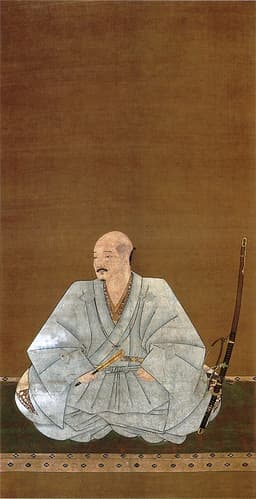
Amago Haruhisa
Emperor · Modern
50.0Total

Napoleon Bonaparte
General · Modern
70.9Total
Basic Information
Born
1514
1769
Died
1561
1821
Era
Modern
Modern
Nationality
Japan
France
Occupation
Emperor
General
Civilization
Eastern
Western
Score Comparison
Military (10%)
55.0
94.0
Political (20%)
54.7
72.0
Influence (20%)
50.2
40.0
Legacy (20%)
40.8
80.0
Leadership (15%)
67.0
78.0
Strategy (15%)
35.0
90.0
TOTAL
50.0
70.9
Amago Haruhisa — Complete Timeline
1540 AD
Battle of Gassantoda CastleWar◆ Major
Amago Haruhisa led a large army to besiege Gassantoda Castle, held by the Mouri clan. The siege failed after several months, marking a major defeat for the Amago and the beginning of their decline.
SiegeDefeatMouri Conflict
Impact: regionaltragic
1554 AD
Battle of OshikibataWar
Amago Haruhisa's forces were defeated by the Mouri clan at Oshikibata in Aki Province. This loss further weakened the Amago and allowed the Mouri to expand into Amago territory.
BattleDefeatMouri Expansion
Impact: regionaltragic
1561 AD
Sudden DeathOther◆ Major
Amago Haruhisa died suddenly at the age of 47, likely from illness. His death left the Amago clan without a strong leader, leading to internal strife and the eventual destruction of the clan by the Mouri.
DeathClan DeclineSuccession Crisis
Impact: regionaltragic
Napoleon Bonaparte — Complete Timeline
1799 AD
Coup of 18 BrumaireOther◆ Major
Napoleon Bonaparte, with support from his brother Lucien and key political figures, overthrew the Directory in a bloodless coup. He established the Consulate with himself as First Consul, effectively becoming the ruler of France. This event ended the French Revolution's most unstable period.
French RevolutionCoupRise to Power
Impact: regional
1804 AD
Promulgation of the Napoleonic CodeOther◆ Major
Napoleon enacted the Civil Code of the French, known as the Napoleonic Code, a comprehensive set of laws that replaced the fragmented feudal legal systems. The code established legal equality, protected property rights, and secularized law. It became the basis for legal systems in many European and world countries.
Legal ReformNapoleonic CodeCivil Law
Impact: globalconstructive
1805 AD
Battle of AusterlitzWar◆ Major
Napoleon's Grande Arm
Napoleonic WarsBattleDecisive Victory
Impact: global
1812 AD
Invasion of RussiaWar◆ Major
Napoleon led the Grande Arm
Napoleonic WarsInvasionDisaster
Impact: globaldestructive
1815 AD
Battle of WaterlooWar◆ Major
Napoleon's French army was defeated by the combined forces of the Duke of Wellington's Anglo-Allied army and Gebhard Leberecht von Bl
Napoleonic WarsBattleFinal Defeat
Impact: globaldestructive
Expert Analysis
amago-haruhisa-vs-napoleon-bonaparte
# The Conqueror and the Daimyō: Two Paths to Power, Two Fates in History
In the summer of 1815, Napoleon Bonaparte stood on the deck of the HMS *Bellerophon*, watching the coast of France recede into the Atlantic mist. He was a prisoner of the British, bound for the remote island of Saint Helena, where he would die six years later. Two and a half centuries earlier and half a world away, another ambitious leader—Amago Haruhisa—died suddenly in his sleep at the age of forty-seven, his clan crumbling within months of his passing. Both men had reached the pinnacle of power in their respective worlds. Both saw their empires vanish with shocking speed. But the differences between them—in ambition, in method, in the scale of their impact—tell us as much about the civilizations they led as about the men themselves.
Origins
Napoleon Bonaparte was born in 1769 on the island of Corsica, a territory that France had acquired only the year before. His family were minor nobles of Italian descent, speaking a Corsican dialect, and young Napoleon grew up with a deep resentment of French authority—a resentment that later transformed into a fierce desire to master the very system that had conquered his homeland. He entered a French military academy at age nine, where he was mocked for his accent and short stature. The French Revolution of 1789, however, shattered the old order and created opportunities that a man of talent—regardless of birth—could seize. Napoleon was a child of revolution, and revolution shaped him.
Amago Haruhisa was born in 1514 into the chaos of Japan’s Sengoku period—the “Warring States” era when central authority had collapsed and regional warlords fought for supremacy. His clan, the Amago, had ruled the Izumo region for generations, but their power was constantly challenged by rivals like the Mouri and the Ouchi. Haruhisa inherited not a revolutionary moment but a feudal tradition: loyalty to clan, mastery of castle warfare, and the constant pressure to expand or be destroyed. Where Napoleon saw a world to be remade, Haruhisa saw a world to be held together.
Rise to Power
Napoleon’s ascent was meteoric. At age twenty-four, he drove the British out of Toulon and was promoted to brigadier general. By twenty-six, he was commanding the French army in Italy, winning a series of stunning victories that forced Austria to sue for peace. In 1799, at age thirty, he seized power in a coup d’état and became First Consul of France. Five years later, he crowned himself Emperor. His rise was a product of war, yes, but also of political calculation: he understood that the French people wanted order after the Terror, and he gave it to them, wrapped in glory.
Amago Haruhisa’s path was slower and more precarious. He became head of the Amago clan around 1537, inheriting a domain that had been built by his father and grandfather. His early campaigns were cautious, consolidating control over neighboring provinces. In 1540, he led a massive army to besiege Gassantoda Castle, the stronghold of the Mouri clan—a strategic blunder that ended in failure after several months. This defeat did not destroy him, but it marked the beginning of a slow decline. Unlike Napoleon, Haruhisa had no revolution to ride, no centralized state to command. His power was personal, fragile, and constantly contested.
Leadership and Governance
Napoleon ruled with a blend of military genius and administrative brilliance. His Napoleonic Code reformed French law, establishing principles of equality before the law, religious toleration, and merit-based advancement that influenced legal systems across Europe. He built roads, founded banks, and centralized education. His military campaigns were masterpieces of speed and deception: at Austerlitz in 1805, he crushed the combined armies of Austria and Russia, a victory so complete that it dissolved the Holy Roman Empire. His leadership score of 80 and strategy score of 93 reflect a man who could inspire soldiers and outthink opponents on a continental scale.
Amago Haruhisa, by contrast, was a traditional daimyō. His leadership score of 74 and military score of 63 suggest competence rather than brilliance. He maintained clan loyalty through marriage alliances and land grants, not through sweeping reforms. His greatest achievement was holding the Amago domain together for two decades, but he lacked the vision—or the opportunity—to transform his society. Japan’s Sengoku period rewarded endurance as much as innovation, and Haruhisa’s strategy score of 34.6 hints at a leader who fought wars of attrition rather than decisive battles.
Triumph and Tragedy
Napoleon’s greatest triumph was also the beginning of his tragedy. In 1812, he invaded Russia with the largest army Europe had ever seen—over 600,000 men. He reached Moscow, but the Russians refused to surrender, and the Russian winter destroyed his army. Only about 100,000 men returned. Two years later, he was exiled to Elba. He escaped, raised another army, and was finally defeated at Waterloo in 1815. His tragedy was hubris—the belief that his genius could overcome geography, logistics, and the sheer weight of coalitions arrayed against him.
Amago Haruhisa’s tragedy was quieter but no less absolute. His defeat at Oshikibata in 1554, where his forces were routed by the Mouri clan, exposed the weakness of his position. He died suddenly in 1561, likely from illness, and the Amago clan collapsed within months, lacking a strong successor. His tragedy was not a dramatic fall from a great height but a slow erosion of power that ended in oblivion.
Character and Destiny
Napoleon was driven by an insatiable ambition. “Impossible is a word to be found only in the dictionary of fools,” he once said. He believed that he could shape history through sheer will, and for a time, he did. But his character—arrogant, restless, unable to compromise—also sealed his fate. He could not stop conquering, even when conquest became self-destructive.
Amago Haruhisa was more cautious, more constrained by the world he inherited. He lacked Napoleon’s revolutionary fervor and his global vision. In Japan’s feudal system, a daimyō’s power depended on personal bonds, not institutional reforms. When Haruhisa died, those bonds dissolved. His destiny was shaped not by his own choices alone but by the fragility of the system he served.
Legacy
Napoleon’s legacy is immense. He reshaped Europe’s borders, spread nationalist ideas, and left a legal and administrative framework that survives in many countries today. His influence score of 82 and legacy score of 78 reflect a man who, even in defeat, changed the world.
Amago Haruhisa’s legacy is local and obscure. He is remembered in Japan as a competent but unlucky daimyō, a footnote in the rise of the Mouri clan. His legacy score of 57.2 is a measure of how quickly history forgets those who fail to build institutions that outlast them.
Conclusion
Two men, two worlds, two fates. Napoleon Bonaparte tried to conquer the world and fell from a height that still stirs the imagination. Amago Haruhisa tried to hold onto what he had and disappeared into the silence of history. Their stories remind us that leadership is not just about talent—it is about timing, about the structures a leader inherits, and about the scale of the stage on which they perform. Napoleon’s tragedy was that he reached too high. Haruhisa’s tragedy was that he never reached high enough. Both were prisoners of their own eras, and both teach us that the greatest victories and the greatest defeats are, in the end, the same: the struggle to leave a mark on a world that will, inevitably, move on.
Rankings
🥇
Napoleon BonaparteLeader
Mil: 94.0Pol: 72.0Inf: 40.0
70.9
🥈
Amago Haruhisa
Mil: 55.0Pol: 54.7Inf: 50.2
50.0
+20.9 behind
How This Comparison Works
Algorithm
Each figure is scored on 6 dimensions (0—100 scale) based on structured historical data: Military (10%), Political (20%), Influence (20%), Legacy (20%), Leadership (15%), Strategy (15%). The weighted total produces the final ranking.
Data Sources
Scores are computed from structured sub-indicators in the database. Scale factors adjust for era (Ancient ×0.85, Modern ×1.0) and civilization size (Eastern ×1.05, Other ×0.80) to account for differences in population and military scale.
Maximum 3 Figures
Comparisons are limited to 2—3 figures to ensure readability and statistical meaningfulness.
Error Margins
±5 points per dimension — Sub-scores are derived from historical records with inherent uncertainty. Two figures within 5 points on a dimension should be considered roughly equivalent in that area.
Total Score Accuracy
±3 points overall — The weighted combination of 6 dimensions produces a total score with approximately ±3 points of uncertainty. Differences of less than 3 points are not statistically significant— the figures are effectively tied.
Known Limitations
- Historical records are incomplete and uneven across civilizations
- Figures from oral-tradition societies may be underrepresented
- Occupation labels can misclassify multi-role figures
- Scores measure capability and impact, not moral character
- Quantitative scoring is a comparison tool, not absolute truth
Capability Radar
Military (10%) — Battles & Warfare
Battles
45
95
Win Rate
50
90
Expansion
50
95
Political (20%) — Governance & Reform
Reform
35
95
Diplomacy
40
80
Economy
35
85
Influence (20%) — Cultural & Global Reach
Cultural
30
85
Global
10
90
Legacy (20%) — Historical Impact
Historical
35
95
Longevity
20
90
Leadership (15%) — Power & Stability
Tenure
40
85
Stability
30
70
Strategy (15%) — Tactics & Innovation
Strategy
45
95
Tactics
40
98
Reform
30
92
Similar Comparisons
Comments & Discussion
General_Tsar6/17/2026
If you want a real comparison, look at Hitler vs. Stalin. Napoleon was a revolutionary who built a meritocracy; Haruhisa was a feudal warlord who kept the same tired system going. Napoleon's Civil Code still influences law today; what does Haruhisa have? A samurai grave and a footnote. Napoleon changed Europe forever; Haruhisa barely changed his own province. This comparison flatters a minor daimyo. Napoleon operates on a whole different plane of historical significance.
兵略痴人6/17/2026
拿破仑玩的是战略大局,晴久顶多会点战术小聪明。拿破仑搞垮了欧洲旧秩序,用大炮和法典重塑大陆版图,晴久呢?在尼子家那点地盘上内斗,连战国都出不去。拿破仑的军队横扫整个欧洲,晴久的军队连京都都没打进过。拿破仑最后的滑铁卢是史诗级悲剧,晴久死得悄无声息,连个像样的败仗都没留下。不是一个量级的人物。
Data_Skeptic_426/17/2026
I call shenanigans on the whole premise. You're comparing a man who commanded armies of 500,000 and a population base of 28 million to a daimyo whose entire domain had fewer people than a medium-sized French city. Napoleon's campaigns involved logistics on a continental scale; Haruhisa's battles were glorified skirmishes between a few thousand men. Apologists love to inflate these "what if" comparisons, but the quantitative chasm is unbridgeable. Napoleon played 4D chess on a global board; Haruh
诡辩史臣6/17/2026
这种跨文化比较本来就是伪命题。拿拿破仑和晴久比,就像拿航母和渔船比航速——不在一个维度。拿破仑的野心是征服欧洲,改变世界秩序;晴久的野心就是守住出云国那点地盘,撑死了吞并周边两三国。拿破仑失败是因为全欧洲联手反他;晴久失败是因为他家族自己内斗不停。根本原因不同、环境不同、手段不同,强行比较只是在满足现代人的猎奇心理,毫无学术价值。
Redcoat_Buff6/17/2026
Forget the scale; look at the endgame. Napoleon's downfall was a masterpiece of coalition warfare—the Sixth Coalition coordinated a massive multi-front campaign that ground him down. He was beaten by a system he himself helped to build: nationalism turned against him. Haruhisa? His clan collapsed because his heirs were useless and his vassals switched sides. That's not a grand strategic defeat; that's a succession crisis. Napoleon went down fighting on a European stage. Haruhisa died in his futo