Loading...
Aman Andom vs Napoleon Bonaparte
Napoleon Bonaparte leads by 32.9 pts · 2 figures compared
…
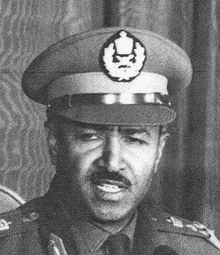
Aman Andom
General · Modern
38.0Total

Napoleon Bonaparte
General · Modern
70.9Total
Basic Information
Born
1924
1769
Died
—
1821
Era
Modern
Modern
Nationality
Ethiopia
France
Occupation
General
General
Civilization
Other
Western
Score Comparison
Military (10%)
22.6
94.0
Political (20%)
29.3
72.0
Influence (20%)
52.5
40.0
Legacy (20%)
40.0
80.0
Leadership (15%)
34.6
78.0
Strategy (15%)
30.3
90.0
TOTAL
38.0
70.9
Aman Andom — Complete Timeline
1974 AD
Appointed Head of State after Haile Selassie's overthrowPolitical Action◆ Major
Following the Derg's coup that deposed Emperor Haile Selassie, Aman Andom was appointed as the first post-imperial head of state of Ethiopia. He served as Chairman of the Provisional Military Administrative Council (Derg) for a brief period.
Ethiopian RevolutionDergTransition
Impact: national
Conflict with the Derg over execution of former officialsPolitical Action◆ Major
Aman Andom opposed the Derg's decision to execute 60 former imperial officials without trial. His refusal to authorize the executions led to a power struggle within the military council, isolating him from the radical faction led by Mengistu Haile Mariam.
DergPolitical PurgeHuman Rights
Impact: nationaldestructive
Killed during a confrontation with Derg forcesPolitical Action◆ Major
After being dismissed from his position, Aman Andom barricaded himself in his home. Derg forces stormed the residence, and Andom was killed in the ensuing gunfight. His death marked the consolidation of power by the radical faction of the Derg.
DergPolitical ViolenceDeath
Impact: nationaltragic
Napoleon Bonaparte — Complete Timeline
1799 AD
Coup of 18 BrumaireOther◆ Major
Napoleon Bonaparte, with support from his brother Lucien and key political figures, overthrew the Directory in a bloodless coup. He established the Consulate with himself as First Consul, effectively becoming the ruler of France. This event ended the French Revolution's most unstable period.
French RevolutionCoupRise to Power
Impact: regional
1804 AD
Promulgation of the Napoleonic CodeOther◆ Major
Napoleon enacted the Civil Code of the French, known as the Napoleonic Code, a comprehensive set of laws that replaced the fragmented feudal legal systems. The code established legal equality, protected property rights, and secularized law. It became the basis for legal systems in many European and world countries.
Legal ReformNapoleonic CodeCivil Law
Impact: globalconstructive
1805 AD
Battle of AusterlitzWar◆ Major
Napoleon's Grande Arm
Napoleonic WarsBattleDecisive Victory
Impact: global
1812 AD
Invasion of RussiaWar◆ Major
Napoleon led the Grande Arm
Napoleonic WarsInvasionDisaster
Impact: globaldestructive
1815 AD
Battle of WaterlooWar◆ Major
Napoleon's French army was defeated by the combined forces of the Duke of Wellington's Anglo-Allied army and Gebhard Leberecht von Bl
Napoleonic WarsBattleFinal Defeat
Impact: globaldestructive
Expert Analysis
aman-andom-vs-napoleon-bonaparte
# The Emperor and the General: Two Paths from the Barracks to Power
On a June morning in 1815, Napoleon Bonaparte stood on the muddy fields of Waterloo, watching his Imperial Guard advance for the last time. Across the Channel and a century and a half away, in November 1974, General Aman Andom barricaded himself in his Addis Ababa home as Derg forces closed in. One man had conquered Europe; the other could not hold a single government building. Both were generals who seized political power in moments of national crisis. Why did one become a legend while the other became a footnote?
Origins
Napoleon was born in 1769 on Corsica, an island newly French, into a minor noble family with more pride than money. His father's death left him to fight his way through military school, where classmates mocked his accent and provincial manners. France in the 1780s was a society cracking open—the old aristocracy crumbling, talent suddenly prized above birth. Napoleon absorbed this revolutionary energy like a sponge. He was small, driven, and deeply aware that the world was changing.
Aman Andom came from a different world entirely. Born in 1924 in Italian-occupied Ethiopia, he grew up under colonial rule. His Ethiopia was ancient, proud, and largely untouched by the Enlightenment currents that had remade Europe. Where Napoleon learned mathematics and artillery tactics at Brienne, Andom learned guerrilla warfare in the bush. Both men were outsiders—Napoleon a Corsican among Frenchmen, Andom a lowlander in an empire dominated by Amhara highlanders. But Napoleon's outsider status drove him to master the system; Andom's forced him to navigate a web of ethnic and political loyalties.
Rise to Power
Napoleon's ascent was meteoric and strategic. At twenty-four, he cleared the streets of Paris with a "whiff of grapeshot" during the Royalist uprising of 1795. At twenty-seven, he conquered Italy. At thirty, he seized power in a coup. Each step was calculated, each victory leveraged into political capital. He understood that in revolutionary France, military success was the only currency that never devalued.
Aman Andom's rise was slower and more ambiguous. He fought against Italian occupation in the 1930s, served as a diplomat, and became a general in the Imperial Ethiopian Army. When the Derg—a committee of low-ranking soldiers and officers—overthrew Emperor Haile Selassie in 1974, they needed a figurehead. Andom, respected, moderate, and not a member of the old Amhara elite, was appointed head of state. He did not seize power; power was handed to him, as if by men who expected to take it back.
Leadership & Governance
Napoleon governed with the same energy he brought to war. The Napoleonic Code, his greatest peacetime achievement, standardized French law and spread ideas of meritocracy across Europe. He appointed officials based on ability, not birth. He built roads, schools, and banks. Yet his political score of 75 reflects a fundamental flaw: he could not stop conquering. Every reform was funded by plunder, every treaty was a prelude to the next war.
Aman Andom's governance lasted barely two months. His political score of 47.5 is not a judgment of his ideas but a measure of his situation. The Derg was a revolutionary committee with no patience for legal niceties. When they ordered the execution of sixty former imperial officials without trial, Andom refused. He insisted on due process, on evidence, on the rule of law. In a revolution, this was not moderation—it was suicide.
Triumph & Tragedy
Napoleon's triumph was Austerlitz in 1805, where he destroyed the combined armies of Russia and Austria. His tragedy was the invasion of Russia in 1812, where hubris and winter consumed his Grand Army. He recovered, returned from exile, and lost again at Waterloo. His arc was Shakespearean: rise, fall, brief resurrection, final defeat.
Aman Andom's tragedy was more compressed. His triumph was simply becoming the first head of state of post-imperial Ethiopia—a symbol of hope for reform. His tragedy came when he refused to sign the execution orders. Dismissed from his position, he barricaded himself at home. On the night of November 23, 1974, Derg forces stormed his residence. He died fighting, reportedly with a pistol in each hand, killing several attackers before being cut down. His score of 20.7 in military achievement reflects a career cut short, not a lack of courage.
Character & Destiny
Napoleon's character was ambition without limit. "Impossible is a word to be found only in the dictionary of fools," he said. He believed in his star, in his ability to bend reality to his will. This confidence built an empire and destroyed it. He could not stop, could not consolidate, could not make peace.
Aman Andom's character was principle without power. He believed in law, in order, in the proper procedures of a state that no longer existed. His refusal to compromise with the Derg was noble and futile. Where Napoleon would have signed the orders, waited for his moment, and then struck—if that served his ambition—Andom chose to die rather than betray his sense of justice.
Legacy
Napoleon left the Napoleonic Code, the modern French state, and a myth that still shapes European politics. His legacy score of 78 is high but contested—was he a reformer or a tyrant? A unifier of Europe or its greatest destroyer?
Aman Andom left a cautionary tale. In Ethiopia, he is remembered as a martyr to the rule of law. His legacy score of 52.3 reflects how quickly revolutionary regimes erase inconvenient heroes. The Derg went on to murder tens of thousands, and Andom's brief, principled stand became a footnote in a larger horror.
Conclusion
Standing at the end of their stories, we see two generals who faced the same choice: power or principle. Napoleon chose power and changed the world. Aman Andom chose principle and died. The difference was not courage—both men were brave. It was not intelligence—both were sharp. The difference was context and timing. Napoleon rose in a France where talent could remake society; Andom fell in an Ethiopia where revolution devoured its children. One became a name known to every schoolchild; the other is forgotten outside his homeland. History, like war, rewards not the righteous but the effective—and leaves the rest to be remembered, if they are lucky, as martyrs.
Rankings
🥇
Napoleon BonaparteLeader
Mil: 94.0Pol: 72.0Inf: 40.0
70.9
🥈
Aman Andom
Mil: 22.6Pol: 29.3Inf: 52.5
38.0
+32.9 behind
How This Comparison Works
Algorithm
Each figure is scored on 6 dimensions (0—100 scale) based on structured historical data: Military (10%), Political (20%), Influence (20%), Legacy (20%), Leadership (15%), Strategy (15%). The weighted total produces the final ranking.
Data Sources
Scores are computed from structured sub-indicators in the database. Scale factors adjust for era (Ancient ×0.85, Modern ×1.0) and civilization size (Eastern ×1.05, Other ×0.80) to account for differences in population and military scale.
Maximum 3 Figures
Comparisons are limited to 2—3 figures to ensure readability and statistical meaningfulness.
Error Margins
±5 points per dimension — Sub-scores are derived from historical records with inherent uncertainty. Two figures within 5 points on a dimension should be considered roughly equivalent in that area.
Total Score Accuracy
±3 points overall — The weighted combination of 6 dimensions produces a total score with approximately ±3 points of uncertainty. Differences of less than 3 points are not statistically significant— the figures are effectively tied.
Known Limitations
- Historical records are incomplete and uneven across civilizations
- Figures from oral-tradition societies may be underrepresented
- Occupation labels can misclassify multi-role figures
- Scores measure capability and impact, not moral character
- Quantitative scoring is a comparison tool, not absolute truth
Capability Radar
Military (10%) — Battles & Warfare
Battles
10
95
Win Rate
10
90
Expansion
5
95
Political (20%) — Governance & Reform
Reform
10
95
Diplomacy
20
80
Economy
10
85
Influence (20%) — Cultural & Global Reach
Cultural
15
85
Global
10
90
Legacy (20%) — Historical Impact
Historical
20
95
Longevity
10
90
Leadership (15%) — Power & Stability
Tenure
15
85
Stability
5
70
Strategy (15%) — Tactics & Innovation
Strategy
15
95
Tactics
15
98
Reform
10
92
Similar Comparisons
Comments & Discussion
No comments yet. Be the first to share your thoughts!