Loading...
This comparison has not been analyzed yet.
One-time AI generation (~1 minute). Scores and timeline are already available below.
Andrei Bogolyubsky vs Shaybani Khan
Shaybani Khan leads by 13.7 pts · 2 figures compared
…
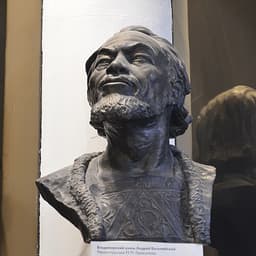
Andrei Bogolyubsky
Emperor · Medieval
46.8Total
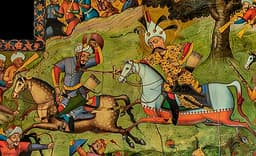
Shaybani Khan
Emperor · Medieval
60.5Total
Basic Information
Born
1111
1451
Died
1174
1510
Era
Medieval
Medieval
Nationality
Vladimir-Suzdal
Khanate of Bukhara
Occupation
Emperor
Emperor
Civilization
Western
Eastern
Score Comparison
Military (10%)
10.0
78.0
Political (20%)
43.7
45.0
Influence (20%)
54.9
62.0
Legacy (20%)
46.7
54.0
Leadership (15%)
62.2
72.0
Strategy (15%)
45.0
61.2
TOTAL
46.8
60.5
Andrei Bogolyubsky — Complete Timeline
1157 AD
Transfer of the Capital to VladimirPolitical Action
After becoming Grand Prince, Andrei moved his capital from Kiev to Vladimir, a city in the northeast. He made Vladimir the political and religious center of his realm, building the Assumption Cathedral and Golden Gate.
Capital MoveVladimirPolitical Shift
Impact: regionalconstructive
1165 AD
Construction of the Church of the Intercession on the NerlCultural◆ Major
Andrei commissioned the Church of the Intercession on the Nerl River near Vladimir. This white-stone church is a masterpiece of medieval Russian architecture and a symbol of the Vladimir-Suzdal principality's cultural flourishing.
ArchitectureChurchCultural Symbol
Impact: regionalconstructive
1169 AD
Sack of KievWar
Andrei Bogolyubsky led a coalition of Rus princes in sacking Kiev, the traditional capital. His forces looted and burned the city, marking a decline in Kiev's power and the rise of Vladimir-Suzdal as a new center.
Sack of KievDeclineVladimir-Suzdal
Impact: regionaldestructive
1174 AD
Assassination by BoyarsPolitical Action◆ Major
Andrei was assassinated by a group of boyars in his palace at Bogolyubovo. The conspiracy was driven by his autocratic rule and conflicts with the nobility. His death led to a period of civil strife in Vladimir-Suzdal.
AssassinationBoyar RevoltCivil Strife
Impact: nationaltragic
Shaybani Khan — Complete Timeline
1500 AD
Conquest of SamarkandWar◆ Major
Muhammad Shaybani Khan, leader of the Uzbek Shaybanids, captured Samarkand from the Timurids. This conquest marked the beginning of the end for the Timurid dynasty in Transoxiana and established the Khanate of Bukhara.
ShaybanidsConquestSamarkand
Impact: regionaldestructive
1507 AD
Conquest of HeratWar◆ Major
Shaybani Khan captured Herat, the Timurid capital of Khorasan, after the death of Husayn Bayqara. This conquest ended the Timurid dynasty and brought Khorasan under Uzbek control.
ShaybanidsConquestHerat
Impact: regionaldestructive
1510 AD
Battle of MarvWar◆ Major
Shaybani Khan was defeated and killed by the Safavid Shah Ismail I at the Battle of Marv. His death ended the rapid expansion of the Shaybanid state and allowed the Safavids to briefly occupy Khorasan.
ShaybanidsBattleSafavids
Impact: regionaltragic
This comparison has not been analyzed yet.
One-time AI generation (~1 minute). Scores and timeline are already available below.
Rankings
🥇
Shaybani KhanLeader
Mil: 78.0Pol: 45.0Inf: 62.0
60.5
🥈
Andrei Bogolyubsky
Mil: 10.0Pol: 43.7Inf: 54.9
46.8
+13.7 behind
How This Comparison Works
Algorithm
Each figure is scored on 6 dimensions (0—100 scale) based on structured historical data: Military (10%), Political (20%), Influence (20%), Legacy (20%), Leadership (15%), Strategy (15%). The weighted total produces the final ranking.
Data Sources
Scores are computed from structured sub-indicators in the database. Scale factors adjust for era (Ancient ×0.85, Modern ×1.0) and civilization size (Eastern ×1.05, Other ×0.80) to account for differences in population and military scale.
Maximum 3 Figures
Comparisons are limited to 2—3 figures to ensure readability and statistical meaningfulness.
Error Margins
±5 points per dimension — Sub-scores are derived from historical records with inherent uncertainty. Two figures within 5 points on a dimension should be considered roughly equivalent in that area.
Total Score Accuracy
±3 points overall — The weighted combination of 6 dimensions produces a total score with approximately ±3 points of uncertainty. Differences of less than 3 points are not statistically significant— the figures are effectively tied.
Known Limitations
- Historical records are incomplete and uneven across civilizations
- Figures from oral-tradition societies may be underrepresented
- Occupation labels can misclassify multi-role figures
- Scores measure capability and impact, not moral character
- Quantitative scoring is a comparison tool, not absolute truth
Capability Radar
Military (10%) — Battles & Warfare
Battles
35
75
Win Rate
40
80
Expansion
45
80
Political (20%) — Governance & Reform
Reform
45
55
Diplomacy
40
60
Economy
35
50
Influence (20%) — Cultural & Global Reach
Cultural
40
55
Global
30
55
Legacy (20%) — Historical Impact
Historical
45
65
Longevity
35
50
Leadership (15%) — Power & Stability
Tenure
50
65
Stability
30
45
Strategy (15%) — Tactics & Innovation
Strategy
35
75
Tactics
30
70
Reform
20
60
Similar Comparisons
Comments & Discussion
No comments yet. Be the first to share your thoughts!