Loading...
Archibald Wavell vs Napoleon Bonaparte
Napoleon Bonaparte leads by 13.5 pts · 2 figures compared
…
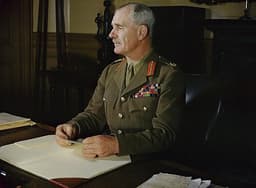
Archibald Wavell
General · Modern
57.4Total

Napoleon Bonaparte
General · Modern
70.9Total
Basic Information
Born
1883
1769
Died
1950
1821
Era
Modern
Modern
Nationality
United Kingdom
France
Occupation
General
General
Civilization
Western
Western
Score Comparison
Military (10%)
70.0
94.0
Political (20%)
46.6
72.0
Influence (20%)
55.0
40.0
Legacy (20%)
54.0
80.0
Leadership (15%)
71.0
78.0
Strategy (15%)
55.0
90.0
TOTAL
57.4
70.9
Archibald Wavell — Complete Timeline
1939 AD
Appointed Commander-in-Chief of Middle East CommandOther◆ Major
Wavell was appointed Commander-in-Chief of the Middle East Command in July 1939. He oversaw British forces in Egypt, Sudan, Palestine, and East Africa, preparing for the expected conflict with Italy in North Africa at the outbreak of World War II.
World War IINorth Africa
Impact: national
1940 AD
Launched Operation CompassOther◆ Major
Wavell ordered Operation Compass in December 1940, a British offensive against Italian forces in North Africa. The attack captured 130,000 Italian prisoners, advanced 500 miles into Libya, and destroyed the Italian Tenth Army, achieving the first major Allied land victory of World War II.
World War IINorth AfricaVictory
Impact: nationalconstructive
1941 AD
Defeated Italian Forces in East AfricaOther◆ Major
Wavell's forces conducted a campaign in East Africa from January to May 1941. British, Commonwealth, and Ethiopian troops defeated the Italian army in Eritrea and Ethiopia, capturing 230,000 prisoners and restoring Emperor Haile Selassie to the Ethiopian throne.
World War IIEast AfricaVictory
Impact: nationalconstructive
Relieved of Command in the Middle EastOther◆ Major
Wavell was relieved as Commander-in-Chief of Middle East Command in July 1941 following a series of setbacks, including the failure of Operation Battleaxe to relieve Tobruk and the German capture of Crete. He was replaced by Claude Auchinleck and reassigned to India.
World War IINorth AfricaSetback
Impact: nationaldestructive
1943 AD
Appointed Viceroy of IndiaPolitical Action◆ Major
Wavell was appointed Viceroy and Governor-General of India in October 1943, succeeding Lord Linlithgow. He faced the Bengal famine of 1943, which killed an estimated 2-3 million people, and attempted to negotiate Indian independence with political leaders including Gandhi and Jinnah.
IndiaWorld War IIColonial Administration
Impact: national
Napoleon Bonaparte — Complete Timeline
1799 AD
Coup of 18 BrumaireOther◆ Major
Napoleon Bonaparte, with support from his brother Lucien and key political figures, overthrew the Directory in a bloodless coup. He established the Consulate with himself as First Consul, effectively becoming the ruler of France. This event ended the French Revolution's most unstable period.
French RevolutionCoupRise to Power
Impact: regional
1804 AD
Promulgation of the Napoleonic CodeOther◆ Major
Napoleon enacted the Civil Code of the French, known as the Napoleonic Code, a comprehensive set of laws that replaced the fragmented feudal legal systems. The code established legal equality, protected property rights, and secularized law. It became the basis for legal systems in many European and world countries.
Legal ReformNapoleonic CodeCivil Law
Impact: globalconstructive
1805 AD
Battle of AusterlitzWar◆ Major
Napoleon's Grande Arm
Napoleonic WarsBattleDecisive Victory
Impact: global
1812 AD
Invasion of RussiaWar◆ Major
Napoleon led the Grande Arm
Napoleonic WarsInvasionDisaster
Impact: globaldestructive
1815 AD
Battle of WaterlooWar◆ Major
Napoleon's French army was defeated by the combined forces of the Duke of Wellington's Anglo-Allied army and Gebhard Leberecht von Bl
Napoleonic WarsBattleFinal Defeat
Impact: globaldestructive
Expert Analysis
archibald-wavell-vs-napoleon-bonaparte
# The Conqueror and the Custodian
In the winter of 1941, as German panzers rolled across the Russian steppes and the Japanese fleet steamed toward Pearl Harbor, a British general in Cairo faced a decision that would define his career. Archibald Wavell, commander-in-chief in the Middle East, had just crushed the Italian army in Libya, capturing 130,000 prisoners at a cost of barely 2,000 British casualties. It was a victory as stunning in its completeness as any Napoleon had achieved at Austerlitz. Yet Wavell did not press his advantage. He halted, dispersed his forces, and sent reinforcements to Greece. Within months, Rommel would be at the gates of Egypt, and Wavell would be relieved of command. The contrast with Napoleon—who would have ridden that victory to the ends of the earth—could not be sharper. What made one man reach for everything, and the other settle for enough?
Origins
Napoleon Bonaparte was born in 1769 on the island of Corsica, a place that had been Genoese, then French, and never fully at peace with either. His family was minor nobility, poor enough to feel the sting of inferiority, proud enough to resent it. When he entered the military academy at Brienne at age nine, he spoke French with a thick Italian accent and was mocked by the sons of aristocrats. That wound never healed. It drove him to prove himself—not just equal to his peers, but their master.
Archibald Wavell, born in 1883, came from the opposite end of the social spectrum. His father was a major general, his family part of the British military establishment for generations. He attended Winchester and Sandhurst, where he was described as "quiet, unambitious, and scholarly." Where Napoleon burned with the hunger of an outsider, Wavell carried the calm assurance of someone who had always belonged. He did not need to conquer the world; the world had already given him a place.
Rise to Power
Napoleon’s rise was meteoric because it was improvised. In 1795, at age twenty-six, he dispersed a royalist mob in Paris with a "whiff of grapeshot"—a brutal, decisive act that caught the attention of the revolutionary government. By 1796 he commanded the Army of Italy, and within a year he had defeated four Austrian armies and made himself the most famous man in France. He did not wait for opportunity; he created it.
Wavell’s ascent was slower, more deliberate. He served in the Boer War, then in India, then on the Western Front, where he lost an eye at the Second Battle of Ypres in 1915. He was promoted steadily but unspectacularly, earning a reputation as a thinker—he wrote poetry and edited an anthology of military quotations—rather than a fighter. By 1939, when war broke out, he was fifty-six years old, commanding British forces in the Middle East, a theater considered secondary to Europe. He was the right man for a quiet war, but the war was about to become very loud.
Leadership & Governance
Napoleon’s military genius lay in speed, concentration, and psychological dominance. At Austerlitz in 1805, he deliberately weakened his right flank to draw the Austro-Russian army into a trap, then shattered their center with a massed assault. He commanded from the front, leading charges, exposing himself to fire. His soldiers adored him because he shared their dangers and their glory. Politically, he was equally decisive. The Napoleonic Code, enacted in 1804, standardized French law, abolished feudal privileges, and established merit-based advancement. It was his most enduring achievement, a legal framework that spread across Europe and survives in modified form today.
Wavell’s leadership was the opposite: cautious, methodical, and humane. He won the North African campaign not through brilliant maneuvers but through careful logistics, deception, and the patient accumulation of advantage. His most famous operation, the capture of Tobruk in January 1941, was a model of planning—but it lacked the Napoleonic flash. Politically, Wavell was a diplomat rather than a reformer. As Viceroy of India from 1943 to 1947, he tried to negotiate a peaceful path to independence, maintaining order while preparing for the inevitable transfer of power. He was a custodian, not a conqueror.
Triumph & Tragedy
Napoleon’s greatest triumph was the campaign of 1805, when he destroyed three European armies in three months and crowned himself master of the continent. His greatest tragedy was the invasion of Russia in 1812. He marched 600,000 men into the vastness of the east; fewer than 100,000 returned. The disaster was self-inflicted, born of hubris and the belief that his will alone could overcome geography, climate, and the stubbornness of a people who refused to fight on his terms.
Wavell’s triumph was the defeat of the Italians in 1940-41, a campaign so efficient that Churchill called it "the first gleam of light" in the war. His tragedy came immediately after: the decision to send troops to Greece, against his own better judgment, at Churchill’s insistence. The Greek campaign failed, Rommel arrived in North Africa, and Wavell’s carefully built army was scattered. He was removed from command in July 1941, his reputation forever tied to what might have been.
Character & Destiny
Napoleon’s character was his destiny. He was restless, brilliant, and incapable of stopping. "Power is my mistress," he once said, and he pursued her with the single-mindedness of a man who believed the world existed to be conquered. That drive made him great, but it also made him blind. He could not consolidate because consolidation felt like stagnation. He could not share power because sharing felt like weakness. In the end, he died alone on Saint Helena, a prisoner of the very ambition that had lifted him so high.
Wavell was a man of duty and restraint. He accepted responsibility without seeking glory. "The only way to be a successful general," he wrote, "is to be a successful man." He was not a conqueror; he was a servant. That made him less spectacular, but perhaps more admirable. He lost his command not through failure but through obedience—and he bore the loss with a dignity Napoleon could never have mustered.
Legacy
Napoleon’s legacy is written in the laws of Europe, the borders of nations, and the romantic imagination of the West. He is remembered as the man who rode a white horse across the Alps, who crowned himself emperor, who died whispering "France, Army, Head of the Army." His name is synonymous with ambition, genius, and the terrible price of both.
Wavell’s legacy is quieter. He is remembered by military historians as a competent commander who was outmatched by the scale of the war, and by students of empire as the last Viceroy who tried to hold India together with words instead of force. He was not great in the Napoleonic sense—he did not change the world. But he held the line when holding the line was all that mattered.
Conclusion
Napoleon and Wavell represent two poles of leadership: the revolutionary and the steward, the conqueror and the custodian. Napoleon changed the world by breaking it; Wavell kept it from breaking further. One died in exile, the other in retirement. One is remembered in marble and myth; the other in dusty archives and footnotes. Yet both faced the same question: what does it mean to lead in a time of war? Napoleon answered: to impose your will on the world. Wavell answered: to do your duty and accept the consequences. History has judged Napoleon the greater man. But perhaps it is Wavell who teaches the harder lesson—that greatness is not always measured in conquest, and that sometimes the most difficult victory is the one you refuse to claim.
Rankings
🥇
Napoleon BonaparteLeader
Mil: 94.0Pol: 72.0Inf: 40.0
70.9
🥈
Archibald Wavell
Mil: 70.0Pol: 46.6Inf: 55.0
57.4
+13.5 behind
How This Comparison Works
Algorithm
Each figure is scored on 6 dimensions (0—100 scale) based on structured historical data: Military (10%), Political (20%), Influence (20%), Legacy (20%), Leadership (15%), Strategy (15%). The weighted total produces the final ranking.
Data Sources
Scores are computed from structured sub-indicators in the database. Scale factors adjust for era (Ancient ×0.85, Modern ×1.0) and civilization size (Eastern ×1.05, Other ×0.80) to account for differences in population and military scale.
Maximum 3 Figures
Comparisons are limited to 2—3 figures to ensure readability and statistical meaningfulness.
Error Margins
±5 points per dimension — Sub-scores are derived from historical records with inherent uncertainty. Two figures within 5 points on a dimension should be considered roughly equivalent in that area.
Total Score Accuracy
±3 points overall — The weighted combination of 6 dimensions produces a total score with approximately ±3 points of uncertainty. Differences of less than 3 points are not statistically significant— the figures are effectively tied.
Known Limitations
- Historical records are incomplete and uneven across civilizations
- Figures from oral-tradition societies may be underrepresented
- Occupation labels can misclassify multi-role figures
- Scores measure capability and impact, not moral character
- Quantitative scoring is a comparison tool, not absolute truth
Capability Radar
Military (10%) — Battles & Warfare
Battles
65
95
Win Rate
60
90
Expansion
50
95
Political (20%) — Governance & Reform
Reform
30
95
Diplomacy
50
80
Economy
20
85
Influence (20%) — Cultural & Global Reach
Cultural
30
85
Global
45
90
Legacy (20%) — Historical Impact
Historical
55
95
Longevity
40
90
Leadership (15%) — Power & Stability
Tenure
55
85
Stability
35
70
Strategy (15%) — Tactics & Innovation
Strategy
75
95
Tactics
70
98
Reform
40
92
Similar Comparisons
Comments & Discussion
CRUNCHY LENS6/17/2026
People love to mythologize "decisive" generals like Napoleon, but numbers don’t lie: Napoleon’s victories cost an average of 25% casualties per battle; Wavell’s 1940 Libya campaign had a loss ratio under 2%. Wavell understood that 130,000 prisoners wasn’t a trophy—it was a logistical trap. Pressing into Tripoli would have stretched his supply lines 1,000 miles through desert with 12 divisions vs. Rommel’s 2. Napoleon’s 1812 campaign proves that ignoring those constraints gets you 500,000 dead me
大象棋盘6/17/2026
拿仑的野心是开疆拓土,而韦维尔是在玩一盘帝国版围棋。1941年他调兵希腊,表面看是分散力量,但你得看英国当时的战略核心:守住苏伊士运河、保住印度。希腊在棋盘上是弃子,但能拖住德军四个月,延缓了"巴巴罗萨"行动。拿破仑会把这口恶气咽下去吗?不,他会冲到巴尔干去,就像1805年在奥斯特利茨那样。但然后呢?韦维尔知道什么时候该让步兵走,什么时候该让政治走。这不是怕输,这是算到第十步。
BENCHMARK BREAKER6/17/2026
Modern military analysts love to call Napoleon a "pioneer", but honestly, he was just lucky with his era’s lethality ceiling. Compare: Napoleon’s Grand Armée moved at 15 miles per day on foot; Wavell’s mechanized divisions in 1941 could do 40, but fuel constraints bound him tighter than any battlefield. Wavell faced Rommel—a general who learned from Napoleon’s speed doctrine and weaponized it with tanks. The real lesson? Napoleon’s empire was built on a pre-industrial tempo. Wavell’s caution was
历史显微镜6/17/2026
说韦维尔与拿仑相反,不如说他们是同一棵权力树的两根树枝。拿仑出身科西嘉贫贱子弟,他恨透了那个"不是法国人"的标签,所以要用欧洲王座来证明自己。韦维尔是标准英国上层子弟,哈罗公学毕业,他根本不需要征服巴黎来证明家族荣耀——他祖宗早在克里米亚就赢过了。拿仑打仗为了推翻世界秩序,韦维尔打仗为了维持它。所以前者永远是进攻,后者永远是收支平衡。一个是被羞辱逼疯的天才,一个是带着银汤匙出生的管家。
TACTICAL TEA-LEAF6/17/2026
Honestly the best comparison point is their failures: Napoleon never learned to coordinate across theaters. In 1813, he let Schwar