Loading...
Arnulf of Carinthia vs Philip III of France
Philip III of France leads by 5.4 pts · 2 figures compared
…
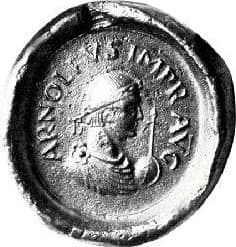
Arnulf of Carinthia
Emperor · Medieval
51.1Total
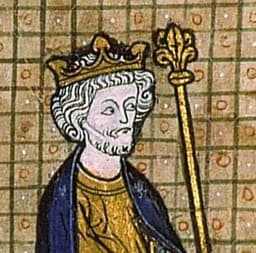
Philip III of France
Emperor · Medieval
56.5Total
Basic Information
Born
850
1245
Died
899
1285
Era
Medieval
Medieval
Nationality
East Francia
France
Occupation
Emperor
Emperor
Civilization
Western
Western
Score Comparison
Military (10%)
20.0
72.5
Political (20%)
46.6
48.0
Influence (20%)
53.3
54.1
Legacy (20%)
46.7
45.8
Leadership (15%)
74.0
74.0
Strategy (15%)
60.0
60.0
TOTAL
51.1
56.5
Arnulf of Carinthia — Complete Timeline
887 AD
Deposition of Charles the FatPolitical Action
Arnulf played a key role in the deposition of his uncle, Charles the Fat, in 887. As the illegitimate son of Carloman, Arnulf was elected King of East Francia by the nobles, ending the unified Carolingian rule and establishing his own dynasty.
DepositionAccessionEast Francia
Impact: regional
891 AD
Battle of the Dyle (891)War◆ Major
Arnulf of Carinthia led an East Frankish army to victory against Viking raiders at the Battle of the Dyle in present-day Belgium. This victory halted Viking incursions into East Francia and demonstrated Arnulf's military capability, boosting his prestige.
BattleVikingsVictory
Impact: regionalconstructive
892 AD
Campaign against the MagyarsWar◆ Major
Arnulf allied with the Magyars (Hungarians) against the Moravian Empire, inviting them into Central Europe. This decision backfired, as the Magyars later turned on East Francia, launching devastating raids. Arnulf's short-term strategy had long-term negative consequences.
AllianceMagyarsRaids
Impact: regionaldestructive
896 AD
Imperial Coronation (896)Cultural◆ Major
Arnulf was crowned Holy Roman Emperor by Pope Formosus on February 22, 896, in Rome. He had marched into Italy to support the pope against rival factions. His coronation was brief, as he suffered a stroke soon after and returned to East Francia.
CoronationEmperorItaly
Impact: regional
899 AD
Death of Arnulf of CarinthiaOther
Arnulf died on December 8, 899, likely from a stroke. He was succeeded by his young son, Louis the Child, whose weak rule led to further fragmentation and vulnerability to Magyar attacks. Arnulf's reign was marked by military successes but also strategic errors.
DeathSuccessionDecline
Impact: regionaltragic
Philip III of France — Complete Timeline
1258 AD
Treaty of CorbeilPolitical Action
Philip III's father, Louis IX, signed the Treaty of Corbeil, which renounced French claims to Catalonia and Roussillon in exchange for Aragonese renunciation of claims to Provence and Languedoc. Philip III inherited this settlement.
TreatyDiplomacyCapetian
Impact: regional
1274 AD
Invasion of NavarreWar◆ Major
Philip III invaded Navarre to enforce his claim as regent for his niece, Joan I of Navarre. He secured control of the kingdom, which later passed to his son Philip IV through marriage, expanding French influence in the Pyrenees.
InvasionTerritorial ExpansionCapetian
Impact: regional
1285 AD
Aragonese CrusadeWar◆ Major
Philip III led the Aragonese Crusade, a papal-sanctioned invasion of Aragon to depose King Peter III. The French army was defeated at the Battle of the Col de Panissars and forced to retreat, suffering heavy losses. Philip III died during the retreat.
CrusadeDefeatCapetian
Impact: regionaltragic
Expert Analysis
Origins
Arnulf of Carinthia was born around 850, the illegitimate son of Carloman of Bavaria. His birth outside marriage limited his early prospects, but he was raised in the Carolingian court and gained experience governing Carinthia, a march in the southeast of East Francia. Philip III of France, born on April 3, 1245, was the second son of King Louis IX and Margaret of Provence. He was not initially destined for the throne, but his older brother Louis died in 1260, making Philip the heir. Philip was educated in the chivalric traditions of 13th-century France.
Rise to Power
Arnulf rose to prominence by leading a revolt against his uncle, Emperor Charles the Fat, in 887. Charles was deposed, and Arnulf was elected King of East Francia by the nobility. He consolidated power by defeating rivals, including the Moravians, and was crowned Holy Roman Emperor in 896 by Pope Formosus. Philip III became king upon his father's death in 1270 during the Eighth Crusade. He was crowned at Reims in 1271 and initially relied on his uncle, Pierre de la Broce, and later on his cousin, Robert II of Artois. His reign was marked by the continuation of Capetian expansion.
Leadership & Governance
Arnulf's leadership was pragmatic but short-sighted. He successfully defended against Viking raids at the Battle of the Dyle in 891, scoring a military victory that secured his northern frontier. However, his decision to ally with the Magyars against the Moravians in the 890s invited a new threat into Central Europe. The Magyars later raided East Francia after Arnulf's death. Philip III, with a military score of 72.5 compared to Arnulf's 20.0, led the Aragonese Crusade (1284-1285) against Peter III of Aragon. Despite initial gains, the crusade failed due to disease and naval defeat, costing Philip his heir and his reputation. His governance was largely influenced by his court, and he expanded French territory through the marriage of his son to Joan I of Navarre, securing Navarre and Champagne.
Triumph & Tragedy
Arnulf's greatest triumph was his coronation as Holy Roman Emperor, a symbol of his authority, and his victory at the Dyle. His tragedy was the Magyar alliance; the Magyars devastated East Francia after his death, contributing to the fragmentation of the Carolingian Empire. Philip III's triumph was the annexation of Navarre and the consolidation of royal domains. His tragedy was the Aragonese Crusade, a costly failure that weakened the French crown and led to the death of his son Philip. Philip III died in 1285 from dysentery contracted during the campaign.
Character & Destiny
Arnulf was ambitious and politically astute, but his reliance on external allies like the Magyars showed a lack of foresight. He scored 74.0 in leadership and 60.0 in strategy, indicating competent but not exceptional decision-making. Philip III was pious and chivalrous but indecisive, often swayed by advisors. His leadership score of 74.0 matches Arnulf's, but his strategy score of 60.0 reflects the same middling strategic ability. Both rulers were shaped by the feudal constraints of their time, but Arnulf's actions had more direct consequences for the future of Germany.
Legacy
Arnulf's legacy is mixed: he temporarily revived Carolingian power but his invitation to the Magyars altered the course of Central European history. His son Louis the Child was the last Carolingian ruler in East Francia, leading to the rise of the Ottonians. Arnulf's influence score of 53.3 and legacy score of 46.7 reflect his limited long-term impact. Philip III's legacy is more tangible: he expanded French territory and strengthened the Capetian monarchy. His son Philip IV continued this work. Philip III's legacy score of 45.8 is slightly lower than Arnulf's, but his influence score of 54.1 is comparable. However, Philip's failures in the Aragonese Crusade tarnished his reputation.
Conclusion
While Philip III of France has a higher total score (56.5 vs. 51.1), Arnulf of Carinthia's impact on the political geography of Europe was more significant. Arnulf's decision to ally with the Magyars had centuries-long consequences, whereas Philip's territorial gains were largely reversed or integrated into the Capetian domain without fundamental change. Arnulf's leadership in defending against Vikings and his imperial coronation demonstrate a more active role in shaping events. Therefore, despite the score gap, Arnulf's influence on the trajectory of East Francia and the Holy Roman Empire gives him a greater historical impact. Philip III's reign was competent but ultimately less transformative.
Rankings
🥇
Philip III of FranceLeader
Mil: 72.5Pol: 48.0Inf: 54.1
56.5
🥈
Arnulf of Carinthia
Mil: 20.0Pol: 46.6Inf: 53.3
51.1
+5.4 behind
How This Comparison Works
Algorithm
Each figure is scored on 6 dimensions (0—100 scale) based on structured historical data: Military (10%), Political (20%), Influence (20%), Legacy (20%), Leadership (15%), Strategy (15%). The weighted total produces the final ranking.
Data Sources
Scores are computed from structured sub-indicators in the database. Scale factors adjust for era (Ancient ×0.85, Modern ×1.0) and civilization size (Eastern ×1.05, Other ×0.80) to account for differences in population and military scale.
Maximum 3 Figures
Comparisons are limited to 2—3 figures to ensure readability and statistical meaningfulness.
Error Margins
±5 points per dimension — Sub-scores are derived from historical records with inherent uncertainty. Two figures within 5 points on a dimension should be considered roughly equivalent in that area.
Total Score Accuracy
±3 points overall — The weighted combination of 6 dimensions produces a total score with approximately ±3 points of uncertainty. Differences of less than 3 points are not statistically significant— the figures are effectively tied.
Known Limitations
- Historical records are incomplete and uneven across civilizations
- Figures from oral-tradition societies may be underrepresented
- Occupation labels can misclassify multi-role figures
- Scores measure capability and impact, not moral character
- Quantitative scoring is a comparison tool, not absolute truth
Capability Radar
Military (10%) — Battles & Warfare
Battles
45
55
Win Rate
40
60
Expansion
40
65
Political (20%) — Governance & Reform
Reform
35
40
Diplomacy
55
50
Economy
40
45
Influence (20%) — Cultural & Global Reach
Cultural
30
30
Global
30
25
Legacy (20%) — Historical Impact
Historical
45
40
Longevity
35
35
Leadership (15%) — Power & Stability
Tenure
60
55
Stability
45
50
Strategy (15%) — Tactics & Innovation
Strategy
55
50
Tactics
50
45
Reform
30
30
Similar Comparisons
Comments & Discussion
No comments yet. Be the first to share your thoughts!