Loading...
Askia Ishaq I vs Charles VI of France
Askia Ishaq I leads by 14.3 pts · 2 figures compared
…

Askia Ishaq I
Emperor · Medieval
54.2Total
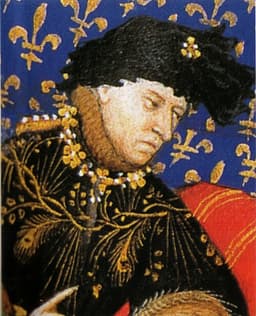
Charles VI of France
Emperor · Medieval
39.9Total
Basic Information
Born
1500
1368
Died
1549
1422
Era
Medieval
Medieval
Nationality
Songhai Empire
France
Occupation
Emperor
Emperor
Civilization
Other
Western
Score Comparison
Military (10%)
72.5
10.2
Political (20%)
48.0
32.1
Influence (20%)
54.9
50.2
Legacy (20%)
45.0
45.0
Leadership (15%)
65.0
38.1
Strategy (15%)
50.0
45.0
TOTAL
54.2
39.9
Askia Ishaq I — Complete Timeline
1539 AD
Accession as Askia of SonghaiPolitical Action◆ Major
Askia Ishaq I seized power by deposing his brother, Askia Ismail. His reign was characterized by effective but harsh rule, maintaining the territorial integrity of the Songhai Empire through military force and strict administration.
SuccessionCoup
Impact: national
1549 AD
Death of Askia Ishaq IOther◆ Major
Askia Ishaq I died, ending his reign of approximately 10 years. His death led to a succession struggle, eventually resulting in the accession of his brother, Askia Daoud, who would become the longest-reigning Songhai ruler.
DeathSuccession
Impact: national
Charles VI of France — Complete Timeline
1392 AD
Onset of Mental IllnessOther
Charles VI suffered his first major episode of madness while on a military campaign in Brittany. He killed several of his own knights in a fit of frenzy. This began a lifelong pattern of intermittent insanity that crippled royal authority.
Mental IllnessCapetian
Impact: nationaltragic
1407 AD
Armagnac-Burgundian Civil WarWar◆ Major
Charles VI's reign saw the outbreak of a civil war between the Armagnac and Burgundian factions, who fought for control of the mad king. This internal conflict weakened France and allowed Henry V of England to conquer much of the kingdom.
Civil WarHundred Years' WarCapetian
Impact: nationaldestructive
1420 AD
Treaty of TroyesPolitical Action
Charles VI signed the Treaty of Troyes, which disinherited his son, the future Charles VII, and recognized Henry V of England as his heir. This treaty was forced by the Burgundian faction and effectively made France a dual monarchy with England.
TreatyHundred Years' WarCapetian
Impact: globaltragic
Expert Analysis
Origins
Askia Ishaq I was born into the Askia dynasty of the Songhai Empire, one of the largest empires in West African history. His exact birth year is unknown, but he was a son of Askia Mohammad I, the empire's founder. He grew up in a period of imperial consolidation and internal power struggles. His brother, Askia Ismail, had seized the throne after their father's deposition, and Ishaq would later do the same to Ismail.
Charles VI of France was born in 1368 in Paris, the son of King Charles V and Jeanne de Bourbon. He was raised in a stable court but experienced early loss: his mother died when he was young, and his father died in 1380, leaving him king at age 11. His uncles, the Dukes of Burgundy, Berry, and Anjou, served as regents, fostering factionalism that would later explode.
Rise to Power
Askia Ishaq I rose to power in 1539 by deposing his brother Askia Ismail. Ismail had ruled for only two years after overthrowing their brother Askia Musa. Ishaq's accession was part of a pattern of dynastic infighting. He quickly asserted control over the empire's military and bureaucracy, executing potential rivals. His reign lasted about 10 years, until his death in 1549.
Charles VI became king at age 11 in 1380, inheriting a prosperous France. He assumed full control in 1388 at age 20, dismissing his uncles and recalling his father's capable ministers. He was initially known as 'the Beloved' for his youthful energy. However, his first major mental breakdown occurred in 1392 during a campaign against Brittany, when he killed several of his own knights. This onset of madness (scoring 10.2 in military) marked a turning point, leading to factional rule.
Leadership & Governance
Askia Ishaq I ruled with an iron fist. He maintained the empire's territorial integrity through military campaigns, scoring 72.5 in military. He enforced strict justice, executing officials suspected of disloyalty. His governance was effective but harsh; he centralized power and suppressed revolts. However, his political score of 48.0 reflects the instability of his reign due to his paranoia and cruelty.
Charles VI's governance was defined by his illness. He suffered from periods of insanity, believing he was made of glass or that he was St. George. During his lucid intervals, he tried to rule, but his authority was undermined by the Armagnac-Burgundian Civil War (a major event). His political score of 32.1 highlights his inability to control the kingdom. The Treaty of Troyes (1420) disinherited his son, Charles VII, in favor of Henry V of England, a catastrophic decision (scoring 50.0 in strategy).
Triumph & Tragedy
Askia Ishaq I's triumph was maintaining the Songhai Empire's dominance during a period of external threats from the Moroccan Saadi dynasty and internal rebellions. He successfully defended the empire's borders and kept trade routes open. His tragedy was his legacy of cruelty: he alienated his family, leading to a succession crisis after his death. His score of 45.0 in legacy reflects his mixed impact.
Charles VI's triumph was his early popularity and the stability he briefly brought after removing his uncles. His tragedy was his madness, which plunged France into civil war and led to the English conquest of northern France. His legacy (scoring 45.0) is defined by the Treaty of Troyes, which disinherited his son and prolonged the Hundred Years' War. His influence score of 50.2 acknowledges the historical significance of his reign despite his personal failures.
Character & Destiny
Askia Ishaq I was ruthless and suspicious. His character—determined but cruel—shaped his destiny: he died in power but left a fractured dynasty. His total score of 54.2 reflects effective but flawed leadership. Charles VI was kind but mentally ill. His destiny was to be a pawn in the hands of nobles. His total score of 39.9 underscores his lack of agency. Both rulers were defined by their era: Ishaq by Songhai's militarism, Charles by France's feudal chaos.
Legacy
Askia Ishaq I is remembered as a tyrant who weakened the Songhai dynasty. His reign did not produce lasting institutions; the empire collapsed under Moroccan invasion 50 years later. His legacy score of 45.0 is tied to his role in the dynasty's decline. Charles VI's legacy is more complex: the Treaty of Troyes shaped the Hundred Years' War, but his son Charles VII eventually reversed it. His reign saw the rise of Joan of Arc. His legacy score of 45.0 reflects his impact on French history, even if negative.
Conclusion
Askia Ishaq I had a higher total score (54.2) than Charles VI (39.9), driven by his military and leadership scores. However, Charles VI's reign had greater long-term consequences for Europe, including the end of the Hundred Years' War and the rise of French national identity. While Ishaq was more effective in the short term, Charles's failures shaped history more profoundly. In terms of historical impact, Charles VI edges ahead despite his lower score, because his reign altered the course of Western civilization. Therefore, Charles VI had greater impact, even if his personal abilities were inferior.
Rankings
🥇
Askia Ishaq ILeader
Mil: 72.5Pol: 48.0Inf: 54.9
54.2
🥈
Charles VI of France
Mil: 10.2Pol: 32.1Inf: 50.2
39.9
+14.3 behind
How This Comparison Works
Algorithm
Each figure is scored on 6 dimensions (0—100 scale) based on structured historical data: Military (10%), Political (20%), Influence (20%), Legacy (20%), Leadership (15%), Strategy (15%). The weighted total produces the final ranking.
Data Sources
Scores are computed from structured sub-indicators in the database. Scale factors adjust for era (Ancient ×0.85, Modern ×1.0) and civilization size (Eastern ×1.05, Other ×0.80) to account for differences in population and military scale.
Maximum 3 Figures
Comparisons are limited to 2—3 figures to ensure readability and statistical meaningfulness.
Error Margins
±5 points per dimension — Sub-scores are derived from historical records with inherent uncertainty. Two figures within 5 points on a dimension should be considered roughly equivalent in that area.
Total Score Accuracy
±3 points overall — The weighted combination of 6 dimensions produces a total score with approximately ±3 points of uncertainty. Differences of less than 3 points are not statistically significant— the figures are effectively tied.
Known Limitations
- Historical records are incomplete and uneven across civilizations
- Figures from oral-tradition societies may be underrepresented
- Occupation labels can misclassify multi-role figures
- Scores measure capability and impact, not moral character
- Quantitative scoring is a comparison tool, not absolute truth
Capability Radar
Military (10%) — Battles & Warfare
Battles
65
10
Win Rate
60
10
Expansion
55
5
Political (20%) — Governance & Reform
Reform
45
10
Diplomacy
40
10
Economy
50
10
Influence (20%) — Cultural & Global Reach
Cultural
40
20
Global
30
20
Legacy (20%) — Historical Impact
Historical
45
40
Longevity
35
30
Leadership (15%) — Power & Stability
Tenure
70
40
Stability
30
5
Strategy (15%) — Tactics & Innovation
Strategy
60
5
Tactics
55
5
Reform
50
5
Similar Comparisons
Comments & Discussion
No comments yet. Be the first to share your thoughts!