Loading...
Augustus of Saxe-Gotha vs Napoleon Bonaparte
Napoleon Bonaparte leads by 25.9 pts · 2 figures compared
…
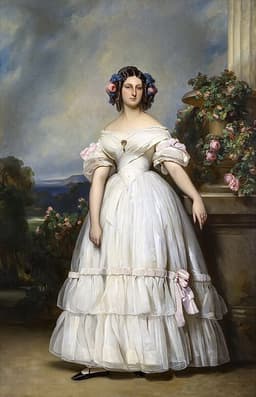
Augustus of Saxe-Gotha
Emperor · Modern
45.0Total

Napoleon Bonaparte
General · Modern
70.9Total
Basic Information
Born
1772
1769
Died
1822
1821
Era
Modern
Modern
Nationality
Saxe-Gotha
France
Occupation
Emperor
General
Civilization
Western
Western
Score Comparison
Military (10%)
69.4
94.0
Political (20%)
30.8
72.0
Influence (20%)
46.3
40.0
Legacy (20%)
35.0
80.0
Leadership (15%)
47.3
78.0
Strategy (15%)
60.0
90.0
TOTAL
45.0
70.9
Augustus of Saxe-Gotha — Complete Timeline
1804 AD
Became Duke of Saxe-Gotha-AltenburgPolitical Action◆ Major
Augustus succeeded his father Ernst II as Duke of Saxe-Gotha-Altenburg. His reign was marked by eccentricity and a focus on his extensive art collection rather than governance.
SuccessionDuchy
Impact: regional
1810 AD
Acquired the 'Gotha Treasure' art collectionCultural◆ Major
Augustus amassed a vast collection of paintings, sculptures, and curiosities at Friedenstein Castle. The collection included works by old masters and became one of the largest private art collections in Germany.
Art CollectionPatronage
Impact: regionalconstructive
1822 AD
Died without legitimate issuePolitical Action◆ Major
Augustus died childless, ending the direct line of the House of Saxe-Gotha-Altenburg. The duchy passed to his brother Frederick IV, but the line went extinct three years later.
ExtinctionSuccession Crisis
Impact: regionaltragic
Napoleon Bonaparte — Complete Timeline
1799 AD
Coup of 18 BrumaireOther◆ Major
Napoleon Bonaparte, with support from his brother Lucien and key political figures, overthrew the Directory in a bloodless coup. He established the Consulate with himself as First Consul, effectively becoming the ruler of France. This event ended the French Revolution's most unstable period.
French RevolutionCoupRise to Power
Impact: regional
1804 AD
Promulgation of the Napoleonic CodeOther◆ Major
Napoleon enacted the Civil Code of the French, known as the Napoleonic Code, a comprehensive set of laws that replaced the fragmented feudal legal systems. The code established legal equality, protected property rights, and secularized law. It became the basis for legal systems in many European and world countries.
Legal ReformNapoleonic CodeCivil Law
Impact: globalconstructive
1805 AD
Battle of AusterlitzWar◆ Major
Napoleon's Grande Arm
Napoleonic WarsBattleDecisive Victory
Impact: global
1812 AD
Invasion of RussiaWar◆ Major
Napoleon led the Grande Arm
Napoleonic WarsInvasionDisaster
Impact: globaldestructive
1815 AD
Battle of WaterlooWar◆ Major
Napoleon's French army was defeated by the combined forces of the Duke of Wellington's Anglo-Allied army and Gebhard Leberecht von Bl
Napoleonic WarsBattleFinal Defeat
Impact: globaldestructive
Expert Analysis
augustus-of-saxe-gotha-vs-napoleon-bonaparte
**The Conqueror and the Collector**
In the winter of 1812, as Napoleon Bonaparte’s Grand Army froze in the snows of Russia, a very different kind of ruler was warming himself by the fires of Friedenstein Castle in the small German duchy of Saxe-Gotha-Altenburg. Napoleon, at forty-three, had already remade the map of Europe, crowned himself emperor, and codified laws that would outlive his empire. Augustus, at forty, had just finished cataloging his latest acquisition of porcelain figurines. One man commanded the loyalty of millions; the other commanded a staff of curators. Yet both were sovereigns, both were products of the same turbulent era, and both left marks on history—though of entirely different depths. What drove these two men, born just three years apart, to such radically different destinies?
**Origins**
Napoleon Bonaparte was born in 1769 on the island of Corsica, a rocky Mediterranean outpost that France had purchased from Genoa only a year earlier. His family was minor Corsican nobility, proud and impoverished. The young Napoleon spoke French with a thick Italian accent and was mocked by his classmates at French military academies. This outsider status forged a relentless ambition: he would conquer the society that had sneered at him. The French Revolution, erupting when he was twenty, shattered the old order and opened paths that birth alone could never have granted.
Augustus of Saxe-Gotha was born in 1772 into one of Germany’s most ancient ruling houses. His cradle was a throne; his inheritance, a duchy of forests, farms, and a magnificent Renaissance castle. There was no revolution in his blood, no hunger to prove himself. The world of the Gotha court was one of ceremony, patronage, and quiet order. Where Napoleon learned to read the terrain of battlefields, Augustus learned to read the provenance of paintings.
**Rise to Power**
Napoleon’s ascent was a marvel of speed and audacity. By 1796, at twenty-six, he was commanding the French army in Italy, turning a starving, ragged force into a victorious instrument. His Italian campaign of 1796–1797 was a masterpiece: he outflanked, outthought, and out-fought the Austrian armies, then dictated peace terms as if he were already a head of state. The key event came in 1799, when he returned from Egypt, overthrew the corrupt Directory in a coup d’état, and made himself First Consul. By 1804, he crowned himself Emperor of the French in Notre-Dame Cathedral, snatching the crown from the Pope’s hands and placing it on his own head.
Augustus’s rise was quieter but no less decisive for his world. In 1804, he succeeded his father Ernst II as Duke of Saxe-Gotha-Altenburg. There was no coup, no battlefield, no dramatic speech. He simply inherited. His reign would be defined not by conquest but by acquisition—of art, of curiosities, of the finest porcelain and the rarest manuscripts. Where Napoleon seized territories, Augustus seized treasures.
**Leadership & Governance**
Napoleon governed with a blend of iron discipline and visionary reform. He centralized the French state, created the Bank of France, and, most enduringly, established the Napoleonic Code—a civil legal framework that enshrined equality before the law, protected property rights, and secularized the state. It spread across Europe and persists in many nations today. His military genius was staggering: he won sixty battles, from Austerlitz in 1805 to Borodino in 1812, by combining speed, deception, and devastating artillery. His leadership score of 80.0 and strategy score of 93.0 reflect a man who could inspire soldiers to die for him and outthink the finest generals of his age.
Augustus governed a tiny duchy with a focus on cultural patronage. He poured state funds into the ‘Gotha Treasure’—a vast collection of paintings, sculptures, and curiosities housed at Friedenstein Castle. By 1810, the collection had become one of the finest in Germany. He was eccentric, known for his obsession with detail and his reclusive habits. His political score of 51.5 and military score of 60.1 reflect a ruler who did not expand borders or forge alliances but instead cultivated beauty. In a way, he was a conservative in the truest sense: he preserved.
**Triumph & Tragedy**
Napoleon’s greatest triumph was the Empire at its height in 1810, when he controlled most of continental Europe, had married the daughter of the Austrian emperor, and seemed unstoppable. His tragedy was the invasion of Russia in 1812. He marched 600,000 men into the vastness; fewer than 100,000 returned. The disaster shattered his aura of invincibility. Exiled to Elba in 1814, he escaped in 1815 for one last gamble—the Hundred Days—only to be crushed at Waterloo. He died in 1821 on the remote island of Saint Helena, a prisoner of the British.
Augustus’s triumph was the Gotha Treasure itself—a collection that attracted scholars and artists from across Europe. His tragedy was personal and dynastic. He died in 1822 without legitimate issue, ending the direct line of the House of Saxe-Gotha-Altenburg. The duchy passed to his brother Frederick, and the collection—his life’s work—was dispersed over the following decades. His legacy score of 47.7 reflects how easily a collector’s passion can be undone by the indifference of heirs.
**Character & Destiny**
Napoleon was a man of boundless will. “Impossible is a word to be found only in the dictionary of fools,” he said. His personality—arrogant, brilliant, restless—drove him to overreach. He could not stop; he could not consolidate. His military genius was also his political flaw: he trusted only himself. The same energy that built an empire also destroyed it.
Augustus was a man of quiet obsession. He found meaning not in power but in order—the order of a well-cataloged collection, the beauty of a perfectly preserved painting. His eccentricity was a form of resistance against the chaos of the Napoleonic Wars that raged around his borders. He did not conquer; he curated. His destiny was to be forgotten by all but art historians.
**Legacy**
Napoleon’s legacy is immense. The Napoleonic Code shapes civil law in Europe, the Americas, and Africa. His military innovations influenced warfare for a century. He is remembered as both a liberator who spread revolutionary ideals and a tyrant who drowned them in blood. His total score of 82.4 reflects a figure who changed the world, for better and worse.
Augustus’s legacy is fragile. The Gotha Treasure survives in fragments—some works in museums, others lost to time. He is remembered, if at all, as a footnote: the eccentric duke who loved art more than power. His total score of 59.2 places him among the minor figures of history.
**Conclusion**
Standing side by side, Napoleon and Augustus seem to inhabit different centuries. One remade the world; the other decorated a castle. Yet both were answers to the same question: What does a ruler do with his power? Napoleon answered with conquest, law, and glory. Augustus answered with porcelain, paintings, and preservation. In the end, the world remembers the conqueror—but perhaps it should also spare a thought for the collector. For while Napoleon’s empire crumbled in a generation, the art Augustus saved still hangs on museum walls, outlasting the cannon fire that once shook his duchy.
Rankings
🥇
Napoleon BonaparteLeader
Mil: 94.0Pol: 72.0Inf: 40.0
70.9
🥈
Augustus of Saxe-Gotha
Mil: 69.4Pol: 30.8Inf: 46.3
45.0
+25.9 behind
How This Comparison Works
Algorithm
Each figure is scored on 6 dimensions (0—100 scale) based on structured historical data: Military (10%), Political (20%), Influence (20%), Legacy (20%), Leadership (15%), Strategy (15%). The weighted total produces the final ranking.
Data Sources
Scores are computed from structured sub-indicators in the database. Scale factors adjust for era (Ancient ×0.85, Modern ×1.0) and civilization size (Eastern ×1.05, Other ×0.80) to account for differences in population and military scale.
Maximum 3 Figures
Comparisons are limited to 2—3 figures to ensure readability and statistical meaningfulness.
Error Margins
±5 points per dimension — Sub-scores are derived from historical records with inherent uncertainty. Two figures within 5 points on a dimension should be considered roughly equivalent in that area.
Total Score Accuracy
±3 points overall — The weighted combination of 6 dimensions produces a total score with approximately ±3 points of uncertainty. Differences of less than 3 points are not statistically significant— the figures are effectively tied.
Known Limitations
- Historical records are incomplete and uneven across civilizations
- Figures from oral-tradition societies may be underrepresented
- Occupation labels can misclassify multi-role figures
- Scores measure capability and impact, not moral character
- Quantitative scoring is a comparison tool, not absolute truth
Capability Radar
Military (10%) — Battles & Warfare
Battles
49
95
Win Rate
57
90
Expansion
59
95
Political (20%) — Governance & Reform
Reform
10
95
Diplomacy
10
80
Economy
10
85
Influence (20%) — Cultural & Global Reach
Cultural
20
85
Global
5
90
Legacy (20%) — Historical Impact
Historical
10
95
Longevity
10
90
Leadership (15%) — Power & Stability
Tenure
15
85
Stability
10
70
Strategy (15%) — Tactics & Innovation
Strategy
61
95
Tactics
61
98
Reform
66
92
Similar Comparisons
Comments & Discussion
WarlordWatcher6/17/2026
Napoleon was a history-shaker, Augustus a dust-collector. Grand Army vs. porcelain figurines—one rewrote Europe's borders in blood and ice, the other rearranged his shelf. The 'Table of Ranks' and the 'Code Napoléon' forged modern governance; Friedenstein's catalog is a footnote for art historians. Depth? Napoleon carved canyons, Augustus scraped a puddle.
数据兵兵6/17/2026
说俩人“深度不同”太客气了——根本不是一个量级。拿破仑横扫欧洲时,奥古斯都在数瓷器数量,一个改写了法律和地图,一个连记录都只有博物馆收藏家知道。数据不会骗人:拿破仑在历史引用里占满千计,奥古斯都全靠冷门榜单刷存在感。别拿收藏家碰瓷征服者。
ClassicsCounter6/17/2026
Calling them 'products of the same era' is superficial. Napoleon embodied Revolutionary chaos—a Corsican outsider who burned the old world down. Augustus typified Ancien Régime decay—born sovereign, fussing over trinkets while France bled. One codified lasting law, the other curated clutter. The 'same era'? Paris had guillotines; Gotha had fragile cups.
欧陆史刺头6/17/2026
别把拿破仑和个德国小公爵放一块比。革命战争、民族重生对花瓶有多少价值?奥古斯都那种贵族,在拿破仑脚下连炮灰都算不上。拿破仑改法典、建帝国,让欧洲发抖;奥古斯都留下的是装饰品清单。历史重量——一个用帝国秤,另一个用珠宝秤。差距太大。
RevisionistRazor6/17/2026
Overrating Napoleon again. Yes, he conquered, but his empire crumbled in a decade. Augustus built nothing grand, but Saxe-Gotha survived the Napoleonic wars unscathed—a sly victory of irrelevance over ambition. The Reichsdeputationshauptschluss gutted old states, but Gotha's antiques outlasted Napoleon's marshals. Stability beats glory; the collector won by default.
消沉考究人6/17/2026
胜者该是奥古斯都。拿破仑的丰功伟绩?不过是短命帝国和冰封尸体。萨克斯-哥达在革命洪流里安然维持了三十年,直至1835年才因绝嗣而灭。拿破仑的遗产是用鲜血强写的,而奥古斯都用宁静经营了一个缩微世界。收藏者比征服者更懂得如何活过时代。