Loading...
Bai Qi vs Qin Shi Huang
Qin Shi Huang leads by 29.0 pts · 2 figures compared
…

Bai Qi
General · Ancient
56.2Total
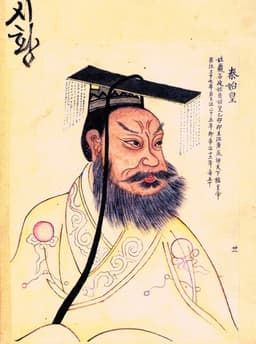
Qin Shi Huang
Emperor · Ancient
85.2Total
Basic Information
Born
-332
-259
Died
-257
-210
Era
Ancient
Ancient
Nationality
China
China
Occupation
General
Emperor
Civilization
Eastern
Eastern
Score Comparison
Military (10%)
92.0
80.0
Political (20%)
35.0
90.0
Influence (20%)
61.0
85.0
Legacy (20%)
52.0
90.0
Leadership (15%)
35.4
78.0
Strategy (15%)
82.0
82.0
TOTAL
56.2
85.2
Bai Qi — Complete Timeline
293 BC
Battle of YiqueWar◆ Major
Bai Qi defeated the allied forces of Wei and Han at Yique, killing 240,000 enemy troops. This victory eliminated the threat from these states and secured Qin's eastern borders.
BattleQin StateWei StateHan State
Impact: regionaldestructive
278 BC
Capture of the Chu Capital YingWar◆ Major
Bai Qi led a Qin campaign against Chu, capturing the capital Ying. This forced the Chu court to relocate eastward, significantly weakening Chu and expanding Qin's territory in the south.
ConquestQin StateChu State
Impact: regionaldestructive
260 BC
Battle of ChangpingWar
Bai Qi commanded the Qin army against Zhao at Changping. After a prolonged siege, he defeated the Zhao forces and allegedly ordered the execution of 400,000 surrendered Zhao soldiers. This massacre crippled Zhao's military power.
MassacreQin StateZhao StateWar
Impact: regionaldestructive
257 BC
Forced Suicide by King Zhaoxiang of QinPolitical Action◆ Major
King Zhaoxiang of Qin ordered Bai Qi to commit suicide after Bai Qi refused to lead a campaign against Handan. Bai Qi's death removed a key general, but did not halt Qin's expansion.
SuicideQin StatePolitical Purge
Impact: nationaltragic
Qin Shi Huang — Complete Timeline
246 BC
Construction of the Mausoleum and Terracotta ArmyOther◆ Major
Qin Shi Huang commissioned a vast mausoleum complex near Xi'an, guarded by thousands of life-sized terracotta soldiers, horses, and chariots. The project employed hundreds of thousands of workers and reflected his obsession with immortality and imperial power.
Impact: global
230 BC
Conquest of the Six Warring StatesWar
From 230 to 221 BCE, Ying Zheng led the Qin state in a series of campaigns that conquered the Han, Zhao, Wei, Chu, Yan, and Qi states. This unified China under a single ruler for the first time, ending the Warring States period.
Impact: global
221 BC
Standardization of Writing, Currency, and MeasurementsReform◆ Major
Qin Shi Huang ordered the standardization of Chinese script, currency, and weights and measures across the unified empire. This facilitated administration, trade, and cultural integration, laying a foundation for future dynasties.
Impact: globalconstructive
Proclamation of the Qin DynastyPolitical Action
After conquering the last independent state, Ying Zheng declared himself Shi Huangdi (First Emperor), founding the Qin Dynasty. He adopted a new title to signify his supreme authority and initiated centralized imperial rule.
Impact: global
214 BC
Initiation of the Great Wall ConstructionOther◆ Major
Qin Shi Huang ordered the connection and extension of existing northern fortifications to create a unified defensive wall against nomadic Xiongnu raids. This project involved massive conscripted labor and became the precursor to the later Great Wall.
Impact: regional
213 BC
Burning of Books and Burying of ScholarsPolitical Action◆ Major
On the advice of Li Si, Qin Shi Huang ordered the burning of historical records and philosophical texts not aligned with Legalist doctrine. He also had 460 Confucian scholars buried alive to suppress dissent and consolidate ideological control.
Impact: nationaldestructive
Expert Analysis
bai-qi-vs-qin-shi-huang
# The Emperor and the Executioner
On a winter morning in 257 BC, the greatest general of the Warring States period knelt in the dust of a roadside ditch outside the Qin capital, Xianyang. Bai Qi, the man who had buried 400,000 Zhao soldiers alive at Changping, drew his sword and slit his own throat. Forty-seven years later, his emperor would also die—but not before conquering the world Bai Qi had bled to create. The contrast between these two men, both architects of Qin's rise, tells a story about power, personality, and the terrible price of unification.
Origins
Bai Qi was born around 332 BC, a century before China's unification, into a world of ceaseless war among seven rival states. He rose through merit alone, a commoner whose genius for butchery made him indispensable to the Qin court. His era demanded ruthlessness—and he delivered it without hesitation.
Qin Shi Huang, born Ying Zheng in 259 BC, entered a different world. His father was a Qin prince, his mother a former concubine. By the time he was born, Qin had already absorbed half the known world. The boy king inherited not just a throne but a machine of conquest built over generations. Where Bai Qi had to prove himself through blood, Ying Zheng had only to steer an empire already in motion.
Rise to Power
Bai Qi's path was forged in battle. In 293 BC, at Yique, he annihilated the combined armies of Wei and Han, killing 240,000 men in a single campaign. By 278 BC, he had captured the Chu capital Ying, forcing one of China's oldest kingdoms to flee east like refugees. His reputation became a weapon: enemy generals surrendered rather than face him.
Ying Zheng's rise was more complex. He became king of Qin at thirteen, ruling through regents while his mother's lover, Lao Ai, plotted rebellion. At twenty-two, he crushed the coup, exiled his mother, and purged the court. Unlike Bai Qi, who killed only on the battlefield, Ying Zheng learned that politics required a different kind of murder—quiet, patient, absolute.
Leadership & Governance
Bai Qi was a weapon, not a statesman. His military score of 92.6 reflects his tactical brilliance, but his political score of 44.7 reveals his fatal weakness. He understood siegecraft, supply lines, and the psychology of terror, but he never grasped that war serves politics, not the reverse. When King Zhaoxiang ordered him to attack Handan in 257 BC, Bai Qi refused, arguing the timing was wrong. The king, insulted, demanded his death. The general who had never lost a battle died because he failed to understand that loyalty, not victory, was the supreme virtue.
Qin Shi Huang understood this instinctively. His political score of 88.0 matched his military score of 80.0 because he saw conquest as a means, not an end. After unifying China in 221 BC, he standardized writing, currency, and measurements—acts that would outlast any army. He began the Great Wall, not as a single structure but as a system of linked fortifications. He even commissioned the Terracotta Army, a silent legion to guard him in death. Every action was political, designed to create a single China that would survive him.
Triumph & Tragedy
Bai Qi's triumph was Changping in 260 BC, where he besieged the Zhao army for months, then tricked them into surrendering by promising safe passage. He buried 400,000 prisoners alive—a number that still chills the Chinese soul. The tragedy was that this atrocity made him indispensable and therefore disposable. Once the Zhao were broken, Qin no longer needed a general who could commit such horrors.
Qin Shi Huang's triumph was the proclamation of the Qin Dynasty in 221 BC, when he declared himself Shi Huangdi, "First Emperor." His tragedy came later, in 213 BC, when he ordered the Burning of Books and Burying of Scholars—a purge of all texts and thinkers not aligned with Legalist philosophy. He sought to control history itself, but this act of intellectual genocide ensured that his own legacy would be written by his enemies.
Character & Destiny
Bai Qi was a man of action, not reflection. He killed because he was good at it, and because his king commanded it. When ordered to die, he obeyed without understanding why. His character was his fate: a perfect instrument that could not question its wielder.
Qin Shi Huang was consumed by fear—fear of death, of rebellion, of the chaos he had crushed. He sought immortality through elixirs, through the Terracotta Army, through the very standardization of Chinese civilization. His paranoia drove him to burn books and bury scholars, to build walls against the northern barbarians, to create a system so rigid that it would shatter within four years of his death. His character was also his fate: a man who conquered all but himself.
Legacy
Bai Qi is remembered as a monster—the "Human Butcher" of Chinese history. His name appears in literature as shorthand for cruelty. Yet his tactics were studied for centuries, and his victories made Qin's unification possible. He is the dark foundation upon which China was built.
Qin Shi Huang's legacy is more complex. He unified China, gave it a common script and currency, and established the administrative framework that would last for two millennia. But he also created the template for imperial tyranny. The Great Wall, the Terracotta Army, the standardized roads—these are his monuments. So too are the burned books and the buried scholars.
Conclusion
Standing at the crossroads of history, these two men represent the twin faces of power. Bai Qi was the sword that carved a path through the Warring States, but he was discarded when his purpose was served. Qin Shi Huang was the hand that wielded the sword, but he died believing his empire would last forever. In the end, both were consumed by the forces they unleashed. The general who killed 400,000 men died in a ditch. The emperor who unified China died seeking immortality. Their stories remind us that the architects of great empires are often destroyed by the very qualities that built them—and that the price of unity is sometimes paid in blood that never fully dries.
Rankings
🥇
Qin Shi HuangLeader
Mil: 80.0Pol: 90.0Inf: 85.0
85.2
🥈
Bai Qi
Mil: 92.0Pol: 35.0Inf: 61.0
56.2
+29.0 behind
How This Comparison Works
Algorithm
Each figure is scored on 6 dimensions (0—100 scale) based on structured historical data: Military (10%), Political (20%), Influence (20%), Legacy (20%), Leadership (15%), Strategy (15%). The weighted total produces the final ranking.
Data Sources
Scores are computed from structured sub-indicators in the database. Scale factors adjust for era (Ancient ×0.85, Modern ×1.0) and civilization size (Eastern ×1.05, Other ×0.80) to account for differences in population and military scale.
Maximum 3 Figures
Comparisons are limited to 2—3 figures to ensure readability and statistical meaningfulness.
Error Margins
±5 points per dimension — Sub-scores are derived from historical records with inherent uncertainty. Two figures within 5 points on a dimension should be considered roughly equivalent in that area.
Total Score Accuracy
±3 points overall — The weighted combination of 6 dimensions produces a total score with approximately ±3 points of uncertainty. Differences of less than 3 points are not statistically significant— the figures are effectively tied.
Known Limitations
- Historical records are incomplete and uneven across civilizations
- Figures from oral-tradition societies may be underrepresented
- Occupation labels can misclassify multi-role figures
- Scores measure capability and impact, not moral character
- Quantitative scoring is a comparison tool, not absolute truth
Capability Radar
Military (10%) — Battles & Warfare
Battles
95
85
Win Rate
98
90
Expansion
85
90
Political (20%) — Governance & Reform
Reform
10
95
Diplomacy
20
75
Economy
10
90
Influence (20%) — Cultural & Global Reach
Cultural
60
95
Global
55
85
Legacy (20%) — Historical Impact
Historical
75
95
Longevity
70
95
Leadership (15%) — Power & Stability
Tenure
40
70
Stability
15
65
Strategy (15%) — Tactics & Innovation
Strategy
90
85
Tactics
95
80
Reform
30
95
Similar Comparisons
Comments & Discussion
焚书坑俑6/17/2026
我是修正派批评者,那些吹捧白起战神的人,有没有想过他之后秦始皇为什么要搞焚书坑儒?白起杀的是士兵,是战争;秦始皇杀的是思想,是未来。白起在长平坑杀40万降卒,军事上必要但道德上崩塌。可四十年后,始皇帝统一天下,却让方士儒生闭嘴——烧书活埋,连选择沉默的权利都不给。白起输给了良心,嬴政输给了偏执。
竹简夜话6/17/2026
作为古典学者,我觉得这比较本身就是偏见。白起和秦始皇根本不在同一个维度。白起是兵器,秦始皇是帝王。白起打的是战国群雄的仗,秦始皇打的是"天下从此为一"的仗。看出土的睡虎地秦简,秦法从商鞅到始皇时期一脉相承,白起只是这套法家的执行者,执行到把自己也搭进去。而始皇帝是法家的立法者和终结者。
Historian4336/17/2026
History buff here: Bai Qi was the better soldier by far. The First Emperor couldn't hold a candle to him on any battlefield. But here's the rub: Bai Qi died in a ditch, forced to suicide by his own court, while Qin Shi Huang died in his bed after ruling the world. Generals win battles; Emperors win history. Bai Qi made Qin invincible, but the First Emperor made Qin *the only game in town.* Whose legacy lasts longer? Check your calendar—it's still Qin.
Chronicler98576/17/2026
Data doesn't lie: Bai Qi killed more people than Qin Shi Huang's entire conquest army size. The Zhang family records from Liye show Qin's total mobilized forces never exceeded 600,000. Bai Qi personally killed 400,000 at Changping alone. The First Emperor unified China through strategy, bureaucracy, and sheer persistence—he didn't need to be the best general. He needed to be the best manager of generals. Give me the emperor who built walls over the general who built graves.
Chronicler40286/17/2026
As a military historian, I call this a tragic mismatch: Bai Qi was Qin's sword, but Qin Shi Huang became the hand that held it. Bai Qi won wars; the First Emperor won a civilization. Bai Qi's Changping victory annihilated 400,000 enemies in one stroke, but he never lived to see the unified empire his blood made possible. The First Emperor finished what Bai Qi started, but he never had to bury a quarter-million men in a single day. Which is worse—the hand or the sword?