Loading...
Basil II vs Ferdinand II of Aragon
Ferdinand II of Aragon leads by 6.6 pts · 2 figures compared
…
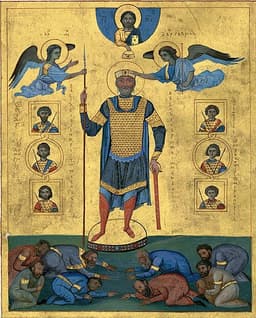
Basil II
Emperor · Medieval
63.8Total
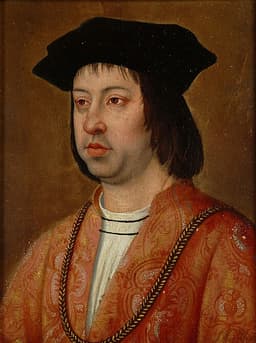
Ferdinand II of Aragon
Emperor · Medieval
70.4Total
Basic Information
Born
958
1452
Died
1025
1516
Era
Medieval
Medieval
Nationality
Byzantine Empire
Spain
Occupation
Emperor
Emperor
Civilization
Western
Western
Score Comparison
Military (10%)
85.0
76.0
Political (20%)
59.3
78.0
Influence (20%)
56.7
65.0
Legacy (20%)
55.0
65.0
Leadership (15%)
78.0
80.0
Strategy (15%)
68.0
66.3
TOTAL
63.8
70.4
Basil II — Complete Timeline
986 AD
Battle of the Gates of TrajanWar◆ Major
Basil II led an invasion of Bulgaria but was ambushed and defeated at the Gates of Trajan pass. The Byzantine army was routed, and Basil barely escaped. This defeat forced him to adopt a more cautious strategy and delayed the conquest of Bulgaria.
Byzantine-Bulgarian WarsDefeatAmbush
Impact: regionaltragic
1000 AD
Reforms of the Military and Land SystemReform◆ Major
Basil II implemented reforms to strengthen the Byzantine military and economy. He increased the size of the army, improved fortifications, and curbed the power of the landed aristocracy by enforcing laws against the accumulation of large estates. These measures stabilized the empire.
Military ReformLand ReformByzantine Empire
Impact: nationalconstructive
1014 AD
Battle of KleidionWar
Basil II decisively defeated the Bulgarian army at the Battle of Kleidion. After the victory, he blinded 15,000 Bulgarian prisoners, leaving one in every hundred with one eye to lead them home. This earned him the epithet 'Bulgar-Slayer' and broke Bulgarian resistance.
Byzantine-Bulgarian WarsMass BlindingBulgar-Slayer
Impact: regionaldestructive
1018 AD
Annexation of BulgariaWar◆ Major
Following the death of Bulgarian Tsar Samuel and the collapse of Bulgarian resistance, Basil II formally annexed the First Bulgarian Empire into the Byzantine Empire. He established the Theme of Bulgaria, integrating the territory and ending the long war.
AnnexationBulgariaByzantine Expansion
Impact: regionalconstructive
Ferdinand II of Aragon — Complete Timeline
1469 AD
Marriage to Isabella I of CastilePolitical Action
Ferdinand II of Aragon married Isabella I of Castile in Valladolid, uniting the two largest Christian kingdoms in Spain. This marriage created the basis for the Kingdom of Spain, though both crowns remained legally separate until the death of Isabella in 1504.
Spanish unificationDynastic union
Impact: globalconstructive
1478 AD
Establishment of the Spanish InquisitionPolitical Action◆ Major
Ferdinand II and Isabella I obtained papal approval to establish the Spanish Inquisition, a tribunal to enforce Catholic orthodoxy. The Inquisition targeted converted Jews (conversos) and Muslims (moriscos) suspected of secretly practicing their former religions, leading to thousands of executions and imprisonments.
InquisitionReligious persecution
Impact: globaldestructive
1492 AD
Conquest of GranadaWar
Ferdinand II and Isabella I completed the Reconquista by capturing the city of Granada, the last Muslim stronghold in the Iberian Peninsula. The surrender of the Nasrid kingdom ended nearly 800 years of Muslim rule in Spain and marked a major victory for the Catholic Monarchs.
ReconquistaGranada
Impact: global
Alhambra DecreePolitical Action◆ Major
Ferdinand II and Isabella I issued the Alhambra Decree, ordering the expulsion of all Jews from the kingdoms of Spain who refused to convert to Catholicism. The decree led to the exile of an estimated 200,000 Jews, causing a significant demographic and economic impact on Spain.
Expulsion of JewsReligious persecution
Impact: globaldestructive
Expert Analysis
Origins
Basil II was born in 958 into the Macedonian dynasty, the son of Emperor Romanos II. His early life was marked by political instability; his mother Theophano acted as regent, and powerful figures like Basil Lekapenos dominated the court. He received a thorough education in military and administrative affairs, but his path to power was fraught with intrigue.
Ferdinand II of Aragon was born in 1452, the son of King John II of Navarre and Aragon. He grew up in the tumultuous politics of the Iberian Peninsula, where noble factions and the ongoing Reconquista shaped his upbringing. He was trained in statecraft and warfare, preparing him to rule Aragon and eventually unite Spain.
Rise to Power
Basil II became co-emperor in 960 and sole emperor in 976 after the death of John I Tzimiskes. However, real power initially lay with the eunuch Basil Lekapenos. Basil II faced rebellions from powerful aristocrats, most notably Bardas Skleros and Bardas Phokas, whom he defeated by 989. His rise was solidified through military campaigns and by curbing the power of the landed aristocracy.
Ferdinand II married Isabella I of Castile in 1469, a union that laid the foundation for a unified Spain. He became King of Aragon in 1479 after his father's death. Together with Isabella, he consolidated royal authority, subdued rebellious nobles, and funded Christopher Columbus's expedition in 1492. His political acumen and marriage alliance were pivotal in his rise.
Leadership & Governance
Basil II was a hands-on emperor who personally led military campaigns. He reformed the Byzantine army, increasing its size and improving fortifications. His land reforms aimed to protect small farmers from the powerful magnates, strengthening the empire's tax base. Basil II's governance was autocratic but effective; he reduced the influence of the aristocracy and centralized power.
Ferdinand II was a master of diplomacy and state-building. He and Isabella established the Spanish Inquisition in 1478 to enforce religious unity. The Alhambra Decree of 1492 expelled Jews who refused conversion. Ferdinand's governance focused on centralization, creating a strong monarchy with efficient administration. He also pursued expansion into Italy, securing Naples in 1504.
Triumph & Tragedy
Basil II's greatest triumph was the annexation of Bulgaria after the Battle of Kleidion in 1014, where he blinded 15,000 prisoners, earning the epithet "Bulgar-Slayer." He expanded Byzantine territory to its greatest extent since Justinian. However, his tragedy was the lack of a competent successor; his brother Constantine VIII was weak, and the empire declined after his death in 1025. His harsh policies also sowed resentment.
Ferdinand II's triumph was completing the Reconquista with the conquest of Granada in 1492, ending 781 years of Muslim rule in Iberia. He also sponsored Columbus, leading to Spain's New World empire. His tragedy includes the expulsion of Jews and Muslims, which damaged the economy and culture. The Inquisition led to religious persecution and stifled intellectual life. Despite these, Ferdinand scored 76.0 in military and 78.0 in political, while Basil scored 85.0 and 59.3 respectively.
Character & Destiny
Basil II was ruthless, disciplined, and focused on military glory. His blinding of Bulgarian prisoners showed a calculated cruelty aimed at breaking enemy morale. His character was shaped by early struggles against aristocracy; he became distrustful of the powerful. His destiny was to be a warrior-emperor who restored Byzantine power but left a fragile legacy.
Ferdinand II was pragmatic, diplomatic, and religiously devout. He was a shrewd politician who used marriage and alliances to expand his influence. His character combined piety with political calculation, as seen in his support for the Inquisition. His destiny was to create a unified Spain that became a global power, but his policies also sowed division.
Legacy
Basil II's legacy is as a military emperor who temporarily reversed Byzantine decline. The annexation of Bulgaria lasted until the late 11th century. His reforms strengthened the military but failed to address long-term structural issues. He is remembered as a strong ruler but not a visionary. His total score of 63.8 reflects his limited broader influence.
Ferdinand II's legacy is foundational for modern Spain. The unification of Castile and Aragon, the Reconquista, and the sponsorship of Columbus set Spain on a path to become a global empire. The Spanish Inquisition and expulsion of Jews had lasting negative impacts. His total score of 70.4 indicates greater overall impact, especially in political and legacy categories.
Conclusion
Ferdinand II of Aragon had a greater historical impact than Basil II. While Basil II was a superior military commander (85.0 vs 76.0), Ferdinand's political and legacy scores (78.0 and 65.0 vs 59.3 and 55.0) reflect his role in shaping a nation that influenced world history. Basil's achievements were impressive but ultimately temporary; Ferdinand's unification of Spain and sponsorship of Columbus had global consequences. The score gap of 6.6 points supports this assessment. Ferdinand II's ability to build enduring institutions and launch an era of exploration places him above Basil II in overall significance.
Rankings
🥇
Ferdinand II of AragonLeader
Mil: 76.0Pol: 78.0Inf: 65.0
70.4
🥈
Basil II
Mil: 85.0Pol: 59.3Inf: 56.7
63.8
+6.6 behind
How This Comparison Works
Algorithm
Each figure is scored on 6 dimensions (0—100 scale) based on structured historical data: Military (10%), Political (20%), Influence (20%), Legacy (20%), Leadership (15%), Strategy (15%). The weighted total produces the final ranking.
Data Sources
Scores are computed from structured sub-indicators in the database. Scale factors adjust for era (Ancient ×0.85, Modern ×1.0) and civilization size (Eastern ×1.05, Other ×0.80) to account for differences in population and military scale.
Maximum 3 Figures
Comparisons are limited to 2—3 figures to ensure readability and statistical meaningfulness.
Error Margins
±5 points per dimension — Sub-scores are derived from historical records with inherent uncertainty. Two figures within 5 points on a dimension should be considered roughly equivalent in that area.
Total Score Accuracy
±3 points overall — The weighted combination of 6 dimensions produces a total score with approximately ±3 points of uncertainty. Differences of less than 3 points are not statistically significant— the figures are effectively tied.
Known Limitations
- Historical records are incomplete and uneven across civilizations
- Figures from oral-tradition societies may be underrepresented
- Occupation labels can misclassify multi-role figures
- Scores measure capability and impact, not moral character
- Quantitative scoring is a comparison tool, not absolute truth
Capability Radar
Military (10%) — Battles & Warfare
Battles
85
75
Win Rate
90
80
Expansion
80
85
Political (20%) — Governance & Reform
Reform
80
80
Diplomacy
70
90
Economy
75
75
Influence (20%) — Cultural & Global Reach
Cultural
60
75
Global
65
80
Legacy (20%) — Historical Impact
Historical
75
85
Longevity
70
80
Leadership (15%) — Power & Stability
Tenure
85
85
Stability
80
70
Strategy (15%) — Tactics & Innovation
Strategy
85
85
Tactics
80
70
Reform
75
60
Similar Comparisons
Comments & Discussion
No comments yet. Be the first to share your thoughts!