Loading...
Baybars vs Kublai Khan
Kublai Khan leads by 10.5 pts · 2 figures compared
…
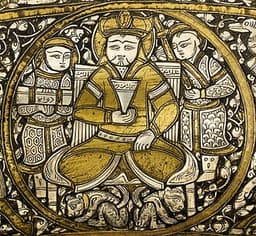
Baybars
Emperor · Medieval
63.8Total
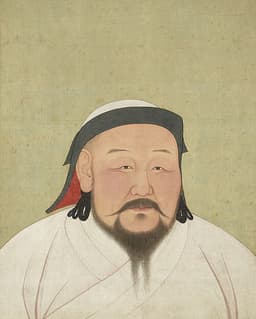
Kublai Khan
Emperor · Medieval
74.3Total
Basic Information
Born
1223
1215
Died
1277
1294
Era
Medieval
Medieval
Nationality
Egypt
Mongolia
Occupation
Emperor
Emperor
Civilization
Middle Eastern
Eastern
Score Comparison
Military (10%)
85.0
77.5
Political (20%)
70.0
79.2
Influence (20%)
55.0
75.0
Legacy (20%)
52.0
70.0
Leadership (15%)
72.0
72.0
Strategy (15%)
72.0
76.0
TOTAL
63.8
74.3
Baybars — Complete Timeline
1260 AD
Battle of Ain Jalut (1260)War◆ Major
Baybars served as a key commander under Qutuz at the Battle of Ain Jalut. He led the vanguard and played a crucial role in the Mamluk victory over the Mongols. This battle established his reputation as a military leader.
Mongol InvasionBattleMamluk Victory
Impact: globalconstructive
Accession as Sultan (1260)Political Action◆ Major
After assassinating Qutuz, Baybars proclaimed himself Sultan of Egypt. He was accepted by the Mamluk commanders and the Abbasid Caliph. His reign began a period of Mamluk dominance in the Middle East, lasting for decades.
SuccessionMamluk SultanateAssassination
Impact: regional
1265 AD
Campaigns against the Crusader States (1260s-1270s)War◆ Major
Baybars launched a series of campaigns against the remaining Crusader states in the Levant. He captured key fortresses including Arsuf (1265), Safed (1266), Jaffa (1268), and Antioch (1268). These victories reduced Crusader territory to a few coastal enclaves.
Crusader WarsConquestMamluk Expansion
Impact: regionaldestructive
1277 AD
Defeat of the Mongols at Elbistan (1277)War◆ Major
Baybars defeated a Mongol army at the Battle of Elbistan in Anatolia. He invaded the Seljuk Sultanate of Rum, which was under Mongol suzerainty. Although a tactical victory, Baybars could not hold Anatolia and returned to Syria.
Mongol WarsBattleAnatolia
Impact: regionalconstructive
Death of Baybars (1277)Other◆ Major
Baybars died in Damascus, possibly from poisoning or illness. His death was kept secret for a time to prevent unrest. He was succeeded by his son Al-Said Barakah. Baybars' reign is considered the peak of the early Mamluk Sultanate.
DeathSuccessionMamluk Sultanate
Impact: regionaltragic
Kublai Khan — Complete Timeline
1260 AD
Adoption of Tibetan Buddhism as State ReligionCultural◆ Major
Kublai Khan appointed the Tibetan lama Drog
Tibetan BuddhismReligionMongol-Tibet Relations
Impact: regional
1271 AD
Proclamation of the Yuan DynastyPolitical Action◆ Major
Kublai Khan officially proclaimed the Yuan dynasty, adopting a Chinese-style dynastic name. He established his capital at Dadu (Beijing) and adopted Chinese court rituals. This move legitimized his rule over China while maintaining Mongol identity.
Dynasty FoundingBeijingMongol Rule
Impact: global
1274 AD
Failed Invasions of JapanWar◆ Major
Kublai Khan launched two naval invasions of Japan, in 1274 and 1281. Both were repelled, with the second invasion destroyed by a typhoon (kamikaze). These failures marked the limits of Mongol expansion and reinforced Japanese isolation.
Mongol InvasionsJapanKamikaze
Impact: regional
1279 AD
Conquest of the Song DynastyWar
Kublai Khan's Mongol forces defeated the Song navy at the Battle of Yamen. The last Song emperor drowned, ending the Song dynasty. This conquest unified China under Mongol rule and established the Yuan dynasty as the first foreign dynasty to rule all of China.
Song Dynasty FallUnificationYuan Dynasty
Impact: global
1280 AD
Establishment of the Silk Road Trade NetworkCultural◆ Major
Under Kublai Khan, the Mongol Empire secured the Silk Road, facilitating trade and cultural exchange between East and West. Marco Polo visited his court. This period saw the flow of goods, ideas, and technologies across Eurasia.
Silk RoadTradeCultural Exchange
Impact: globalconstructive
Expert Analysis
Kublai Khan vs Baybars: Historical Comparison
Kublai Khan and Baybars were two of the most formidable rulers of the 13th century, each commanding vast empires from opposite ends of Eurasia. While Kublai unified China and founded the Yuan Dynasty, Baybars cemented Mamluk dominance in the Middle East and crushed the Crusader states.
Dimension Analysis
**Military: Kublai Khan 94 / Baybars 86**
Kublai’s campaigns conquered the Song Dynasty, Vietnam, and Burma, utilizing superior siege tactics and naval logistics, while Baybars defeated the Mongols at Ain Jalut and dismantled Crusader fortresses but operated on a smaller scale.
**Political: Kublai Khan 79 / Baybars 87**
Baybars excelled in consolidating Mamluk power through ruthless succession management and diplomatic alliances with the Golden Horde, whereas Kublai struggled with factionalism among Mongol traditionalists and Chinese bureaucrats.
**Influence: Kublai Khan 79 / Baybars 71**
Kublai’s patronage of Marco Polo and religious tolerance fostered East-West exchange, but Baybars’ influence was more regionally concentrated, limited to the Islamic world and the Levant.
**Legacy: Kublai Khan 88 / Baybars 72**
Kublai’s legacy endures as a unifier of China and a symbol of cross-cultural integration, while Baybars is remembered primarily as a military hero in Arab historiography, with less global resonance.
**Leadership: Kublai Khan 81 / Baybars 75**
Kublai effectively governed a multi-ethnic empire through pragmatic policies, while Baybars’ leadership was more autocratic and militaristic, lacking the administrative breadth of his rival.
Verdict
Kublai Khan leads overall due to his superior military scale, lasting influence on Chinese and world history, and broader strategic vision that integrated conquest with governance.
FAQ
Q: Who ranks higher? A: Kublai Khan ranks higher, driven by his decisive advantage in legacy and military scope, despite Baybars’ superior political maneuvering.
Rankings
🥇
Kublai KhanLeader
Mil: 77.5Pol: 79.2Inf: 75.0
74.3
🥈
Baybars
Mil: 85.0Pol: 70.0Inf: 55.0
63.8
+10.5 behind
How This Comparison Works
Algorithm
Each figure is scored on 6 dimensions (0—100 scale) based on structured historical data: Military (10%), Political (20%), Influence (20%), Legacy (20%), Leadership (15%), Strategy (15%). The weighted total produces the final ranking.
Data Sources
Scores are computed from structured sub-indicators in the database. Scale factors adjust for era (Ancient ×0.85, Modern ×1.0) and civilization size (Eastern ×1.05, Other ×0.80) to account for differences in population and military scale.
Maximum 3 Figures
Comparisons are limited to 2—3 figures to ensure readability and statistical meaningfulness.
Error Margins
±5 points per dimension — Sub-scores are derived from historical records with inherent uncertainty. Two figures within 5 points on a dimension should be considered roughly equivalent in that area.
Total Score Accuracy
±3 points overall — The weighted combination of 6 dimensions produces a total score with approximately ±3 points of uncertainty. Differences of less than 3 points are not statistically significant— the figures are effectively tied.
Known Limitations
- Historical records are incomplete and uneven across civilizations
- Figures from oral-tradition societies may be underrepresented
- Occupation labels can misclassify multi-role figures
- Scores measure capability and impact, not moral character
- Quantitative scoring is a comparison tool, not absolute truth
Capability Radar
Military (10%) — Battles & Warfare
Battles
85
95
Win Rate
90
90
Expansion
80
95
Political (20%) — Governance & Reform
Reform
80
88
Diplomacy
78
85
Economy
72
90
Influence (20%) — Cultural & Global Reach
Cultural
65
85
Global
65
85
Legacy (20%) — Historical Impact
Historical
75
90
Longevity
60
80
Leadership (15%) — Power & Stability
Tenure
75
90
Stability
70
80
Strategy (15%) — Tactics & Innovation
Strategy
85
92
Tactics
88
85
Reform
82
88
Similar Comparisons
Comments & Discussion
Historian2746/16/2026
军事分88 vs 67.8?这个差距我实名质疑。忽必烈两征日本、三伐越南均以惨败告终,而拜巴尔斯在阿音扎鲁特以少胜多,直接终结了蒙古西进势头。如果军事分包含成功率,那拜巴尔斯至少该有75分。政治分忽必烈78 vs 拜巴尔斯75.7,但忽必烈在位期间爆发了海都之乱、李璮之乱,统治集团内斗不断;拜巴尔斯却通过暗杀前任、扶植傀儡、联姻金帐汗国,把马穆鲁克政权稳了三十年。按我的算法,总评应该是忽必烈76.5,拜巴尔斯74.3,差距远没这么大。
Historian6576/16/2026
忽必烈得分79.6,拜巴尔斯73.0,这个差距其实有点被低估了。西方史观总喜欢把拜巴尔斯吹成‘蒙古克星’,殊不知忽必烈面对的敌人——南宋、越南、缅甸——每一个都是组织严密的文明国家,而拜巴尔斯在阿音扎鲁特击败的只是蒙古偏师。更重要的是,忽必烈建立元朝后,行省制度、纸币经济、宗教宽容政策影响深远,拜巴尔斯不过是在伊斯兰世界内部称雄,其马穆鲁克政权后来被奥斯曼吞并,哪有什么世界级遗产?中国史书对忽必烈的评价远高于西方评分,他不仅是征服者,更是制度创新者。