Loading...
Bilge Qaghan vs John of Brienne
Bilge Qaghan leads by 15.6 pts · 2 figures compared
…
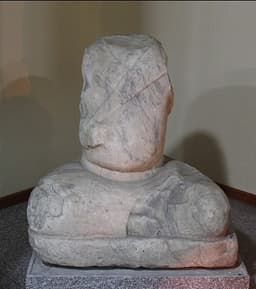
Bilge Qaghan
Emperor · Medieval
65.5Total
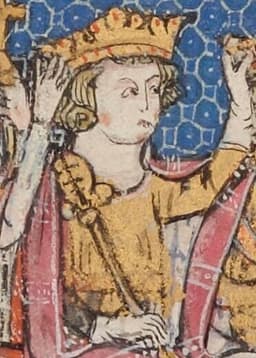
John of Brienne
Emperor · Medieval
49.9Total
Basic Information
Born
683
1170
Died
734
1237
Era
Medieval
Medieval
Nationality
Gokturk Khaganate
Jerusalem
Occupation
Emperor
Emperor
Civilization
Eastern
Western
Score Comparison
Military (10%)
78.0
50.0
Political (20%)
70.0
43.7
Influence (20%)
62.0
51.8
Legacy (20%)
56.0
44.2
Leadership (15%)
72.0
67.0
Strategy (15%)
69.1
43.3
TOTAL
65.5
49.9
Bilge Qaghan — Complete Timeline
716 AD
Restoration of the Eastern Turkic KhaganatePolitical Action◆ Major
After the Eastern Turkic Khaganate was destroyed by the Tang dynasty in 630, Bilge Qaghan, with the help of his brother Kul Tigin and vizier Tonyukuk, revived the khaganate. He defeated the Tang and their allies, re-establishing Turkic independence.
RestorationTurkic Revival
Impact: regionalconstructive
717 AD
Battle of the Irtysh RiverWar◆ Major
Bilge Qaghan led a campaign against the Tang and their Turkic allies, defeating them at the Irtysh River. This victory secured the khaganate's western borders and demonstrated the military prowess of the revived Turkic state.
BattleTang-Turkic War
Impact: regionaldestructive
727 AD
Peace treaty with the Tang dynastyPolitical Action◆ Major
Bilge Qaghan negotiated a peace treaty with the Tang dynasty, ending decades of conflict. The treaty established the borders between the two empires and allowed for trade and diplomatic exchanges, bringing stability to the region.
TreatyPeace
Impact: regionalconstructive
732 AD
Construction of the Orkhon inscriptionsCultural◆ Major
Bilge Qaghan commissioned the Orkhon inscriptions, monumental stelae inscribed with runic Turkic script. These inscriptions, written by Tonyukuk and later by Bilge's son, recorded the history and achievements of the Turkic Khaganate, providing a key source for Turkic history.
InscriptionsCultural Heritage
Impact: regionalconstructive
734 AD
Assassination of Bilge QaghanPolitical Action◆ Major
Bilge Qaghan was poisoned by a minister, possibly on the orders of the Tang court. His death led to a period of instability and decline for the Eastern Turkic Khaganate, which eventually fell to the Uyghurs in 744.
AssassinationDecline
Impact: regionaltragic
John of Brienne — Complete Timeline
1210 AD
Election as King of JerusalemPolitical Action◆ Major
John of Brienne was elected King of Jerusalem by the Haute Cour, marrying Maria of Montferrat, the heiress. He became king at a time when the kingdom was reduced to the coastal city of Acre and faced threats from the Ayyubids.
SuccessionCrusader States
Impact: regional
1218 AD
Siege of Damietta (Fifth Crusade)War◆ Major
John of Brienne led the crusader forces in the Fifth Crusade, besieging the Egyptian city of Damietta. After a long siege, the city fell in 1219, but the crusaders failed to capitalize on the victory due to internal divisions.
CrusadeEgyptFifth Crusade
Impact: regional
1219 AD
Failed negotiations with al-KamilPolitical Action◆ Major
John of Brienne negotiated with Ayyubid Sultan al-Kamil, who offered to return Jerusalem in exchange for the crusaders leaving Egypt. John refused, influenced by the papal legate Pelagius, leading to the eventual failure of the Fifth Crusade.
DiplomacyFifth CrusadeJerusalem
Impact: regionaldestructive
1229 AD
Election as Latin Emperor of ConstantinoplePolitical Action◆ Major
John of Brienne was elected Latin Emperor of Constantinople, ruling as regent for the young Baldwin II. He brought military experience to the beleaguered empire, which was threatened by the Byzantine Empire of Nicaea and the Second Bulgarian Empire.
SuccessionLatin EmpireByzantine
Impact: regional
1235 AD
Defense of Constantinople against John III VatatzesWar◆ Major
John of Brienne successfully defended Constantinople against a siege by John III Vatatzes of Nicaea and Ivan Asen II of Bulgaria. His leadership preserved the Latin Empire for another generation.
SiegeDefenseLatin Empire
Impact: regionalconstructive
Expert Analysis
Origins
Bilge Qaghan was born around 683 AD into the Ashina clan, the ruling family of the Eastern Turkic Khaganate. His early life was shaped by the khaganate's collapse under Tang domination in 630. His father, Ilterish Qaghan, had led a rebellion to restore Turkic independence, instilling in Bilge a deep sense of national identity. His brother Kul Tigin and advisor Tonyukuk became his key allies.
John of Brienne was born around 1170 in France, the youngest son of a minor noble family. With limited prospects, he pursued a military career, participating in tournaments and minor campaigns. His big break came in 1210 when he was elected King of Jerusalem, marrying the heiress Maria of Montferrat. His background was that of a landless knight rising through opportunity.
Rise to Power
Bilge Qaghan rose through military command under his father and brother. In 716, after his father's death, he and Kul Tigin staged a coup against the usurper Kapaghan Qaghan. Bilge became khagan in 717, with Kul Tigin as his general. Their first major test was the Battle of the Irtysh River in 717-718, where they defeated a Tang-led coalition, securing the khaganate's western borders. This victory solidified his rule.
John of Brienne's rise was more political. In 1210, the Haute Cour of Jerusalem elected him king to provide military leadership. He married Maria of Montferrat, becoming king-consort. He led the Fifth Crusade, capturing Damietta in 1219 after a long siege. However, his refusal of Sultan al-Kamil's offer of Jerusalem in exchange for withdrawal led to the crusade's failure. In 1229, he was elected Latin Emperor of Constantinople, ruling as regent for Baldwin II.
Leadership & Governance
Bilge Qaghan's leadership was autocratic but consultative. He relied heavily on Tonyukuk, his vizier, for strategy and administration. He centralized power, reformed the military, and promoted Turkic culture. He commissioned the Orkhon inscriptions, which recorded his achievements and served as a nationalistic manifesto. His governance focused on stability and independence from Tang influence.
John of Brienne's leadership was feudal and reactive. As King of Jerusalem, he was constrained by the Haute Cour and lacked resources. He was a competent military commander but poor diplomat. As Latin Emperor, he defended Constantinople against John III Vatatzes in 1235, but his reign was marked by constant financial and military struggles. His governance score of 43.7 reflects these limitations.
Triumph & Tragedy
Bilge Qaghan's greatest triumph was restoring the Eastern Turkic Khaganate and defeating the Tang at the Irtysh River. He also negotiated a peace treaty with the Tang, securing borders. His tragedy was his assassination in 734, poisoned by a minister possibly bribed by the Tang. His death led to internal strife and decline.
John of Brienne's triumph was the capture of Damietta and the defense of Constantinople. His tragedy was the failure of the Fifth Crusade due to his refusal of al-Kamil's offer. He also failed to stabilize the Latin Empire, leaving it weak. His military score of 50.0 and political 43.7 reflect mixed results.
Character & Destiny
Bilge Qaghan was pragmatic, strategic, and culturally conscious. His decision to commission the Orkhon inscriptions shows a focus on legacy. His reliance on Tonyukuk and Kul Tigin indicates trust in capable advisors. His assassination highlights the dangers of court intrigue.
John of Brienne was ambitious but overly cautious. His refusal of al-Kamil's offer was a strategic blunder driven by religious zeal. He was a capable defender but poor negotiator. His destiny was to be a transitional figure in declining crusader states.
Legacy
Bilge Qaghan's legacy is immense for Turkic peoples. The Orkhon inscriptions are the earliest known Turkic script, foundational for Turkic identity. His khaganate set a precedent for later Turkic empires. His influence score of 62.0 reflects this cultural impact.
John of Brienne's legacy is more limited. He is remembered as a crusader king and Latin Emperor, but his reign did not significantly alter the course of the crusades. The Latin Empire fell in 1261, decades after his death. His legacy score of 44.2 is lower.
Conclusion
Bilge Qaghan had a greater impact on history. His military score of 78.0, political 70.0, and legacy 56.0 all exceed John's 50.0, 43.7, and 44.2. Bilge revived a nation and left a cultural monument, while John struggled to maintain dying states. The 15.6-point total score gap reflects this disparity. Bilge Qaghan's contributions to Turkic identity and statecraft are lasting, whereas John's efforts were fleeting.
Rankings
🥇
Bilge QaghanLeader
Mil: 78.0Pol: 70.0Inf: 62.0
65.5
🥈
John of Brienne
Mil: 50.0Pol: 43.7Inf: 51.8
49.9
+15.6 behind
How This Comparison Works
Algorithm
Each figure is scored on 6 dimensions (0—100 scale) based on structured historical data: Military (10%), Political (20%), Influence (20%), Legacy (20%), Leadership (15%), Strategy (15%). The weighted total produces the final ranking.
Data Sources
Scores are computed from structured sub-indicators in the database. Scale factors adjust for era (Ancient ×0.85, Modern ×1.0) and civilization size (Eastern ×1.05, Other ×0.80) to account for differences in population and military scale.
Maximum 3 Figures
Comparisons are limited to 2—3 figures to ensure readability and statistical meaningfulness.
Error Margins
±5 points per dimension — Sub-scores are derived from historical records with inherent uncertainty. Two figures within 5 points on a dimension should be considered roughly equivalent in that area.
Total Score Accuracy
±3 points overall — The weighted combination of 6 dimensions produces a total score with approximately ±3 points of uncertainty. Differences of less than 3 points are not statistically significant— the figures are effectively tied.
Known Limitations
- Historical records are incomplete and uneven across civilizations
- Figures from oral-tradition societies may be underrepresented
- Occupation labels can misclassify multi-role figures
- Scores measure capability and impact, not moral character
- Quantitative scoring is a comparison tool, not absolute truth
Capability Radar
Military (10%) — Battles & Warfare
Battles
75
55
Win Rate
80
50
Expansion
80
35
Political (20%) — Governance & Reform
Reform
85
30
Diplomacy
75
65
Economy
70
25
Influence (20%) — Cultural & Global Reach
Cultural
60
30
Global
50
20
Legacy (20%) — Historical Impact
Historical
65
40
Longevity
55
25
Leadership (15%) — Power & Stability
Tenure
70
60
Stability
75
30
Strategy (15%) — Tactics & Innovation
Strategy
75
40
Tactics
70
45
Reform
85
20
Similar Comparisons
Comments & Discussion
No comments yet. Be the first to share your thoughts!