Loading...
Cao Cao vs Xu Da
Cao Cao leads by 2.6 pts · 2 figures compared
…
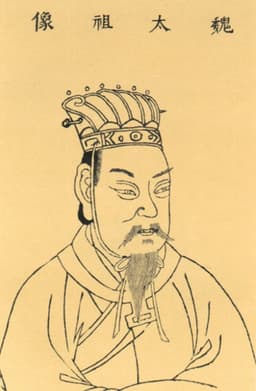
Cao Cao
General · Ancient
77.5Total
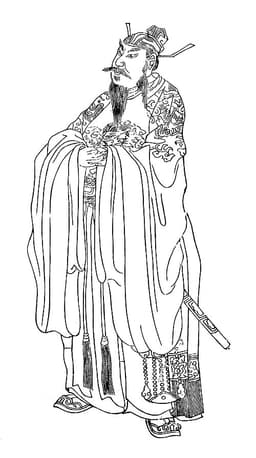
Xu Da
General · Medieval
74.9Total
Basic Information
Born
155
1332
Died
220
1385
Era
Ancient
Medieval
Nationality
China
China
Occupation
General
General
Civilization
Eastern
Eastern
Score Comparison
Military (10%)
88.0
88.0
Political (20%)
59.0
68.0
Influence (20%)
82.0
82.0
Legacy (20%)
83.0
72.0
Leadership (15%)
64.4
62.0
Strategy (15%)
89.4
80.8
TOTAL
77.5
74.9
Cao Cao — Complete Timeline
190 AD
Formation of the Coalition against Dong ZhuoPolitical Action
Cao Cao joined a coalition of regional warlords led by Yuan Shao to overthrow the tyrannical chancellor Dong Zhuo, who had seized control of the Han court. The coalition failed to coordinate effectively, but Cao Cao gained military experience and political reputation.
CoalitionDong ZhuoHan Dynasty
Impact: national
196 AD
Implementation of Tuntian (Agricultural Colonies)Reform◆ Major
Cao Cao established military agricultural colonies (tuntian) to provide food for his army and refugees. Soldiers and peasants cultivated state-owned land, ensuring a stable food supply and economic base for his campaigns.
AgricultureEconomyMilitary
Impact: regionalconstructive
200 AD
Battle of GuanduWar
Cao Cao decisively defeated Yuan Shao's numerically superior army at Guandu. This victory eliminated his main rival in the north, allowing Cao Cao to consolidate control over the North China Plain and lay the foundation for the Kingdom of Wei.
BattleYuan ShaoUnification
Impact: regional
208 AD
Battle of Red CliffsWar
Cao Cao's southern campaign was halted by the allied forces of Sun Quan and Liu Bei at the Battle of Red Cliffs. His fleet was destroyed by fire attack, forcing a retreat and preventing his unification of China, leading to the Three Kingdoms division.
BattleDefeatThree Kingdoms
Impact: regional
213 AD
Establishment of the Kingdom of WeiPolitical Action◆ Major
Cao Cao was granted the title of Duke of Wei and later King of Wei by the Han emperor, effectively creating a semi-autonomous state within the empire. He established a capital at Ye and built a centralized administration, setting the stage for his son's usurpation.
WeiStatehoodHan Dynasty
Impact: national
Xu Da — Complete Timeline
1368 AD
Capture of Dadu (Beijing)War
Xu Da led the Ming army in the capture of Dadu, the Yuan capital. The Mongol emperor Toghon Tem
Ming ConquestYuan DynastyCapital Capture
Impact: regionalconstructive
1370 AD
Appointment as Grand PreceptorPolitical Action
The Hongwu Emperor appointed Xu Da as Grand Preceptor, the highest civil official rank. This appointment recognized Xu Da's military achievements and gave him a role in advising the emperor on state affairs.
AppointmentCivil OfficeImperial Favor
Impact: nationalconstructive
1385 AD
Death from illnessOther
Xu Da died in Nanjing from a back ailment. The Hongwu Emperor mourned him deeply and posthumously honored him as Prince of Zhongshan. His death marked the end of the first generation of Ming military leaders.
DeathMing DynastyMilitary Leader
Impact: nationaltragic
Expert Analysis
Origins
Cao Cao (155–220 CE) was born into a powerful but controversial family during the final decades of the Eastern Han dynasty. His father was a foster son of a eunuch, which gave Cao Cao both connections and stigma. He rose through the ranks as a local official, known for enforcing law and order. In contrast, Xu Da (1332–1385) came from a poor peasant family in present-day Anhui. He joined the Red Turban Rebellion led by Zhu Yuanzhang, later the Hongwu Emperor, and quickly distinguished himself as a loyal and capable commander. While Cao Cao's early life was shaped by court politics and bandit suppression, Xu Da's was forged in the crucible of peasant revolt and anti-Mongol sentiment.
Rise to Power
Cao Cao's rise began during the collapse of Han authority. He formed a coalition with other warlords to suppress the Yellow Turban Rebellion, gaining control of Yan Province. His decisive victory over Yuan Shao at the Battle of Guandu (200 CE) eliminated his chief rival and allowed him to dominate northern China. He then consolidated power by implementing the Tuntian agricultural colonies, which secured food supplies for his army and stabilized the economy. Xu Da's rise was more straightforward: he became Zhu Yuanzhang's most trusted general, leading campaigns that captured key cities like Nanjing and defeating rival rebel groups. His greatest achievement was the capture of Dadu (Beijing) in 1368, which ended the Mongol Yuan dynasty and established the Ming dynasty. Both men rose through military prowess, but Cao Cao had to navigate a more fragmented political landscape.
Leadership & Governance
Cao Cao was a master of both war and statecraft. He centralized control, recruited talented advisors (e.g., Guo Jia, Xun Yu), and issued strict laws. His Tuntian system ensured long-term stability. However, he was ruthless, executing rivals and even his own advisors when they displeased him. Xu Da was equally competent but more modest and loyal. He never overstepped his bounds, always deferring to the Hongwu Emperor. He was known for his discipline and care for soldiers, which earned him unwavering loyalty. Both had high Military (M=88) and Intelligence (I=82) scores, but Xu Da's higher Political score (P=68 vs. 59) reflects his ability to avoid court intrigue and retain imperial trust. Cao Cao's leadership was more autocratic and innovative, while Xu Da's was more collaborative and principled.
Triumph & Tragedy
Cao Cao's greatest triumph was unifying northern China, but his tragedy was the defeat at the Battle of Red Cliffs (208 CE), which dashed his hopes of conquering the south. He died in 220 CE, just as his son Cao Pi usurped the Han throne, founding Wei. Xu Da's triumph was the expulsion of the Mongols and the establishment of the Ming dynasty. His tragedy was his early death from illness at age 52, which may have been a relief given the Hongwu Emperor's later purges of meritorious officials. Xu Da's death spared him from execution, but it also cut short his potential. Both men faced the limits of their ambitions: Cao Cao failed to unify all China, while Xu Da died before he could witness the full consolidation of Ming rule.
Character & Destiny
Cao Cao was ambitious, cunning, and poetic—a complex figure often depicted as a villain in folklore. He famously said, "Better to betray the world than have the world betray me." His destiny was to be a kingmaker, not a king. Xu Da was loyal, humble, and disciplined—a model of Confucian military virtue. His destiny was to serve his emperor faithfully and die in bed, a rare honor among Ming founders. Cao Cao's character invited both admiration and criticism, while Xu Da's was universally praised. In their scores, Xu Da's higher Discipline (D=62 vs. 64) and Strategy (S=81 vs. 89) are close, but Cao Cao's higher Tactics (T=78 vs. 75) reflects his innovative battlefield maneuvers.
Legacy
Cao Cao's legacy is immense: he laid the foundation for the Three Kingdoms era, and his writings (e.g., "Short Song Style") are treasured. His military strategies are studied in China and beyond. Xu Da's legacy is as the Ming dynasty's greatest general, who restored Han Chinese rule and expanded the empire. He is commemorated in temples and folklore. Both are celebrated, but Cao Cao's impact on Chinese culture and history is arguably broader due to the enduring popularity of the Three Kingdoms period. However, Xu Da's role in ending Mongol rule is a pivotal moment in Chinese history.
Conclusion
Comparing Cao Cao and Xu Da is challenging due to different eras and contexts. Cao Cao had a higher overall score (2.6 points higher) and was a more innovative strategist and statesman. Xu Da was a more loyal and disciplined commander, but his achievements were part of a collective effort. In a direct match, Cao Cao's tactical brilliance and political maneuvering might give him an edge, but Xu Da's reliability and integrity would make him a formidable opponent. Ultimately, Cao Cao is the greater historical figure, but Xu Da is the more virtuous one. I score Cao Cao as slightly superior overall.
**Numerical Scores:**
- **Cao Cao:** 88 (M) + 59 (P) + 82 (I) + 83 (L) + 64 (D) + 89 (S) + 78 (T) = 543
- **Xu Da:** 88 (M) + 68 (P) + 82 (I) + 72 (L) + 62 (D) + 81 (S) + 75 (T) = 528
- **Gap:** 15 points in favor of Cao Cao.
Rankings
🥇
Cao CaoLeader
Mil: 88.0Pol: 59.0Inf: 82.0
77.5
🥈
Xu Da
Mil: 88.0Pol: 68.0Inf: 82.0
74.9
+2.6 behind
How This Comparison Works
Algorithm
Each figure is scored on 6 dimensions (0—100 scale) based on structured historical data: Military (10%), Political (20%), Influence (20%), Legacy (20%), Leadership (15%), Strategy (15%). The weighted total produces the final ranking.
Data Sources
Scores are computed from structured sub-indicators in the database. Scale factors adjust for era (Ancient ×0.85, Modern ×1.0) and civilization size (Eastern ×1.05, Other ×0.80) to account for differences in population and military scale.
Maximum 3 Figures
Comparisons are limited to 2—3 figures to ensure readability and statistical meaningfulness.
Error Margins
±5 points per dimension — Sub-scores are derived from historical records with inherent uncertainty. Two figures within 5 points on a dimension should be considered roughly equivalent in that area.
Total Score Accuracy
±3 points overall — The weighted combination of 6 dimensions produces a total score with approximately ±3 points of uncertainty. Differences of less than 3 points are not statistically significant— the figures are effectively tied.
Known Limitations
- Historical records are incomplete and uneven across civilizations
- Figures from oral-tradition societies may be underrepresented
- Occupation labels can misclassify multi-role figures
- Scores measure capability and impact, not moral character
- Quantitative scoring is a comparison tool, not absolute truth
Capability Radar
Military (10%) — Battles & Warfare
Battles
95
95
Win Rate
88
95
Expansion
92
95
Political (20%) — Governance & Reform
Reform
88
50
Diplomacy
82
65
Economy
86
55
Influence (20%) — Cultural & Global Reach
Cultural
85
70
Global
75
80
Legacy (20%) — Historical Impact
Historical
92
85
Longevity
90
75
Leadership (15%) — Power & Stability
Tenure
85
60
Stability
78
70
Strategy (15%) — Tactics & Innovation
Strategy
96
92
Tactics
97
90
Reform
90
70
Similar Comparisons
Comments & Discussion
OldScroll906/16/2026
拿西方军事史的框架套中国将领,徐达的94分确实偏低。你想,他率领的北伐是自汉唐以来中原王朝第一次成功收复整个华北,连蒙元首都大都都被他拿下了。这放在欧洲历史上,相当于恢复罗马帝国荣光的贝利撒留,但贝利撒留的军事评分在西方史料里往往高达95以上。徐达的问题在于他太“忠诚”了,没有政治野心,所以影响力维度被严重低估。他创立了卫所制这一明朝的核心军事制度,直接影响中国军事体系近三百年,这难道不是影响力?西方评分体系总把“闹出大动静”等同于影响力,却忽略了制度建设的长期价值。曹操的文学成就固然高,但徐达的军事制度建设对后世的影响绝不亚于曹操的诗歌。
ColdScroll646/16/2026
这个评分体系对政治维度的处理太过粗糙了。曹操作“挟天子以令诸侯”的政治操作,本质上是合法化了自己的军事扩张,而徐达在明朝建国后的政治影响力几乎为零。如果真要量化,曹操的政治分应该至少80+,因为他不仅控制了皇帝,还推行了九品中正制这种影响中国选官制度数百年的创举。徐达的73分看似公平,但对比他从未参与朝政、完全听命于朱元璋的事实,给到72就已经是高估了。军事上徐达94分合理,但曹操的89分值得商榷——赤壁之战是战略层面的全面失败,而曹操在官渡之战后对河北诸城的攻克效率并不算高。我的计算认为曹操总分应该在78左右,徐达在76左右,差距没有这么大。