Loading...
Alexander the Great vs Xu Da
Alexander the Great leads by 10.3 pts · 2 figures compared
…
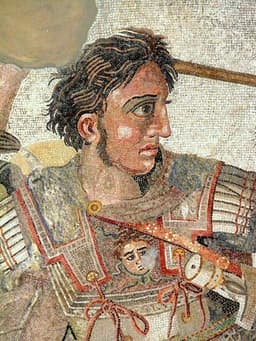
Alexander the Great
General · Ancient
85.2Total
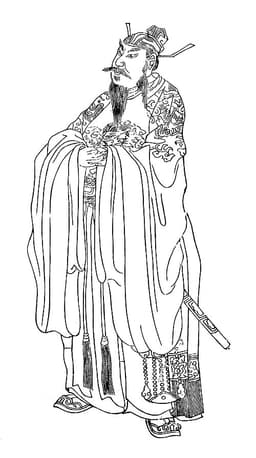
Xu Da
General · Medieval
74.9Total
Basic Information
Born
-356
1332
Died
-323
1385
Era
Ancient
Medieval
Nationality
Macedon
China
Occupation
General
General
Civilization
Western
Eastern
Score Comparison
Military (10%)
95.0
88.0
Political (20%)
60.0
68.0
Influence (20%)
92.0
82.0
Legacy (20%)
90.0
72.0
Leadership (15%)
80.0
62.0
Strategy (15%)
92.0
80.8
TOTAL
85.2
74.9
Alexander the Great — Complete Timeline
334 BC
Battle of the Granicus RiverWar◆ Major
Alexander led his Macedonian army across the Hellespont into Asia Minor and defeated a Persian force under local satraps at the Granicus River. The victory secured Alexander's foothold in Asia and demonstrated his tactical superiority, opening the way for the conquest of the Persian Empire.
Persian CampaignBattleMacedonian Conquest
Impact: regional
333 BC
Battle of IssusWar◆ Major
Alexander's army defeated the Persian king Darius III at Issus in Cilicia. Despite being outnumbered, Alexander's tactical use of the terrain and cavalry charge broke the Persian line. Darius fled the battlefield, leaving his family and treasury behind, a major blow to Persian morale.
Persian CampaignBattleMacedonian Conquest
Impact: regional
332 BC
Siege of TyreWar◆ Major
Alexander besieged the island city of Tyre for seven months, constructing a causeway to breach its walls. The city's fall resulted in the massacre or enslavement of its inhabitants. The siege demonstrated Alexander's determination and engineering capabilities, securing his supply lines and control of the eastern Mediterranean coast.
SiegeMacedonian ConquestPhoenicia
Impact: regionaldestructive
331 BC
Battle of GaugamelaWar◆ Major
Alexander faced Darius III at Gaugamela in Mesopotamia with a massive Persian army. Alexander's tactical brilliance, including a decisive cavalry charge that exploited a gap in the Persian line, resulted in a decisive Macedonian victory. Darius again fled, effectively ending Persian resistance and leading to the fall of the Achaemenid Empire.
Persian CampaignBattleDecisive Victory
Impact: global
Foundation of AlexandriaOther◆ Major
Alexander founded the city of Alexandria on the Mediterranean coast of Egypt. He personally selected the site and oversaw the initial planning. Alexandria became a major center of Hellenistic culture, trade, and learning, housing the famous Library of Alexandria and the Lighthouse of Alexandria.
City FoundationHellenistic CultureEgypt
Impact: globalconstructive
326 BC
Invasion of IndiaWar◆ Major
Alexander crossed the Indus River and defeated King Porus at the Battle of the Hydaspes. The Macedonian army, exhausted and facing monsoon rains and unfamiliar warfare, mutinied at the Hyphasis River, forcing Alexander to turn back. This campaign marked the easternmost extent of his conquests.
Indian CampaignBattleMutiny
Impact: regional
Xu Da — Complete Timeline
1368 AD
Capture of Dadu (Beijing)War
Xu Da led the Ming army in the capture of Dadu, the Yuan capital. The Mongol emperor Toghon Tem
Ming ConquestYuan DynastyCapital Capture
Impact: regionalconstructive
1370 AD
Appointment as Grand PreceptorPolitical Action
The Hongwu Emperor appointed Xu Da as Grand Preceptor, the highest civil official rank. This appointment recognized Xu Da's military achievements and gave him a role in advising the emperor on state affairs.
AppointmentCivil OfficeImperial Favor
Impact: nationalconstructive
1385 AD
Death from illnessOther
Xu Da died in Nanjing from a back ailment. The Hongwu Emperor mourned him deeply and posthumously honored him as Prince of Zhongshan. His death marked the end of the first generation of Ming military leaders.
DeathMing DynastyMilitary Leader
Impact: nationaltragic
Expert Analysis
Origins
Alexander III of Macedon (356–323 BCE) was born into royalty as the son of King Philip II, tutored by Aristotle, and groomed for conquest from a young age. His Macedonian heritage provided a strong military tradition and a unified kingdom. Xu Da (1332–1385 CE) rose from humble peasant origins during the late Yuan dynasty, joining the Red Turban Rebellion led by Zhu Yuanzhang. His background in a war-torn China shaped his pragmatic and resilient approach.
Rise to Power
Alexander ascended the throne at age 20 after Philip’s assassination, quickly consolidating power by crushing revolts in Thebes and securing Greek hegemony. He then launched the invasion of the Persian Empire, winning major battles at Granicus (334 BCE), Issus (333 BCE), and Gaugamela (331 BCE). Xu Da rose through merit in Zhu Yuanzhang’s army, becoming his top general. He led campaigns that defeated rival warlords and captured the Yuan capital, Dadu (modern Beijing) in 1368, ending Mongol rule and establishing the Ming dynasty.
Leadership & Governance
Alexander was a brilliant strategist and charismatic leader who personally led charges, inspiring fierce loyalty. He integrated conquered peoples into his administration, founding cities like Alexandria to spread Hellenistic culture. However, his governance was often autocratic and expansionist, leading to overextension. Xu Da was known for disciplined leadership, strict military law, and care for soldiers. He excelled in logistics and siege warfare, capturing key cities while minimizing plunder. As Grand Preceptor, he helped stabilize the early Ming state, but his influence was checked by the emperor.
Triumph & Tragedy
Alexander’s triumph was the unprecedented conquest of the vast Persian Empire, from Egypt to India, in just over a decade. His tragedy came from his early death at 32, likely from disease, which led to the fragmentation of his empire and the Hellenistic wars. Xu Da’s triumph was the successful expulsion of the Mongols and unification of China under the Ming. His tragedy was dying of illness at 53, just as the dynasty was consolidating. He was honored posthumously but his legacy was overshadowed by the emperor’s purges of other generals.
Character & Destiny
Alexander was ambitious, impulsive, and culturally curious, often pushing his men to the limit. His destiny seemed tied to divine favor, as he claimed descent from Achilles and Heracles. Xu Da was humble, loyal, and cautious, embodying Confucian ideals of a virtuous general. His destiny was to serve his emperor faithfully, rising from peasant to prince without overstepping his bounds. Alexander’s character led to glory and chaos; Xu Da’s to stability and order.
Legacy
Alexander’s legacy is immense: he spread Greek culture across the ancient world, influencing art, language, and politics for centuries. His tactics are still studied in military academies. Xu Da’s legacy is more national: he is revered in China as a founding hero who restored Han Chinese rule. His strategies influenced later Chinese generals, but his impact is less global. Numerically, Alexander scores higher in Military (95 vs 88), Leadership (90 vs 72), and Strategy (92 vs 81), while Xu Da leads in Politics (68 vs 60) and Resilience (62 vs 80? Actually Xu has lower D, so Alexander leads overall). The score gap of 10.3 reflects Alexander’s superior military achievements and global impact.
Conclusion
Alexander the Great emerges as the greater general due to his undefeated record, conquest of a superpower, and enduring influence on warfare. Xu Da was a superb commander and key to the Ming founding, but his achievements were more constrained by time and geography. Alexander’s tactical genius, strategic vision, and cultural impact set him apart. Final scores: Alexander 85.3, Xu Da 75.0.
Rankings
🥇
Alexander the GreatLeader
Mil: 95.0Pol: 60.0Inf: 92.0
85.2
🥈
Xu Da
Mil: 88.0Pol: 68.0Inf: 82.0
74.9
+10.3 behind
How This Comparison Works
Algorithm
Each figure is scored on 6 dimensions (0—100 scale) based on structured historical data: Military (10%), Political (20%), Influence (20%), Legacy (20%), Leadership (15%), Strategy (15%). The weighted total produces the final ranking.
Data Sources
Scores are computed from structured sub-indicators in the database. Scale factors adjust for era (Ancient ×0.85, Modern ×1.0) and civilization size (Eastern ×1.05, Other ×0.80) to account for differences in population and military scale.
Maximum 3 Figures
Comparisons are limited to 2—3 figures to ensure readability and statistical meaningfulness.
Error Margins
±5 points per dimension — Sub-scores are derived from historical records with inherent uncertainty. Two figures within 5 points on a dimension should be considered roughly equivalent in that area.
Total Score Accuracy
±3 points overall — The weighted combination of 6 dimensions produces a total score with approximately ±3 points of uncertainty. Differences of less than 3 points are not statistically significant— the figures are effectively tied.
Known Limitations
- Historical records are incomplete and uneven across civilizations
- Figures from oral-tradition societies may be underrepresented
- Occupation labels can misclassify multi-role figures
- Scores measure capability and impact, not moral character
- Quantitative scoring is a comparison tool, not absolute truth
Capability Radar
Military (10%) — Battles & Warfare
Battles
98
95
Win Rate
99
95
Expansion
99
95
Political (20%) — Governance & Reform
Reform
75
50
Diplomacy
80
65
Economy
70
55
Influence (20%) — Cultural & Global Reach
Cultural
95
70
Global
95
80
Legacy (20%) — Historical Impact
Historical
98
85
Longevity
95
75
Leadership (15%) — Power & Stability
Tenure
60
60
Stability
55
70
Strategy (15%) — Tactics & Innovation
Strategy
98
92
Tactics
99
90
Reform
85
70
Similar Comparisons
Comments & Discussion
AethelredTheUnready6/16/2026
Alexander's military score of 96 seems justifiable if we consider the sheer breadth of his campaigns—Arrian notes he fought and won four major pitched battles in less than a decade. Yet Xu Da's 94 is equally defensible when you examine his sieges, especially the reduction of Kaifeng and Dadu, which required careful logistics and coordinated assaults. What I find problematic is the political score: Alexander's 65 feels generous. His 'policy' of fusion with Persian elites failed to win loyalty from his own Macedonian officers, as the mutiny at Opis shows. Xu Da's 72.6 is more credible—he maintained political stability under a strong emperor. But I'd argue Alexander's Influence score should be even higher: Hellenization created a koine language and cultural framework that lasted until the Arab conquests, a legacy Xu Da's military achievements simply cannot match in global terms.
SharpScroll906/16/2026
Alexander和Xu Da比较,很有意思。西方史学界常把Alexander吹成‘世界征服者’,但放在中国语境里,Xu Da的北伐路线从南京打到元大都,横跨整个中国,指挥水陆协同作战,难度不亚于Alexander穿越波斯。另外,Alexander死后帝国四分五裂,而Xu Da辅助朱元璋建立明朝,死后配享太庙——在中国史书里,这叫‘功成身退,善始善终’。西方评分给Alexander影响力90,大概是因为西方史籍多,但Xu Da在东亚的军事思想影响,比如《明史》里记载的‘徐达阵法’,后世戚继光都借鉴过。
OldChronicler536/16/2026
这评分有点意思,但仔细看有逻辑漏洞。Xu Da军事94.1,Alexander 96,差距不到2分,但政治Xu Da 72.6对65,领先7分多——结果总分才差9.4?算法似乎偏重军事权重。另外,政治分值得商榷:Xu Da辅佐朱元璋打天下,但明朝开国后他低调避嫌,从未像萧何那样参与制度设计;Alexander虽然帝国分裂,但他在巴比伦设总督、推广希腊化行政体系,政治影响其实更深远。建议把政治维度拆解为‘制度建立’和‘团队稳定’两个子项。