Loading...
Catherine de Medici vs Shaukat Aziz
Catherine de Medici leads by 9.3 pts · 2 figures compared
…
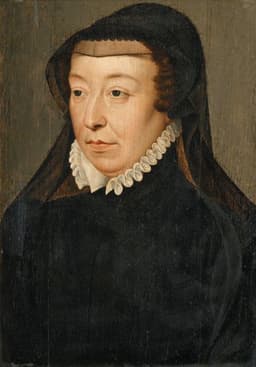
Catherine de Medici
Politician · Modern
60.0Total
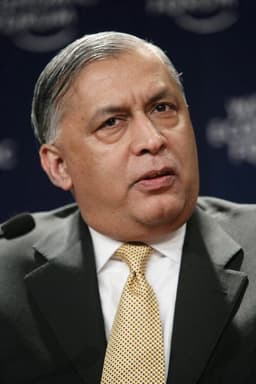
Shaukat Aziz
Politician · Modern
50.7Total
Basic Information
Born
1519
1949
Died
1589
—
Era
Modern
Modern
Nationality
France
Pakistan
Occupation
Politician
Politician
Civilization
Western
Indian
Score Comparison
Military (10%)
43.3
35.8
Political (20%)
72.0
62.7
Influence (20%)
68.0
50.2
Legacy (20%)
55.0
38.3
Leadership (15%)
66.0
64.0
Strategy (15%)
42.3
60.0
TOTAL
60.0
50.7
Catherine de Medici — Complete Timeline
1560 AD
Appointed Regent for Charles IXPolitical Action◆ Major
After the death of her son Francis II, Catherine de Medici became regent for her ten-year-old son Charles IX. She assumed control of the French government during the early Wars of Religion, seeking to maintain royal authority and religious peace.
RegencyWars of ReligionPower
Impact: national
1562 AD
Edict of Saint-GermainPolitical Action◆ Major
Catherine issued the Edict of Saint-Germain, granting limited toleration to Huguenots and allowing them to worship outside towns. This edict aimed to reduce religious tensions but was rejected by Catholic hardliners, contributing to the outbreak of the First War of Religion.
EdictReligious TolerationWars of Religion
Impact: nationalconstructive
1572 AD
St. Bartholomew's Day MassacreOther
Catherine de Medici was implicated in the assassination of Huguenot leader Gaspard de Coligny, which triggered a wave of mob violence in Paris that killed thousands of Huguenots. The massacre spread to other cities and deepened the religious conflict in France.
MassacreReligious ViolenceHuguenots
Impact: nationaldestructive
1576 AD
Peace of MonsieurPolitical Action◆ Major
Catherine negotiated the Peace of Monsieur, which granted extensive concessions to Huguenots, including freedom of worship and fortified towns. The peace was opposed by the Catholic League and led to the formation of the Catholic League, escalating tensions.
Peace TreatyReligious TolerationCatholic League
Impact: national
Shaukat Aziz — Complete Timeline
1999 AD
Economic Reforms as Finance MinisterReform◆ Major
As Finance Minister under President Pervez Musharraf from 1999 to 2004, Shaukat Aziz implemented economic reforms including privatization of state-owned enterprises, banking sector reforms, and tax restructuring. These policies contributed to GDP growth averaging 7% annually.
Economic ReformPrivatizationMusharraf
Impact: nationalconstructive
2004 AD
Appointed Prime Minister of PakistanPolitical Action◆ Major
Shaukat Aziz was appointed as the 17th Prime Minister of Pakistan on August 28, 2004, after serving as Finance Minister. He was a former Citibank executive and his appointment marked a technocratic shift in Pakistani politics.
Prime MinisterTechnocratPakistan
Impact: national
2007 AD
Completion of Five-Year TermPolitical Action◆ Major
Shaukat Aziz completed his five-year term as Prime Minister on November 15, 2007, becoming the first Pakistani Prime Minister to serve a full term since 1977. His tenure saw continued economic growth but also rising political instability.
Term CompletionPolitical StabilityPakistan
Impact: national
Expert Analysis
Origins
Catherine de Medici was born on April 13, 1519, in Florence, Italy, to Lorenzo de' Medici, Duke of Urbino, and Madeleine de La Tour d'Auvergne. Orphaned as an infant, she was raised by relatives and later by Pope Clement VII. Her marriage to Henry II of France in 1533 was arranged for political alliance, bringing her into the French court.
Shaukat Aziz was born on March 6, 1949, in Karachi, Pakistan, into a Muslim family. His father was a civil servant. He attended St. Patrick's High School and later earned a degree in business administration from the University of Karachi. He then pursued a master's degree in business from the University of Pennsylvania's Wharton School, graduating in 1969.
Rise to Power
Catherine de Medici's rise began with her husband Henry II's death in 1559, after which her son Francis II became king. Francis died in 1560, and Catherine became regent for her second son, Charles IX, who was only ten. She effectively governed France from 1560 to 1563 and remained influential throughout Charles's reign. Her power was rooted in her role as queen mother and her ability to navigate court factions.
Shaukat Aziz rose to prominence in the financial sector, joining Citibank in 1969 and eventually becoming a senior executive. In 1999, General Pervez Musharraf's coup brought him into government as Finance Minister. He implemented economic reforms that stabilized Pakistan's economy. In 2004, he was appointed Prime Minister, a position he held until 2007, becoming the first Pakistani PM to complete a full term since 1977.
Leadership & Governance
Catherine de Medici's leadership was characterized by political maneuvering and attempts at religious compromise. She issued the Edict of Saint-Germain in 1562, granting limited toleration to Huguenots (French Protestants). She also negotiated the Peace of Monsieur in 1576, which gave Huguenots extensive concessions. However, her governance was marked by inconsistency and a reliance on intrigue. Her political score is 72.0, reflecting her influence, but her military score is 43.3 due to her inability to control armed conflicts.
Shaukat Aziz focused on economic liberalization. As Finance Minister, he privatized state-owned enterprises, deregulated financial markets, and attracted foreign investment. Pakistan's GDP growth averaged over 7% during his tenure. His political score is 62.7, lower than Catherine's, but his strategy score is 60.0, indicating a more systematic approach. However, he governed under a military regime, limiting his democratic legitimacy.
Triumph & Tragedy
Catherine de Medici's greatest success was maintaining the French monarchy's authority during the Wars of Religion. She kept her sons on the throne and preserved the dynasty. Her greatest failure was the St. Bartholomew's Day Massacre in 1572, when Catholic mobs killed thousands of Huguenots. She was implicated in the assassination of Huguenot leader Gaspard de Coligny, which triggered the violence. This event tarnished her legacy and intensified the conflict.
Shaukat Aziz's triumph was his economic reforms, which reduced poverty and increased foreign exchange reserves. He successfully completed his five-year term, a rare feat in Pakistani politics. His tragedy was his association with Musharraf's authoritarian rule. His legacy score of 38.3 reflects limited lasting impact, as subsequent governments reversed some reforms. He also faced criticism for corruption, though no charges were proven.
Character & Destiny
Catherine de Medici was pragmatic and secretive, often described as a master of intrigue. She prioritized political stability over religious conviction, which led to her shifting alliances. Her character shaped her fate: her attempts to control events often backfired, as seen in the St. Bartholomew's Day Massacre. Historians assess her as a capable but ruthless leader who struggled to manage the forces she unleashed.
Shaukat Aziz was technocratic and focused on results, with a background in banking rather than politics. He was seen as competent but aloof, lacking a political base. His destiny was tied to Musharraf's regime; when Musharraf fell, Aziz's influence waned. His leadership score of 64.0 is close to Catherine's 66.0, but his total score of 50.7 is lower due to lesser historical impact.
Legacy
Catherine de Medici's legacy is complex. She is remembered for her role in the Wars of Religion and the St. Bartholomew's Day Massacre, which made her a controversial figure. However, she also promoted the arts and patronage, contributing to the French Renaissance. Her influence score is 68.0, reflecting her long-term impact on French politics and culture.
Shaukat Aziz's legacy is primarily economic. He is credited with modernizing Pakistan's financial sector and boosting growth. However, his reforms were not sustained, and his political legacy is overshadowed by Musharraf's dictatorship. His influence score is 50.2, and legacy score 38.3, indicating a more limited footprint.
Conclusion
Catherine de Medici had a greater overall impact, as reflected in her total score of 60.0 compared to Shaukat Aziz's 50.7. Her political maneuvering shaped the course of France's religious wars and the monarchy's survival, despite the tragedy of the massacre. Aziz's economic reforms were significant but reversible and tied to an authoritarian regime. Catherine's influence on European history is more enduring. Thus, Catherine de Medici emerges as the more consequential figure.
Rankings
🥇
Catherine de MediciLeader
Mil: 43.3Pol: 72.0Inf: 68.0
60.0
🥈
Shaukat Aziz
Mil: 35.8Pol: 62.7Inf: 50.2
50.7
+9.3 behind
How This Comparison Works
Algorithm
Each figure is scored on 6 dimensions (0—100 scale) based on structured historical data: Military (10%), Political (20%), Influence (20%), Legacy (20%), Leadership (15%), Strategy (15%). The weighted total produces the final ranking.
Data Sources
Scores are computed from structured sub-indicators in the database. Scale factors adjust for era (Ancient ×0.85, Modern ×1.0) and civilization size (Eastern ×1.05, Other ×0.80) to account for differences in population and military scale.
Maximum 3 Figures
Comparisons are limited to 2—3 figures to ensure readability and statistical meaningfulness.
Error Margins
±5 points per dimension — Sub-scores are derived from historical records with inherent uncertainty. Two figures within 5 points on a dimension should be considered roughly equivalent in that area.
Total Score Accuracy
±3 points overall — The weighted combination of 6 dimensions produces a total score with approximately ±3 points of uncertainty. Differences of less than 3 points are not statistically significant— the figures are effectively tied.
Known Limitations
- Historical records are incomplete and uneven across civilizations
- Figures from oral-tradition societies may be underrepresented
- Occupation labels can misclassify multi-role figures
- Scores measure capability and impact, not moral character
- Quantitative scoring is a comparison tool, not absolute truth
Capability Radar
Military (10%) — Battles & Warfare
Battles
10
45
Win Rate
10
45
Expansion
5
52
Political (20%) — Governance & Reform
Reform
60
55
Diplomacy
80
50
Economy
50
65
Influence (20%) — Cultural & Global Reach
Cultural
60
10
Global
55
30
Legacy (20%) — Historical Impact
Historical
70
20
Longevity
65
10
Leadership (15%) — Power & Stability
Tenure
85
40
Stability
30
35
Strategy (15%) — Tactics & Innovation
Strategy
20
54
Tactics
15
55
Reform
15
57
Similar Comparisons
Comments & Discussion
No comments yet. Be the first to share your thoughts!