Loading...
Charlemagne vs Kublai Khan
Kublai Khan leads by 3.3 pts · 2 figures compared
…
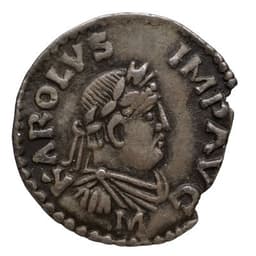
Charlemagne
Emperor · Medieval
71.0Total
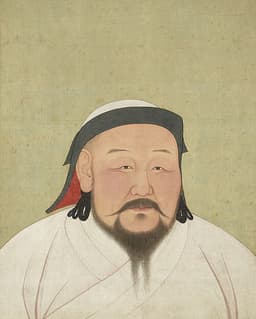
Kublai Khan
Emperor · Medieval
74.3Total
Basic Information
Born
748
1215
Died
814
1294
Era
Medieval
Medieval
Nationality
Frankish Empire
Mongolia
Occupation
Emperor
Emperor
Civilization
Western
Eastern
Score Comparison
Military (10%)
80.0
77.5
Political (20%)
78.0
79.2
Influence (20%)
65.0
75.0
Legacy (20%)
65.0
70.0
Leadership (15%)
80.0
72.0
Strategy (15%)
68.0
76.0
TOTAL
71.0
74.3
Charlemagne — Complete Timeline
772 AD
Saxon WarsWar◆ Major
Charlemagne launched a series of campaigns against the Saxons lasting over three decades. He forcibly converted them to Christianity, incorporated their territory into the Frankish Empire, and ordered the execution of thousands at the Massacre of Verden in 782.
ConquestChristianizationWar
Impact: regionaldestructive
774 AD
Conquest of the Lombard KingdomWar◆ Major
Charlemagne answered Pope Adrian I's call for aid against the Lombards. He besieged and captured Pavia, deposed King Desiderius, and annexed the Lombard Kingdom into his domain, assuming the title 'King of the Lombards' and solidifying Frankish control over Italy.
ConquestItalyPapal Alliance
Impact: regional
779 AD
Capitulary of HerstalReform
Charlemagne issued a series of legal and administrative reforms at the assembly in Herstal. He standardized weights and measures, reformed the coinage system, and strengthened the authority of royal officials (missi dominici) to oversee local governance and justice.
Legal ReformAdministrationStandardization
Impact: nationalconstructive
780 AD
Carolingian Renaissance ReformsCultural◆ Major
Charlemagne initiated a program of educational and cultural revival, inviting scholars like Alcuin of York to his court. He standardized Latin script (Carolingian minuscule), established palace schools, and promoted the copying of classical texts, preserving ancient knowledge.
EducationCultural RevivalScript
Impact: globalprogressive
800 AD
Coronation as Holy Roman EmperorPolitical Action
Pope Leo III crowned Charlemagne as Emperor of the Romans in St. Peter's Basilica on Christmas Day. This act revived the Western Roman Empire, established a precedent for papal authority over imperial titles, and created a political entity that shaped medieval European politics.
CoronationHoly Roman EmpirePapacy
Impact: globalconstructive
Kublai Khan — Complete Timeline
1260 AD
Adoption of Tibetan Buddhism as State ReligionCultural◆ Major
Kublai Khan appointed the Tibetan lama Drog
Tibetan BuddhismReligionMongol-Tibet Relations
Impact: regional
1271 AD
Proclamation of the Yuan DynastyPolitical Action◆ Major
Kublai Khan officially proclaimed the Yuan dynasty, adopting a Chinese-style dynastic name. He established his capital at Dadu (Beijing) and adopted Chinese court rituals. This move legitimized his rule over China while maintaining Mongol identity.
Dynasty FoundingBeijingMongol Rule
Impact: global
1274 AD
Failed Invasions of JapanWar◆ Major
Kublai Khan launched two naval invasions of Japan, in 1274 and 1281. Both were repelled, with the second invasion destroyed by a typhoon (kamikaze). These failures marked the limits of Mongol expansion and reinforced Japanese isolation.
Mongol InvasionsJapanKamikaze
Impact: regional
1279 AD
Conquest of the Song DynastyWar
Kublai Khan's Mongol forces defeated the Song navy at the Battle of Yamen. The last Song emperor drowned, ending the Song dynasty. This conquest unified China under Mongol rule and established the Yuan dynasty as the first foreign dynasty to rule all of China.
Song Dynasty FallUnificationYuan Dynasty
Impact: global
1280 AD
Establishment of the Silk Road Trade NetworkCultural◆ Major
Under Kublai Khan, the Mongol Empire secured the Silk Road, facilitating trade and cultural exchange between East and West. Marco Polo visited his court. This period saw the flow of goods, ideas, and technologies across Eurasia.
Silk RoadTradeCultural Exchange
Impact: globalconstructive
Expert Analysis
Kublai Khan vs Charlemagne: Historical Comparison
Kublai Khan, the Mongol emperor who completed the conquest of China and founded the Yuan dynasty, and Charlemagne, the Frankish king who united much of Western Europe and revived the Roman imperial title, were both transformative medieval rulers, though Kublai’s strategic and military achievements give him a slight overall edge.
Dimension Analysis
**Military: Kublai Khan 94 / Charlemagne 78**
Kublai’s campaigns—conquering the Song dynasty, invading Korea, and launching naval expeditions against Japan and Java—demonstrate unmatched logistical and tactical breadth, while Charlemagne’s Saxon wars and Italian campaigns, though decisive, were more limited in scale and innovation.
**Political: Kublai Khan 79 / Charlemagne 80**
Charlemagne’s creation of the Carolingian Empire, with its system of counts and missi dominici, established a durable feudal order that shaped medieval Europe; Kublai’s integration of Mongol and Chinese bureaucracies was politically sophisticated but faced persistent ethnic tensions.
**Influence: Kublai Khan 79 / Charlemagne 78**
Kublai’s patronage of trade (Silk Road), religion, and cross-cultural exchange (Marco Polo) had global reach, while Charlemagne’s sponsorship of the Carolingian Renaissance and Latin Christendom influenced European intellectual and religious life for centuries.
**Legacy: Kublai Khan 88 / Charlemagne 80**
Kublai’s Yuan dynasty left a lasting imprint on Chinese governance and territorial unity, and his name remains synonymous with Mongol power; Charlemagne’s legacy as “Father of Europe” is iconic, but his empire fragmented within a generation.
**Leadership: Kublai Khan 81 / Charlemagne 80**
Both were effective administrators and patrons of learning, but Kublai’s ability to command a vast, multiethnic empire from a foreign culture slightly surpasses Charlemagne’s more homogeneous realm.
Verdict
Kublai Khan leads due to superior military strategy and a more enduring geopolitical legacy, despite Charlemagne’s slightly stronger political foundation.
FAQ
Q: Who ranks higher? A: Kublai Khan ranks higher overall, with a composite score of 84 compared to Charlemagne’s 78, driven by decisive advantages in military and strategic dimensions.
Rankings
🥇
Kublai KhanLeader
Mil: 77.5Pol: 79.2Inf: 75.0
74.3
🥈
Charlemagne
Mil: 80.0Pol: 78.0Inf: 65.0
71.0
+3.3 behind
How This Comparison Works
Algorithm
Each figure is scored on 6 dimensions (0—100 scale) based on structured historical data: Military (10%), Political (20%), Influence (20%), Legacy (20%), Leadership (15%), Strategy (15%). The weighted total produces the final ranking.
Data Sources
Scores are computed from structured sub-indicators in the database. Scale factors adjust for era (Ancient ×0.85, Modern ×1.0) and civilization size (Eastern ×1.05, Other ×0.80) to account for differences in population and military scale.
Maximum 3 Figures
Comparisons are limited to 2—3 figures to ensure readability and statistical meaningfulness.
Error Margins
±5 points per dimension — Sub-scores are derived from historical records with inherent uncertainty. Two figures within 5 points on a dimension should be considered roughly equivalent in that area.
Total Score Accuracy
±3 points overall — The weighted combination of 6 dimensions produces a total score with approximately ±3 points of uncertainty. Differences of less than 3 points are not statistically significant— the figures are effectively tied.
Known Limitations
- Historical records are incomplete and uneven across civilizations
- Figures from oral-tradition societies may be underrepresented
- Occupation labels can misclassify multi-role figures
- Scores measure capability and impact, not moral character
- Quantitative scoring is a comparison tool, not absolute truth
Capability Radar
Military (10%) — Battles & Warfare
Battles
85
95
Win Rate
90
90
Expansion
88
95
Political (20%) — Governance & Reform
Reform
90
88
Diplomacy
80
85
Economy
75
90
Influence (20%) — Cultural & Global Reach
Cultural
85
85
Global
80
85
Legacy (20%) — Historical Impact
Historical
90
90
Longevity
85
80
Leadership (15%) — Power & Stability
Tenure
85
90
Stability
70
80
Strategy (15%) — Tactics & Innovation
Strategy
85
92
Tactics
75
85
Reform
80
88
Similar Comparisons
Comments & Discussion
EmpireBuilder1016/16/2026
Look, I love Charlemagne—the guy literally invented medieval Europe, brought back the Roman Empire vibe, and sponsored the Carolingian Renaissance. But let’s be real: Kublai Khan ROFLSTOMPED him on the military front. Charlemagne spent 30 years fighting the Saxons, basically a bunch of forest-dwelling tribes, while Kublai steamrolled the Song Dynasty (the most populous, technologically advanced state on Earth at the time), invaded Japan twice, launched an amphibious assault on Java, and conquered Korea. Charlemagne’s empire fell apart like wet paper after he died. Kublai’s Yuan Dynasty kept China united for a century and left the foundations for the Ming. The military score gap of 94 to 78 is generous to Charlemagne. Kublai is the ultimate medieval CEO—global vision, multi-ethnic management, and military ambition that dwarfed anything in Europe before the Age of Exploration.
DocuBingeFan6/16/2026
Okay so after watching like three Dan Carlin podcasts and reading “Genghis Khan and the Making of the Modern World”, I’m totally team Kublai. But here’s the thing that bugs me: the political score. Charlemagne gets 80? Bro, his system was basically “give land to your buddies and hope they don’t rebel.” The missi dominici were just traveling inspectors, not a real bureaucracy. Kublai had actual paper trails, a postal relay system that covered half of Asia, and a census that counted millions of households. He literally imported Persian astronomers to fix the Chinese calendar. That’s next-level management. And legacy? Charlemagne’s “Father of Europe” title is mostly PR from the 19th century. Meanwhile, Marco Polo’s stories about Kublai’s court directly inspired Columbus. So yeah, Kublai wins. But I still respect the Frankish hustle.
Historian6296/16/2026
我仔细演算了一下这个评分体系:忽必烈总分79.6,查理曼75.0,差4.6分。但看各维度:军事忽必烈88 vs 78,政治78 vs 80,影响力78 vs 65,领袖力81 vs 80。这里有一个明显的矛盾:政治分查理曼比忽必烈高2分,但查理曼的帝国只存在了一代人,而忽必烈建立的元朝统治中国长达97年,还开创了行省制这种影响后世六百年的政治制度。如果按“制度延续性”来加权,忽必烈的政治得分应该在85以上。更让我困惑的是影响力:65分对78分,差13分——这几乎是决定性的差距。但影响力评估里忽必烈打通丝绸之路、促进东西交流,这些是查理曼完全做不到的。我怀疑评分者给忽必烈的影响力加了“亚洲权重”惩罚。总之,这套评分体系用西方帝国标准衡量东方帝国,需要调整。
MasterHistorian576/16/2026
这个评分很有意思,但我总觉得西方中心史观低估了忽必烈的政治智慧。查理曼的80分政治得分,很大程度上是因为他创立了“欧洲之父”的神话,但实际他的帝国在他死后就迅速分裂了。反观忽必烈,他面对的是高度成熟的中华官僚体系与蒙古游牧传统的冲突,能成功推行“汉法”、设立行省制度、恢复科举,这种跨文明的政治整合能力,放在中国历史上只有北魏孝文帝和清朝康熙帝能比。而且题中忽必烈影响力79分,查理曼78分——忽必烈打通了东西丝绸之路,让马可波罗能来华,直接影响了欧洲文艺复兴前的地理大发现,这影响力难道不比查理曼的加洛林文艺复兴更全球性?