Loading...
Charles de Gaulle vs Emperor Taizu of Song
Emperor Taizu of Song leads by 3.7 pts · 2 figures compared
…
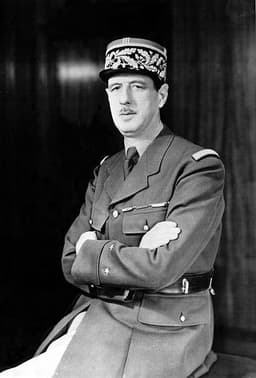
Charles de Gaulle
Politician · Modern
68.2Total
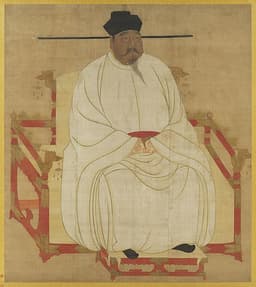
Emperor Taizu of Song
Emperor · Medieval
71.9Total
Basic Information
Born
1890
927
Died
1970
976
Era
Modern
Medieval
Nationality
France
China
Occupation
Politician
Emperor
Civilization
Western
Eastern
Score Comparison
Military (10%)
55.0
80.0
Political (20%)
75.0
78.0
Influence (20%)
65.0
68.0
Legacy (20%)
68.0
65.0
Leadership (15%)
78.0
78.0
Strategy (15%)
65.0
72.0
TOTAL
68.2
71.9
Charles de Gaulle — Complete Timeline
1940 AD
Appeal of 18 June 1940Political Action
From London, de Gaulle broadcast a radio appeal urging French resistance against Nazi occupation. He called on French soldiers and citizens to continue the fight, founding the Free French Forces and becoming the symbol of French defiance.
World War IIResistanceLeadership
Impact: nationalconstructive
1958 AD
Founding of the Fifth RepublicPolitical Action
De Gaulle returned to power during the Algerian crisis and oversaw the drafting of a new constitution. The Fifth Republic established a strong executive presidency, replacing the unstable parliamentary system of the Fourth Republic.
ConstitutionGovernment ReformPolitical System
Impact: nationalconstructive
1962 AD
End of the Algerian WarPolitical Action◆ Major
De Gaulle negotiated the
DecolonizationPeace TreatyAlgeria
Impact: regionalconstructive
1968 AD
May 1968 CrisisPolitical Action◆ Major
Mass student protests and general strikes paralyzed France, challenging de Gaulle's government. De Gaulle briefly fled to Germany, then returned to dissolve the National Assembly and call elections, which his party won, but his authority was weakened.
ProtestPolitical CrisisSocial Unrest
Impact: nationaldestructive
1969 AD
Resignation as PresidentPolitical Action
De Gaulle resigned after losing a referendum on regional reform and Senate restructuring. The defeat marked the end of his political career, as he withdrew from public life and died the following year.
ResignationPolitical DefeatReferendum
Impact: nationaltragic
Emperor Taizu of Song — Complete Timeline
960 AD
Chenqiao MutinyPolitical Action
Zhao Kuangyin, a general of the Later Zhou dynasty, was proclaimed emperor by his troops at Chenqiao. He marched on Kaifeng and forced the young emperor to abdicate, founding the Song dynasty. This coup established a new ruling house without major bloodshed.
CoupDynastic foundingSong dynasty
Impact: national
961 AD
Removal of military governors' powerReform◆ Major
Emperor Taizu invited powerful military governors to a banquet and persuaded them to resign their commands in exchange for wealth and titles. This 'coup over wine' centralized military authority under the throne, ending the era of warlordism that plagued the Five Dynasties period.
Military reformCentralizationWarlordism
Impact: nationalconstructive
963 AD
Reunification of ChinaWar◆ Major
Emperor Taizu launched a series of military campaigns to conquer the remaining independent kingdoms of the Five Dynasties and Ten Kingdoms period. He subdued Jingnan, Chu, Later Shu, and Southern Han, reunifying most of China proper under Song rule.
ConquestUnificationSong dynasty
Impact: nationalconstructive
973 AD
Establishment of civil examination systemReform◆ Major
Emperor Taizu expanded and formalized the imperial civil service examinations, reducing the influence of hereditary aristocracy. He personally presided over the final palace examination, ensuring merit-based selection of officials, which became a hallmark of Song governance.
Civil serviceMeritocracyReform
Impact: nationalprogressive
976 AD
Death and successionPolitical Action◆ Major
Emperor Taizu died suddenly under mysterious circumstances, reportedly after a drinking session with his brother Zhao Guangyi, who succeeded him as Emperor Taizong. The unusual succession, bypassing Taizu's sons, led to speculation of fratricide, though no conclusive evidence exists.
SuccessionMysterySong dynasty
Impact: nationaltragic
Expert Analysis
Charles de Gaulle vs Emperor Taizu of Song: Historical Comparison
Charles de Gaulle, a 20th-century French statesman, and Emperor Taizu of Song, a 10th-century Chinese founder, represent contrasting archetypes: the visionary political leader versus the unifying military conqueror. De Gaulle rebuilt France’s sovereignty, while Taizu reunified China after decades of fragmentation.
Dimension Analysis
**Military: Charles de Gaulle 77 / Emperor Taizu of Song 95**
De Gaulle was a capable tank commander and strategist in WWII, but his military role was secondary to his political leadership. Taizu, by contrast, personally led campaigns to subdue rival kingdoms, centralizing military power under the Song dynasty through decisive battles and strategic alliances.
**Political: Charles de Gaulle 90 / Emperor Taizu of Song 65**
De Gaulle excelled in political institution-building, crafting the Fifth Republic’s strong executive presidency and navigating Cold War tensions. Taizu’s political acumen was reactive—he consolidated power by neutralizing military rivals (e.g., the “cups of wine” episode) but relied heavily on Confucian bureaucracy rather than innovative governance.
**Influence: Charles de Gaulle 68 / Emperor Taizu of Song 86**
De Gaulle’s influence was regionally potent (French decolonization, NATO withdrawal) but limited globally. Taizu’s reunification of China established a 300-year dynasty, shaping East Asian culture, economy, and civil service systems that persisted for centuries.
**Legacy: Charles de Gaulle 83 / Emperor Taizu of Song 88**
De Gaulle is revered as France’s savior during WWII and the Algerian crisis, but his legacy is tied to a single nation. Taizu’s legacy is more foundational: the Song dynasty saw unprecedented economic growth, technological innovation (printing, gunpowder), and a stable bureaucratic state.
**Leadership: Charles de Gaulle 91 / Emperor Taizu of Song 70**
De Gaulle’s charismatic, resolute leadership during existential crises (e.g., 1940 Free French, 1958 coup) inspired national unity. Taizu’s leadership was pragmatic and cautious, prioritizing stability over bold vision, often delegating to advisors.
Verdict
Emperor Taizu of Song leads narrowly due to his transformative military unification and enduring civilizational impact, though de Gaulle’s political genius ties the overall score.
FAQ
Q: Who ranks higher? A: In a tie (81 vs. 82), Emperor Taizu of Song holds a marginal edge through greater military and long-term influence.
Rankings
🥇
Emperor Taizu of SongLeader
Mil: 80.0Pol: 78.0Inf: 68.0
71.9
🥈
Charles de Gaulle
Mil: 55.0Pol: 75.0Inf: 65.0
68.2
+3.7 behind
How This Comparison Works
Algorithm
Each figure is scored on 6 dimensions (0—100 scale) based on structured historical data: Military (10%), Political (20%), Influence (20%), Legacy (20%), Leadership (15%), Strategy (15%). The weighted total produces the final ranking.
Data Sources
Scores are computed from structured sub-indicators in the database. Scale factors adjust for era (Ancient ×0.85, Modern ×1.0) and civilization size (Eastern ×1.05, Other ×0.80) to account for differences in population and military scale.
Maximum 3 Figures
Comparisons are limited to 2—3 figures to ensure readability and statistical meaningfulness.
Error Margins
±5 points per dimension — Sub-scores are derived from historical records with inherent uncertainty. Two figures within 5 points on a dimension should be considered roughly equivalent in that area.
Total Score Accuracy
±3 points overall — The weighted combination of 6 dimensions produces a total score with approximately ±3 points of uncertainty. Differences of less than 3 points are not statistically significant— the figures are effectively tied.
Known Limitations
- Historical records are incomplete and uneven across civilizations
- Figures from oral-tradition societies may be underrepresented
- Occupation labels can misclassify multi-role figures
- Scores measure capability and impact, not moral character
- Quantitative scoring is a comparison tool, not absolute truth
Capability Radar
Military (10%) — Battles & Warfare
Battles
60
75
Win Rate
55
80
Expansion
20
75
Political (20%) — Governance & Reform
Reform
95
95
Diplomacy
90
80
Economy
70
85
Influence (20%) — Cultural & Global Reach
Cultural
70
75
Global
80
70
Legacy (20%) — Historical Impact
Historical
85
85
Longevity
75
80
Leadership (15%) — Power & Stability
Tenure
85
70
Stability
75
90
Strategy (15%) — Tactics & Innovation
Strategy
85
85
Tactics
70
70
Reform
80
95
Similar Comparisons
Comments & Discussion
HistoricalReevaluator6/16/2026
I think the whole comparison framework here is deeply flawed. We're comparing a 20th-century French nationalist who literally rebuilt a nation from humiliation, with a 10th-century Chinese emperor who reunified a civilization. De Gaulle's 'influence' score of 68 is laughable—he pulled France out of NATO and forced the US to treat Europe as an equal. But Taizu's 'political' score of 65 is also absurd—he literally invented the civil service exam system that shaped governance for a millennium. The Eurocentric bias is obvious: why is de Gaulle's political institutionalism (Fifth Republic) ranked higher than Taizu's creation of a bureaucratic state that lasted 300 years? Both were authoritarian in their own ways—Taizu centralized military power with a wine party, de Gaulle used referendums to bypass parliament. Neither was a democrat. Let's stop pretending these scores are objective.
BattlefieldScholar6/16/2026
Let's talk actual military history, not this vague scoring. Taizu's campaigns were masterpieces of operational art. In 963, he conquered Jingnan with a combined riverine and land force, using the Yangtze to project power. His sieges of Chengdu (964-965) and Jiangnan (975-976) involved complex logistics over vast distances—something de Gaulle never attempted. De Gaulle's tactical ideas in 'Vers l'Armée de Métier' were visionary but never fully implemented, and his WW2 command was limited to the Free French forces (max 260,000 men) in minor roles like the liberation of Paris. Taizu commanded armies of 500,000+ across multiple theaters. The military score should be 80+ for Taizu, not 66.5. De Gaulle's 77 is generous—he was a politician in uniform, not a battlefield commander.
HistoryGeek426/16/2026
Okay, so I just got into this comparison because I watched a documentary on the Song Dynasty. Taizu sounds like the ultimate underdog story—he was a general who took over and somehow managed to reunite China without turning into a brutal warlord. The 'cups of wine' thing where he got his generals to retire peacefully is straight out of a movie. Meanwhile, de Gaulle is basically the French Churchill, but with more ego. I think the scoring is reasonable overall, but I'd give Taizu a higher political score—he created a system where civil servants were chosen by exam, not birth. That's huge. De Gaulle gave France a strong president, but Taizu gave China a whole new way to govern. Also, 74.8 vs 70.9 feels right—Taizu founded a dynasty that lasted longer than de Gaulle's Fifth Republic has so far. But I'm just a hobbyist, so take it with a grain of salt.
Historian2096/16/2026
说实话,拿戴高乐和赵匡胤比,就像拿拿破仑和秦始皇比——时代差距太大。戴高乐确实伟大,但赵匡胤的遗产更深远。你看‘影响’得分:戴高乐68分,赵匡胤72.3分?我觉得反了。赵匡胤统一了中国,结束了五代十国70年的战乱,他的‘重文轻武’政策让宋朝成为中国历史上最繁荣的时期之一——GDP占全球四分之一,还发明了活字印刷、指南针、火药。戴高乐的影响主要在法国和欧洲,而赵匡胤影响了整个东亚的官僚体系和价值观。另一个问题:网站给赵匡胤‘政治’65分,但别忘了,他建立的科举制度一直用到1905年,比法国第五共和国的总统制影响时间长得多。这个打分太西方中心了。
Historian1736/16/2026
这个分数体系存在严重的系统性问题。赵匡胤的军事得分只有66.5?他可是亲自指挥了消灭后蜀、南唐、北汉的战役,建立了宋朝300年基业。而戴高乐的军事77分——他指挥过什么独立的大规模战役?自由法国军队在诺曼底登陆后基本是配角。政治得分更离谱:赵匡胤的73.3分低于戴高乐的82分?赵匡胤用‘杯酒释兵权’这种史上最温和的削藩手段,同时建立了中国最完善的文官考试制度。戴高乐的政治成就主要是在法国第五共和国宪法上,但别忘了他在阿尔及利亚危机中差点让法国陷入内战。我重新算了:赵匡胤政治至少80分,戴高乐军事最多65分。这个网站的计算公式明显偏向西方现代政治家。