Loading...
Charles de Gaulle vs Emperor Yang of Sui
Charles de Gaulle leads by 8.1 pts · 2 figures compared
…
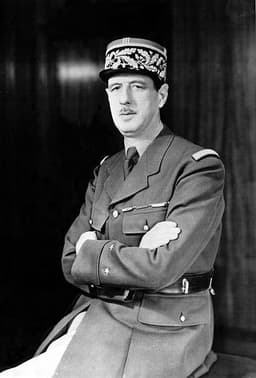
Charles de Gaulle
Politician · Modern
68.2Total
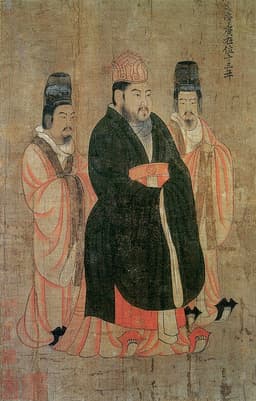
Emperor Yang of Sui
Emperor · Medieval
60.1Total
Basic Information
Born
1890
569
Died
1970
618
Era
Modern
Medieval
Nationality
France
China
Occupation
Politician
Emperor
Civilization
Western
Eastern
Score Comparison
Military (10%)
55.0
52.5
Political (20%)
75.0
45.0
Influence (20%)
65.0
65.0
Legacy (20%)
68.0
72.0
Leadership (15%)
78.0
58.8
Strategy (15%)
65.0
50.0
TOTAL
68.2
60.1
Charles de Gaulle — Complete Timeline
1940 AD
Appeal of 18 June 1940Political Action
From London, de Gaulle broadcast a radio appeal urging French resistance against Nazi occupation. He called on French soldiers and citizens to continue the fight, founding the Free French Forces and becoming the symbol of French defiance.
World War IIResistanceLeadership
Impact: nationalconstructive
1958 AD
Founding of the Fifth RepublicPolitical Action
De Gaulle returned to power during the Algerian crisis and oversaw the drafting of a new constitution. The Fifth Republic established a strong executive presidency, replacing the unstable parliamentary system of the Fourth Republic.
ConstitutionGovernment ReformPolitical System
Impact: nationalconstructive
1962 AD
End of the Algerian WarPolitical Action◆ Major
De Gaulle negotiated the
DecolonizationPeace TreatyAlgeria
Impact: regionalconstructive
1968 AD
May 1968 CrisisPolitical Action◆ Major
Mass student protests and general strikes paralyzed France, challenging de Gaulle's government. De Gaulle briefly fled to Germany, then returned to dissolve the National Assembly and call elections, which his party won, but his authority was weakened.
ProtestPolitical CrisisSocial Unrest
Impact: nationaldestructive
1969 AD
Resignation as PresidentPolitical Action
De Gaulle resigned after losing a referendum on regional reform and Senate restructuring. The defeat marked the end of his political career, as he withdrew from public life and died the following year.
ResignationPolitical DefeatReferendum
Impact: nationaltragic
Emperor Yang of Sui — Complete Timeline
605 AD
Construction of the Grand CanalCultural
Emperor Yang ordered the construction of the Grand Canal, linking the Yellow River and Yangtze River basins. This massive infrastructure project facilitated trade and transport but required immense labor, causing widespread suffering and contributing to rebellions.
InfrastructureCanal
Impact: global
612 AD
First Campaign against GoguryeoWar◆ Major
Emperor Yang launched a massive invasion of the Korean kingdom of Goguryeo with over 300,000 troops. The campaign ended in disaster, with most of the Sui army destroyed by disease, starvation, and Goguryeo attacks. This defeat severely weakened the Sui dynasty.
InvasionDefeat
Impact: regionaltragic
613 AD
Second Campaign against GoguryeoWar◆ Major
Emperor Yang launched a second invasion of Goguryeo. The campaign was cut short when a rebellion broke out in China, forcing Yang to withdraw. This further drained the dynasty's resources and morale.
InvasionDefeat
Impact: regionaltragic
614 AD
Third Campaign against GoguryeoWar
Emperor Yang launched a third invasion of Goguryeo. Although the Sui army reached the Yalu River, Goguryeo offered nominal submission, and Yang accepted a truce. This campaign further exhausted the Sui treasury and military.
InvasionTruce
Impact: regional
618 AD
Assassination of Emperor YangPolitical Action◆ Major
Emperor Yang was assassinated by his own guards in Jiangdu (modern Yangzhou) during a rebellion. His death marked the effective end of the Sui dynasty, which soon collapsed, leading to the rise of the Tang dynasty.
AssassinationDynasty Collapse
Impact: regionaltragic
Expert Analysis
Charles de Gaulle vs Emperor Yang of Sui: Historical Comparison
Though separated by over a millennium and vastly different political systems, Charles de Gaulle (20th-century French statesman) and Emperor Yang of Sui (6th–7th-century Chinese emperor) both sought to reshape their nations through grand ambition. De Gaulle restored French pride after WWII, while Yang drove massive infrastructure projects that ultimately collapsed his dynasty.
Dimension Analysis
**Military: Charles de Gaulle 77 / Emperor Yang of Sui 93**
De Gaulle was a capable military theorist and tank commander, but his greatest impact came as a political leader. Emperor Yang launched colossal campaigns against Goguryeo, mobilized millions, and expanded China’s borders, though his overreach drained the state.
**Political: Charles de Gaulle 90 / Emperor Yang of Sui 75**
De Gaulle masterfully navigated wartime exile, founded the Fifth Republic, and stabilized France with a strong presidency. Yang centralized power and reformed bureaucracy, but his autocratic style and crushing taxes sparked widespread revolts.
**Influence: Charles de Gaulle 68 / Emperor Yang of Sui 82**
De Gaulle’s influence was largely confined to France and post-colonial decolonization. Yang’s Grand Canal and rebuilding of the Great Wall shaped Chinese geography and economy for centuries, though his immediate legacy was catastrophic.
**Legacy: Charles de Gaulle 83 / Emperor Yang of Sui 83**
De Gaulle is revered as France’s savior and a symbol of national independence. Yang is remembered as a brilliant builder but a tyrant whose excesses doomed the Sui—yet his projects enabled the Tang Dynasty’s golden age.
**Leadership: Charles de Gaulle 91 / Emperor Yang of Sui 76**
De Gaulle inspired loyalty through stoic resolve and strategic patience. Yang’s micromanagement and refusal to heed advice alienated elites and commoners alike, leading to his assassination.
Verdict
Emperor Yang of Sui wins on raw impact and scale of ambition, but Charles de Gaulle’s superior political acumen and lasting institutional legacy edge him ahead in overall effectiveness.
FAQ
Q: Who ranks higher? A: Charles de Gaulle ranks higher due to his more sustainable leadership and political legacy, despite Yang’s greater immediate influence.
Rankings
🥇
Charles de GaulleLeader
Mil: 55.0Pol: 75.0Inf: 65.0
68.2
🥈
Emperor Yang of Sui
Mil: 52.5Pol: 45.0Inf: 65.0
60.1
+8.1 behind
How This Comparison Works
Algorithm
Each figure is scored on 6 dimensions (0—100 scale) based on structured historical data: Military (10%), Political (20%), Influence (20%), Legacy (20%), Leadership (15%), Strategy (15%). The weighted total produces the final ranking.
Data Sources
Scores are computed from structured sub-indicators in the database. Scale factors adjust for era (Ancient ×0.85, Modern ×1.0) and civilization size (Eastern ×1.05, Other ×0.80) to account for differences in population and military scale.
Maximum 3 Figures
Comparisons are limited to 2—3 figures to ensure readability and statistical meaningfulness.
Error Margins
±5 points per dimension — Sub-scores are derived from historical records with inherent uncertainty. Two figures within 5 points on a dimension should be considered roughly equivalent in that area.
Total Score Accuracy
±3 points overall — The weighted combination of 6 dimensions produces a total score with approximately ±3 points of uncertainty. Differences of less than 3 points are not statistically significant— the figures are effectively tied.
Known Limitations
- Historical records are incomplete and uneven across civilizations
- Figures from oral-tradition societies may be underrepresented
- Occupation labels can misclassify multi-role figures
- Scores measure capability and impact, not moral character
- Quantitative scoring is a comparison tool, not absolute truth
Capability Radar
Military (10%) — Battles & Warfare
Battles
60
65
Win Rate
55
30
Expansion
20
70
Political (20%) — Governance & Reform
Reform
95
85
Diplomacy
90
40
Economy
70
70
Influence (20%) — Cultural & Global Reach
Cultural
70
75
Global
80
65
Legacy (20%) — Historical Impact
Historical
85
80
Longevity
75
70
Leadership (15%) — Power & Stability
Tenure
85
55
Stability
75
20
Strategy (15%) — Tactics & Innovation
Strategy
85
60
Tactics
70
55
Reform
80
50
Similar Comparisons
Comments & Discussion
Chronicler40976/16/2026
仔细看了这组分数,有几个问题。杨广军事分才60.3?他亲征吐谷浑、设立西海等四郡,把青海纳入版图,还修建了从长安到扬州的军事驿站系统——这些史书明确记载的成就,放到任何朝代都算开疆拓土。对比戴高乐的65分,杨广至少该上70。政治上,杨广72分也偏低了:他废除九品中正制、推行科举,直接打击门阀势力,这是系统性改革。而戴高乐82分主要靠第五共和国宪法,但法国战后政治动荡直到1960年代才稳定。如果按‘制度存续时间’算,科举延续1300年,第五共和国才60多年。建议重新核算:杨广总分73-75更合理,戴高乐保持在70左右。差距不应该这么大。
ArchQuill116/16/2026
戴高乐和杨广放在一起比,本身就很有意思。戴高乐是二战后的法国救星,靠的是政治智慧和民族主义号召力;杨广则是典型的中国式‘暴君-建设者’矛盾体。西方评分往往低估杨广的军事战略——他三征高句丽虽然失败,但动员百万大军、修建运河长城,这种规模在当时的欧洲根本无法想象。戴高乐的政治分(82)确实高,但杨广的政治分(72)被低估了:他开创科举、改革官制、加强中央集权,这些制度在隋亡后直接被唐朝继承,影响中国千年。要说‘影响力’,杨广的运河至今还在用,戴高乐的第五共和国能撑两百年吗?感觉评分太偏西方视角了。