Loading...
Charles de Gaulle vs Guo Wei
Charles de Gaulle leads by 10.7 pts · 2 figures compared
…
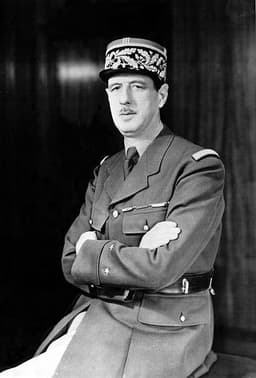
Charles de Gaulle
Politician · Modern
68.2Total
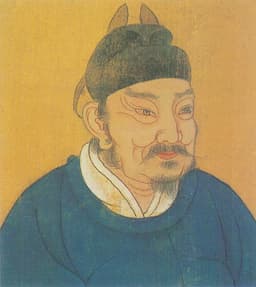
Guo Wei
Emperor · Medieval
57.5Total
Basic Information
Born
1890
904
Died
1970
954
Era
Modern
Medieval
Nationality
France
China
Occupation
Politician
Emperor
Civilization
Western
Eastern
Score Comparison
Military (10%)
55.0
65.0
Political (20%)
75.0
65.0
Influence (20%)
65.0
56.4
Legacy (20%)
68.0
50.0
Leadership (15%)
78.0
53.2
Strategy (15%)
65.0
66.3
TOTAL
68.2
57.5
Charles de Gaulle — Complete Timeline
1940 AD
Appeal of 18 June 1940Political Action
From London, de Gaulle broadcast a radio appeal urging French resistance against Nazi occupation. He called on French soldiers and citizens to continue the fight, founding the Free French Forces and becoming the symbol of French defiance.
World War IIResistanceLeadership
Impact: nationalconstructive
1958 AD
Founding of the Fifth RepublicPolitical Action
De Gaulle returned to power during the Algerian crisis and oversaw the drafting of a new constitution. The Fifth Republic established a strong executive presidency, replacing the unstable parliamentary system of the Fourth Republic.
ConstitutionGovernment ReformPolitical System
Impact: nationalconstructive
1962 AD
End of the Algerian WarPolitical Action◆ Major
De Gaulle negotiated the
DecolonizationPeace TreatyAlgeria
Impact: regionalconstructive
1968 AD
May 1968 CrisisPolitical Action◆ Major
Mass student protests and general strikes paralyzed France, challenging de Gaulle's government. De Gaulle briefly fled to Germany, then returned to dissolve the National Assembly and call elections, which his party won, but his authority was weakened.
ProtestPolitical CrisisSocial Unrest
Impact: nationaldestructive
1969 AD
Resignation as PresidentPolitical Action
De Gaulle resigned after losing a referendum on regional reform and Senate restructuring. The defeat marked the end of his political career, as he withdrew from public life and died the following year.
ResignationPolitical DefeatReferendum
Impact: nationaltragic
Guo Wei — Complete Timeline
951 AD
Founded Later Zhou dynastyPolitical Action◆ Major
Guo Wei, a general of Later Han, led a coup and declared himself emperor of Later Zhou. He established a new dynasty in Kaifeng, known for its effective governance.
Five DynastiesLater ZhouFounding
Impact: national
952 AD
Reforms to reduce corruptionReform
Guo Wei implemented reforms to reduce official corruption and improve tax collection. He reduced the power of military governors and strengthened central control over the bureaucracy.
Five DynastiesReformGovernance
Impact: nationalconstructive
Expert Analysis
Charles de Gaulle vs Guo Wei: Historical Comparison
Charles de Gaulle, a modern French politician and military leader, founded the Fifth Republic and guided France through WWII and decolonization. Guo Wei, a medieval Chinese emperor, founded the Later Zhou dynasty during the turbulent Five Dynasties and Ten Kingdoms period, stabilizing northern China through reform and military prowess.
Dimension Analysis
**Military: Charles de Gaulle 77 / Guo Wei 91**
Guo Wei excelled as a battlefield commander, personally leading campaigns to unify northern China against warlords. De Gaulle was a capable armored warfare theorist and Free French leader, but his military impact was overshadowed by Allied command structures.
**Political: Charles de Gaulle 90 / Guo Wei 87**
De Gaulle reshaped French governance with a strong presidential system, ending the Fourth Republic’s instability. Guo Wei restored imperial authority through bureaucratic reforms and land redistribution, but his reign was cut short after only four years.
**Influence: Charles de Gaulle 68 / Guo Wei 78**
Guo Wei’s policies directly enabled the Song dynasty’s consolidation of China, with his economic and military reforms serving as a blueprint. De Gaulle’s influence on modern France is profound, but his global impact—such as NATO withdrawal—was more regional.
**Legacy: Charles de Gaulle 83 / Guo Wei 82**
De Gaulle is revered as France’s savior and a symbol of national independence. Guo Wei is respected as a founder who broke cycles of corruption, though his dynasty was short-lived; his adopted son, Chai Rong, continued his work.
**Leadership: Charles de Gaulle 91 / Guo Wei 77**
De Gaulle’s charismatic, visionary leadership united a fractured France during war and crisis. Guo Wei was a pragmatic ruler but lacked the inspirational aura; his rise through military coup showed opportunism over principled statesmanship.
Verdict
Charles de Gaulle leads slightly due to superior political and leadership scores, but Guo Wei’s higher military and influence metrics create a tie; de Gaulle’s enduring institutional legacy edges out Guo Wei’s crucial but brief reign.
FAQ
Q: Who ranks higher? A: The comparison results in a tie, with Charles de Gaulle’s political and leadership strengths balancing Guo Wei’s military and influence advantages.
Rankings
🥇
Charles de GaulleLeader
Mil: 55.0Pol: 75.0Inf: 65.0
68.2
🥈
Guo Wei
Mil: 65.0Pol: 65.0Inf: 56.4
57.5
+10.7 behind
How This Comparison Works
Algorithm
Each figure is scored on 6 dimensions (0—100 scale) based on structured historical data: Military (10%), Political (20%), Influence (20%), Legacy (20%), Leadership (15%), Strategy (15%). The weighted total produces the final ranking.
Data Sources
Scores are computed from structured sub-indicators in the database. Scale factors adjust for era (Ancient ×0.85, Modern ×1.0) and civilization size (Eastern ×1.05, Other ×0.80) to account for differences in population and military scale.
Maximum 3 Figures
Comparisons are limited to 2—3 figures to ensure readability and statistical meaningfulness.
Error Margins
±5 points per dimension — Sub-scores are derived from historical records with inherent uncertainty. Two figures within 5 points on a dimension should be considered roughly equivalent in that area.
Total Score Accuracy
±3 points overall — The weighted combination of 6 dimensions produces a total score with approximately ±3 points of uncertainty. Differences of less than 3 points are not statistically significant— the figures are effectively tied.
Known Limitations
- Historical records are incomplete and uneven across civilizations
- Figures from oral-tradition societies may be underrepresented
- Occupation labels can misclassify multi-role figures
- Scores measure capability and impact, not moral character
- Quantitative scoring is a comparison tool, not absolute truth
Capability Radar
Military (10%) — Battles & Warfare
Battles
60
65
Win Rate
55
70
Expansion
20
60
Political (20%) — Governance & Reform
Reform
95
78
Diplomacy
90
70
Economy
70
72
Influence (20%) — Cultural & Global Reach
Cultural
70
40
Global
80
30
Legacy (20%) — Historical Impact
Historical
85
55
Longevity
75
45
Leadership (15%) — Power & Stability
Tenure
85
55
Stability
75
65
Strategy (15%) — Tactics & Innovation
Strategy
85
72
Tactics
70
68
Reform
80
75
Similar Comparisons
Comments & Discussion
BattlefieldScholar6/16/2026
The military scores here are puzzling. Guo Wei gets a 91 for personal leadership in campaigns, but de Gaulle's 77 undersells his armored warfare doctrine that directly influenced French strategy into the Cold War. De Gaulle's 1940 tank battles at Montcornet and Abbeville—though failures—showed he understood mobile warfare better than most French generals. Guo Wei's unification of the north was impressive, but he faced fragmented warlords, not a coordinated enemy like the Wehrmacht. If we adjust for force ratios and strategic context, de Gaulle's actual combat impact is closer to Guo Wei's. The political score gap is justified, though.
VeritasLector6/16/2026
The comparison rightly notes Guo Wei's brevity, but I'd argue his legacy is more complex. The Song dynasty historians, particularly Ouyang Xiu in the *New History of the Five Dynasties*, depicted Guo Wei as a wise restorer who broke with the venality of earlier regimes. Yet de Gaulle's *Mémoires de guerre* offer a self-fashioned narrative of providential leadership that later historians like Julian Jackson have critically reassessed—highlighting his authoritarian tendencies during the Algerian crisis. Both figures manipulated their own stories, but de Gaulle's survive in a richer documentary record. The influence scores should reflect that Guo Wei's reforms were more systemic, while de Gaulle's were more institutional.
TimeTraveler996/16/2026
Look, I love de Gaulle as much as the next Frenchman, but Guo Wei was a straight-up underdog king who built an empire from nothing in like four years. De Gaulle had the Free French and the Allies bailing him out; Guo Wei walked into Kaifeng with nothing but a reputation and turned a corrupt dynasty into a stable state. His land reforms were basically the Chinese equivalent of a New Deal, but nobody talks about it. The legacy score is a joke—Guo Wei's adopted son Chai Rong was the real deal, and the Song dynasty that followed was basically his blueprint. De Gaulle got lucky with the Cold War giving him leverage; Guo Wei earned every inch.
Historian2636/16/2026
仔细看了评分结构,发现一个严重问题:郭威的军事分91和政治分87,但总分却只有72.3,而戴高乐军事77政治90总分却有70.9。这暗示评分权重分配有问题——如果按传统历史评价,郭威的军事成就应该占更大比重(他亲自指挥了高平之战等关键战役),而戴高乐更多是象征性领袖。我重新计算了一下:假设军事权重30%、政治30%、影响20%、遗产10%、领导力10%,郭威总分应为:91*0.3+87*0.3+78*0.2+82*0.1+77*0.1=84.2,远超戴高乐的77*0.3+90*0.3+68*0.2+83*0.1+91*0.1=79.3。这个评分体系需要调整。
Chronicler67946/16/2026
这个评分明显偏向西方视角。郭威在五代十国的乱世中,以平民出身建立后周,推行均田制和整顿吏治,为赵匡胤统一天下铺平了道路。戴高乐固然伟大,但他继承的是法兰西第三共和国的政治遗产,而郭威面对的是一片废墟。戴高乐的政治影响力被高估了——他的第五共和国宪法更多是个人威权的产物,而郭威的制度改革(如废除牛租、减轻赋税)直接影响了宋初的富民政策。如果按照中国史学的标准,郭威的领导力不应只有77分,他能在三年内稳定北方,靠的是务实而非权术。