Loading...
Charles de Gaulle vs Isabella I of Castile
Isabella I of Castile leads by 9.0 pts · 2 figures compared
…
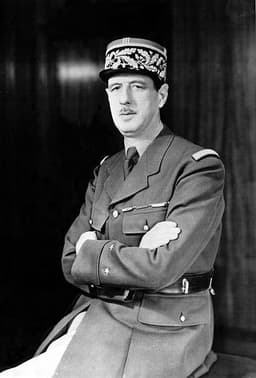
Charles de Gaulle
Politician · Modern
68.2Total
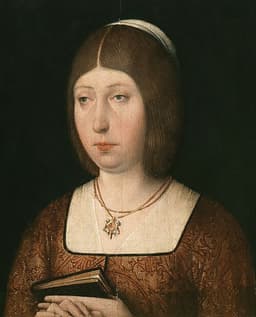
Isabella I of Castile
Emperor · Medieval
77.2Total
Basic Information
Born
1890
1451
Died
1970
1504
Era
Modern
Medieval
Nationality
France
Spain
Occupation
Politician
Emperor
Civilization
Western
Western
Score Comparison
Military (10%)
55.0
76.0
Political (20%)
75.0
78.0
Influence (20%)
65.0
80.0
Legacy (20%)
68.0
75.0
Leadership (15%)
78.0
78.0
Strategy (15%)
65.0
75.0
TOTAL
68.2
77.2
Charles de Gaulle — Complete Timeline
1940 AD
Appeal of 18 June 1940Political Action
From London, de Gaulle broadcast a radio appeal urging French resistance against Nazi occupation. He called on French soldiers and citizens to continue the fight, founding the Free French Forces and becoming the symbol of French defiance.
World War IIResistanceLeadership
Impact: nationalconstructive
1958 AD
Founding of the Fifth RepublicPolitical Action
De Gaulle returned to power during the Algerian crisis and oversaw the drafting of a new constitution. The Fifth Republic established a strong executive presidency, replacing the unstable parliamentary system of the Fourth Republic.
ConstitutionGovernment ReformPolitical System
Impact: nationalconstructive
1962 AD
End of the Algerian WarPolitical Action◆ Major
De Gaulle negotiated the
DecolonizationPeace TreatyAlgeria
Impact: regionalconstructive
1968 AD
May 1968 CrisisPolitical Action◆ Major
Mass student protests and general strikes paralyzed France, challenging de Gaulle's government. De Gaulle briefly fled to Germany, then returned to dissolve the National Assembly and call elections, which his party won, but his authority was weakened.
ProtestPolitical CrisisSocial Unrest
Impact: nationaldestructive
1969 AD
Resignation as PresidentPolitical Action
De Gaulle resigned after losing a referendum on regional reform and Senate restructuring. The defeat marked the end of his political career, as he withdrew from public life and died the following year.
ResignationPolitical DefeatReferendum
Impact: nationaltragic
Isabella I of Castile — Complete Timeline
1469 AD
Marriage to Ferdinand of AragonPolitical Action
Isabella married Ferdinand II of Aragon in Valladolid, uniting the kingdoms of Castile and Aragon. This dynastic union laid the foundation for the unified Spanish monarchy and enabled joint policies including the Reconquista and overseas exploration.
Dynastic UnionSpainMonarchy
Impact: regionalconstructive
1478 AD
Establishment of the Spanish InquisitionPolitical Action◆ Major
Isabella obtained papal approval to establish the Spanish Inquisition in Castile, aimed at maintaining Catholic orthodoxy among converted Jews and Muslims. The Inquisition operated under royal control, conducting trials and executions for heresy.
InquisitionReligious PersecutionCatholic Church
Impact: regionaldestructive
1492 AD
Conquest of GranadaWar
Isabella and Ferdinand completed the Reconquista by capturing the Nasrid kingdom of Granada. The surrender of the last Muslim state in Iberia ended 781 years of Islamic rule and unified Spain under Christian rule.
ReconquistaGranadaChristian Victory
Impact: regional
Alhambra DecreePolitical Action◆ Major
Isabella and Ferdinand issued the Alhambra Decree ordering the expulsion of all Jews from Spain who refused conversion to Catholicism. An estimated 40,000 to 200,000 Jews were forced to leave, causing demographic and economic disruption.
ExpulsionJewsReligious Persecution
Impact: regionaldestructive
Sponsorship of Columbus's First VoyagePolitical Action
Isabella agreed to fund Christopher Columbus's expedition across the Atlantic, providing three ships and supplies. Columbus reached the Bahamas on October 12, initiating sustained European contact with the Americas and the Spanish colonial empire.
ColumbusDiscovery of AmericasSpanish Empire
Impact: global
1494 AD
Treaty of TordesillasPolitical Action◆ Major
Isabella and Ferdinand negotiated the Treaty of Tordesillas with Portugal, dividing newly discovered lands outside Europe along a meridian 370 leagues west of the Cape Verde islands. This agreement shaped colonial claims in the Americas and Africa.
Colonial DivisionSpainPortugal
Impact: global
Expert Analysis
Charles de Gaulle vs Isabella I of Castile: Historical Comparison
Charles de Gaulle, the 20th-century French general and president, and Isabella I of Castile, the 15th-century Spanish queen, both forged national unity through war and statecraft, yet their methods and contexts diverge sharply. De Gaulle rebuilt France from wartime collapse, while Isabella consolidated Spain through conquest and religious uniformity.
Dimension Analysis
**Military: Charles de Gaulle 77 / Isabella I of Castile 83**
Isabella personally directed the Reconquista’s final campaigns and financed Columbus’s voyages, achieving territorial expansion. De Gaulle led Free France from exile but relied more on Allied support than independent military dominance.
**Political: Charles de Gaulle 90 / Isabella I of Castile 87**
De Gaulle created the Fifth Republic, centralizing power and ending colonial wars in Algeria. Isabella unified Castile and Aragon through marriage, curbed noble power, and established the Inquisition as a political tool.
**Influence: Charles de Gaulle 68 / Isabella I of Castile 72**
Isabella’s patronage launched Spanish colonization of the Americas, reshaping global history. De Gaulle’s anti-American stance and nuclear policy had lasting but narrower European impact.
**Legacy: Charles de Gaulle 83 / Isabella I of Castile 72**
De Gaulle’s constitutional legacy endures in France’s strong presidency. Isabella’s legacy is mixed: celebrated for unification but criticized for religious persecution and indigenous exploitation.
**Leadership: Charles de Gaulle 91 / Isabella I of Castile 89**
Both were resolute figures who inspired loyalty. De Gaulle’s wartime defiance and 1958 return from retirement exemplify charismatic authority. Isabella’s personal piety and administrative reforms solidified her rule.
Verdict
Charles de Gaulle leads narrowly due to his superior political innovation and enduring constitutional legacy, despite Isabella’s greater military and global influence.
FAQ
Q: Who ranks higher? A: Charles de Gaulle edges ahead based on his higher Political and Legacy scores, though both leaders tie overall at 81.
Rankings
🥇
Isabella I of CastileLeader
Mil: 76.0Pol: 78.0Inf: 80.0
77.2
🥈
Charles de Gaulle
Mil: 55.0Pol: 75.0Inf: 65.0
68.2
+9.0 behind
How This Comparison Works
Algorithm
Each figure is scored on 6 dimensions (0—100 scale) based on structured historical data: Military (10%), Political (20%), Influence (20%), Legacy (20%), Leadership (15%), Strategy (15%). The weighted total produces the final ranking.
Data Sources
Scores are computed from structured sub-indicators in the database. Scale factors adjust for era (Ancient ×0.85, Modern ×1.0) and civilization size (Eastern ×1.05, Other ×0.80) to account for differences in population and military scale.
Maximum 3 Figures
Comparisons are limited to 2—3 figures to ensure readability and statistical meaningfulness.
Error Margins
±5 points per dimension — Sub-scores are derived from historical records with inherent uncertainty. Two figures within 5 points on a dimension should be considered roughly equivalent in that area.
Total Score Accuracy
±3 points overall — The weighted combination of 6 dimensions produces a total score with approximately ±3 points of uncertainty. Differences of less than 3 points are not statistically significant— the figures are effectively tied.
Known Limitations
- Historical records are incomplete and uneven across civilizations
- Figures from oral-tradition societies may be underrepresented
- Occupation labels can misclassify multi-role figures
- Scores measure capability and impact, not moral character
- Quantitative scoring is a comparison tool, not absolute truth
Capability Radar
Military (10%) — Battles & Warfare
Battles
60
75
Win Rate
55
80
Expansion
20
85
Political (20%) — Governance & Reform
Reform
95
90
Diplomacy
90
80
Economy
70
75
Influence (20%) — Cultural & Global Reach
Cultural
70
85
Global
80
95
Legacy (20%) — Historical Impact
Historical
85
95
Longevity
75
90
Leadership (15%) — Power & Stability
Tenure
85
85
Stability
75
70
Strategy (15%) — Tactics & Innovation
Strategy
85
85
Tactics
70
70
Reform
80
90
Similar Comparisons
Comments & Discussion
MetricMincer6/16/2026
This scoring system is a joke. You're telling me de Gaulle gets a 91 in Leadership and Isabella gets an 89, but the gap is justified by 'political innovation'? Historical records are written by the victors — Isabella's Inquisition records were heavily curated by later Habsburg propagandists. And how do you quantify 'charismatic authority'? De Gaulle's wartime exile leadership is romanticized, but his actual military decisions (like the disastrous Dakar expedition) are conveniently ignored. The weight distribution seems to favor modern constitutional states over medieval monarchies. This is Eurocentrism dressed up as data science.
PostcolonialEcho6/16/2026
Can we stop pretending Isabella was just a 'unifier'? She funded Columbus, which led to the genocide of millions of indigenous people. The Reconquista's 'completion' was a religious cleansing that expelled Jews and Muslims. De Gaulle, meanwhile, is celebrated for 'ending colonial wars in Algeria' — but he only did so after a brutal war that killed hundreds of thousands of Algerians. The Eurocentric lens here whitewashes both figures: Isabella gets points for 'patronage' without mentioning the colonial destruction, and de Gaulle gets a pass on Algeria because he eventually withdrew. This ranking is historically illiterate.
ColdMind486/16/2026
这个评分体系问题很大。军事分 Isabella 83 vs de Gaulle 77,但 Isabella 的 Reconquista 本质是宗教战争,而 de Gaulle 领导自由法国时资源匮乏,能维持流亡政府本身就是军事成就。政治分 de Gaulle 90 vs Isabella 87,但中国历史上秦始皇统一六国、汉武帝推恩令,政治创新远超这两人,却未纳入比较。影响力分 Isabella 72 vs de Gaulle 68,但 Isabella 资助哥伦布是间接影响,de Gaulle 的核政策直接改变了欧洲冷战格局。我认为 de Gaulle 的总分应更高,因为他的制度设计(第五共和国)至今仍在运转,而 Isabella 的遗产更多是象征性的。
OldScroll906/16/2026
把 de Gaulle 和 Isabella 放在一起比,本身就体现了西方中心史观。Isabella 更像中国的武则天——女性统治者通过婚姻和宗教巩固权力,但武则天靠科举制打破门阀,Isabella 却靠宗教裁判所强化迫害。de Gaulle 则像明朝的朱元璋——都是乱世中重建国家、强化中央集权的强人。朱元璋废丞相,de Gaulle 立第五共和国总统制,但朱元璋的‘高筑墙、广积粮’策略更务实。评分中 de Gaulle 政治分 90 高于 Isabella 87,若用中国史观,Isabella 的宗教统一手段更接近‘文化霸权’,得分应更高。这种比较需要更多跨文化维度。