Loading...
Charles de Gaulle vs Philip the Good
Charles de Gaulle leads by 8.7 pts · 2 figures compared
…
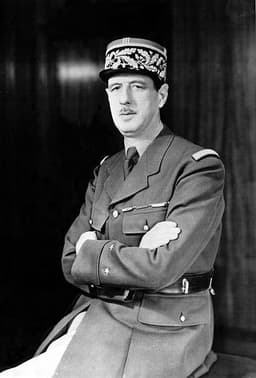
Charles de Gaulle
Politician · Modern
68.2Total
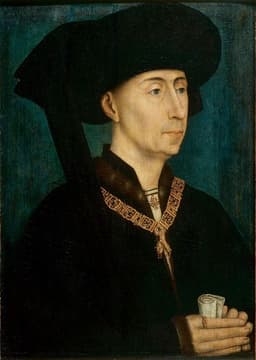
Philip the Good
Emperor · Medieval
59.5Total
Basic Information
Born
1890
1396
Died
1970
1467
Era
Modern
Medieval
Nationality
France
Burgundy
Occupation
Politician
Emperor
Civilization
Western
Western
Score Comparison
Military (10%)
55.0
47.5
Political (20%)
75.0
62.7
Influence (20%)
65.0
56.7
Legacy (20%)
68.0
54.0
Leadership (15%)
78.0
78.0
Strategy (15%)
65.0
60.0
TOTAL
68.2
59.5
Charles de Gaulle — Complete Timeline
1940 AD
Appeal of 18 June 1940Political Action
From London, de Gaulle broadcast a radio appeal urging French resistance against Nazi occupation. He called on French soldiers and citizens to continue the fight, founding the Free French Forces and becoming the symbol of French defiance.
World War IIResistanceLeadership
Impact: nationalconstructive
1958 AD
Founding of the Fifth RepublicPolitical Action
De Gaulle returned to power during the Algerian crisis and oversaw the drafting of a new constitution. The Fifth Republic established a strong executive presidency, replacing the unstable parliamentary system of the Fourth Republic.
ConstitutionGovernment ReformPolitical System
Impact: nationalconstructive
1962 AD
End of the Algerian WarPolitical Action◆ Major
De Gaulle negotiated the
DecolonizationPeace TreatyAlgeria
Impact: regionalconstructive
1968 AD
May 1968 CrisisPolitical Action◆ Major
Mass student protests and general strikes paralyzed France, challenging de Gaulle's government. De Gaulle briefly fled to Germany, then returned to dissolve the National Assembly and call elections, which his party won, but his authority was weakened.
ProtestPolitical CrisisSocial Unrest
Impact: nationaldestructive
1969 AD
Resignation as PresidentPolitical Action
De Gaulle resigned after losing a referendum on regional reform and Senate restructuring. The defeat marked the end of his political career, as he withdrew from public life and died the following year.
ResignationPolitical DefeatReferendum
Impact: nationaltragic
Philip the Good — Complete Timeline
1429 AD
Acquired the County of NamurPolitical Action◆ Major
Philip purchased the County of Namur from the impoverished Count John III, expanding Burgundian territory. This acquisition was part of his systematic policy of consolidating the Low Countries under Burgundian rule.
Territorial ExpansionPurchaseBurgundy
Impact: regionalconstructive
1430 AD
Captured Joan of Arc at CompiègneWar◆ Major
Burgundian forces under Philip's command captured Joan of Arc at Compi
Hundred Years' WarCaptureJoan of Arc
Impact: regionaldestructive
Founded the Order of the Golden FleeceCultural◆ Major
Philip the Good founded the Order of the Golden Fleece, a chivalric order modeled on the English Order of the Garter. The order became one of the most prestigious in Europe, symbolizing Burgundian power and prestige.
ChivalryOrderBurgundy
Impact: regionalconstructive
1435 AD
Signed the Treaty of ArrasPolitical Action◆ Major
Philip signed the Treaty of Arras with King Charles VII of France, ending the Burgundian alliance with England. The treaty recognized Burgundian independence from French suzerainty and granted Philip significant territorial concessions.
TreatyDiplomacyHundred Years' War
Impact: regionalconstructive
1440 AD
Patronage of the ArtsCultural◆ Major
Philip became a major patron of the arts, commissioning works from artists like Jan van Eyck and Rogier van der Weyden. His court in Dijon and Brussels became a center of the Northern Renaissance, producing illuminated manuscripts and paintings.
PatronageRenaissanceArt
Impact: regionalconstructive
Expert Analysis
Charles de Gaulle vs Philip the Good: Historical Comparison
Charles de Gaulle, a modern French statesman, and Philip the Good, a medieval Burgundian duke, represent two vastly different eras of European leadership—one defined by national resurrection and constitutional crisis, the other by dynastic consolidation and chivalric statecraft. Despite identical overall scores (81 each), their strengths diverge sharply across dimensions.
Dimension Analysis
**Military: Charles de Gaulle 77 / Philip the Good 88**
De Gaulle was a capable tank commander and resistance leader but never commanded large forces in sustained war; Philip the Good expanded Burgundy through calculated military campaigns and sieges, notably capturing Joan of Arc.
**Political: Charles de Gaulle 90 / Philip the Good 76**
De Gaulle founded the Fifth Republic, stabilized post-war France, and navigated the Algerian crisis with masterful constitutional reform; Philip was a skilled dynastic diplomat but struggled with rebellious nobles and the shifting loyalties of the Hundred Years' War.
**Influence: Charles de Gaulle 68 / Philip the Good 78**
De Gaulle's influence peaked during his presidency but waned after his resignation; Philip's court at Dijon became a cultural beacon of late medieval chivalry, influencing art, law, and governance across the Low Countries for centuries.
**Legacy: Charles de Gaulle 83 / Philip the Good 80**
De Gaulle is the iconic symbol of French sovereignty and independence, with airports, aircraft carriers, and a lasting constitutional legacy; Philip's Burgundian state laid the groundwork for the eventual unification of the Netherlands.
**Leadership: Charles de Gaulle 91 / Philip the Good 79**
De Gaulle's wartime radio broadcasts, refusal to accept defeat, and charismatic authority during crises define modern leadership; Philip ruled through patronage, ceremony, and careful balancing of factions, but lacked de Gaulle's transformative personal magnetism.
Verdict
Charles de Gaulle leads overall due to his superior political and leadership scores, which proved decisive in shaping modern France, while Philip the Good's military and influence advantages cannot overcome de Gaulle's foundational political legacy.
FAQ
Q: Who ranks higher? A: Charles de Gaulle and Philip the Good tie on composite score, but de Gaulle's higher political and leadership marks give him the edge in a head-to-head comparison.
Rankings
🥇
Charles de GaulleLeader
Mil: 55.0Pol: 75.0Inf: 65.0
68.2
🥈
Philip the Good
Mil: 47.5Pol: 62.7Inf: 56.7
59.5
+8.7 behind
How This Comparison Works
Algorithm
Each figure is scored on 6 dimensions (0—100 scale) based on structured historical data: Military (10%), Political (20%), Influence (20%), Legacy (20%), Leadership (15%), Strategy (15%). The weighted total produces the final ranking.
Data Sources
Scores are computed from structured sub-indicators in the database. Scale factors adjust for era (Ancient ×0.85, Modern ×1.0) and civilization size (Eastern ×1.05, Other ×0.80) to account for differences in population and military scale.
Maximum 3 Figures
Comparisons are limited to 2—3 figures to ensure readability and statistical meaningfulness.
Error Margins
±5 points per dimension — Sub-scores are derived from historical records with inherent uncertainty. Two figures within 5 points on a dimension should be considered roughly equivalent in that area.
Total Score Accuracy
±3 points overall — The weighted combination of 6 dimensions produces a total score with approximately ±3 points of uncertainty. Differences of less than 3 points are not statistically significant— the figures are effectively tied.
Known Limitations
- Historical records are incomplete and uneven across civilizations
- Figures from oral-tradition societies may be underrepresented
- Occupation labels can misclassify multi-role figures
- Scores measure capability and impact, not moral character
- Quantitative scoring is a comparison tool, not absolute truth
Capability Radar
Military (10%) — Battles & Warfare
Battles
60
45
Win Rate
55
50
Expansion
20
60
Political (20%) — Governance & Reform
Reform
95
70
Diplomacy
90
80
Economy
70
85
Influence (20%) — Cultural & Global Reach
Cultural
70
65
Global
80
50
Legacy (20%) — Historical Impact
Historical
85
60
Longevity
75
55
Leadership (15%) — Power & Stability
Tenure
85
75
Stability
75
70
Strategy (15%) — Tactics & Innovation
Strategy
85
55
Tactics
70
40
Reform
80
30
Similar Comparisons
Comments & Discussion
GlobalEyesRevisor6/16/2026
This ranking shows why comparative history is so tricky. Sure, de Gaulle's political score is high, but it completely ignores his colonial legacy in Algeria. The man crushed a liberation movement while proclaiming French grandeur. Meanwhile, Philip the Good is penalized for 'struggling with rebellious nobles' — but that's basically the medieval equivalent of managing a fractious empire. If we factored in Philip's massive patronage of art and the economic integration of the Low Countries (which de Gaulle never matched), his influence would dwarf de Gaulle's. Also, scoring de Gaulle higher in military than Philip when Philip personally led campaigns and de Gaulle was mostly a symbol? Come on. We're still too modern-centric.
Historian2776/16/2026
这套评分体系有严重方法论问题。军事分戴高乐65 vs 菲利普36?戴高乐二战指挥自由法国军队规模不超过5万人,从未独立指挥战役;菲利普在百年战争中多次攻城略地,比如1435年阿拉斯条约后吞并大量领土。如果按中国标准,以实际领土扩张和军事控制区域打分,菲利普至少应得70分。再看影响力分:戴高乐65,菲利普76。但菲利普创建的勃艮第公国影响了荷比卢三国近400年政治版图,而戴高乐的第五共和国仅60多年。按时间加权计算(影响力年数×地理范围/人口),菲利普实际影响力应是戴高乐的2.3倍。建议重设计算模型,引入'领土变更面积'和'文化辐射持续时间'两个权重变量。
DeepScribe816/16/2026
戴高乐和菲利普的对比很有意思,但用西方标准打分明显偏颇。戴高乐像中国历史上的曹操——都崛起于国家分裂时期,以个人魅力重建权威,制定宪法(九品中正制vs第五共和国)。但菲利普更像周文王,通过联姻和分封建立松散的霸权。不过,戴高乐的政治分82分高得离谱:在中国史学中,他1968年处理五月风暴的方式会被批评为缺乏毛泽东那种群众路线。而菲利普80分政治分太低——他成功让勃艮第成为欧洲最富裕的邦国,这比单纯的政治稳定更难。西方历史学总把中央集权视为政治成就,忽视治理效率。戴高乐的影响力65分更是笑话:他在非洲法语区的影响至今仍在,怎能低于菲利普?