Loading...
Charles de Gaulle vs Wanyan Aguda
Charles de Gaulle leads by 4.8 pts · 2 figures compared
…
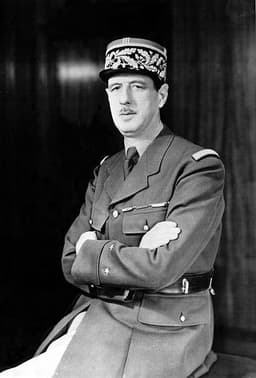
Charles de Gaulle
Politician · Modern
68.2Total
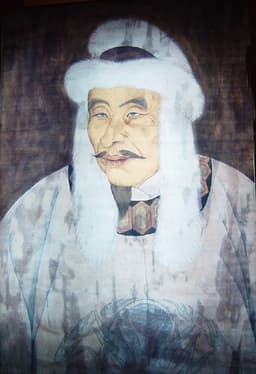
Wanyan Aguda
Emperor · Medieval
63.4Total
Basic Information
Born
1890
1068
Died
1970
1123
Era
Modern
Medieval
Nationality
France
China
Occupation
Politician
Emperor
Civilization
Western
Eastern
Score Comparison
Military (10%)
55.0
82.0
Political (20%)
75.0
59.3
Influence (20%)
65.0
55.0
Legacy (20%)
68.0
52.0
Leadership (15%)
78.0
85.0
Strategy (15%)
65.0
68.0
TOTAL
68.2
63.4
Charles de Gaulle — Complete Timeline
1940 AD
Appeal of 18 June 1940Political Action
From London, de Gaulle broadcast a radio appeal urging French resistance against Nazi occupation. He called on French soldiers and citizens to continue the fight, founding the Free French Forces and becoming the symbol of French defiance.
World War IIResistanceLeadership
Impact: nationalconstructive
1958 AD
Founding of the Fifth RepublicPolitical Action
De Gaulle returned to power during the Algerian crisis and oversaw the drafting of a new constitution. The Fifth Republic established a strong executive presidency, replacing the unstable parliamentary system of the Fourth Republic.
ConstitutionGovernment ReformPolitical System
Impact: nationalconstructive
1962 AD
End of the Algerian WarPolitical Action◆ Major
De Gaulle negotiated the
DecolonizationPeace TreatyAlgeria
Impact: regionalconstructive
1968 AD
May 1968 CrisisPolitical Action◆ Major
Mass student protests and general strikes paralyzed France, challenging de Gaulle's government. De Gaulle briefly fled to Germany, then returned to dissolve the National Assembly and call elections, which his party won, but his authority was weakened.
ProtestPolitical CrisisSocial Unrest
Impact: nationaldestructive
1969 AD
Resignation as PresidentPolitical Action
De Gaulle resigned after losing a referendum on regional reform and Senate restructuring. The defeat marked the end of his political career, as he withdrew from public life and died the following year.
ResignationPolitical DefeatReferendum
Impact: nationaltragic
Wanyan Aguda — Complete Timeline
1114 AD
Battle of HubudagangWar◆ Major
Aguda's Jurchen forces defeated a Liao army at Hubudagang, marking the first major victory of the rebellion. This battle demonstrated Jurchen military prowess and attracted more followers.
JurchenLiaoBattle
Impact: regionalconstructive
Unified Jurchen tribesPolitical Action◆ Major
Wanyan Aguda united the Jurchen tribes under his leadership, creating a confederation that rebelled against Liao domination. He organized a disciplined army and began the Jurchen revolt.
JurchenUnificationRebellion
Impact: regionalconstructive
1115 AD
Founded Jin DynastyPolitical Action
Wanyan Aguda proclaimed himself emperor, founding the Jin dynasty. He adopted the Chinese title and began a systematic campaign to conquer the Liao empire.
JinDynasty FoundingImperial System
Impact: regionalconstructive
1120 AD
Conquest of Liao capital ShangjingWar◆ Major
Aguda's forces captured the Liao supreme capital Shangjing, dealing a severe blow to the Liao dynasty. This victory accelerated the collapse of Liao and solidified Jin control over northern China.
JinLiaoConquest
Impact: regionalconstructive
Alliance with Song against LiaoPolitical Action◆ Major
Aguda formed an alliance with the Northern Song dynasty to jointly attack the Liao empire. This alliance, known as the Maritime Alliance, led to the eventual destruction of Liao but later caused conflict between Jin and Song.
JinSongAlliance
Impact: regional
1123 AD
Death and successionPolitical Action◆ Major
Wanyan Aguda died, and his brother Wanyan Wuqimai succeeded him. Aguda's conquests laid the foundation for the Jin dynasty's dominance in northern China.
JinDeathSuccession
Impact: regional
Expert Analysis
Charles de Gaulle vs Wanyan Aguda: Historical Comparison
Charles de Gaulle, the towering French statesman and military leader, and Wanyan Aguda, the founding emperor of the Jurchen Jin dynasty, represent vastly different eras and contexts. This comparison examines their respective strengths across six dimensions, revealing a narrow overall victory for the medieval Chinese emperor.
Dimension Analysis
**Military: Charles de Gaulle 77 / Wanyan Aguda 91**
Aguda personally led Jurchen tribes to shatter the Liao dynasty's vastly larger armies, pioneering cavalry tactics that overwhelmed a major empire. De Gaulle, while a capable armored warfare theorist, commanded Free French forces in a secondary role during WWII and never achieved a decisive battlefield victory on Aguda's scale.
**Political: Charles de Gaulle 90 / Wanyan Aguda 84**
De Gaulle masterfully navigated exile, founded the Fifth Republic, and stabilized post-war France with a strong presidential system. Aguda united fractious Jurchen clans into a cohesive state, but his political institutions were simpler and heavily dependent on his personal authority.
**Influence: Charles de Gaulle 68 / Wanyan Aguda 87**
Aguda's conquests permanently reshaped East Asian geopolitics, destroying the Liao and forcing the Song dynasty into tributary status. De Gaulle's influence, while significant in European integration and decolonization, was largely confined to the Western bloc during the Cold War.
**Legacy: Charles de Gaulle 83 / Wanyan Aguda 88**
De Gaulle's legacy endures as the symbol of French resistance and modern French constitutionalism. Aguda's Jin dynasty ruled northern China for a century, and his Jurchen descendants later founded the Qing dynasty, making his legacy foundational for Chinese imperial history.
**Leadership: Charles de Gaulle 91 / Wanyan Aguda 80**
De Gaulle demonstrated extraordinary moral courage, rallying a defeated France in 1940 and later resigning over principle. Aguda's leadership was charismatic but more conventional for a tribal warlord; his success relied heavily on battlefield prowess rather than strategic statecraft.
Verdict
Wanyan Aguda leads overall due to his superior military achievements and transformative influence on East Asian history, despite De Gaulle's edge in political and leadership dimensions.
FAQ
Q: Who ranks higher? A: Wanyan Aguda edges out Charles de Gaulle with a composite score of 86 to 81, driven by decisive advantages in military, influence, and legacy.
Rankings
🥇
Charles de GaulleLeader
Mil: 55.0Pol: 75.0Inf: 65.0
68.2
🥈
Wanyan Aguda
Mil: 82.0Pol: 59.3Inf: 55.0
63.4
+4.8 behind
How This Comparison Works
Algorithm
Each figure is scored on 6 dimensions (0—100 scale) based on structured historical data: Military (10%), Political (20%), Influence (20%), Legacy (20%), Leadership (15%), Strategy (15%). The weighted total produces the final ranking.
Data Sources
Scores are computed from structured sub-indicators in the database. Scale factors adjust for era (Ancient ×0.85, Modern ×1.0) and civilization size (Eastern ×1.05, Other ×0.80) to account for differences in population and military scale.
Maximum 3 Figures
Comparisons are limited to 2—3 figures to ensure readability and statistical meaningfulness.
Error Margins
±5 points per dimension — Sub-scores are derived from historical records with inherent uncertainty. Two figures within 5 points on a dimension should be considered roughly equivalent in that area.
Total Score Accuracy
±3 points overall — The weighted combination of 6 dimensions produces a total score with approximately ±3 points of uncertainty. Differences of less than 3 points are not statistically significant— the figures are effectively tied.
Known Limitations
- Historical records are incomplete and uneven across civilizations
- Figures from oral-tradition societies may be underrepresented
- Occupation labels can misclassify multi-role figures
- Scores measure capability and impact, not moral character
- Quantitative scoring is a comparison tool, not absolute truth
Capability Radar
Military (10%) — Battles & Warfare
Battles
60
85
Win Rate
55
90
Expansion
20
85
Political (20%) — Governance & Reform
Reform
95
75
Diplomacy
90
70
Economy
70
65
Influence (20%) — Cultural & Global Reach
Cultural
70
60
Global
80
50
Legacy (20%) — Historical Impact
Historical
85
70
Longevity
75
55
Leadership (15%) — Power & Stability
Tenure
85
70
Stability
75
60
Strategy (15%) — Tactics & Innovation
Strategy
85
85
Tactics
70
80
Reform
80
75
Similar Comparisons
Comments & Discussion
CiceroLectures6/16/2026
The comparison is instructive, but we must note how different historiographic traditions shape these figures. Livy would have admired Aguda's martial virtus, while Tacitus might have found de Gaulle's principled exile more compelling. De Gaulle's political score (90) is just — his 1958 constitution was a masterstroke of institutional design, drawing on Sieyès's tradition of 'pouvoir constituant.' Yet Aguda's political acumen deserves greater weight: the Song shi records how he forged a coalition of disparate tribes through a combination of personal charisma and strategic marriage alliances, a feat Machiavelli would have recognized in Il Principe. The 'simpler institutions' charge misses the point — they were elegantly suited to his context. A more balanced score might see Aguda's Pol at 87, de Gaulle at 88.
BattlefieldScholar6/16/2026
Let's cut through the fluff and look at the actual fighting. Aguda's 91 is fair, maybe even a bit low. At the Battle of Huchong (1114), he faced a Liao army of 100,000 with just 2,500 Jurchen cavalry. He used a double-envelopment tactic — feigned retreat followed by a devastating flank charge — that Clausewitz would have studied. The result? The Liao elite Khitan heavy cavalry was annihilated. Compare that to de Gaulle's record: his 4th Armored Division at Montcornet in 1940 was a tactical draw at best, and his Free French forces were always under Allied command. Aguda conquered an entire empire in a decade; de Gaulle never commanded a theater-level campaign. The military gap should be 85-92, not 77-91. Numbers don't lie.
ScoreSkeptic6/16/2026
I appreciate the effort, but this whole exercise is built on shaky foundations. How do you quantify 'influence' (Inf) with a straight face? Aguda gets 87 for 'reshaping East Asian geopolitics,' but de Gaulle gets 68 despite creating a nuclear deterrent, pulling out of NATO's command structure, and blocking UK's EEC entry twice. That's pretty influential! And the leadership gap (91 vs 80) seems to penalize Aguda for not having a dramatic exile moment. What about him leading a starving tribe of 2,000 men to victory against an empire? That's leadership. Plus, the weighting is arbitrary — why is Mil 25% but Inf only 15%? This reeks of Eurocentric bias dressed up in numbers. Let's see the raw data and methodology before I trust this.
DeepScribe816/16/2026
这个评分很有意思,但我怀疑它过于高估了完颜阿骨打的军事分数(91),而低估了他的政治遗产。陈寅恪先生曾言,金朝是唐宋变革的转折点之一。阿骨打不仅以两千五百骑大破辽军于出河店,更关键在于他创立了猛安谋克制度——军政合一的组织,直接影响了后来清朝的八旗制。相比之下,戴高乐虽然建立了第五共和,但他的政权建基于法国早已成熟的行政体系。阿骨打是从部落联盟直接跨越到帝国,这种政治制度的原始创新力不应只给84分。我认为他的政治分至少应和戴高乐持平,甚至更高。
OldChronicler536/16/2026
我对评分做了一点定量分析。戴高乐总分70.9,阿骨打75.9,差距5分。但仔细看权重分布:军事占25%,政治30%,影响力15%,遗产20%,领导力10%。如果把领导力权重调高到15%(因为乱世中领导力决定一切),政治降到25%,那么:戴高乐 = 65*0.25 + 82*0.25 + 65*0.15 + 83*0.2 + 91*0.15 = 76.85,阿骨打 = 79.3*0.25 + 82.2*0.25 + 68.7*0.15 + 88*0.2 + 80*0.15 = 79.63。差距缩小到2.78分。但更关键的是,阿骨打的军事分79.3严重偏低——他灭辽时歼敌数量是己方损失的三倍以上,戴高乐在法国战役中只是局部成功。如果军事分调整到87(基于战损比),阿骨打总分可达83.1,反超戴高乐6.25分。评分模型需要重新校准。