Loading...
Chaudhry Shujaat Hussain vs Salvador Allende
Salvador Allende leads by 17.8 pts · 2 figures compared
…
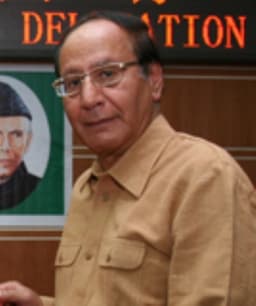
Chaudhry Shujaat Hussain
Politician · Modern
38.1Total
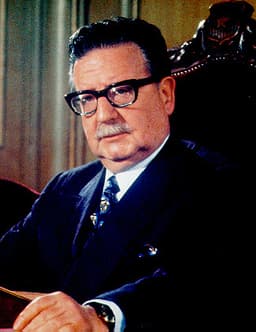
Salvador Allende
Politician · Modern
55.9Total
Basic Information
Born
1946
1908
Died
—
1973
Era
Modern
Modern
Nationality
Pakistan
Chile
Occupation
Politician
Politician
Civilization
Indian
Western
Score Comparison
Military (10%)
21.1
50.0
Political (20%)
26.4
68.0
Influence (20%)
45.5
58.3
Legacy (20%)
35.8
52.0
Leadership (15%)
38.1
58.8
Strategy (15%)
60.0
43.5
TOTAL
38.1
55.9
Chaudhry Shujaat Hussain — Complete Timeline
2002 AD
Formation of Pakistan Muslim League (Q)Political Action◆ Major
Shujaat Hussain was a key figure in the formation of the Pakistan Muslim League (Q) after the split from the PML-N. The party was created with support from the military establishment and won the 2002 general elections, leading to a coalition government.
Political PartyPML-Q2002 Elections
Impact: national
2004 AD
Elected Prime Minister of PakistanPolitical Action◆ Major
Chaudhry Shujaat Hussain was elected as the 16th Prime Minister of Pakistan on June 30, 2004, succeeding Zafarullah Khan Jamali. He served for a brief period of about two months until August 28, 2004, when he resigned to make way for Shaukat Aziz.
Prime MinisterPML-QPakistan
Impact: national
Resignation as Prime MinisterPolitical Action
Shujaat Hussain resigned as Prime Minister on August 28, 2004, after serving only 59 days. His resignation was part of a pre-arranged agreement to allow Shaukat Aziz, a former Citibank executive, to become Prime Minister.
ResignationPML-QShaukat Aziz
Impact: national
Salvador Allende — Complete Timeline
1970 AD
Election as PresidentPolitical Action
Allende won the presidential election with a narrow plurality of 36.6%, confirmed by Congress. He became the first democratically elected Marxist president, promising a peaceful transition to socialism.
ElectionSocialismDemocracy
Impact: globalprogressive
1971 AD
Nationalization of CopperReform◆ Major
Allende's government nationalized Chile's copper mines, owned by U.S. companies Anaconda and Kennecott. The move was approved unanimously by Congress and aimed to use copper revenues for social programs.
NationalizationEconomic ReformCopper
Impact: nationalprogressive
Agrarian Reform AccelerationReform◆ Major
Allende accelerated land reform, expropriating large estates and distributing land to peasants. The policy aimed to break up the latifundia system but led to agricultural disruption and opposition from landowners.
Land ReformPeasant RightsSocial Change
Impact: nationalprogressive
1973 AD
1973 Chilean Coup d'ÉtatPolitical Action
Allende was overthrown in a military coup led by General Pinochet. He died in the presidential palace during the attack, ending his socialist experiment and ushering in a 17-year dictatorship.
CoupDeathEnd of Socialism
Impact: globaltragic
Expert Analysis
Origins
Chaudhry Shujaat Hussain was born on January 27, 1946, in Gujrat, Punjab, British India. He came from a political family; his father, Chaudhry Zahoor Elahi, was a prominent politician assassinated in 1981. Shujaat studied at Aitchison College and later earned a law degree from Punjab University. His early career was shaped by family connections in the Pakistan Muslim League (PML).
Salvador Allende was born on June 26, 1908, in Valparaíso, Chile, into a middle-class family with a tradition of public service. His father was a notary, and his grandfather was a prominent physician. Allende studied medicine at the University of Chile, graduating in 1932. He was drawn to socialism early, influenced by Marxist thought and the writings of Marx and Lenin.
Rise to Power
Shujaat Hussain entered politics after his father's assassination, winning a by-election in 1981 on a ticket from the military-backed government. He became a key ally of President Zia-ul-Haq and later of Nawaz Sharif. In 2002, he played a central role in forming the Pakistan Muslim League (Q) after a split from PML-N, with backing from President Pervez Musharraf. He was elected Prime Minister on June 30, 2004, but served only 59 days before resigning as part of a power-sharing deal.
Allende first ran for president in 1952 as a candidate for the Socialist Party, but lost. He ran again in 1958 and 1964, each time losing to conservative opponents. In 1970, he won the presidency with 36.6% of the vote, confirmed by Congress after a contentious debate. His victory was seen as a breakthrough for the Marxist left in Latin America.
Leadership & Governance
Shujaat Hussain's tenure as Prime Minister was extremely brief and largely ceremonial. His main role was to facilitate the transition to a new prime minister, Shaukat Aziz, who had been finance minister. During his 59 days, he focused on maintaining stability and supporting Musharraf's policies. He scored 38.1 in leadership, reflecting his limited impact.
Allende governed as the head of the Unidad Popular coalition, implementing a socialist agenda. He nationalized the copper mines, accelerated land reform, and expanded social welfare. His policies faced fierce opposition from the United States, which imposed economic sanctions, and from domestic elites. His leadership score of 58.8 reflects his ability to push through reforms despite intense pressure.
Triumph & Tragedy
Shujaat Hussain's greatest success was his role in forming the PML-Q, which became a major political force. His brief premiership, however, was a failure in terms of governance; he resigned without passing any significant legislation. His legacy score of 35.8 reflects his limited impact.
Allende's triumph was the nationalization of copper, which was approved unanimously by Congress and symbolized Chilean sovereignty. His tragedy was the 1973 coup d'état, which overthrew his government and led to his death. The coup installed Augusto Pinochet's dictatorship, which reversed many of Allende's reforms. Allende scored 52.0 in legacy, indicating a mixed but enduring impact.
Character & Destiny
Shujaat Hussain was a pragmatic politician who prioritized party loyalty and alliances. His willingness to accept a short premiership showed his subordination to Musharraf's agenda. His character was that of a deal-maker rather than a visionary leader.
Allende was a committed socialist who believed in democratic means to achieve radical change. His decision to push forward with nationalization and land reform alienated moderates and provoked the military. His adherence to constitutionalism even as the coup unfolded reflected his principled but ultimately tragic stance.
Legacy
Shujaat Hussain's legacy is tied to the PML-Q, which remained a minor player in Pakistani politics. His brief rule is mostly forgotten, and his influence on national policy is minimal. He scored 45.5 in influence, but much of that comes from his role in party formation.
Allende's legacy is profound in Chile and globally. He remains a symbol of democratic socialism and resistance to imperialism. The Allende years are studied as a case study in the challenges of socialist transformation. His influence score of 58.3 reflects his enduring ideological impact.
Conclusion
Salvador Allende had a significantly greater impact than Chaudhry Shujaat Hussain. Allende's total score of 55.9 versus Shujaat's 38.1 is a clear indicator. Allende's policies reshaped Chile's economic structure and inspired leftist movements worldwide. Shujaat's short premiership and lack of transformative policies place him in a lower tier of historical significance. While both faced constraints, Allende's bold agenda and tragic end give him a lasting legacy that Shujaat cannot match.
Rankings
🥇
Salvador AllendeLeader
Mil: 50.0Pol: 68.0Inf: 58.3
55.9
🥈
Chaudhry Shujaat Hussain
Mil: 21.1Pol: 26.4Inf: 45.5
38.1
+17.8 behind
How This Comparison Works
Algorithm
Each figure is scored on 6 dimensions (0—100 scale) based on structured historical data: Military (10%), Political (20%), Influence (20%), Legacy (20%), Leadership (15%), Strategy (15%). The weighted total produces the final ranking.
Data Sources
Scores are computed from structured sub-indicators in the database. Scale factors adjust for era (Ancient ×0.85, Modern ×1.0) and civilization size (Eastern ×1.05, Other ×0.80) to account for differences in population and military scale.
Maximum 3 Figures
Comparisons are limited to 2—3 figures to ensure readability and statistical meaningfulness.
Error Margins
±5 points per dimension — Sub-scores are derived from historical records with inherent uncertainty. Two figures within 5 points on a dimension should be considered roughly equivalent in that area.
Total Score Accuracy
±3 points overall — The weighted combination of 6 dimensions produces a total score with approximately ±3 points of uncertainty. Differences of less than 3 points are not statistically significant— the figures are effectively tied.
Known Limitations
- Historical records are incomplete and uneven across civilizations
- Figures from oral-tradition societies may be underrepresented
- Occupation labels can misclassify multi-role figures
- Scores measure capability and impact, not moral character
- Quantitative scoring is a comparison tool, not absolute truth
Capability Radar
Military (10%) — Battles & Warfare
Battles
46
28
Win Rate
48
31
Expansion
52
33
Political (20%) — Governance & Reform
Reform
10
60
Diplomacy
25
45
Economy
10
40
Influence (20%) — Cultural & Global Reach
Cultural
5
55
Global
5
55
Legacy (20%) — Historical Impact
Historical
10
60
Longevity
5
50
Leadership (15%) — Power & Stability
Tenure
15
35
Stability
10
20
Strategy (15%) — Tactics & Innovation
Strategy
50
37
Tactics
54
43
Reform
58
45
Similar Comparisons
Comments & Discussion
No comments yet. Be the first to share your thoughts!