Loading...
Billy Hughes vs Chaudhry Shujaat Hussain
Billy Hughes leads by 18.8 pts · 2 figures compared
…
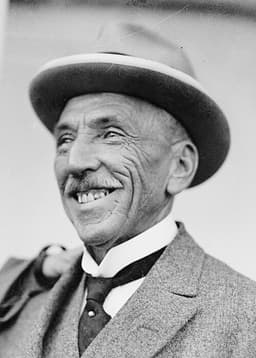
Billy Hughes
Politician · Modern
56.9Total
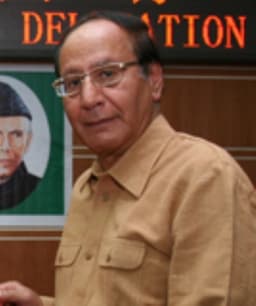
Chaudhry Shujaat Hussain
Politician · Modern
38.1Total
Basic Information
Born
1862
1946
Died
1952
—
Era
Modern
Modern
Nationality
Australia
Pakistan
Occupation
Politician
Politician
Civilization
Western
Indian
Score Comparison
Military (10%)
49.4
21.1
Political (20%)
72.0
26.4
Influence (20%)
59.0
45.5
Legacy (20%)
49.2
35.8
Leadership (15%)
66.0
38.1
Strategy (15%)
41.8
60.0
TOTAL
56.9
38.1
Billy Hughes — Complete Timeline
1915 AD
Became Prime Minister of AustraliaPolitical Action◆ Major
Billy Hughes became Prime Minister of Australia on October 27, 1915, succeeding Andrew Fisher. He led the country through the remainder of World War I, becoming a dominant figure in Australian politics.
Prime MinisterWorld War ILeadership
Impact: national
1916 AD
Conscription Referendums (1916 and 1917)Political Action◆ Major
Hughes held two national referendums on conscription for overseas military service during WWI, in 1916 and 1917. Both were narrowly defeated, causing a split in the Labor Party. Hughes and his supporters left to form the Nationalist Party.
ConscriptionReferendumLabor Split
Impact: nationaldestructive
Expelled from Labor PartyPolitical Action◆ Major
Following the defeat of the first conscription referendum, Hughes was expelled from the Australian Labor Party in November 1916. He then formed the National Labor Party, which later merged with the Liberal Party to become the Nationalist Party.
ExpulsionLabor PartyParty Split
Impact: nationaldestructive
1919 AD
Attended Paris Peace ConferencePolitical Action◆ Major
Hughes represented Australia at the Paris Peace Conference in 1919. He argued strongly for Australian interests, including control over former German colonies in the Pacific and reparations from Germany. He also secured Australia's separate membership in the League of Nations.
Paris Peace ConferenceLeague of NationsWorld War I
Impact: globalconstructive
Chaudhry Shujaat Hussain — Complete Timeline
2002 AD
Formation of Pakistan Muslim League (Q)Political Action◆ Major
Shujaat Hussain was a key figure in the formation of the Pakistan Muslim League (Q) after the split from the PML-N. The party was created with support from the military establishment and won the 2002 general elections, leading to a coalition government.
Political PartyPML-Q2002 Elections
Impact: national
2004 AD
Elected Prime Minister of PakistanPolitical Action◆ Major
Chaudhry Shujaat Hussain was elected as the 16th Prime Minister of Pakistan on June 30, 2004, succeeding Zafarullah Khan Jamali. He served for a brief period of about two months until August 28, 2004, when he resigned to make way for Shaukat Aziz.
Prime MinisterPML-QPakistan
Impact: national
Resignation as Prime MinisterPolitical Action
Shujaat Hussain resigned as Prime Minister on August 28, 2004, after serving only 59 days. His resignation was part of a pre-arranged agreement to allow Shaukat Aziz, a former Citibank executive, to become Prime Minister.
ResignationPML-QShaukat Aziz
Impact: national
Expert Analysis
Origins
Billy Hughes was born on September 25, 1862, in London, England, to Welsh parents. He emigrated to Australia in 1884, where he worked as a laborer and later as a union organizer. His early life in the working class shaped his political views. He became involved in the Australian Labor Party and was elected to the New South Wales Parliament in 1894, then to the federal Parliament in 1901.
Chaudhry Shujaat Hussain was born on January 27, 1946, in Gujrat, Punjab, British India. He came from a political family; his father, Chaudhry Zahoor Elahi, was a prominent politician. He studied law at the University of Punjab but did not complete his degree. He entered politics in the 1970s, initially with the Pakistan Muslim League.
Rise to Power
Hughes rose quickly through the labor movement. He served as Attorney-General under Prime Minister Andrew Fisher from 1908 to 1913 and again in 1914. When Fisher resigned in 1915, Hughes became Prime Minister, capitalizing on his reputation as a strong war leader. His decisive stance on conscription made him a national figure, though it also split his party.
Shujaat Hussain's rise was more gradual and factional. He was elected to the National Assembly in 1985 and held various ministerial portfolios. After the 1999 coup, he aligned with Pervez Musharraf, becoming a key figure in the formation of the Pakistan Muslim League (Q) in 2002. He became Prime Minister on June 30, 2004, as a compromise candidate, but his tenure was brief.
Leadership & Governance
Hughes led Australia through the final years of World War I. He was a forceful leader, often at odds with his own party. His governance style was confrontational and determined. He pushed for conscription, believing it necessary for the war effort, but the referendums failed, causing deep societal divisions. He also represented Australia at the Paris Peace Conference, securing control over German New Guinea. His leadership score is 66.0, reflecting his effectiveness in crisis.
Shujaat Hussain's governance was short-lived and largely symbolic. As PM for 59 days, he focused on stability and worked closely with President Musharraf. His strategy score is 60.0, indicating careful maneuvering, but his political score is low at 26.4. His leadership was overshadowed by the military establishment. He did not initiate major reforms or face significant crises.
Triumph & Tragedy
Hughes' greatest triumph was his representation at Versailles, where he successfully argued for Australian interests despite being a small power. His tragedy was the conscription referendums: both failed, splitting the Labor Party and leading to his expulsion. He formed the Nationalist Party and won the 1917 election, but the issue left lasting scars. His military score is 49.4, reflecting his wartime leadership.
Shujaat Hussain's triumph was becoming Prime Minister, a personal achievement. His tragedy was the brevity of his term and the perception of being a placeholder. He resigned after 59 days as part of a deal, which diminished his political stature. His legacy score is 35.8, indicating minimal lasting impact.
Character & Destiny
Hughes was combative, intelligent, and stubborn. His determination to pursue conscription despite public opposition shows his conviction, but also his inflexibility. His character shaped his destiny: he achieved much but also alienated allies. Historians note his role in shaping Australian nationalism.
Shujaat Hussain was pragmatic and loyal to the establishment. His willingness to serve a short term suggests a focus on party interests over personal ambition. His destiny was to be a transitional figure, remembered more for his party role than his premiership.
Legacy
Hughes left a mixed legacy. He is remembered as a strong wartime leader who expanded Australian influence. The conscription issue remains a reference point in Australian politics. His influence score is 59.0, reflecting his impact on national identity.
Shujaat Hussain's legacy is limited. The PML-Q faded after Musharraf's fall. He is not widely studied outside Pakistan. His influence score is 45.5, but his total score of 38.1 is significantly lower than Hughes' 56.9.
Conclusion
Billy Hughes had a greater impact than Chaudhry Shujaat Hussain. Hughes' leadership during a global conflict and his role in shaping Australia's foreign policy and national identity are undeniable. His political score of 72.0 and leadership score of 66.0 far exceed Hussain's 26.4 and 38.1. While Hussain's strategy score of 60.0 shows tactical skill, his brief tenure and lack of transformative policies place him far behind. Hughes' legacy endures; Hussain's is largely forgotten.
Rankings
🥇
Billy HughesLeader
Mil: 49.4Pol: 72.0Inf: 59.0
56.9
🥈
Chaudhry Shujaat Hussain
Mil: 21.1Pol: 26.4Inf: 45.5
38.1
+18.8 behind
How This Comparison Works
Algorithm
Each figure is scored on 6 dimensions (0—100 scale) based on structured historical data: Military (10%), Political (20%), Influence (20%), Legacy (20%), Leadership (15%), Strategy (15%). The weighted total produces the final ranking.
Data Sources
Scores are computed from structured sub-indicators in the database. Scale factors adjust for era (Ancient ×0.85, Modern ×1.0) and civilization size (Eastern ×1.05, Other ×0.80) to account for differences in population and military scale.
Maximum 3 Figures
Comparisons are limited to 2—3 figures to ensure readability and statistical meaningfulness.
Error Margins
±5 points per dimension — Sub-scores are derived from historical records with inherent uncertainty. Two figures within 5 points on a dimension should be considered roughly equivalent in that area.
Total Score Accuracy
±3 points overall — The weighted combination of 6 dimensions produces a total score with approximately ±3 points of uncertainty. Differences of less than 3 points are not statistically significant— the figures are effectively tied.
Known Limitations
- Historical records are incomplete and uneven across civilizations
- Figures from oral-tradition societies may be underrepresented
- Occupation labels can misclassify multi-role figures
- Scores measure capability and impact, not moral character
- Quantitative scoring is a comparison tool, not absolute truth
Capability Radar
Military (10%) — Battles & Warfare
Battles
30
46
Win Rate
34
48
Expansion
32
52
Political (20%) — Governance & Reform
Reform
60
10
Diplomacy
70
25
Economy
55
10
Influence (20%) — Cultural & Global Reach
Cultural
40
5
Global
55
5
Legacy (20%) — Historical Impact
Historical
55
10
Longevity
40
5
Leadership (15%) — Power & Stability
Tenure
65
15
Stability
50
10
Strategy (15%) — Tactics & Innovation
Strategy
35
50
Tactics
43
54
Reform
42
58
Similar Comparisons
Comments & Discussion
No comments yet. Be the first to share your thoughts!