Loading...
Harun al-Rashid vs Rana Sanga
Harun al-Rashid leads by 13.6 pts · 2 figures compared
…
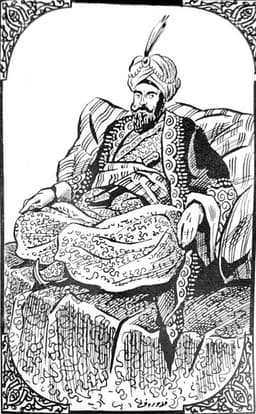
Harun al-Rashid
Emperor · Medieval
71.3Total
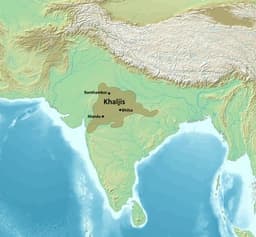
Rana Sanga
Emperor · Medieval
57.7Total
Basic Information
Born
763
1482
Died
809
1528
Era
Medieval
Medieval
Nationality
Abbasid Caliphate
India
Occupation
Emperor
Emperor
Civilization
Middle Eastern
Indian
Score Comparison
Military (10%)
72.5
66.0
Political (20%)
70.0
53.8
Influence (20%)
71.0
59.0
Legacy (20%)
80.0
50.0
Leadership (15%)
72.0
66.0
Strategy (15%)
50.0
58.4
TOTAL
71.3
57.7
Harun al-Rashid — Complete Timeline
786 AD
Accession to the CaliphatePolitical Action◆ Major
Harun al-Rashid became the fifth Abbasid caliph after the death of his brother Al-Hadi. His reign marked the beginning of a period of cultural and economic flourishing, often considered the zenith of Abbasid power.
SuccessionCaliphateGolden Age
Impact: regionalconstructive
Patronage of the Arts and SciencesCultural◆ Major
Harun al-Rashid's court in Baghdad became a center of learning and culture, attracting poets, scholars, and musicians. His patronage fostered the development of Arabic literature, including the tales later compiled as One Thousand and One Nights.
CulturePatronageLiterature
Impact: globalconstructive
790 AD
Military Campaigns Against ByzantiumWar
Harun al-Rashid led several campaigns into Byzantine Anatolia, capturing fortresses and extracting tribute. These raids, though not resulting in permanent conquest, demonstrated Abbasid military strength and secured the frontier.
Byzantine WarsMilitary CampaignFrontier
Impact: regional
797 AD
Diplomatic Exchange with CharlemagnePolitical Action◆ Major
Harun al-Rashid sent an embassy to the Frankish emperor Charlemagne, including gifts such as an elephant named Abul-Abbas. This exchange established diplomatic relations between the Abbasid Caliphate and the Carolingian Empire, facilitating trade and cultural contact.
DiplomacyCharlemagneInternational Relations
Impact: globalconstructive
803 AD
Suppression of the BarmakidsPolitical Action◆ Major
Harun al-Rashid ordered the execution of the powerful Barmakid family, who had served as viziers for decades. This purge removed a major political faction and consolidated Harun's personal authority, but also disrupted the administration.
PurgeBarmakidsPower Struggle
Impact: regionaldestructive
Rana Sanga — Complete Timeline
1518 AD
Battle of KhatoliWar◆ Major
Rana Sanga defeated the Lodi Sultan Ibrahim Lodi at the Battle of Khatoli. The victory expanded Mewar's territory and influence. Rana Sanga captured several Lodi officers and gained control of parts of eastern Rajasthan.
VictoryLodi SultanateTerritorial Expansion
Impact: regionalconstructive
1526 AD
Battle of DholpurWar◆ Major
Rana Sanga defeated Babur's forces at the Battle of Dholpur, capturing the fort. This victory encouraged Sanga to challenge Babur directly. It set the stage for the decisive Battle of Khanwa.
VictoryMughal ConflictPrelude to Khanwa
Impact: regionalconstructive
Formation of Rajput confederation against BaburPolitical Action◆ Major
Rana Sanga united several Rajput kingdoms, including Mewar, Marwar, and Amber, to oppose Babur's invasion of India. The confederation aimed to restore Rajput sovereignty. This alliance was the largest Rajput coalition since the medieval period.
AllianceRajput UnityAnti-Mughal
Impact: regionalconstructive
1527 AD
Battle of KhanwaWar
Rana Sanga led a confederation of Rajput clans against Babur at the Battle of Khanwa. The Rajput forces were defeated by Babur's use of artillery and tactics. This battle cemented Mughal power in North India and ended Rajput hopes of restoring their dominance.
Mughal ConquestRajput ConfederacyDefeat
Impact: globaltragic
Expert Analysis
Origins
Harun al-Rashid was born in 763 CE in Rayy, Persia, to the Abbasid caliph Al-Mahdi and Al-Khayzuran, a former slave. He grew up in the opulent court of Baghdad, receiving a thorough education in Islamic theology, poetry, and military arts. His early exposure to court politics and his mother's influence prepared him for leadership. In contrast, Rana Sanga was born in 1482 CE into the Sisodia dynasty of Mewar, a Rajput kingdom in northwestern India. He was the son of Rana Raimal, a ruler who expanded Mewar's territory. Sanga was trained in martial traditions from a young age, inheriting a legacy of resistance against Delhi sultanates. His early life was marked by familial conflicts, including a struggle for succession after his father's death.
Rise to Power
Harun al-Rashid ascended to the caliphate in 786 CE after the death of his brother Al-Hadi, whose reign was cut short by political intrigue. Harun's mother, Al-Khayzuran, played a key role in securing his accession. He quickly consolidated power by appointing the Barmakid family as viziers, who managed the empire's administration. His rise was smooth, supported by a stable Abbasid state. Rana Sanga, however, rose to power through military prowess and political maneuvering. After his father's death, he defeated his brothers in a war of succession, becoming Rana of Mewar in 1508 CE. He then expanded his territory by defeating the Lodi Sultanate at the Battle of Khatoli in 1517, capturing the Sultan of Delhi, Ibrahim Lodi, for a time. This victory established him as the leading Rajput power.
Leadership & Governance
Harun al-Rashid's leadership was characterized by decentralized governance, delegating authority to viziers and provincial governors. He patronized the arts and sciences, turning Baghdad into a center of learning under the House of Wisdom. His court became a hub for scholars, poets, and musicians, fostering the Islamic Golden Age. He maintained diplomatic relations with distant rulers, like Charlemagne, sending an elephant named Abul-Abbas in 802 CE. However, his reliance on the Barmakids led to a power struggle; in 803 CE, he ordered their execution, consolidating his control. Rana Sanga's leadership was more martial and feudal. He united Rajput clans through personal charisma and military alliances, forming a confederation against external threats. He led from the front in battles, inspiring loyalty. His governance focused on expanding Mewar's territory and defending Hindu kingdoms from Muslim rulers. He did not establish a centralized administrative system but relied on feudal lords.
Triumph & Tragedy
Harun al-Rashid's greatest triumph was the cultural flourishing of Baghdad, which produced works like "One Thousand and One Nights." His military campaigns against Byzantium, though not conquering, secured tribute and demonstrated Abbasid power. His tragedy was the execution of the Barmakids, which removed a competent administrative family and created instability. Additionally, his internal policies sowed seeds for later fragmentation. Rana Sanga's triumph was uniting Rajput clans against Babur, a feat unprecedented in medieval India. His victory at the Battle of Dholpur in 1526 CE gave him control over key forts. His tragedy was the defeat at the Battle of Khanwa in 1527 CE, where Babur's artillery and tactics overwhelmed his confederation. This defeat ended Rajput resistance to Mughal expansion, leading to the decline of Rajput independence.
Character & Destiny
Harun al-Rashid was a patron of culture but also ruthless in politics. His decision to eliminate the Barmakids reflects a paranoid streak, despite their loyalty. He was known for his piety and justice, but his reign saw increasing autonomy of provinces. His character combined generosity with pragmatism, shaping a golden age that masked underlying weaknesses. Rana Sanga was a valiant warrior with a strong sense of Rajput honor. His charisma united disparate clans, but his military strategy was outdated against Babur's gunpowder weapons. He was wounded in battle but continued fighting. His fate was sealed by his inability to adapt to new warfare, leading to the loss of Rajput sovereignty.
Legacy
Harun al-Rashid's legacy is immense: he is immortalized in literature as the ideal Islamic ruler. His patronage catalyzed the translation movement, preserving Greek and Persian knowledge. The Abbasid caliphate reached its zenith under him, with Baghdad becoming a global center. However, his reign also saw the beginning of decline due to internal divisions. Rana Sanga is remembered as a symbol of Rajput resistance against Mughal expansion. His efforts inspired later Rajput rulers, but his defeat at Khanwa marked the end of independent Hindu kingdoms in North India. His legacy is more regional, celebrated in folk tales and history, but with limited lasting political impact.
Conclusion
While both figures shaped their eras, Harun al-Rashid's influence was more profound and enduring. With a total score of 71.3 compared to Rana Sanga's 57.7, Harun al-Rashid's cultural and diplomatic achievements had a global impact, fostering the Islamic Golden Age that influenced Europe and Asia. Rana Sanga, despite his military valor and unity efforts, failed to prevent Mughal dominance and left a less transformative legacy. Therefore, Harun al-Rashid had greater historical impact.
Rankings
🥇
Harun al-RashidLeader
Mil: 72.5Pol: 70.0Inf: 71.0
71.3
🥈
Rana Sanga
Mil: 66.0Pol: 53.8Inf: 59.0
57.7
+13.6 behind
How This Comparison Works
Algorithm
Each figure is scored on 6 dimensions (0—100 scale) based on structured historical data: Military (10%), Political (20%), Influence (20%), Legacy (20%), Leadership (15%), Strategy (15%). The weighted total produces the final ranking.
Data Sources
Scores are computed from structured sub-indicators in the database. Scale factors adjust for era (Ancient ×0.85, Modern ×1.0) and civilization size (Eastern ×1.05, Other ×0.80) to account for differences in population and military scale.
Maximum 3 Figures
Comparisons are limited to 2—3 figures to ensure readability and statistical meaningfulness.
Error Margins
±5 points per dimension — Sub-scores are derived from historical records with inherent uncertainty. Two figures within 5 points on a dimension should be considered roughly equivalent in that area.
Total Score Accuracy
±3 points overall — The weighted combination of 6 dimensions produces a total score with approximately ±3 points of uncertainty. Differences of less than 3 points are not statistically significant— the figures are effectively tied.
Known Limitations
- Historical records are incomplete and uneven across civilizations
- Figures from oral-tradition societies may be underrepresented
- Occupation labels can misclassify multi-role figures
- Scores measure capability and impact, not moral character
- Quantitative scoring is a comparison tool, not absolute truth
Capability Radar
Military (10%) — Battles & Warfare
Battles
60
65
Win Rate
65
60
Expansion
55
68
Political (20%) — Governance & Reform
Reform
70
50
Diplomacy
80
65
Economy
85
45
Influence (20%) — Cultural & Global Reach
Cultural
90
55
Global
85
40
Legacy (20%) — Historical Impact
Historical
85
60
Longevity
90
50
Leadership (15%) — Power & Stability
Tenure
75
60
Stability
70
55
Strategy (15%) — Tactics & Innovation
Strategy
60
72
Tactics
55
70
Reform
50
55
Similar Comparisons
Comments & Discussion
No comments yet. Be the first to share your thoughts!