Loading...
This comparison has not been analyzed yet.
One-time AI generation (~1 minute). Scores and timeline are already available below.
Cnut the Great vs Zara Yaqob
Cnut the Great leads by 2.7 pts · 2 figures compared
…

Cnut the Great
Emperor · Medieval
63.5Total
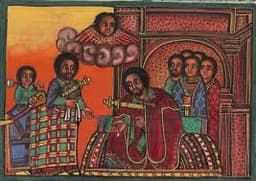
Zara Yaqob
Emperor · Medieval
60.8Total
Basic Information
Born
990
1399
Died
1035
1468
Era
Medieval
Medieval
Nationality
Denmark
Ethiopia
Occupation
Emperor
Emperor
Civilization
Western
Other
Score Comparison
Military (10%)
76.0
55.0
Political (20%)
70.0
72.0
Influence (20%)
55.0
61.0
Legacy (20%)
52.0
50.0
Leadership (15%)
79.8
72.0
Strategy (15%)
66.3
60.0
TOTAL
63.5
60.8
Cnut the Great — Complete Timeline
1016 AD
Conquest of EnglandWar◆ Major
After defeating Edmund Ironside at Assandun and Edmund's death, Cnut became sole king of England. He divided the kingdom into four earldoms: Wessex, Mercia, Northumbria, and East Anglia.
ConquestVikingEngland
Impact: regional
1019 AD
Accession to Danish ThronePolitical Action◆ Major
Cnut succeeded his brother Harald II as king of Denmark. He now ruled both England and Denmark, creating a North Sea empire.
SuccessionEmpireDenmark
Impact: regionalconstructive
1027 AD
Pilgrimage to RomeCultural
Cnut traveled to Rome for the coronation of Holy Roman Emperor Conrad II. He secured agreements for reduced tolls for English pilgrims and merchants traveling through Europe.
PilgrimageDiplomacyTrade
Impact: regionalconstructive
1028 AD
Conquest of NorwayWar◆ Major
Cnut invaded Norway and defeated King Olaf Haraldsson at the Battle of Stiklestad. Olaf was killed, and Cnut added Norway to his domains, becoming ruler of a North Sea empire.
ConquestVikingNorway
Impact: regional
1035 AD
Death of Cnut the GreatPolitical Action◆ Major
Cnut died at Shaftesbury in Dorset on November 12, 1035. His death led to the disintegration of his North Sea empire, with his sons Harold Harefoot and Harthacnut contesting the English throne.
DeathEmpire CollapseSuccession Crisis
Impact: regionaltragic
Zara Yaqob — Complete Timeline
1445 AD
Campaign against the Sultanate of AdalWar◆ Major
Zara Yaqob led a successful military campaign against the Sultanate of Adal, capturing its ruler and temporarily halting Muslim incursions. The victory strengthened the empire's eastern frontier and boosted the emperor's prestige.
Military CampaignAdalVictory
Impact: regional
1450 AD
Promulgation of the 'Book of the Law' (Matshafa Berhan)Reform◆ Major
Zara Yaqob composed the 'Matshafa Berhan' (Book of Light), a religious and legal text that reformed the Ethiopian Orthodox Church. It standardized liturgy, condemned heresies, and reinforced the emperor's authority over religious matters.
Religious ReformLegal CodeChurch
Impact: nationalconstructive
Council of Debre MitmaqCultural◆ Major
Zara Yaqob convened a church council at Debre Mitmaq to address theological disputes and enforce religious uniformity. The council condemned the 'Stephanites' (followers of Abba Estifanos) and other dissident groups, leading to persecutions.
Church CouncilReligious PersecutionHeresy
Impact: nationaldestructive
1456 AD
Construction of Debre Berhan ChurchCultural
Zara Yaqob founded the church of Debre Berhan (Mount of Light) in Shewa, which became a major religious center. The church was built after a reported vision of a heavenly light, symbolizing the emperor's divine mandate.
Church ConstructionReligious CenterShewa
constructive
This comparison has not been analyzed yet.
One-time AI generation (~1 minute). Scores and timeline are already available below.
Rankings
🥇
Cnut the GreatLeader
Mil: 76.0Pol: 70.0Inf: 55.0
63.5
🥈
Zara Yaqob
Mil: 55.0Pol: 72.0Inf: 61.0
60.8
+2.7 behind
How This Comparison Works
Algorithm
Each figure is scored on 6 dimensions (0—100 scale) based on structured historical data: Military (10%), Political (20%), Influence (20%), Legacy (20%), Leadership (15%), Strategy (15%). The weighted total produces the final ranking.
Data Sources
Scores are computed from structured sub-indicators in the database. Scale factors adjust for era (Ancient ×0.85, Modern ×1.0) and civilization size (Eastern ×1.05, Other ×0.80) to account for differences in population and military scale.
Maximum 3 Figures
Comparisons are limited to 2—3 figures to ensure readability and statistical meaningfulness.
Error Margins
±5 points per dimension — Sub-scores are derived from historical records with inherent uncertainty. Two figures within 5 points on a dimension should be considered roughly equivalent in that area.
Total Score Accuracy
±3 points overall — The weighted combination of 6 dimensions produces a total score with approximately ±3 points of uncertainty. Differences of less than 3 points are not statistically significant— the figures are effectively tied.
Known Limitations
- Historical records are incomplete and uneven across civilizations
- Figures from oral-tradition societies may be underrepresented
- Occupation labels can misclassify multi-role figures
- Scores measure capability and impact, not moral character
- Quantitative scoring is a comparison tool, not absolute truth
Capability Radar
Military (10%) — Battles & Warfare
Battles
75
45
Win Rate
80
50
Expansion
85
50
Political (20%) — Governance & Reform
Reform
70
80
Diplomacy
85
60
Economy
75
65
Influence (20%) — Cultural & Global Reach
Cultural
65
60
Global
55
35
Legacy (20%) — Historical Impact
Historical
70
55
Longevity
60
50
Leadership (15%) — Power & Stability
Tenure
80
70
Stability
70
70
Strategy (15%) — Tactics & Innovation
Strategy
85
45
Tactics
70
40
Reform
60
55
Similar Comparisons
Comments & Discussion
No comments yet. Be the first to share your thoughts!