Loading...
Conrad III vs Henry V
Henry V leads by 13.3 pts · 2 figures compared
…
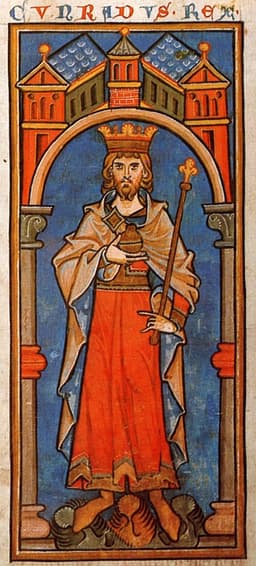
Conrad III
Emperor · Medieval
42.8Total
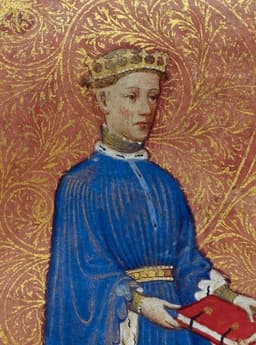
Henry V
Emperor · Medieval
56.1Total
Basic Information
Born
1093
1081
Died
1152
1125
Era
Medieval
Medieval
Nationality
Holy Roman Empire
Holy Roman Empire
Occupation
Emperor
Emperor
Civilization
Western
Western
Score Comparison
Military (10%)
45.0
25.0
Political (20%)
27.9
72.0
Influence (20%)
50.2
59.0
Legacy (20%)
41.7
54.0
Leadership (15%)
48.4
68.0
Strategy (15%)
38.3
43.3
TOTAL
42.8
56.1
Conrad III — Complete Timeline
1138 AD
Conflict with the WelfsWar
Conrad III engaged in a civil war with the Welf party, led by Henry the Proud and later Henry the Lion, from 1138 to 1142. The conflict ended with a compromise that allowed the Welfs to retain some territories.
Civil WarWelf Conflict
Impact: regionaldestructive
Election as King of GermanyPolitical Action◆ Major
Conrad III was elected King of Germany in 1138, becoming the first ruler of the Hohenstaufen dynasty. His election was opposed by the Welf party, leading to a prolonged conflict with Henry the Proud.
SuccessionHohenstaufen Dynasty
Impact: regional
1147 AD
Leadership of the Second CrusadeWar◆ Major
Conrad III led the German contingent of the Second Crusade to the Holy Land in 1147-1148. His army was defeated by the Seljuk Turks at the Battle of Dorylaeum in 1147, and the crusade ended in failure.
CrusadeMilitary Defeat
Impact: regionaltragic
1148 AD
Siege of DamascusWar
Conrad III participated in the Siege of Damascus in July 1148 during the Second Crusade. The siege failed after only four days due to internal disputes among crusader leaders, leading to the crusade's collapse.
CrusadeSiege
Impact: regionaltragic
Henry V — Complete Timeline
1106 AD
Election as King of GermanyPolitical Action◆ Major
Henry V was elected King of Germany in 1106 after rebelling against his father Henry IV, who died the same year. His accession marked the continuation of the Salian dynasty amid the Investiture Controversy.
SuccessionRebellion
Impact: regional
1110 AD
Campaign in ItalyWar
Henry V led a military campaign to Italy in 1110-1111 to assert imperial claims over the Papal States and secure his coronation. He captured Rome and forced Pope Paschal II to concede investiture rights, but the agreement was later repudiated.
Italian CampaignPapal Conflict
Impact: regional
1111 AD
Coronation as Holy Roman EmperorPolitical Action◆ Major
Pope Paschal II crowned Henry V Holy Roman Emperor in Rome on April 13, 1111, after Henry forced the Pope to grant him the right of investiture. The coronation followed a tense standoff where Henry imprisoned the Pope and cardinals.
CoronationInvestiture Controversy
Impact: regional
1122 AD
Concordat of WormsPolitical Action
Henry V and Pope Callixtus II signed the Concordat of Worms on September 23, 1122, ending the Investiture Controversy. The agreement gave the Church the right to elect bishops but allowed the emperor to invest them with secular authority.
Investiture ControversyTreatyChurch-State Relations
Impact: regionalconstructive
Expert Analysis
Origins
Conrad III (1093–1152) was born into the Hohenstaufen dynasty, a noble family from Swabia. His father was Frederick I, Duke of Swabia, and his mother was Agnes of Waiblingen, daughter of Emperor Henry IV. Conrad grew up amid the ongoing Investiture Controversy and the rivalry between the Hohenstaufen and the Welfs. He received a knightly education and became Duke of Franconia in 1116.
Henry V (1086–1125) was the son of Emperor Henry IV and Bertha of Savoy, born into the Salian dynasty. He was raised in the imperial court during the height of the Investiture Controversy, witnessing his father's conflicts with the papacy and the German princes. His education focused on governance and military command, preparing him for kingship.
Rise to Power
Conrad III's rise began when he was elected King of Germany in 1138 after the death of Emperor Lothair III. His election was contested by the Welf party, leading to a civil war. Conrad secured his position by defeating Henry the Proud at the Battle of Weinsberg in 1140 and later reconciling with Henry the Lion in 1142. His reign was marked by continuous struggle to assert Hohenstaufen authority.
Henry V rose to power by rebelling against his own father, Emperor Henry IV, in 1104. With the support of the papacy and disgruntled nobles, he forced his father to abdicate in 1105. Henry V became King of Germany in 1106 and was crowned Holy Roman Emperor in 1111 after a military campaign in Italy where he captured Pope Paschal II. His political maneuvering scored 72.0, reflecting his ability to navigate complex power structures.
Leadership & Governance
Conrad III's leadership style was martial and direct, with a military score of 45.0. He focused on consolidating Hohenstaufen rule through warfare and alliances. His governance was hampered by the ongoing Welf conflict, limiting his ability to implement reforms. He supported the Second Crusade, which ended in failure at the Siege of Damascus in 1148, damaging his prestige.
Henry V, with a leadership score of 68.0, was more diplomatic and strategic. He resolved the Investiture Controversy through the Concordat of Worms in 1122, which granted the Church the right to elect bishops while allowing the emperor to invest them with temporal authority. This compromise stabilized imperial-papal relations for decades. Henry also worked to centralize imperial authority, but faced rebellions from Saxony and other regions.
Triumph & Tragedy
Conrad III's greatest triumph was establishing the Hohenstaufen dynasty on the German throne, a line that would produce future emperors like Frederick Barbarossa. His greatest tragedy was the failed Second Crusade, where his army was annihilated by the Seljuks at the Battle of Dorylaeum in 1147. The siege of Damascus lasted only four days due to internal disputes among crusaders, further tarnishing his reputation.
Henry V's triumph was the Concordat of Worms, a diplomatic achievement that ended a half-century of conflict. He also secured his coronation as emperor by force. His tragedy was the failure to fully subdue the German princes, leading to ongoing regional autonomy. His legacy score of 54.0 reflects mixed outcomes.
Character & Destiny
Conrad III was determined but inflexible, often prioritizing honor over pragmatism. His decision to lead the crusade personally demonstrated his piety but also his poor strategic judgment (strategy score 38.3). His inability to reconcile fully with the Welfs kept the realm divided.
Henry V was calculating and ambitious, willing to rebel against his father and later use military force against the pope. His political acumen (72.0) allowed him to achieve the Concordat, but his harsh methods alienated allies. He died without an heir, ending the Salian dynasty.
Legacy
Conrad III's legacy is primarily as the founder of the Hohenstaufen dynasty, which shaped German history for a century. His crusade failure, however, made him a cautionary tale. His influence score of 50.2 reflects his role in establishing a major imperial line.
Henry V's legacy is the Concordat of Worms, a landmark in church-state relations. It set a precedent for compromise that influenced later medieval politics. His reign also marked the end of the Salian dynasty, leading to the Hohenstaufen rise. His overall score of 56.1 is higher than Conrad's 42.8.
Conclusion
Henry V had greater impact on the Holy Roman Empire and European history. His resolution of the Investiture Controversy through the Concordat of Worms was a defining achievement that ended a major conflict and set a framework for future governance. Conrad III, despite founding a dynasty, failed to achieve lasting stability or military success. Henry's political and leadership scores (72.0 and 68.0) significantly exceed Conrad's (27.9 and 48.4), making him the more effective ruler. The 13.3-point gap in total scores underscores Henry's superior influence and legacy.
Rankings
🥇
Henry VLeader
Mil: 25.0Pol: 72.0Inf: 59.0
56.1
🥈
Conrad III
Mil: 45.0Pol: 27.9Inf: 50.2
42.8
+13.3 behind
How This Comparison Works
Algorithm
Each figure is scored on 6 dimensions (0—100 scale) based on structured historical data: Military (10%), Political (20%), Influence (20%), Legacy (20%), Leadership (15%), Strategy (15%). The weighted total produces the final ranking.
Data Sources
Scores are computed from structured sub-indicators in the database. Scale factors adjust for era (Ancient ×0.85, Modern ×1.0) and civilization size (Eastern ×1.05, Other ×0.80) to account for differences in population and military scale.
Maximum 3 Figures
Comparisons are limited to 2—3 figures to ensure readability and statistical meaningfulness.
Error Margins
±5 points per dimension — Sub-scores are derived from historical records with inherent uncertainty. Two figures within 5 points on a dimension should be considered roughly equivalent in that area.
Total Score Accuracy
±3 points overall — The weighted combination of 6 dimensions produces a total score with approximately ±3 points of uncertainty. Differences of less than 3 points are not statistically significant— the figures are effectively tied.
Known Limitations
- Historical records are incomplete and uneven across civilizations
- Figures from oral-tradition societies may be underrepresented
- Occupation labels can misclassify multi-role figures
- Scores measure capability and impact, not moral character
- Quantitative scoring is a comparison tool, not absolute truth
Capability Radar
Military (10%) — Battles & Warfare
Battles
30
40
Win Rate
25
45
Expansion
20
30
Political (20%) — Governance & Reform
Reform
15
70
Diplomacy
30
75
Economy
20
55
Influence (20%) — Cultural & Global Reach
Cultural
25
40
Global
15
45
Legacy (20%) — Historical Impact
Historical
30
65
Longevity
20
50
Leadership (15%) — Power & Stability
Tenure
40
65
Stability
20
60
Strategy (15%) — Tactics & Innovation
Strategy
25
40
Tactics
30
35
Reform
10
30
Similar Comparisons
Comments & Discussion
No comments yet. Be the first to share your thoughts!