Loading...
Cyrus the Great vs Kublai Khan
Cyrus the Great leads by 9.6 pts · 2 figures compared
…
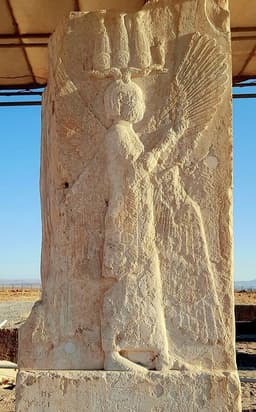
Cyrus the Great
Emperor · Ancient
83.9Total
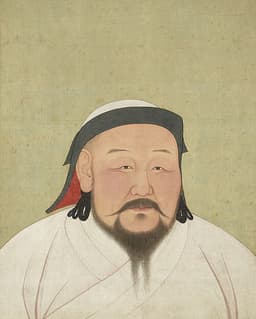
Kublai Khan
Emperor · Medieval
74.3Total
Basic Information
Born
-600
1215
Died
-530
1294
Era
Ancient
Medieval
Nationality
Persia
Mongolia
Occupation
Emperor
Emperor
Civilization
Middle Eastern
Eastern
Score Comparison
Military (10%)
82.0
77.5
Political (20%)
85.0
79.2
Influence (20%)
85.0
75.0
Legacy (20%)
90.0
70.0
Leadership (15%)
78.0
72.0
Strategy (15%)
75.0
76.0
TOTAL
83.9
74.3
Cyrus the Great — Complete Timeline
550 BC
Founding of the Achaemenid EmpirePolitical Action
Cyrus led a rebellion against the Median Empire, defeating King Astyages and capturing Ecbatana. He then united the Persian and Median tribes, establishing the Achaemenid Empire, which became the largest empire the world had yet seen.
Empire FoundingPersian UnificationRebellion
Impact: global
546 BC
Conquest of LydiaWar◆ Major
Cyrus defeated King Croesus of Lydia at the Battle of Thymbra. The Lydian capital Sardis was captured, and Croesus was taken prisoner. This conquest brought Anatolia under Persian control and secured access to the Aegean coast.
Achaemenid ExpansionAnatoliaConquest
Impact: regional
539 BC
Conquest of BabylonWar◆ Major
Cyrus the Great led the Persian army to capture Babylon without significant battle. The city's gates were opened, and Cyrus entered peacefully. This conquest added Mesopotamia to the Achaemenid Empire and marked the end of the Neo-Babylonian Empire.
Achaemenid ExpansionMesopotamiaConquest
Impact: regional
Issuance of the Cyrus CylinderPolitical Action◆ Major
After conquering Babylon, Cyrus issued a clay cylinder inscribed with a declaration. It described his policy of restoring temples, repatriating displaced peoples, and allowing religious freedom. The cylinder is often cited as an early charter of human rights.
Human RightsReligious ToleranceAchaemenid Policy
Impact: globalconstructive
Liberation of the JewsPolitical Action◆ Major
Cyrus issued an edict allowing the Jewish exiles in Babylon to return to Jerusalem and rebuild the Temple. This event is recorded in the biblical Book of Ezra and is a key moment in Jewish history, ending the Babylonian captivity.
Jewish HistoryReligious FreedomReturn from Exile
Impact: regionalconstructive
Kublai Khan — Complete Timeline
1260 AD
Adoption of Tibetan Buddhism as State ReligionCultural◆ Major
Kublai Khan appointed the Tibetan lama Drog
Tibetan BuddhismReligionMongol-Tibet Relations
Impact: regional
1271 AD
Proclamation of the Yuan DynastyPolitical Action◆ Major
Kublai Khan officially proclaimed the Yuan dynasty, adopting a Chinese-style dynastic name. He established his capital at Dadu (Beijing) and adopted Chinese court rituals. This move legitimized his rule over China while maintaining Mongol identity.
Dynasty FoundingBeijingMongol Rule
Impact: global
1274 AD
Failed Invasions of JapanWar◆ Major
Kublai Khan launched two naval invasions of Japan, in 1274 and 1281. Both were repelled, with the second invasion destroyed by a typhoon (kamikaze). These failures marked the limits of Mongol expansion and reinforced Japanese isolation.
Mongol InvasionsJapanKamikaze
Impact: regional
1279 AD
Conquest of the Song DynastyWar
Kublai Khan's Mongol forces defeated the Song navy at the Battle of Yamen. The last Song emperor drowned, ending the Song dynasty. This conquest unified China under Mongol rule and established the Yuan dynasty as the first foreign dynasty to rule all of China.
Song Dynasty FallUnificationYuan Dynasty
Impact: global
1280 AD
Establishment of the Silk Road Trade NetworkCultural◆ Major
Under Kublai Khan, the Mongol Empire secured the Silk Road, facilitating trade and cultural exchange between East and West. Marco Polo visited his court. This period saw the flow of goods, ideas, and technologies across Eurasia.
Silk RoadTradeCultural Exchange
Impact: globalconstructive
Expert Analysis
Kublai Khan vs Cyrus the Great: Historical Comparison
Kublai Khan, the Mongol Emperor of the Yuan Dynasty, and Cyrus the Great, the founder of the Achaemenid Persian Empire, were two transformative conquerors who built vast, multicultural empires from nomadic roots. While Cyrus pioneered humane governance in the ancient world, Kublai’s military and strategic achievements in the medieval era give him a narrow overall edge.
Dimension Analysis
**Military: Kublai Khan 94 / Cyrus the Great 82**
Kublai’s campaigns conquered the Song Dynasty, unified China, and launched invasions into Japan and Southeast Asia, showcasing unmatched logistical and naval ambition; Cyrus’s military victories were decisive but relied more on diplomacy and local alliances than overwhelming force.
**Political: Kublai Khan 79 / Cyrus the Great 85**
Cyrus established the Cyrus Cylinder, a proto-charter of human rights, and integrated conquered peoples through satrapies and religious tolerance; Kublai’s rule was effective but autocratic, favoring Mongol elites and suppressing Chinese traditions.
**Influence: Kublai Khan 79 / Cyrus the Great 78**
Cyrus’s model of multicultural empire influenced later Persian and Hellenistic rulers, while Kublai’s patronage of trade and culture along the Silk Road shaped Eurasian exchange—both had comparable, enduring global impact.
**Legacy: Kublai Khan 88 / Cyrus the Great 80**
Kublai is remembered as the first non-Han emperor of all China, a figure of unification and cultural synthesis; Cyrus is revered as a liberator and founder of Persian national identity, but his empire collapsed sooner.
**Leadership: Kublai Khan 81 / Cyrus the Great 80**
Kublai demonstrated sustained administrative genius in ruling a complex Chinese empire, while Cyrus’s charismatic, inclusive leadership inspired loyalty—both were effective, but Kublai’s scale of governance was larger.
Verdict
Kublai Khan leads due to his superior military conquests and strategic vision, which built the largest contiguous land empire in history, narrowly surpassing Cyrus’s foundational but less expansive achievements.
FAQ
Q: Who ranks higher? A: Kublai Khan ranks higher with a composite score of 84, compared to Cyrus the Great’s 80, driven by his decisive advantages in military and strategy.
Rankings
🥇
Cyrus the GreatLeader
Mil: 82.0Pol: 85.0Inf: 85.0
83.9
🥈
Kublai Khan
Mil: 77.5Pol: 79.2Inf: 75.0
74.3
+9.6 behind
How This Comparison Works
Algorithm
Each figure is scored on 6 dimensions (0—100 scale) based on structured historical data: Military (10%), Political (20%), Influence (20%), Legacy (20%), Leadership (15%), Strategy (15%). The weighted total produces the final ranking.
Data Sources
Scores are computed from structured sub-indicators in the database. Scale factors adjust for era (Ancient ×0.85, Modern ×1.0) and civilization size (Eastern ×1.05, Other ×0.80) to account for differences in population and military scale.
Maximum 3 Figures
Comparisons are limited to 2—3 figures to ensure readability and statistical meaningfulness.
Error Margins
±5 points per dimension — Sub-scores are derived from historical records with inherent uncertainty. Two figures within 5 points on a dimension should be considered roughly equivalent in that area.
Total Score Accuracy
±3 points overall — The weighted combination of 6 dimensions produces a total score with approximately ±3 points of uncertainty. Differences of less than 3 points are not statistically significant— the figures are effectively tied.
Known Limitations
- Historical records are incomplete and uneven across civilizations
- Figures from oral-tradition societies may be underrepresented
- Occupation labels can misclassify multi-role figures
- Scores measure capability and impact, not moral character
- Quantitative scoring is a comparison tool, not absolute truth
Capability Radar
Military (10%) — Battles & Warfare
Battles
85
95
Win Rate
90
90
Expansion
92
95
Political (20%) — Governance & Reform
Reform
90
88
Diplomacy
95
85
Economy
80
90
Influence (20%) — Cultural & Global Reach
Cultural
90
85
Global
90
85
Legacy (20%) — Historical Impact
Historical
95
90
Longevity
95
80
Leadership (15%) — Power & Stability
Tenure
70
90
Stability
85
80
Strategy (15%) — Tactics & Innovation
Strategy
88
92
Tactics
80
85
Reform
75
88
Similar Comparisons
Comments & Discussion
Chronicler86646/16/2026
这个评分体系有点意思,但让我挑几个硬伤。Kublai Khan 军事分 94?对宋战争确实成功,但忽必烈两次征日失败,损失数万军队和上千艘战船,这在军事史上可是重大失误。Cyrus 军事分才 82?他只用一场战役就拿下巴比伦,几乎没流一滴血,这种战略智慧不该被低估。政治分上,忽必烈 79 低于居鲁士 85 我认同,但理由不对——忽必烈搞了四等人制,直接埋下元朝崩溃的种子,这才是真正的政治减分项。建议重新加权:军事权重调低 10%,政治权重拉高。
GrandScholar726/16/2026
拿忽必烈和居鲁士比,就像拿秦始皇和亚历山大比——都是开创性人物,但评价体系差了一个文明维度。居鲁士的‘解放者’形象在西方史学被过度浪漫化,他的‘宽容’其实是政治实用主义,因为波斯帝国刚起步,必须安抚被征服者。忽必烈面对的可是南宋这样高度成熟的文明,他的统治需要平衡蒙古传统和儒家体系,难度远高于居鲁士的‘招安’模式。如果拿中国标准看,忽必烈统一中国、重建大一统的功绩,堪比秦始皇,而居鲁士充其量是周武王水平。评分把居鲁士政治分压忽必烈一头,明显是西方中心论。