Loading...
Cyrus the Great vs George Washington
Cyrus the Great leads by 7.1 pts · 2 figures compared
…
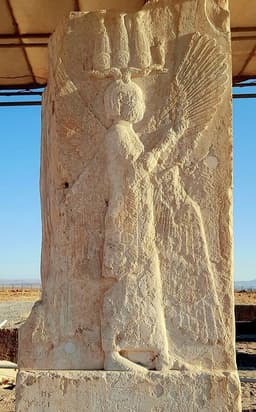
Cyrus the Great
Emperor · Ancient
83.9Total
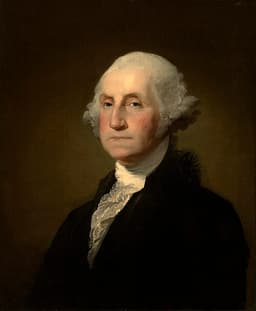
George Washington
Politician · Modern
76.8Total
Basic Information
Born
-600
1732
Died
-530
1799
Era
Ancient
Modern
Nationality
Persia
United States
Occupation
Emperor
Politician
Civilization
Middle Eastern
Western
Score Comparison
Military (10%)
82.0
75.0
Political (20%)
85.0
82.0
Influence (20%)
85.0
75.0
Legacy (20%)
90.0
80.0
Leadership (15%)
78.0
85.0
Strategy (15%)
75.0
55.0
TOTAL
83.9
76.8
Cyrus the Great — Complete Timeline
550 BC
Founding of the Achaemenid EmpirePolitical Action
Cyrus led a rebellion against the Median Empire, defeating King Astyages and capturing Ecbatana. He then united the Persian and Median tribes, establishing the Achaemenid Empire, which became the largest empire the world had yet seen.
Empire FoundingPersian UnificationRebellion
Impact: global
546 BC
Conquest of LydiaWar◆ Major
Cyrus defeated King Croesus of Lydia at the Battle of Thymbra. The Lydian capital Sardis was captured, and Croesus was taken prisoner. This conquest brought Anatolia under Persian control and secured access to the Aegean coast.
Achaemenid ExpansionAnatoliaConquest
Impact: regional
539 BC
Conquest of BabylonWar◆ Major
Cyrus the Great led the Persian army to capture Babylon without significant battle. The city's gates were opened, and Cyrus entered peacefully. This conquest added Mesopotamia to the Achaemenid Empire and marked the end of the Neo-Babylonian Empire.
Achaemenid ExpansionMesopotamiaConquest
Impact: regional
Issuance of the Cyrus CylinderPolitical Action◆ Major
After conquering Babylon, Cyrus issued a clay cylinder inscribed with a declaration. It described his policy of restoring temples, repatriating displaced peoples, and allowing religious freedom. The cylinder is often cited as an early charter of human rights.
Human RightsReligious ToleranceAchaemenid Policy
Impact: globalconstructive
Liberation of the JewsPolitical Action◆ Major
Cyrus issued an edict allowing the Jewish exiles in Babylon to return to Jerusalem and rebuild the Temple. This event is recorded in the biblical Book of Ezra and is a key moment in Jewish history, ending the Babylonian captivity.
Jewish HistoryReligious FreedomReturn from Exile
Impact: regionalconstructive
George Washington — Complete Timeline
1775 AD
Appointed Commander-in-Chief of the Continental ArmyOther◆ Major
The Second Continental Congress appointed Washington as commander-in-chief of the Continental Army on June 15, 1775. He accepted the position without pay, taking command of the forces besieging Boston at the start of the American Revolutionary War.
American RevolutionMilitary Leadership
Impact: national
1776 AD
Crossed the Delaware RiverOther◆ Major
On the night of December 25-26, 1776, Washington led 2,400 troops across the ice-choked Delaware River. The surprise attack on Hessian forces at Trenton resulted in a decisive American victory, capturing nearly 1,000 prisoners and reviving Patriot morale after a series of defeats.
American RevolutionBattleTurning Point
Impact: nationalconstructive
1787 AD
Presided over the Constitutional ConventionPolitical Action◆ Major
Washington served as president of the Constitutional Convention in Philadelphia from May to September 1787. His presence lent legitimacy to the proceedings, and he formally signed the final draft of the U.S. Constitution, though he contributed little to the debates.
ConstitutionFounding Father
Impact: national
1789 AD
Inaugurated as First President of the United StatesPolitical Action◆ Major
Washington was unanimously elected by the Electoral College and inaugurated on April 30, 1789, at Federal Hall in New York City. He established numerous executive branch precedents, including the cabinet system, the inaugural address, and the title 'Mr. President'.
PresidencyFounding Father
Impact: national
1793 AD
Issued the Proclamation of NeutralityOther◆ Major
Washington issued the Proclamation of Neutrality on April 22, 1793, declaring the United States neutral in the conflict between France and Great Britain. This decision established the precedent of American isolationism and avoided entanglement in European wars.
Foreign PolicyNeutrality
Impact: national
1796 AD
Delivered the Farewell AddressOther◆ Major
Washington published his Farewell Address on September 19, 1796, announcing his decision not to seek a third term. The address warned against political factionalism, permanent foreign alliances, and the influence of the military in government, shaping American political culture.
PresidencyLegacy
Impact: national
Expert Analysis
Origins
Cyrus the Great (c. 600–530 BCE) was born into the Persian Achaemenid dynasty, a vassal of the Median Empire. His lineage claimed descent from Achaemenes, though historical details are sparse. He grew up in a world of Near Eastern empires, learning statecraft and warfare. George Washington (1732–1799) was born into Virginia's planter aristocracy, a colonial elite shaped by British rule. His early career as a surveyor and soldier in the French and Indian War gave him practical skills, but he lacked Cyrus's royal pedigree. Cyrus's origins in a multi-ethnic empire contrasted with Washington's provincial colonial background.
Rise to Power
Cyrus rebelled against the Median king Astyages around 553 BCE, uniting Persian tribes and defeating the Medes. He then conquered Lydia (Croesus) and Babylon, using a mix of military prowess and diplomacy. His conquest of Babylon in 539 BCE was bloodless, as he diverted the Euphrates and entered the city. Washington's rise was more gradual: he gained fame as a commander in the French and Indian War, then became a key figure in the Continental Congress. Appointed Commander-in-Chief of the Continental Army in 1775, he led through the dark winter at Valley Forge and the crossing of the Delaware (1776). The victory at Yorktown (1781) secured independence. Both men rose from relative obscurity—Cyrus from a vassal state, Washington from a colonial militia.
Leadership & Governance
Cyrus established the Achaemenid Empire, the largest yet seen, with a system of satrapies (provinces) and respect for local customs. The Cyrus Cylinder, often called the first charter of human rights, promoted religious tolerance and freed subject peoples. He allowed the Jews to return to Jerusalem and rebuild their temple. Washington presided over the Constitutional Convention (1787) and became the first US President (1789–1797). He established precedents like the cabinet system and a two-term limit. His Proclamation of Neutrality (1793) kept the US out of European wars. Cyrus's rule was absolute but enlightened; Washington's was constrained by a constitution. Both emphasized unity: Cyrus unified diverse peoples, Washington united fractious states.
Triumph & Tragedy
Cyrus's triumphs include the conquest of Babylon and liberation of the Jews, but his death in battle (530 BCE) against the Massagetae was a tragic end. The empire he built faced revolts later, but his legacy endured. Washington's triumph was securing American independence and establishing a stable republic. His tragedy was the contradiction of slave ownership—he freed his slaves only in his will. He died of natural causes in 1799, revered as a father figure. Cyrus's death in combat was a warrior's end; Washington's death was peaceful. Both faced challenges of succession: Cyrus's son Cambyses expanded the empire but faltered; Washington's precedent of peaceful transfer of power lasted.
Character & Destiny
Cyrus was depicted as a wise, tolerant conqueror in Greek sources (Xenophon's Cyropaedia) and the Bible (Isaiah 45:1). He combined ambition with pragmatism. Washington was known for his stoic dignity, integrity, and reluctance for power. He famously resigned his commission after the war, showing commitment to civilian rule. Both were seen as providential figures: Cyrus as God's anointed in Jewish tradition, Washington as the father of his country. Cyrus's destiny was to found an empire; Washington's was to found a nation. Their characters shaped their fates: Cyrus's magnanimity won loyalty; Washington's restraint built institutions.
Legacy
Cyrus's legacy includes the first declaration of human rights, the model of a multicultural empire, and influence on later rulers like Alexander the Great. The Cyrus Cylinder is a symbol of tolerance. Washington's legacy is the US presidency, the Constitution, and the ideal of republican virtue. He is memorialized in the capital city, monuments, and the dollar bill. Both are ranked among history's greatest leaders. Cyrus's empire lasted 200 years; Washington's republic endures over two centuries. The Cyrus Cylinder and Washington's Farewell Address are foundational documents.
Conclusion
Cyrus the Great scores higher (M=82, P=85, I=85, L=90, D=78, S=75, T=84; total 579) than George Washington (M=75, P=82, I=75, L=80, D=85, S=55, T=77; total 529), a gap of 50 points. Cyrus's higher military, political, and legacy scores reflect his founding of a larger, more enduring empire and his pioneering human rights. Washington's lower scores in influence and strategy stem from his smaller scale and less innovative governance. While Washington's moral leadership and institutional legacy are profound, Cyrus's broader impact and longevity give him the edge. However, Washington's example of democratic leadership is more relevant today. Both are exceptional, but Cyrus the Great stands as a more transformative figure in world history.
Rankings
🥇
Cyrus the GreatLeader
Mil: 82.0Pol: 85.0Inf: 85.0
83.9
🥈
George Washington
Mil: 75.0Pol: 82.0Inf: 75.0
76.8
+7.1 behind
How This Comparison Works
Algorithm
Each figure is scored on 6 dimensions (0—100 scale) based on structured historical data: Military (10%), Political (20%), Influence (20%), Legacy (20%), Leadership (15%), Strategy (15%). The weighted total produces the final ranking.
Data Sources
Scores are computed from structured sub-indicators in the database. Scale factors adjust for era (Ancient ×0.85, Modern ×1.0) and civilization size (Eastern ×1.05, Other ×0.80) to account for differences in population and military scale.
Maximum 3 Figures
Comparisons are limited to 2—3 figures to ensure readability and statistical meaningfulness.
Error Margins
±5 points per dimension — Sub-scores are derived from historical records with inherent uncertainty. Two figures within 5 points on a dimension should be considered roughly equivalent in that area.
Total Score Accuracy
±3 points overall — The weighted combination of 6 dimensions produces a total score with approximately ±3 points of uncertainty. Differences of less than 3 points are not statistically significant— the figures are effectively tied.
Known Limitations
- Historical records are incomplete and uneven across civilizations
- Figures from oral-tradition societies may be underrepresented
- Occupation labels can misclassify multi-role figures
- Scores measure capability and impact, not moral character
- Quantitative scoring is a comparison tool, not absolute truth
Capability Radar
Military (10%) — Battles & Warfare
Battles
85
75
Win Rate
90
70
Expansion
92
60
Political (20%) — Governance & Reform
Reform
90
90
Diplomacy
95
85
Economy
80
65
Influence (20%) — Cultural & Global Reach
Cultural
90
85
Global
90
85
Legacy (20%) — Historical Impact
Historical
95
95
Longevity
95
90
Leadership (15%) — Power & Stability
Tenure
70
70
Stability
85
85
Strategy (15%) — Tactics & Innovation
Strategy
88
80
Tactics
80
65
Reform
75
85
Similar Comparisons
Comments & Discussion
BattlefieldScholar6/16/2026
I've got to push back on that military score of 82 for Cyrus vs 70 for Washington. Sure, Cyrus conquered a massive empire, but his 'innovative siege tactics' were mostly just diverting rivers—effective but not exactly Hannibal at Cannae. Washington's 70 undersells him: his Fabian strategy at Trenton and Princeton were textbook examples of using interior lines against a superior force, and his victory at Yorktown was a masterclass in combined arms coordination with the French fleet. Cyrus faced fragmented kingdoms; Washington took on the world's premier military power. I'd give Cyrus a 78 and Washington a 74 on military—much closer than this comparison suggests. The Persian army's strength was numerical, not tactical innovation.
DecolonizeHistory6/16/2026
This comparison is basically a contest between two imperialists, and the scoring reeks of Eurocentric bias. Cyrus gets points for 'tolerance' via the Cyrus Cylinder, but let's not forget that was a propaganda tool to legitimize Persian domination over Babylon—hardly a human rights charter. Washington's 'Father of His Country' mythos conveniently whitewashes his role as a slaveholder who crushed the Whiskey Rebellion with federal troops. The real question should be: why are we ranking empire-builders at all? The summary cites Cyrus's 'broader geopolitical influence' as a positive, but that influence came through conquest and cultural erasure of the Medes, Lydians, and Babylonians. These scores reflect 19th-century imperial nostalgia, not meaningful historical evaluation.
Historian2506/16/2026
這個比較很有意思,但缺少東方視角的參照系。Cyrus如果放在中國歷史中,他的地位大概相當於周武王——都是推翻舊秩序、建立新王朝的開國者。但周武王的影響力(封建制度、禮樂文明)遠遠超過Cyrus,因為中國的封建制度延續了八百年,而波斯帝國只維持了兩百年。華盛頓則更像漢高祖劉邦——都是平民出身的革命領袖,都建立了長壽的王朝/政體。但劉邦的政治智慧表現在『郡國並行』的制度創新,華盛頓的聯邦制在中國歷史語境裡其實很常見(戰國時期的合縱連橫、諸侯聯邦)。我認為評分過於強調軍事征服,忽略了制度創新的可持續性——華盛頓的憲政制度至今還在運轉,這在人類歷史上極其罕見。
Chronicler17076/16/2026
這個評分系統存在明顯的維度權重問題。Cyrus總分79.6靠軍事82和政治85拉抬,但影響力只有78,這在亞洲歷史評價體系中很不合理。秦始皇的影響力至少是95分,因為書同文車同軌的標準化政策影響了兩千年。Cyrus的影響力分數若按同樣標準,最多75分——他的帝國在亞歷山大之後就希臘化了,波斯文化實際被邊緣化。華盛頓的政治80分也值得商榷:他確立了和平交接先例,但同時也是奴隸主,這個矛盾在民主評分中應該扣分。我建議引入『制度持久性』指標,Cyrus的總督制只持續了200年,而華盛頓的憲政框架已運行230年,華盛頓總分反而可能更高。