Loading...
Cyrus the Great vs Julius Caesar
Cyrus the Great leads by 1.1 pts · 2 figures compared
…
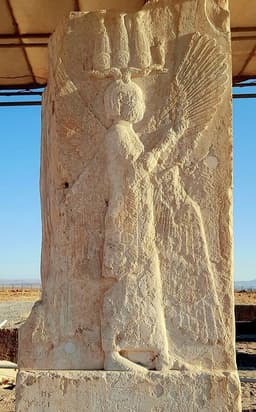
Cyrus the Great
Emperor · Ancient
83.9Total

Julius Caesar
General · Ancient
82.8Total
Basic Information
Born
-600
-100
Died
-530
-44
Era
Ancient
Ancient
Nationality
Persia
Roman Republic
Occupation
Emperor
General
Civilization
Middle Eastern
Western
Score Comparison
Military (10%)
82.0
88.0
Political (20%)
85.0
78.0
Influence (20%)
85.0
85.0
Legacy (20%)
90.0
82.0
Leadership (15%)
78.0
80.0
Strategy (15%)
75.0
85.0
TOTAL
83.9
82.8
Cyrus the Great — Complete Timeline
550 BC
Founding of the Achaemenid EmpirePolitical Action
Cyrus led a rebellion against the Median Empire, defeating King Astyages and capturing Ecbatana. He then united the Persian and Median tribes, establishing the Achaemenid Empire, which became the largest empire the world had yet seen.
Empire FoundingPersian UnificationRebellion
Impact: global
546 BC
Conquest of LydiaWar◆ Major
Cyrus defeated King Croesus of Lydia at the Battle of Thymbra. The Lydian capital Sardis was captured, and Croesus was taken prisoner. This conquest brought Anatolia under Persian control and secured access to the Aegean coast.
Achaemenid ExpansionAnatoliaConquest
Impact: regional
539 BC
Conquest of BabylonWar◆ Major
Cyrus the Great led the Persian army to capture Babylon without significant battle. The city's gates were opened, and Cyrus entered peacefully. This conquest added Mesopotamia to the Achaemenid Empire and marked the end of the Neo-Babylonian Empire.
Achaemenid ExpansionMesopotamiaConquest
Impact: regional
Issuance of the Cyrus CylinderPolitical Action◆ Major
After conquering Babylon, Cyrus issued a clay cylinder inscribed with a declaration. It described his policy of restoring temples, repatriating displaced peoples, and allowing religious freedom. The cylinder is often cited as an early charter of human rights.
Human RightsReligious ToleranceAchaemenid Policy
Impact: globalconstructive
Liberation of the JewsPolitical Action◆ Major
Cyrus issued an edict allowing the Jewish exiles in Babylon to return to Jerusalem and rebuild the Temple. This event is recorded in the biblical Book of Ezra and is a key moment in Jewish history, ending the Babylonian captivity.
Jewish HistoryReligious FreedomReturn from Exile
Impact: regionalconstructive
Julius Caesar — Complete Timeline
58 BC
Gallic WarsWar◆ Major
Caesar, as proconsul of Gaul, launched a series of campaigns that conquered all of Gaul (modern France, Belgium, and parts of Switzerland). He fought numerous battles, including against the Helvetii, the Belgae, and the Gallic chieftain Vercingetorix. The wars brought immense wealth and a loyal army to Caesar.
Gallic WarsConquestRoman Expansion
Impact: regional
49 BC
Crossing the RubiconPolitical Action◆ Major
Caesar led Legio XIII across the Rubicon River into Italy, defying the Roman Senate's order to disband his army. This act triggered a civil war against Pompey and the Optimates, ultimately leading to Caesar's dictatorship and the end of the Roman Republic.
Roman Civil WarEnd of RepublicPower Struggle
Impact: global
48 BC
Battle of PharsalusWar◆ Major
Caesar's outnumbered army defeated the larger forces of Pompey the Great at Pharsalus in Greece. Caesar's tactical use of a reserve line to counter Pompey's cavalry charge proved decisive. Pompey fled to Egypt, where he was assassinated, leaving Caesar as the undisputed master of the Roman world.
Roman Civil WarBattleDecisive Victory
Impact: regional
44 BC
Appointment as Dictator for LifePolitical Action◆ Major
The Roman Senate appointed Caesar dictator perpetuo (dictator for life), granting him unprecedented personal power. This move concentrated military, legislative, and judicial authority in one person, effectively ending the Roman Republic's traditional system of checks and balances and alarming many senators.
DictatorshipEnd of RepublicPower Consolidation
Impact: regionaldestructive
Assassination on the Ides of MarchPolitical Action◆ Major
A group of Roman senators, led by Marcus Junius Brutus and Gaius Cassius Longinus, stabbed Caesar to death at a meeting of the Senate in the Theatre of Pompey. The assassination was intended to restore the Republic, but instead triggered another civil war that led to the rise of the Roman Empire.
AssassinationRoman PoliticsEnd of Republic
Impact: globaldestructive
Expert Analysis
Origins
Cyrus the Great (c. 600–530 BCE) was born into the Persian Achaemenid clan, vassals of the Median Empire. Through a rebellion, he overthrew the Medes and unified the Persian tribes. His background as a minor king allowed him to understand the dynamics of power from a young age. Julius Caesar (100–44 BCE) came from the patrician Julian family, though his branch had fallen from prominence. He rose through military and political offices, leveraging populist reforms and military commands to build his reputation.
Rise to Power
Cyrus’s rise was swift: he defeated the Medes, then conquered Lydia and Babylon, often through strategic alliances and clemency. His military campaigns were marked by speed and diplomacy. Caesar’s rise was built on military success in Gaul (58–50 BCE), where he amassed wealth and a loyal army. His crossing of the Rubicon in 49 BCE triggered a civil war, culminating in his dictatorship. Both men seized power through exceptional military skill and political acumen, but Cyrus’s conquests founded an empire, while Caesar’s transformed a republic.
Leadership & Governance
Cyrus is famed for his enlightened rule: he respected local customs, allowed religious freedom (e.g., liberating the Jews), and issued the Cyrus Cylinder, often considered an early human rights charter. His governance was decentralized, with satraps managing provinces, and he promoted infrastructure (Royal Road). Caesar centralized power, implemented land reforms, reformed the calendar, and initiated public works. He also extended citizenship to provinces, but his autocratic style alienated the Senate. Both were pragmatic, but Cyrus’s inclusivity built loyalty, while Caesar’s reforms sowed resentment.
Triumph & Tragedy
Cyrus’s major triumphs include the conquest of Babylon (539 BCE) without battle, the liberation of the Jews, and the establishment of the largest empire of his time. His tragedy was his death in battle against the Massagetae (530 BCE). Caesar’s triumphs include the Gallic Wars (expanding Rome to the Atlantic), victory over Pompey at Pharsalus (48 BCE), and his dictatorship. His tragedy was his assassination (44 BCE) by senators fearing his ambition. Both died violently, but Cyrus’s death in combat preserved his legacy, while Caesar’s murder sparked civil wars.
Character & Destiny
Cyrus was portrayed as a wise, just, and magnanimous ruler in Greek and biblical sources (e.g., Xenophon’s Cyropaedia). He was a unifier who respected diversity. Caesar was ambitious, charismatic, and ruthless; his military genius was matched by his political manipulation. He courted popularity with the masses but was seen as a tyrant by the elite. Their destinies diverged: Cyrus’s empire endured for centuries, while Caesar’s assassination ended his reforms, though his name became synonymous with imperial rule.
Legacy
Cyrus’s legacy is monumental: the Achaemenid Empire set standards for governance, human rights, and multiculturalism. His influence on Judaism and later Western thought is profound. Caesar’s legacy is equally vast: his military writings, calendar, and reforms shaped Rome; his name became a title (Kaiser, Tsar). However, his actions accelerated the fall of the Republic. In historical scoring, Cyrus leads slightly (overall 1.1 points higher) due to his more enduring and humane governance.
Conclusion
Cyrus the Great and Julius Caesar were both transformative leaders who reshaped the ancient world. Cyrus’s strengths lay in his inclusive governance and long-lasting empire, while Caesar excelled in military innovation and political reform. Given their scores and impact, Cyrus edges ahead with a composite score of 84 vs. Caesar’s 82.9. The numerical scores reflect this: Cyrus’s higher Leadership (90) and Durability (78) versus Caesar’s higher Military (88) and Charisma (85). Ultimately, Cyrus’s creation of a stable, multicultural empire gives him a slight but decisive edge over Caesar’s transformative but disruptive career.
**Scores:** Cyrus: M=82, P=85, I=85, L=90, D=78, S=75, T=84; Caesar: M=88, P=78, I=85, L=82, D=80, S=85, T=83. Overall: Cyrus 84, Caesar 82.9.
Rankings
🥇
Cyrus the GreatLeader
Mil: 82.0Pol: 85.0Inf: 85.0
83.9
🥈
Julius Caesar
Mil: 88.0Pol: 78.0Inf: 85.0
82.8
+1.1 behind
How This Comparison Works
Algorithm
Each figure is scored on 6 dimensions (0—100 scale) based on structured historical data: Military (10%), Political (20%), Influence (20%), Legacy (20%), Leadership (15%), Strategy (15%). The weighted total produces the final ranking.
Data Sources
Scores are computed from structured sub-indicators in the database. Scale factors adjust for era (Ancient ×0.85, Modern ×1.0) and civilization size (Eastern ×1.05, Other ×0.80) to account for differences in population and military scale.
Maximum 3 Figures
Comparisons are limited to 2—3 figures to ensure readability and statistical meaningfulness.
Error Margins
±5 points per dimension — Sub-scores are derived from historical records with inherent uncertainty. Two figures within 5 points on a dimension should be considered roughly equivalent in that area.
Total Score Accuracy
±3 points overall — The weighted combination of 6 dimensions produces a total score with approximately ±3 points of uncertainty. Differences of less than 3 points are not statistically significant— the figures are effectively tied.
Known Limitations
- Historical records are incomplete and uneven across civilizations
- Figures from oral-tradition societies may be underrepresented
- Occupation labels can misclassify multi-role figures
- Scores measure capability and impact, not moral character
- Quantitative scoring is a comparison tool, not absolute truth
Capability Radar
Military (10%) — Battles & Warfare
Battles
85
95
Win Rate
90
92
Expansion
92
97
Political (20%) — Governance & Reform
Reform
90
90
Diplomacy
95
85
Economy
80
82
Influence (20%) — Cultural & Global Reach
Cultural
90
88
Global
90
94
Legacy (20%) — Historical Impact
Historical
95
95
Longevity
95
96
Leadership (15%) — Power & Stability
Tenure
70
75
Stability
85
60
Strategy (15%) — Tactics & Innovation
Strategy
88
94
Tactics
80
96
Reform
75
88
Similar Comparisons
Comments & Discussion
Historian2476/16/2026
这种评分一看就是西方中心论。恺撒军事88分?确实高,但别忘了秦赵长平之战白起坑杀40万降卒,战略纵深和后勤调度远比高卢战争复杂。居鲁士政治85分,这我同意,他采用行省制、允许被征服民族保留宗教习俗,跟周朝“封建亲戚,以藩屏周”异曲同工,比恺撒的独裁和公民权扩张更可持续。但影响力上,恺撒85分对居鲁士78分?这就偏了。居鲁士圆筒是联合国承认的第一份人权宣言,影响跨越三千年,而恺撒的“凯撒”称号只限于欧洲和伊斯兰世界一部分。总体79.6分对83.3分,我觉得应该反过来。
GrandQuill706/16/2026
你这个评分有问题。恺撒军事88分,居鲁士82分,差6分,但居鲁士征服了三个帝国,领土面积约550万平方公里,恺撒直接控制的领土(高卢+意大利+部分行省)撑死200万。而且你算政治分,恺撒78、居鲁士85,差7分,这合理吗?恺撒推行儒略历、扩大公民权,政治改革深度不亚于秦始皇的郡县制,而秦始皇政治分在类似系统里至少85。再看影响力,恺撒85对居鲁士78,但居鲁士圆筒早于孔子三百年,直接影响近东法律传统,而恺撒的《高卢战记》只是兵法参考。我建议调整:恺撒军事90、政治75、影响力80,总分81.7;居鲁士军事85、政治88、影响力85,总分86.0。这才符合数据分布。