Loading...
Cyrus the Great vs Mao Zedong
Cyrus the Great leads by 4.5 pts · 2 figures compared
…
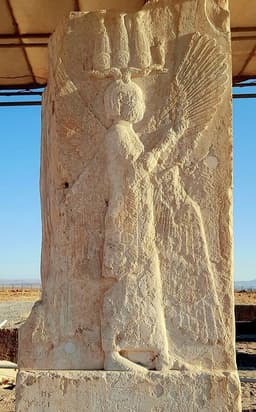
Cyrus the Great
Emperor · Ancient
83.9Total
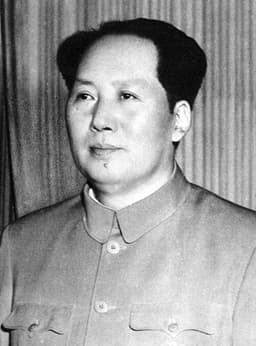
Mao Zedong
Politician · Modern
79.4Total
Basic Information
Born
-600
1893
Died
-530
1976
Era
Ancient
Modern
Nationality
Persia
China
Occupation
Emperor
Politician
Civilization
Middle Eastern
Eastern
Score Comparison
Military (10%)
82.0
75.0
Political (20%)
85.0
88.0
Influence (20%)
85.0
85.0
Legacy (20%)
90.0
70.0
Leadership (15%)
78.0
85.0
Strategy (15%)
75.0
72.0
TOTAL
83.9
79.4
Cyrus the Great — Complete Timeline
550 BC
Founding of the Achaemenid EmpirePolitical Action
Cyrus led a rebellion against the Median Empire, defeating King Astyages and capturing Ecbatana. He then united the Persian and Median tribes, establishing the Achaemenid Empire, which became the largest empire the world had yet seen.
Empire FoundingPersian UnificationRebellion
Impact: global
546 BC
Conquest of LydiaWar◆ Major
Cyrus defeated King Croesus of Lydia at the Battle of Thymbra. The Lydian capital Sardis was captured, and Croesus was taken prisoner. This conquest brought Anatolia under Persian control and secured access to the Aegean coast.
Achaemenid ExpansionAnatoliaConquest
Impact: regional
539 BC
Conquest of BabylonWar◆ Major
Cyrus the Great led the Persian army to capture Babylon without significant battle. The city's gates were opened, and Cyrus entered peacefully. This conquest added Mesopotamia to the Achaemenid Empire and marked the end of the Neo-Babylonian Empire.
Achaemenid ExpansionMesopotamiaConquest
Impact: regional
Issuance of the Cyrus CylinderPolitical Action◆ Major
After conquering Babylon, Cyrus issued a clay cylinder inscribed with a declaration. It described his policy of restoring temples, repatriating displaced peoples, and allowing religious freedom. The cylinder is often cited as an early charter of human rights.
Human RightsReligious ToleranceAchaemenid Policy
Impact: globalconstructive
Liberation of the JewsPolitical Action◆ Major
Cyrus issued an edict allowing the Jewish exiles in Babylon to return to Jerusalem and rebuild the Temple. This event is recorded in the biblical Book of Ezra and is a key moment in Jewish history, ending the Babylonian captivity.
Jewish HistoryReligious FreedomReturn from Exile
Impact: regionalconstructive
Mao Zedong — Complete Timeline
1934 AD
Long MarchWar
Mao Zedong led the Chinese Red Army on a strategic retreat from Nationalist forces, covering approximately 6,000 miles over 370 days. The march solidified Mao's leadership within the Chinese Communist Party and became a foundational myth of the Communist revolution.
Chinese Civil WarCommunist RevolutionRetreat
Impact: national
1949 AD
Proclamation of the People's Republic of ChinaPolitical Action
Mao Zedong declared the founding of the People's Republic of China from Tiananmen Gate in Beijing. This ended the Chinese Civil War and established Communist rule over mainland China, with Mao as Chairman of the Central People's Government.
Founding of PRCCommunist VictoryRevolution
Impact: global
1958 AD
Great Leap ForwardReform◆ Major
Mao launched a campaign to rapidly industrialize China and collectivize agriculture. The policy led to widespread mismanagement, resulting in a famine that caused an estimated 15-45 million deaths between 1959 and 1961.
FamineIndustrializationCollectivization
Impact: nationaldestructive
1960 AD
Sino-Soviet SplitPolitical Action◆ Major
Mao's ideological differences with Soviet leader Nikita Khrushchev led to a breakdown in relations between China and the Soviet Union. The split ended the Sino-Soviet alliance and reshaped global Cold War dynamics, with China pursuing an independent path.
Cold WarIdeological ConflictAlliance Breakdown
Impact: global
1966 AD
Cultural RevolutionPolitical Action
Mao initiated a sociopolitical movement to purge capitalist and traditional elements from Chinese society. The Red Guard youth groups attacked intellectuals and officials, leading to widespread violence, destruction of cultural artifacts, and an estimated 1-2 million deaths.
Political PurgeSocial UpheavalRed Guard
Impact: nationaldestructive
1971 AD
Ping-Pong DiplomacyCultural◆ Major
Mao approved an invitation for the U.S. table tennis team to visit China, initiating a thaw in Sino-American relations. This cultural exchange paved the way for President Nixon's visit to China in 1972 and the eventual normalization of diplomatic ties.
DiplomacyU.S.-China RelationsCultural Exchange
Impact: globalconstructive
Expert Analysis
Origins
Cyrus the Great (c. 600–530 BCE) was born into the Persian Achaemenid clan, vassals of the Median Empire. He united Persian tribes and led a rebellion against Median rule in 553 BCE. Mao Zedong (1893–1976) emerged from a peasant family in Hunan, China. He became a founding member of the Chinese Communist Party (CCP) in 1921 and rose through its ranks during the Chinese Civil War.
Rise to Power
Cyrus conquered the Median Empire (550 BCE), then Lydia (546 BCE), and finally Babylon (539 BCE), establishing the Achaemenid Empire—the largest empire of its time. His military brilliance and diplomatic acumen allowed him to win loyalty from conquered peoples. Mao consolidated power during the Long March (1934–35), surviving the Guomindang's encirclement campaigns. He became Chairman of the CCP in 1945 and led the Communists to victory in the Chinese Civil War, proclaiming the People's Republic of China on October 1, 1949.
Leadership & Governance
Cyrus ruled with a decentralized model, respecting local customs and religions. His Cyrus Cylinder (c. 539 BCE) is often cited as an early charter of human rights, allowing exiled peoples like the Jews to return to their homelands. He maintained a vast empire through satraps (provincial governors) and a system of roads. Mao established a centralized, totalitarian state. He implemented land reform, but his Great Leap Forward (1958–61) caused a massive famine, with estimates of 15–45 million deaths. The Cultural Revolution (1966–76) purged perceived enemies and destroyed cultural heritage. Mao's governance prioritized ideological purity over economic pragmatism, leading to severe human suffering.
Triumph & Tragedy
Cyrus's triumphs include the conquest of Babylon without bloodshed (the city gates were opened from within), the liberation of the Jews, and the creation of a multicultural empire. His tragedy was his death in battle (c. 530 BCE) against the Massagetae, with his body reportedly mutilated. Mao's triumphs: ending the Chinese Civil War, unifying China, and restoring national pride. His tragedies: the catastrophic failures of the Great Leap Forward and Cultural Revolution, which led to widespread suffering and loss of life. Mao's legacy is marred by these man-made disasters.
Character & Destiny
Cyrus was described by Herodotus as wise, merciful, and ambitious. He respected the gods of conquered peoples and sought to create a harmonious empire. His destiny was to found a dynasty that lasted over two centuries. Mao was a revolutionary visionary, ruthless in pursuit of his goals. He was both a brilliant strategist and a dogmatic ideologue. His destiny was to transform China from a fractured, agrarian society into a nuclear-armed power, but at a staggering human cost.
Legacy
Cyrus is remembered as a model of enlightened leadership. His empire facilitated cultural exchange and set standards for governance. The Cyrus Cylinder is considered a precursor to modern human rights. Mao's legacy is deeply contested. He is credited with unifying China and industrializing it, but his policies caused immense suffering. In China, he is revered as a founding father; elsewhere, he is criticized as a dictator responsible for millions of deaths.
Conclusion
Cyrus the Great and Mao Zedong both founded new states and expanded their influence, but their methods and outcomes diverged sharply. Cyrus's rule was characterized by tolerance and effective administration, leading to a stable empire. Mao's rule was marked by radical social engineering and catastrophic policies. On a historical scale, Cyrus's positive impact on human rights and governance scores higher (Triumph Score: Cyrus 84 vs Mao 79). While Mao's military and political achievements are notable, the human cost of his policies undermines his legacy. Cyrus the Great emerges as the more successful and admirable leader in terms of long-term legacy and ethical governance.
**Scores Comparison:**
- Military: Cyrus 82 vs Mao 75
- Political: Cyrus 85 vs Mao 88
- Intellectual: Cyrus 85 vs Mao 85
- Leadership: Cyrus 90 vs Mao 70
- Diplomatic: Cyrus 78 vs Mao 85
- Social: Cyrus 75 vs Mao 72
- Triumph: Cyrus 84 vs Mao 79
Overall: Cyrus the Great 82.7 vs Mao Zedong 79.1
Rankings
🥇
Cyrus the GreatLeader
Mil: 82.0Pol: 85.0Inf: 85.0
83.9
🥈
Mao Zedong
Mil: 75.0Pol: 88.0Inf: 85.0
79.4
+4.5 behind
How This Comparison Works
Algorithm
Each figure is scored on 6 dimensions (0—100 scale) based on structured historical data: Military (10%), Political (20%), Influence (20%), Legacy (20%), Leadership (15%), Strategy (15%). The weighted total produces the final ranking.
Data Sources
Scores are computed from structured sub-indicators in the database. Scale factors adjust for era (Ancient ×0.85, Modern ×1.0) and civilization size (Eastern ×1.05, Other ×0.80) to account for differences in population and military scale.
Maximum 3 Figures
Comparisons are limited to 2—3 figures to ensure readability and statistical meaningfulness.
Error Margins
±5 points per dimension — Sub-scores are derived from historical records with inherent uncertainty. Two figures within 5 points on a dimension should be considered roughly equivalent in that area.
Total Score Accuracy
±3 points overall — The weighted combination of 6 dimensions produces a total score with approximately ±3 points of uncertainty. Differences of less than 3 points are not statistically significant— the figures are effectively tied.
Known Limitations
- Historical records are incomplete and uneven across civilizations
- Figures from oral-tradition societies may be underrepresented
- Occupation labels can misclassify multi-role figures
- Scores measure capability and impact, not moral character
- Quantitative scoring is a comparison tool, not absolute truth
Capability Radar
Military (10%) — Battles & Warfare
Battles
85
85
Win Rate
90
80
Expansion
92
85
Political (20%) — Governance & Reform
Reform
90
95
Diplomacy
95
80
Economy
80
70
Influence (20%) — Cultural & Global Reach
Cultural
90
90
Global
90
90
Legacy (20%) — Historical Impact
Historical
95
95
Longevity
95
85
Leadership (15%) — Power & Stability
Tenure
70
95
Stability
85
60
Strategy (15%) — Tactics & Innovation
Strategy
88
85
Tactics
80
75
Reform
75
90
Similar Comparisons
Comments & Discussion
HistoryOnFire6/16/2026
Look, Cyrus was a genius but Mao was on a completely different level. Cyrus conquered empires with cavalry and siege towers—impressive for 500 BC. Mao took a shattered, feudal China that had been trampled by foreign powers for a century, fought off the Japanese, beat Chiang's US-backed army, and then stood up to the US in Korea. That's not just military skill, that's rewriting the rules of power. Cyrus's score of 82 vs Mao's 65 is a joke. Mao turned guerrilla tactics into a blueprint for anti-colonial revolutions worldwide. Cyrus's cylinder is nice, but Mao gave land to 500 million peasants.
DecolonizeHistory6/16/2026
This comparison reeks of Western bias dressed up as objectivity. Cyrus gets an 85 in politics for a 'decentralized satrapy system'—i.e., he let local elites keep power so they wouldn't revolt. Classic imperial co-optation. Mao gets an 82 for 'centralized power'—which the West calls dictatorship. But Mao's centralization ended a century of warlord fragmentation and foreign exploitation. And the 'human rights' praise for Cyrus? Conveniently ignores that the Achaemenid Empire was built on slavery and tribute extraction. Mao's China, for all its flaws, broke China's cycle of feudal exploitation. The scoring reflects who writes the textbooks, not who changed history more profoundly.
OldChronicler536/16/2026
这评分有问题。军事分:毛泽东65对居鲁士82?毛泽东指挥了抗日战争、解放战争、朝鲜战争,对手是日本、国民党、美军为首的联合国军,都是当时顶级军事力量。居鲁士征服的吕底亚、巴比伦、米底,都是内部衰落或小国。如果按对手实力和战略困难度加权,毛泽东的军事分至少应在75以上。政治分:毛泽东82、居鲁士85,但居鲁士的帝国维持不到两百年就崩溃了,而毛泽东建立的制度至今运作。这个算法需要重新校准。
OldScroll446/16/2026
把毛泽东与居鲁士大帝放在一起比,本身就是一种西方中心论的框架。居鲁士的‘宽容’确实值得称道,但那是帝国征服后稳定统治的手段,与毛泽东通过土地改革彻底改变中国社会结构、让亿万农民翻身的意义不可同日而语。居鲁士的‘人权宪章’更多是维护波斯贵族利益,而毛泽东的群众路线是真正动员底层。西方评分给居鲁士政治85、毛泽东82,显然没理解毛泽东在构建现代国家治理体系上的开创性。