Loading...
Cyrus the Great vs Peter the Great
Cyrus the Great leads by 10.7 pts · 2 figures compared
…
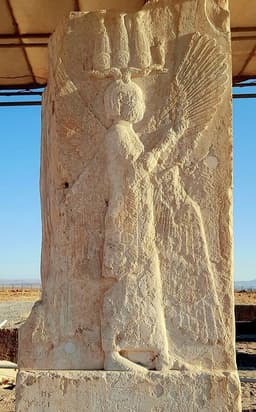
Cyrus the Great
Emperor · Ancient
83.9Total
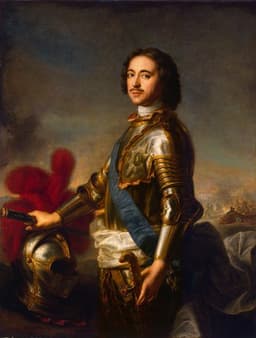
Peter the Great
Emperor · Modern
73.2Total
Basic Information
Born
-600
1672
Died
-530
1725
Era
Ancient
Modern
Nationality
Persia
Russia
Occupation
Emperor
Emperor
Civilization
Middle Eastern
Western
Score Comparison
Military (10%)
82.0
75.0
Political (20%)
85.0
90.0
Influence (20%)
85.0
68.0
Legacy (20%)
90.0
65.0
Leadership (15%)
78.0
78.0
Strategy (15%)
75.0
72.0
TOTAL
83.9
73.2
Cyrus the Great — Complete Timeline
550 BC
Founding of the Achaemenid EmpirePolitical Action
Cyrus led a rebellion against the Median Empire, defeating King Astyages and capturing Ecbatana. He then united the Persian and Median tribes, establishing the Achaemenid Empire, which became the largest empire the world had yet seen.
Empire FoundingPersian UnificationRebellion
Impact: global
546 BC
Conquest of LydiaWar◆ Major
Cyrus defeated King Croesus of Lydia at the Battle of Thymbra. The Lydian capital Sardis was captured, and Croesus was taken prisoner. This conquest brought Anatolia under Persian control and secured access to the Aegean coast.
Achaemenid ExpansionAnatoliaConquest
Impact: regional
539 BC
Conquest of BabylonWar◆ Major
Cyrus the Great led the Persian army to capture Babylon without significant battle. The city's gates were opened, and Cyrus entered peacefully. This conquest added Mesopotamia to the Achaemenid Empire and marked the end of the Neo-Babylonian Empire.
Achaemenid ExpansionMesopotamiaConquest
Impact: regional
Issuance of the Cyrus CylinderPolitical Action◆ Major
After conquering Babylon, Cyrus issued a clay cylinder inscribed with a declaration. It described his policy of restoring temples, repatriating displaced peoples, and allowing religious freedom. The cylinder is often cited as an early charter of human rights.
Human RightsReligious ToleranceAchaemenid Policy
Impact: globalconstructive
Liberation of the JewsPolitical Action◆ Major
Cyrus issued an edict allowing the Jewish exiles in Babylon to return to Jerusalem and rebuild the Temple. This event is recorded in the biblical Book of Ezra and is a key moment in Jewish history, ending the Babylonian captivity.
Jewish HistoryReligious FreedomReturn from Exile
Impact: regionalconstructive
Peter the Great — Complete Timeline
1697 AD
Grand EmbassyPolitical Action◆ Major
Peter the Great traveled incognito to Western Europe as part of a diplomatic mission. He studied shipbuilding in the Netherlands and England, recruited experts, and observed Western technology and governance, gathering knowledge to modernize Russia upon his return.
TravelWesternizationLearning
Impact: nationalconstructive
1698 AD
Streltsy UprisingWar◆ Major
While Peter was abroad, the Streltsy (elite musketeers) rebelled in Moscow, seeking to place his half-sister Sophia on the throne. Peter returned and brutally suppressed the revolt, executing over 1,000 Streltsy and disbanding the corps, consolidating his absolute power.
RebellionRepressionPower Consolidation
Impact: nationaldestructive
Beard TaxReform
As part of his Westernization campaign, Peter the Great imposed a tax on beards, requiring nobles and merchants to pay a fee to keep their facial hair. Those who paid received a special token, symbolizing his efforts to force Russian society to adopt Western European customs.
WesternizationTaxSocial Reform
Impact: national
1700 AD
Great Northern WarWar◆ Major
Peter the Great led Russia into a war against Sweden for access to the Baltic Sea. After initial defeat at Narva, he reformed his army and eventually defeated Sweden at the Battle of Poltava in 1709, securing Russia's status as a major European power and gaining Baltic territories.
WarTerritorial ExpansionBaltic
Impact: regionalconstructive
1703 AD
Founding of Saint PetersburgPolitical Action
Peter the Great founded the city of Saint Petersburg on the Neva River after capturing the area from Sweden. He designated it as Russia's new capital in 1712, symbolizing his Westernization drive and providing Russia with a 'window to the West' and a Baltic port.
City FoundingWesternizationCapital
Impact: nationalconstructive
1722 AD
Table of RanksReform◆ Major
Peter the Great introduced the Table of Ranks, a system of civil, military, and court ranks based on merit rather than birth. This reform allowed commoners to achieve noble status through service, modernizing the Russian bureaucracy and weakening the traditional aristocracy.
BureaucracyMeritocracySocial Reform
Impact: nationalprogressive
Expert Analysis
Peter the Great vs Cyrus the Great: Historical Comparison
Peter the Great, the modernizing Tsar of Russia (r. 1682–1725), and Cyrus the Great, the founder of the Achaemenid Persian Empire (r. 559–530 BCE), both transformed their realms through conquest and reform, though Peter’s more systematic modernization gives him a slight edge in overall impact.
Dimension Analysis
**Military: Peter the Great 87 / Cyrus the Great 82**
Peter revolutionized Russia’s army and navy, defeating Sweden in the Great Northern War and securing Baltic access, while Cyrus conquered the Neo-Babylonian and Lydian empires with innovative combined-arms tactics.
**Political: Peter the Great 85 / Cyrus the Great 85**
Both were masterful state-builders: Peter centralized power, created a bureaucracy, and imposed Western-style administration; Cyrus established a decentralized satrapy system that respected local customs, enabling vast imperial cohesion.
**Influence: Peter the Great 74 / Cyrus the Great 78**
Cyrus’s model of religious tolerance and human rights (the Cyrus Cylinder) influenced later empires and modern governance, while Peter’s Westernization reshaped Russia but had more limited global reach beyond Europe.
**Legacy: Peter the Great 85 / Cyrus the Great 80**
Peter’s legacy is the modernization of Russia and its emergence as a European power, whereas Cyrus’s legacy endures as the archetype of a benevolent conqueror and founder of the first truly multicultural empire.
**Leadership: Peter the Great 82 / Cyrus the Great 80**
Peter led from the front, personally learning shipbuilding and commanding armies, while Cyrus inspired loyalty through clemency and strategic generosity—both effective, but Peter’s hands-on intensity was more transformative.
Verdict
Peter the Great leads due to his higher military and strategy scores, reflecting a more systematic and enduring transformation of his state, though Cyrus’s influence on governance principles remains profound.
FAQ
Q: Who ranks higher? A: Peter the Great ranks higher overall, driven by superior military innovation and strategic execution.
Rankings
🥇
Cyrus the GreatLeader
Mil: 82.0Pol: 85.0Inf: 85.0
83.9
🥈
Peter the Great
Mil: 75.0Pol: 90.0Inf: 68.0
73.2
+10.7 behind
How This Comparison Works
Algorithm
Each figure is scored on 6 dimensions (0—100 scale) based on structured historical data: Military (10%), Political (20%), Influence (20%), Legacy (20%), Leadership (15%), Strategy (15%). The weighted total produces the final ranking.
Data Sources
Scores are computed from structured sub-indicators in the database. Scale factors adjust for era (Ancient ×0.85, Modern ×1.0) and civilization size (Eastern ×1.05, Other ×0.80) to account for differences in population and military scale.
Maximum 3 Figures
Comparisons are limited to 2—3 figures to ensure readability and statistical meaningfulness.
Error Margins
±5 points per dimension — Sub-scores are derived from historical records with inherent uncertainty. Two figures within 5 points on a dimension should be considered roughly equivalent in that area.
Total Score Accuracy
±3 points overall — The weighted combination of 6 dimensions produces a total score with approximately ±3 points of uncertainty. Differences of less than 3 points are not statistically significant— the figures are effectively tied.
Known Limitations
- Historical records are incomplete and uneven across civilizations
- Figures from oral-tradition societies may be underrepresented
- Occupation labels can misclassify multi-role figures
- Scores measure capability and impact, not moral character
- Quantitative scoring is a comparison tool, not absolute truth
Capability Radar
Military (10%) — Battles & Warfare
Battles
85
85
Win Rate
90
80
Expansion
92
90
Political (20%) — Governance & Reform
Reform
90
95
Diplomacy
95
80
Economy
80
85
Influence (20%) — Cultural & Global Reach
Cultural
90
85
Global
90
85
Legacy (20%) — Historical Impact
Historical
95
90
Longevity
95
85
Leadership (15%) — Power & Stability
Tenure
70
90
Stability
85
70
Strategy (15%) — Tactics & Innovation
Strategy
88
85
Tactics
80
75
Reform
75
95
Similar Comparisons
Comments & Discussion
Historian9186/16/2026
彼得大帝78分,居鲁士大帝79.6分,差距不到2分,但细看军事得分彼得87对82,这5分差得有点大。彼得大北方战争打败瑞典,确实让俄罗斯获得了波罗的海出海口,但瑞典当时已非欧洲顶级强国。而居鲁士灭米底、吕底亚、巴比伦,三大强敌全灭,战术上骑兵与步兵协同,比彼得单一化改革更复杂。如果按中国历史标准,彼得类似赵武灵王的胡服骑射,但赵武灵王只强军不改革政治,彼得政治85分确实高。但居鲁士85分政治也不低,他的行省制堪比周朝分封,且更包容。我建议军事分差缩至2分,总分应持平或居鲁士略高。
ColdWatcher106/16/2026
拿彼得大帝和居鲁士大帝比,有点像拿秦始皇和汉武帝比——都是开天辟地的人物,但路子完全不同。居鲁士的《居鲁士圆柱》被西方捧为“人权宣言”,但咱们中国史书里,唐太宗“水能载舟亦能覆舟”更早体现民本思想。不过居鲁士对宗教的包容确实超前,波斯帝国允许犹太人返乡重建圣殿,这一点彼得大帝做不到,他为了西化强制剃须换衣,统治方式更接近商鞅变法的严苛。彼得让俄罗斯跻身欧洲,居鲁士则创建了第一个世界性帝国。论影响力,居鲁士直接影响了亚历山大和罗马,彼得只在东欧称雄。评分至少该给居鲁士更高影响力分。