Loading...
Dosunmu vs Napoleon Bonaparte
Napoleon Bonaparte leads by 26.6 pts · 2 figures compared
…
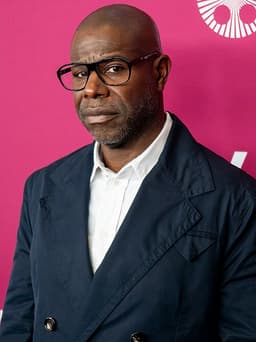
Dosunmu
Emperor · Modern
44.3Total

Napoleon Bonaparte
General · Modern
70.9Total
Basic Information
Born
1823
1769
Died
1885
1821
Era
Modern
Modern
Nationality
Nigeria
France
Occupation
Emperor
General
Civilization
Other
Western
Score Comparison
Military (10%)
20.0
94.0
Political (20%)
30.8
72.0
Influence (20%)
51.0
40.0
Legacy (20%)
40.8
80.0
Leadership (15%)
62.2
78.0
Strategy (15%)
54.3
90.0
TOTAL
44.3
70.9
Dosunmu — Complete Timeline
1853 AD
Accession as Oba of LagosPolitical Action◆ Major
Dosunmu became the Oba of Lagos following the death of his predecessor Akintoye. His reign was dominated by British pressure to end the slave trade and cede sovereignty over Lagos.
KingshipLagosColonial
Impact: regional
1861 AD
Treaty of Cession of LagosPolitical Action◆ Major
Dosunmu signed the Treaty of Cession, ceding the island of Lagos to the British Empire. The treaty ended Lagos's independence and made it a British colony, with Dosunmu remaining as a figurehead ruler under British authority.
TreatyColonialismLagos
Impact: regionaltragic
1863 AD
Loss of customs revenuePolitical Action
Dosunmu lost control of Lagos customs revenue to the British colonial administration. This further reduced his authority and economic power, making him entirely dependent on a British stipend.
ColonialEconomicsLagos
tragic
Napoleon Bonaparte — Complete Timeline
1799 AD
Coup of 18 BrumaireOther◆ Major
Napoleon Bonaparte, with support from his brother Lucien and key political figures, overthrew the Directory in a bloodless coup. He established the Consulate with himself as First Consul, effectively becoming the ruler of France. This event ended the French Revolution's most unstable period.
French RevolutionCoupRise to Power
Impact: regional
1804 AD
Promulgation of the Napoleonic CodeOther◆ Major
Napoleon enacted the Civil Code of the French, known as the Napoleonic Code, a comprehensive set of laws that replaced the fragmented feudal legal systems. The code established legal equality, protected property rights, and secularized law. It became the basis for legal systems in many European and world countries.
Legal ReformNapoleonic CodeCivil Law
Impact: globalconstructive
1805 AD
Battle of AusterlitzWar◆ Major
Napoleon's Grande Arm
Napoleonic WarsBattleDecisive Victory
Impact: global
1812 AD
Invasion of RussiaWar◆ Major
Napoleon led the Grande Arm
Napoleonic WarsInvasionDisaster
Impact: globaldestructive
1815 AD
Battle of WaterlooWar◆ Major
Napoleon's French army was defeated by the combined forces of the Duke of Wellington's Anglo-Allied army and Gebhard Leberecht von Bl
Napoleonic WarsBattleFinal Defeat
Impact: globaldestructive
Expert Analysis
dosunmu-vs-napoleon-bonaparte
# The Emperor Who Chose Peace and the General Who Chose War
On a humid afternoon in August 1861, Oba Dosunmu of Lagos sat in his palace, the weight of an impossible decision pressing upon him. Across the Atlantic, forty-six years earlier, Napoleon Bonaparte had watched his Imperial Guard march toward the ridge of Mont-Saint-Jean at Waterloo, convinced that one final assault would decide the fate of Europe. Two men, two worlds, two radically different answers to the same question: when faced with overwhelming force, does one fight or surrender?
Origins
Napoleon Bonaparte was born in 1769 on the island of Corsica, a place that had only recently become French. His family belonged to the minor nobility, but they were not wealthy. The young Napoleon grew up speaking Corsican Italian, mocked by his French classmates for his accent. This outsider status forged in him a desperate hunger for recognition—a drive that would propel him to the throne of Europe. The French Revolution, erupting when he was twenty, shattered the old order and opened paths that birth alone could never have granted. A gifted artillery officer could rise on talent alone.
Dosunmu, born in 1823, inherited a different world. Lagos was a thriving port city, its wealth built on trade—including, tragically, the slave trade that Britain had now resolved to crush. As a prince of the royal house, Dosunmu was raised to understand power as something negotiated, not conquered. His father had been Oba Akintoye, a ruler who had already tasted the bitter medicine of British interference. The Atlantic world was closing in on West Africa, and the young prince learned early that the white men with their warships were not going away.
Rise to Power
Napoleon’s ascent was a thunderbolt. At twenty-four, he drove the British out of Toulon. At twenty-six, he crushed a royalist uprising in Paris with what he called “a whiff of grapeshot.” By thirty, he had conquered Italy and Egypt. His rise was built on speed, audacity, and a willingness to risk everything. When he returned from Egypt in 1799, he found a corrupt Directory government and overthrew it in the coup of 18 Brumaire. Within five years, he crowned himself Emperor of the French.
Dosunmu became Oba in 1853, at the age of thirty, following his predecessor Akintoye’s death. There was no coup, no dramatic seizure of power. He inherited a crown already cracked by British pressure. The British Consul, Benjamin Campbell, had made clear that the Oba’s authority depended on cooperation. Lagos was not a nation that could mobilize armies; it was a city-state of merchants and fishermen, facing the Royal Navy.
Leadership & Governance
Napoleon ruled with a blend of genius and megalomania. He reformed French law with the Napoleonic Code, establishing principles of equality before the law and secular administration that remain foundational across Europe today. He built roads, standardized education, and created the Bank of France. But he also placed his brothers on thrones, suppressed free speech, and marched his armies from Madrid to Moscow. His leadership was a paradox: the man who gave Europe modern administration also bled it white.
Dosunmu governed in the shadow of decline. His scores in military and strategy—50.8 and 58.6 respectively—reflect a ruler who never commanded armies or planned campaigns. His political score of 62.4 suggests a man who understood the realities of power even as he lost it. As Oba, he tried to preserve what he could: the dignity of his office, the traditions of his people, the economic life of Lagos. But in 1861, Consul Henry Stanhope Freeman presented him with an ultimatum: cede Lagos Island to the British Empire, or face bombardment.
Triumph & Tragedy
Napoleon’s greatest triumph was Austerlitz in 1805, where he destroyed the combined armies of Russia and Austria. It was a masterpiece of deception, speed, and tactical brilliance. His greatest tragedy was the invasion of Russia in 1812. He marched with 600,000 men; fewer than 100,000 returned. The disaster broke his invincible aura and set the stage for his first abdication in 1814.
Dosunmu’s tragedy was the Treaty of Cession itself. On August 6, 1861, he signed away his kingdom. The treaty ended Lagos’s independence and reduced him to a figurehead. By 1863, he had lost even control of customs revenue. His triumph, if it can be called that, was a different kind of courage: the courage to accept reality. He chose to negotiate rather than see his city burned and his people slaughtered. It was not glory, but it was survival.
Character & Destiny
Napoleon was a man of relentless ambition, convinced that destiny had chosen him. “Impossible is a word to be found only in the dictionary of fools,” he once said. This confidence drove him to heights few humans have reached—but it also blinded him. He could not stop. He could not negotiate with his enemies. He had to conquer, and conquest consumed him.
Dosunmu was a realist. He understood that Lagos could not defeat the British Empire. His leadership score of 73.9, higher than his military or political scores, suggests a man who led not through force but through presence. He made a choice that must have broken his heart: to surrender sovereignty so that his people might live. It was not the choice of a coward, but of a man who knew the cost of resistance.
Legacy
Napoleon’s legacy is written across the map of Europe. His legal codes, his administrative systems, his very concept of meritocracy shaped the modern world. He is remembered as both a liberator and a tyrant, a genius and a warmonger. His total score of 82.4 reflects this complexity.
Dosunmu’s legacy is more ambiguous. His total score of 61.5 places him far below Napoleon in conventional historical judgment. In Nigeria, he is often remembered as the Oba who sold Lagos to the British—a painful legacy in a nation still grappling with colonialism. But a more generous reading sees him as a pragmatist who chose the lesser evil. Lagos became the commercial capital of Nigeria, a city of millions. It survived. Dosunmu’s signature on the treaty was the price of that survival.
Conclusion
Standing at the end of their lives, Napoleon and Dosunmu could not have been more different. Napoleon died in exile on Saint Helena, raging against his captors, still dreaming of a comeback that would never come. Dosunmu died in 1885 in Lagos, a British subject in his own palace, his kingdom a memory. One man conquered the world and lost everything; the other surrendered a city and saved it.
History celebrates the conqueror. But perhaps it should also pause to consider the one who chose peace. Napoleon’s ambition reshaped Europe, but it also destroyed millions of lives. Dosunmu’s pragmatism cost him his throne, but it spared Lagos the fate of so many cities that resisted the European tide—cities like Benin, burned and looted, or Kumasi, razed to the ground.
The question their lives pose is not who was greater, but what greatness means. Is it the will to fight against impossible odds, or the wisdom to know when fighting is futile? Napoleon and Dosunmu each gave their answer. History, as always, is still deciding which one was right.
Rankings
🥇
Napoleon BonaparteLeader
Mil: 94.0Pol: 72.0Inf: 40.0
70.9
🥈
Dosunmu
Mil: 20.0Pol: 30.8Inf: 51.0
44.3
+26.6 behind
How This Comparison Works
Algorithm
Each figure is scored on 6 dimensions (0—100 scale) based on structured historical data: Military (10%), Political (20%), Influence (20%), Legacy (20%), Leadership (15%), Strategy (15%). The weighted total produces the final ranking.
Data Sources
Scores are computed from structured sub-indicators in the database. Scale factors adjust for era (Ancient ×0.85, Modern ×1.0) and civilization size (Eastern ×1.05, Other ×0.80) to account for differences in population and military scale.
Maximum 3 Figures
Comparisons are limited to 2—3 figures to ensure readability and statistical meaningfulness.
Error Margins
±5 points per dimension — Sub-scores are derived from historical records with inherent uncertainty. Two figures within 5 points on a dimension should be considered roughly equivalent in that area.
Total Score Accuracy
±3 points overall — The weighted combination of 6 dimensions produces a total score with approximately ±3 points of uncertainty. Differences of less than 3 points are not statistically significant— the figures are effectively tied.
Known Limitations
- Historical records are incomplete and uneven across civilizations
- Figures from oral-tradition societies may be underrepresented
- Occupation labels can misclassify multi-role figures
- Scores measure capability and impact, not moral character
- Quantitative scoring is a comparison tool, not absolute truth
Capability Radar
Military (10%) — Battles & Warfare
Battles
5
95
Win Rate
5
90
Expansion
5
95
Political (20%) — Governance & Reform
Reform
10
95
Diplomacy
20
80
Economy
15
85
Influence (20%) — Cultural & Global Reach
Cultural
15
85
Global
20
90
Legacy (20%) — Historical Impact
Historical
25
95
Longevity
20
90
Leadership (15%) — Power & Stability
Tenure
40
85
Stability
20
70
Strategy (15%) — Tactics & Innovation
Strategy
5
95
Tactics
5
98
Reform
5
92
Similar Comparisons
Comments & Discussion
数据解局6/17/2026
拿数据说话:拿破仑在1815年指挥了约7.2万人,对阵惠灵顿的6.8万和布吕歇尔的4.8万援军,兵力相差无几。多孙穆呢?1851年拉各斯战役中,英军仅用了约300名海军陆战队就击溃了数千守军。一面是概率战,一面是火力碾压,拿工业革命前的战略思维来比较,本身就是个笑话。
The Classics Guy6/17/2026
Two different metrics of greatness: Dosunmu understood that sovereignty can sometimes be preserved best through submission rather than annihilation, a lesson as old as Marcus Aurelius’s Meditations. Napoleon embodied the Homeric hero—glory before survival, even when ruin was certain. One man chose peace for his people; the other chose immortality for himself. History remembers the blaze, but it’s the ember that endured.
茶馆老学究6/17/2026
若论帝王之术,多孙穆比拿破仑高明得多。他看清了英国人的真实目的不是灭国而是控制贸易,选择投降反而保住了王位和拉各斯的对外自主权。拿破仑在莱比锡被反法同盟包围时还在死战,最后被迫退位流放厄尔巴岛。一个懂得何时认输,一个死要面子活受罪。历史从来不奖励莽夫。
Legionnaire's Shadow6/17/2026
You revisionists always miss the forest for the trees. Napoleon didn’t just kill men—he shattered three centuries of European feudalism with the Napoleonic Code and meritocratic reforms that still echo in modern law. Dosunmu’s greatest achievement is maintaining his dynasty under British protection. One rewrote civilization; the other chose survival. I know which legacy I’d rather defend in a pub debate.
Historian9156/17/2026
Calling this a comparison is like comparing a chess grandmaster to a man who lost his queen before the game began. Napoleon engineered his own downfall at Waterloo—bad deployments, poor cavalry decisions, and Grouchy’s absence. Dosunmu faced the British Navy with neither allies nor geography on his side. One man’s defeat was tactical theater; the other’s was an inevitable tragedy.