Loading...
Douglas MacArthur vs Helmuth von Moltke the Elder
Helmuth von Moltke the Elder leads by 9.1 pts · 2 figures compared
…
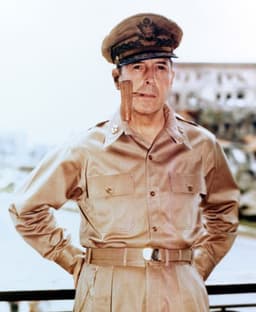
Douglas MacArthur
General · Modern
65.7Total
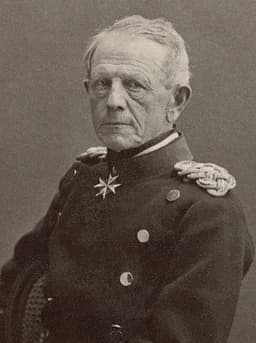
Helmuth von Moltke the Elder
General · Modern
74.8Total
Basic Information
Born
1880
1800
Died
1964
1891
Era
Modern
Modern
Nationality
United States
Germany
Occupation
General
General
Civilization
Western
Western
Score Comparison
Military (10%)
85.0
75.0
Political (20%)
78.0
55.0
Influence (20%)
68.0
88.0
Legacy (20%)
40.0
65.0
Leadership (15%)
78.0
85.0
Strategy (15%)
68.0
80.6
TOTAL
65.7
74.8
Douglas MacArthur — Complete Timeline
1942 AD
Battle of Bataan and CorregidorWar◆ Major
MacArthur commanded US and Filipino forces defending the Bataan Peninsula and Corregidor Island against Japanese invasion. After months of resistance, he was ordered to evacuate to Australia, leaving his troops who later surrendered and endured the Bataan Death March.
World War IIPacific TheaterDefeat
Impact: regionaltragic
1944 AD
Return to the PhilippinesWar◆ Major
MacArthur led the Allied invasion of Leyte Gulf, fulfilling his promise 'I shall return.' The campaign liberated the Philippines from Japanese occupation, a major strategic victory in the Pacific War.
World War IIPacific TheaterVictory
Impact: regionalconstructive
1945 AD
Surrender of JapanWar
MacArthur, as Supreme Commander for the Allied Powers, accepted Japan's formal surrender aboard USS Missouri in Tokyo Bay. This ended World War II and began the Allied occupation of Japan under his leadership.
World War IIJapanOccupation
Impact: globalconstructive
Occupation of Japan ReformsReform◆ Major
MacArthur oversaw the Allied occupation of Japan, implementing sweeping reforms including a new constitution, land redistribution, women's suffrage, and demilitarization. These changes transformed Japan into a democratic and pacifist state.
JapanPost-WarDemocratization
Impact: globalprogressive
1950 AD
Inchon LandingWar◆ Major
MacArthur planned and executed a bold amphibious assault at Inchon, South Korea, behind North Korean lines. The operation cut North Korean supply lines and recaptured Seoul, turning the tide of the Korean War.
Korean WarAmphibious AssaultVictory
Impact: regionalconstructive
1951 AD
Dismissal by President TrumanPolitical Action◆ Major
President Harry S. Truman relieved MacArthur of command for insubordination after MacArthur publicly advocated for expanding the Korean War into China. The dismissal sparked a political controversy in the US and ended MacArthur's military career.
Korean WarCivil-Military RelationsDismissal
Impact: nationaldestructive
Helmuth von Moltke the Elder — Complete Timeline
1857 AD
Appointment as Chief of the Prussian General StaffPolitical Action◆ Major
Moltke was appointed Chief of the Prussian General Staff, a position he held for 30 years. He reorganized the staff system, emphasizing strategic planning, railroad logistics, and decentralized command, laying the foundation for Prussian military dominance.
PrussiaMilitary ReformGeneral Staff
Impact: nationalconstructive
1866 AD
Battle of KöniggrätzWar
Moltke commanded Prussian forces to a decisive victory over Austria at K
Austro-Prussian WarGerman UnificationBattle
Impact: regional
1870 AD
Battle of SedanWar
Moltke's strategic planning led to the encirclement and capture of the French army under Napoleon III at Sedan during the Franco-Prussian War. This battle effectively decided the war and led to the fall of the Second French Empire.
Franco-Prussian WarBattleFrench Defeat
Impact: global
Siege of ParisWar◆ Major
Moltke directed the Prussian siege of Paris from September 1870 to January 1871. The siege cut off the city from supplies and forced its surrender, leading to the end of the Franco-Prussian War and the proclamation of the German Empire.
Franco-Prussian WarSiegeGerman Unification
Impact: global
1871 AD
Publication of 'On War' InfluenceCultural◆ Major
Moltke's strategic writings and after-action reports, though not a single book, shaped military doctrine for decades. His emphasis on decentralized command (Auftragstaktik) and railroad logistics became foundational to modern warfare.
Military TheoryDoctrineLegacy
Impact: globalconstructive
Expert Analysis
Douglas MacArthur vs Helmuth von Moltke the Elder
# The General and the Strategist: MacArthur, Moltke, and the Two Faces of Command
On a September morning in 1950, Douglas MacArthur stood on the bridge of the USS *Mount McKinley* watching as his forces stormed the beaches of Inchon. The tides were treacherous, the channel narrow, and every naval expert had warned against it. But MacArthur, cigar clenched between his teeth, had insisted. "The very factors that the enemy has regarded as making an assault impossible," he later wrote, "are the very factors that will make it a success." Half a world away and nearly a century earlier, Helmuth von Moltke the Elder would have understood the audacity—but he would never have shared it. For where MacArthur was the general as showman, Moltke was the general as engineer. One lived for the dramatic stroke, the other for the meticulous plan.
Origins
They emerged from different worlds. MacArthur was born in 1880 to a military dynasty—his father Arthur had earned the Medal of Honor at Missionary Ridge. The boy grew up on frontier army posts, absorbing the romance of uniform and glory. He entered West Point at seventeen, already convinced of his own destiny. Moltke, born in 1800 into a declining noble family in Mecklenburg, took a quieter path. He served in the Danish army before transferring to Prussia, studied military history, and published novels on the side. While MacArthur's ambition burned hot and public, Moltke's burned cold and private. One was raised to command; the other grew into it.
Their eras shaped them differently. MacArthur came of age when the United States was flexing imperial muscle—the Spanish-American War, the Philippine insurrection—a world where a general could be a proconsul. Moltke matured in the aftermath of Napoleon, when Prussian military thinkers were asking how a small state could survive among predators. The answer, for Moltke, was not charisma but system.
Rise to Power
MacArthur's ascent was meteoric. He became the youngest superintendent of West Point, then the youngest Army Chief of Staff. In 1937, he retired to the Philippines as military advisor to a commonwealth—a semi-exile that became his launching pad. When war came in 1941, he was already a legend. His defense of Bataan and Corregidor in 1942, though ultimately a defeat, was turned into a heroic narrative. His famous line—"I shall return"—became a mantra for a nation desperate for hope.
Moltke's rise was gradual, almost invisible. Appointed Chief of the Prussian General Staff in 1857 at age fifty-seven, he inherited an institution in flux. He did not demand loyalty; he built systems. He reorganized the staff into specialized sections, created a railway department to plan troop movements, and trained officers to think independently within a shared framework. Where MacArthur cultivated a cult of personality, Moltke cultivated a cult of competence.
Leadership & Governance
In command, they diverged completely. MacArthur was the commander as artist. The Inchon landing was pure theater—a gamble that succeeded because it defied logic. He led from the front, courted the press, and insisted on personal control. During the occupation of Japan from 1945 to 1951, he governed like a benevolent viceroy, drafting a new constitution, redistributing land, and reshaping an entire society in his image. He was, for a time, the most powerful American in the world.
Moltke commanded differently. At Königgrätz in 1866, he orchestrated three separate Prussian armies converging on the Austrians from different directions—a logistical miracle requiring precise railway timetables and decentralized execution. He gave his subordinates broad directives, not detailed orders. "No plan of operations extends with certainty beyond the first encounter with the main enemy force," he famously wrote. His genius was in creating the conditions for victory, then letting his generals win it.
Their political instincts also contrasted. MacArthur was openly political, clashing with presidents and eventually defying Harry Truman over Korean War strategy. His dismissal in 1951 was a constitutional crisis—a general who thought he knew better than his commander-in-chief. Moltke, by contrast, served Bismarck with disciplined loyalty. He understood that war was an instrument of policy, not an end in itself. After the Franco-Prussian War, he refused to exploit his fame for political gain.
Triumph & Tragedy
MacArthur's greatest moment was also his most tragic. The return to the Philippines in 1944, wading ashore at Leyte as cameras rolled, was the fulfillment of a promise. But it was also a costly campaign that could have been bypassed. His finest hour—the surrender of Japan aboard the USS *Missouri* in September 1945—was followed by his worst: the dismissal by Truman, a humiliating end to a storied career.
Moltke's triumphs were quieter but more enduring. The Battle of Sedan in 1870, where his encirclement of the French army captured Napoleon III himself, was a masterpiece of strategic planning. The siege of Paris that followed was methodical and grim. His tragedy was personal: he outlived his wife and most of his children, dying in 1891 at ninety-one, a solitary figure in a unified Germany he had helped create but could not fully enjoy.
Character & Destiny
MacArthur believed in destiny. He cultivated an image of infallibility, wore a peaked cap and sunglasses, and spoke of himself in the third person. This grandiosity made him inspiring but also brittle. When things went wrong—the Chinese intervention in Korea, the disastrous retreat from the Yalu—he blamed others. His character demanded a heroic narrative, and reality often refused to cooperate.
Moltke believed in duty. He was taciturn, intellectual, and self-effacing. He wrote poetry, played the cello, and translated Gibbon into German. His famous silence—he rarely spoke in public—was not shyness but discipline. He understood that a general's job was to prepare for war, not to enjoy its glories. "Eternal peace is a dream," he once said, "and not even a beautiful one."
Legacy
MacArthur's legacy is a paradox. His reforms in Japan were transformative and lasting, creating a democratic ally from a defeated empire. But his military record is mixed: brilliant in the Pacific, disastrous in Korea, and haunted by his insubordination. He is remembered as a larger-than-life figure—the general who would not fade away.
Moltke's legacy is more diffuse but deeper. He created the modern general staff system, which became the model for armies worldwide. His emphasis on railroads, decentralized command, and strategic planning shaped warfare for a century. He is remembered not as a personality but as a system—the quiet architect of German unification.
Conclusion
Standing at the extremes of command, MacArthur and Moltke illuminate a fundamental tension in military leadership. The general must sometimes be a gambler, willing to stake everything on a single throw. But he must also be a planner, building the institutions that make victory possible. MacArthur gave us the drama; Moltke gave us the discipline. One shaped a nation's spirit; the other shaped a profession's soul. In the end, perhaps the greatest generals are those who understand that both are necessary—and that the balance between them is the art of command itself.
Rankings
🥇
Helmuth von Moltke the ElderLeader
Mil: 75.0Pol: 55.0Inf: 88.0
74.8
🥈
Douglas MacArthur
Mil: 85.0Pol: 78.0Inf: 68.0
65.7
+9.1 behind
How This Comparison Works
Algorithm
Each figure is scored on 6 dimensions (0—100 scale) based on structured historical data: Military (10%), Political (20%), Influence (20%), Legacy (20%), Leadership (15%), Strategy (15%). The weighted total produces the final ranking.
Data Sources
Scores are computed from structured sub-indicators in the database. Scale factors adjust for era (Ancient ×0.85, Modern ×1.0) and civilization size (Eastern ×1.05, Other ×0.80) to account for differences in population and military scale.
Maximum 3 Figures
Comparisons are limited to 2—3 figures to ensure readability and statistical meaningfulness.
Error Margins
±5 points per dimension — Sub-scores are derived from historical records with inherent uncertainty. Two figures within 5 points on a dimension should be considered roughly equivalent in that area.
Total Score Accuracy
±3 points overall — The weighted combination of 6 dimensions produces a total score with approximately ±3 points of uncertainty. Differences of less than 3 points are not statistically significant— the figures are effectively tied.
Known Limitations
- Historical records are incomplete and uneven across civilizations
- Figures from oral-tradition societies may be underrepresented
- Occupation labels can misclassify multi-role figures
- Scores measure capability and impact, not moral character
- Quantitative scoring is a comparison tool, not absolute truth
Capability Radar
Military (10%) — Battles & Warfare
Battles
85
85
Win Rate
75
95
Expansion
85
85
Political (20%) — Governance & Reform
Reform
85
75
Diplomacy
75
65
Economy
70
60
Influence (20%) — Cultural & Global Reach
Cultural
70
75
Global
80
80
Legacy (20%) — Historical Impact
Historical
85
85
Longevity
70
80
Leadership (15%) — Power & Stability
Tenure
80
70
Stability
65
70
Strategy (15%) — Tactics & Innovation
Strategy
90
95
Tactics
80
90
Reform
70
95
Similar Comparisons
Comments & Discussion
No comments yet. Be the first to share your thoughts!