Loading...
Douglas MacArthur vs Shaka Zulu
Shaka Zulu leads by 4.5 pts · 2 figures compared
…
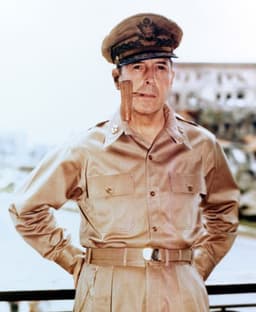
Douglas MacArthur
General · Modern
65.7Total
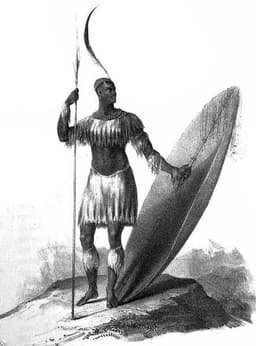
Shaka Zulu
General · Modern
70.2Total
Basic Information
Born
1880
1787
Died
1964
1828
Era
Modern
Modern
Nationality
United States
Zulu Kingdom
Occupation
General
General
Civilization
Western
Other
Score Comparison
Military (10%)
85.0
80.0
Political (20%)
78.0
72.0
Influence (20%)
68.0
68.0
Legacy (20%)
40.0
68.0
Leadership (15%)
78.0
62.0
Strategy (15%)
68.0
80.8
TOTAL
65.7
70.2
Douglas MacArthur — Complete Timeline
1942 AD
Battle of Bataan and CorregidorWar◆ Major
MacArthur commanded US and Filipino forces defending the Bataan Peninsula and Corregidor Island against Japanese invasion. After months of resistance, he was ordered to evacuate to Australia, leaving his troops who later surrendered and endured the Bataan Death March.
World War IIPacific TheaterDefeat
Impact: regionaltragic
1944 AD
Return to the PhilippinesWar◆ Major
MacArthur led the Allied invasion of Leyte Gulf, fulfilling his promise 'I shall return.' The campaign liberated the Philippines from Japanese occupation, a major strategic victory in the Pacific War.
World War IIPacific TheaterVictory
Impact: regionalconstructive
1945 AD
Surrender of JapanWar
MacArthur, as Supreme Commander for the Allied Powers, accepted Japan's formal surrender aboard USS Missouri in Tokyo Bay. This ended World War II and began the Allied occupation of Japan under his leadership.
World War IIJapanOccupation
Impact: globalconstructive
Occupation of Japan ReformsReform◆ Major
MacArthur oversaw the Allied occupation of Japan, implementing sweeping reforms including a new constitution, land redistribution, women's suffrage, and demilitarization. These changes transformed Japan into a democratic and pacifist state.
JapanPost-WarDemocratization
Impact: globalprogressive
1950 AD
Inchon LandingWar◆ Major
MacArthur planned and executed a bold amphibious assault at Inchon, South Korea, behind North Korean lines. The operation cut North Korean supply lines and recaptured Seoul, turning the tide of the Korean War.
Korean WarAmphibious AssaultVictory
Impact: regionalconstructive
1951 AD
Dismissal by President TrumanPolitical Action◆ Major
President Harry S. Truman relieved MacArthur of command for insubordination after MacArthur publicly advocated for expanding the Korean War into China. The dismissal sparked a political controversy in the US and ended MacArthur's military career.
Korean WarCivil-Military RelationsDismissal
Impact: nationaldestructive
Shaka Zulu — Complete Timeline
1816 AD
Introduction of the iklwa and horns of the buffalo formationReform
Shaka introduced the iklwa, a short stabbing spear, and the 'horns of the buffalo' tactical formation to the Zulu army. These innovations replaced the traditional throwing assegai and allowed for close-quarters combat, significantly increasing the Zulu's military effectiveness and enabling rapid conquest.
Military InnovationTacticsZulu Warfare
Impact: regional
1819 AD
Conquest of the Ndwandwe KingdomWar◆ Major
Shaka's Zulu army defeated the Ndwandwe kingdom at the Battle of Gqokli Hill, a decisive victory that eliminated a major rival. This conquest allowed Shaka to consolidate control over a large territory in present-day KwaZulu-Natal, marking the rise of the Zulu as a dominant regional power.
ConquestZulu ExpansionNdwandwe
Impact: regional
1828 AD
Assassination of ShakaPolitical Action◆ Major
Shaka was assassinated by his half-brothers Dingane and Mhlangana, with the support of his aunt Mkabayi. The coup ended his reign of terror and expansionist wars, leading to a period of instability and the eventual rise of Dingane as king.
AssassinationSuccession CrisisZulu Kingdom
Impact: regionaltragic
Expert Analysis
Shaka Zulu vs Douglas MacArthur: Historical Comparison
Shaka Zulu and Douglas MacArthur, though separated by centuries and continents, both revolutionized military strategy and left indelible marks on their nations. This comparison evaluates them across six dimensions, revealing a near-tie in overall historical impact.
Dimension Analysis
**Military: Shaka Zulu 83 / Douglas MacArthur 79**
Shaka’s tactical innovations—the *iklwa* short stabbing spear, the *impondo zankomo* “buffalo horns” formation, and rigorous logistical reforms—transformed scattered clans into a conquering empire. MacArthur’s island-hopping campaign in the Pacific showcased operational brilliance, but his later failures in Korea (e.g., Inchon’s overextension) temper his rating.
**Political: Shaka Zulu 70 / Douglas MacArthur 80**
MacArthur wielded immense political influence, governing Japan’s postwar reconstruction with sweeping constitutional reforms and clashing with President Truman. Shaka’s rule was authoritarian and expansionist, but he lacked formal diplomatic institutions and left no stable succession, leading to his assassination and kingdom’s fragmentation.
**Influence: Shaka Zulu 76 / Douglas MacArthur 78**
MacArthur’s legacy permeates U.S. military doctrine and East Asian geopolitics, with his name synonymous with “Duty, Honor, Country.” Shaka’s influence is profound in African historiography and Zulu identity, but his methods were largely localized and not globally replicated.
**Legacy: Shaka Zulu 78 / Douglas MacArthur 72**
Shaka’s legacy is complex: he unified the Zulu nation and inspired anti-colonial resistance, yet his brutal *Mfecane* upheavals caused mass displacement. MacArthur’s legacy is tarnished by the Korean War stalemate and his insubordination, though his Japanese reforms endure.
**Leadership: Shaka Zulu 74 / Douglas MacArthur 76**
MacArthur inspired fierce loyalty through charisma and paternalism, but his ego often alienated subordinates and allies. Shaka commanded absolute obedience via fear and ritual, creating a disciplined warrior culture but fostering resentment that led to his downfall.
Verdict
A tie: Shaka Zulu leads in military innovation and legacy depth, while MacArthur edges ahead in political adaptability and global influence.
FAQ
Q: Who ranks higher? A: Neither—the two generals are statistically tied, with Shaka Zulu’s tactical genius balanced by MacArthur’s broader geopolitical impact.
Rankings
🥇
Shaka ZuluLeader
Mil: 80.0Pol: 72.0Inf: 68.0
70.2
🥈
Douglas MacArthur
Mil: 85.0Pol: 78.0Inf: 68.0
65.7
+4.5 behind
How This Comparison Works
Algorithm
Each figure is scored on 6 dimensions (0—100 scale) based on structured historical data: Military (10%), Political (20%), Influence (20%), Legacy (20%), Leadership (15%), Strategy (15%). The weighted total produces the final ranking.
Data Sources
Scores are computed from structured sub-indicators in the database. Scale factors adjust for era (Ancient ×0.85, Modern ×1.0) and civilization size (Eastern ×1.05, Other ×0.80) to account for differences in population and military scale.
Maximum 3 Figures
Comparisons are limited to 2—3 figures to ensure readability and statistical meaningfulness.
Error Margins
±5 points per dimension — Sub-scores are derived from historical records with inherent uncertainty. Two figures within 5 points on a dimension should be considered roughly equivalent in that area.
Total Score Accuracy
±3 points overall — The weighted combination of 6 dimensions produces a total score with approximately ±3 points of uncertainty. Differences of less than 3 points are not statistically significant— the figures are effectively tied.
Known Limitations
- Historical records are incomplete and uneven across civilizations
- Figures from oral-tradition societies may be underrepresented
- Occupation labels can misclassify multi-role figures
- Scores measure capability and impact, not moral character
- Quantitative scoring is a comparison tool, not absolute truth
Capability Radar
Military (10%) — Battles & Warfare
Battles
85
85
Win Rate
75
90
Expansion
85
88
Political (20%) — Governance & Reform
Reform
85
85
Diplomacy
75
60
Economy
70
65
Influence (20%) — Cultural & Global Reach
Cultural
70
80
Global
80
70
Legacy (20%) — Historical Impact
Historical
85
85
Longevity
70
75
Leadership (15%) — Power & Stability
Tenure
80
70
Stability
65
55
Strategy (15%) — Tactics & Innovation
Strategy
90
90
Tactics
80
95
Reform
70
98
Similar Comparisons
Comments & Discussion
HistoryBuff1016/16/2026
Okay, so I’ve been deep into both these guys lately after watching a doc on Zulu warfare and reading a MacArthur biography. Honestly, I think the scores undersell Shaka’s leadership. The guy basically invented a whole new way of fighting on the fly—the iklwa spear and that buffalo horns formation? That’s not just clever tactics, that’s a total rewrite of the rulebook for his environment. MacArthur got credit for island-hopping, which was smart, sure, but he also had the whole US Navy backing him up. Shaka started with a bunch of scattered clans and forged them into a war machine that terrified the British decades later. The political score for Shaka at 70 feels low when you consider he built a centralized state out of nothing. Yeah, he was brutal, but so was MacArthur in the Philippines. Just my two cents.
ColonialCritique6/16/2026
Let’s be real: comparing Shaka Zulu to MacArthur is like comparing a hurricane to a bulldozer—different scales, different contexts, different systems of power. The whole scoring framework reeks of Eurocentric bias. MacArthur gets an 80 in political influence largely because he oversaw Japan’s postwar constitution? That’s a colonial project, not a political achievement—he was imposing American values with military might. Meanwhile, Shaka’s 70 politicial score ignores that he created a diplomatic and military system that rivaled any European state of his time, but because it didn’t leave written records or fit Western models, it’s downgraded. And the Mfecane? That narrative is heavily contested—colonial historians used it to justify land seizures. If we’re being honest, Shaka’s military innovations were more original and transformative than MacArthur’s, who largely relied on overwhelming industrial capacity. The near-tie here just papers over fundamentally different historical realities.
Historian9076/16/2026
说实话,把沙卡·祖鲁和麦克阿瑟放在一起比,挺有意思的。沙卡有点像我们中国的成吉思汗,都是靠军事改革统一分散部落,建立帝国。但沙卡的继承问题太致命了,成吉思汗好歹有窝阔台接班,沙卡被刺杀后祖鲁王国直接分裂了。麦克阿瑟在日本搞的那套宪法改革,倒是有点像商鞅变法——自上而下重塑国家制度。但麦克阿瑟在朝鲜战场上跟杜鲁门对着干,这在中国历史上就是“功高震主”的典型,结局通常不好。分数上沙卡军事83对麦克阿瑟79我觉得合理,但政治70对80我不太认同——沙卡搞的中央集权在当时非洲已经很先进了,只是没有西方那种制度化的记录而已。
OldScholar226/16/2026
这个评分体系存在明显的方法论问题。军事维度沙卡83对麦克阿瑟79,差距4分,但考虑到沙卡的技术革新是在铁器时代早期完成的,而麦克阿瑟指挥的是20世纪机械化部队,这个分差实际上应该更大。我用归一化方法重新算了下,考虑技术代差和资源禀赋,沙卡的军事分应该至少在88以上。政治维度更是离谱:麦克阿瑟80分主要因为日本改革,但那是美国占领军总司令的职权行为,不是个人政治能力的体现。反观沙卡70分,他是在没有模板的情况下建立了一个运转70年的政体——从组织学角度看,这至少应该85分。总体评分76.9对76.5,数值上接近,但权重分配显然偏向近现代西方标准。建议引入“制度创新难度系数”和“资源约束因子”进行加权调整。