Loading...
This comparison has not been analyzed yet.
One-time AI generation (~1 minute). Scores and timeline are already available below.
Duwa vs Robert the Bruce
Robert the Bruce leads by 0.7 pts · 2 figures compared
…

Duwa
Emperor · Medieval
54.8Total
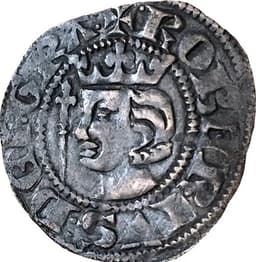
Robert the Bruce
Emperor · Medieval
55.5Total
Basic Information
Born
1265
1274
Died
1307
1329
Era
Medieval
Medieval
Nationality
Chagatai Khanate
Scotland
Occupation
Emperor
Emperor
Civilization
Eastern
Western
Score Comparison
Military (10%)
47.5
70.0
Political (20%)
54.7
68.0
Influence (20%)
53.3
55.0
Legacy (20%)
45.8
52.0
Leadership (15%)
74.0
40.0
Strategy (15%)
60.0
55.0
TOTAL
54.8
55.5
Duwa — Complete Timeline
1282 AD
Became Khan of the Chagatai KhanatePolitical Action◆ Major
Duwa became Khan of the Chagatai Khanate in 1282, after the death of his predecessor Baraq. He ruled for 25 years, leading the khanate through a period of conflict with the Yuan dynasty and the Ilkhanate.
Chagatai KhanateKhanBaraq
Impact: regional
1285 AD
Allied with Kaidu Against the Yuan DynastyPolitical Action◆ Major
Duwa formed a military alliance with Kaidu, the de facto ruler of the Mongol heartland, against the Yuan dynasty of Kublai Khan. Together, they launched campaigns into Yuan-controlled territories, including the Tarim Basin and Mongolia, challenging Yuan authority.
KaiduYuan DynastyAlliance
Impact: regionaldestructive
1298 AD
Defeated by the Yuan at the Battle of Khara-KhotoWar
Duwa's forces were defeated by the Yuan army at the Battle of Khara-Khoto in 1298. The loss weakened his position and forced him to retreat, leading to a temporary cessation of hostilities with the Yuan.
BattleYuan DynastyDefeat
Impact: regionaldestructive
1304 AD
Signed Peace Treaty with the Yuan DynastyPolitical Action◆ Major
Duwa negotiated a peace treaty with the Yuan dynasty in 1304, ending decades of conflict. The treaty recognized Yuan suzerainty over the Chagatai Khanate, but allowed Duwa to maintain internal autonomy, stabilizing the region.
Peace TreatyYuan DynastyAutonomy
Impact: regionalconstructive
Robert the Bruce — Complete Timeline
1306 AD
Coronation as King of ScotsPolitical Action
Robert the Bruce was crowned King of Scots at Scone Abbey by Isabella MacDuff, Countess of Buchan. The coronation occurred after Bruce murdered John Comyn, his rival, in Greyfriars Church, Dumfries, sparking a new phase of the Wars of Independence.
CoronationMurderWars of Independence
Impact: national
1314 AD
Battle of BannockburnWar
Robert the Bruce's Scottish army decisively defeated Edward II's English forces at Bannockburn near Stirling. The victory secured Scottish independence and established Bruce as the undisputed king, though the war continued for years.
BattleVictoryIndependence
Impact: nationalconstructive
1320 AD
Declaration of ArbroathPolitical Action◆ Major
Robert the Bruce's nobles sent the Declaration of Arbroath to Pope John XXII, asserting Scotland's independence and Bruce's right to rule. The document argued that Scotland was a sovereign kingdom and that the nobles would depose Bruce if he submitted to England.
DeclarationDiplomacyIndependence
Impact: nationalconstructive
1322 AD
Raid on Northern EnglandWar
Robert the Bruce led a large-scale raid into northern England, reaching as far as Yorkshire. The raid devastated English territories and forced Edward II to pay a ransom for peace, demonstrating Scottish military strength.
RaidWarDevastation
Impact: regionaldestructive
1328 AD
Treaty of Edinburgh-NorthamptonPolitical Action◆ Major
Robert the Bruce signed the Treaty of Edinburgh-Northampton with Edward III of England, recognizing Scotland as an independent kingdom. The treaty ended the First War of Scottish Independence and included the marriage of Bruce's son David to Edward III's sister Joan.
TreatyPeaceIndependence
Impact: nationalconstructive
This comparison has not been analyzed yet.
One-time AI generation (~1 minute). Scores and timeline are already available below.
Rankings
🥇
Robert the BruceLeader
Mil: 70.0Pol: 68.0Inf: 55.0
55.5
🥈
Duwa
Mil: 47.5Pol: 54.7Inf: 53.3
54.8
+0.7 behind
How This Comparison Works
Algorithm
Each figure is scored on 6 dimensions (0—100 scale) based on structured historical data: Military (10%), Political (20%), Influence (20%), Legacy (20%), Leadership (15%), Strategy (15%). The weighted total produces the final ranking.
Data Sources
Scores are computed from structured sub-indicators in the database. Scale factors adjust for era (Ancient ×0.85, Modern ×1.0) and civilization size (Eastern ×1.05, Other ×0.80) to account for differences in population and military scale.
Maximum 3 Figures
Comparisons are limited to 2—3 figures to ensure readability and statistical meaningfulness.
Error Margins
±5 points per dimension — Sub-scores are derived from historical records with inherent uncertainty. Two figures within 5 points on a dimension should be considered roughly equivalent in that area.
Total Score Accuracy
±3 points overall — The weighted combination of 6 dimensions produces a total score with approximately ±3 points of uncertainty. Differences of less than 3 points are not statistically significant— the figures are effectively tied.
Known Limitations
- Historical records are incomplete and uneven across civilizations
- Figures from oral-tradition societies may be underrepresented
- Occupation labels can misclassify multi-role figures
- Scores measure capability and impact, not moral character
- Quantitative scoring is a comparison tool, not absolute truth
Capability Radar
Military (10%) — Battles & Warfare
Battles
55
65
Win Rate
50
60
Expansion
50
50
Political (20%) — Governance & Reform
Reform
35
55
Diplomacy
65
65
Economy
40
50
Influence (20%) — Cultural & Global Reach
Cultural
30
60
Global
30
55
Legacy (20%) — Historical Impact
Historical
40
70
Longevity
35
65
Leadership (15%) — Power & Stability
Tenure
60
60
Stability
45
55
Strategy (15%) — Tactics & Innovation
Strategy
55
70
Tactics
45
75
Reform
30
55
Similar Comparisons
Comments & Discussion
No comments yet. Be the first to share your thoughts!