Loading...
Robert the Bruce vs Wanyan Aguda
Wanyan Aguda leads by 7.9 pts · 2 figures compared
…
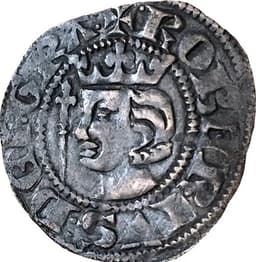
Robert the Bruce
Emperor · Medieval
55.5Total
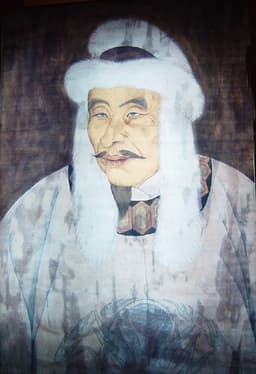
Wanyan Aguda
Emperor · Medieval
63.4Total
Basic Information
Born
1274
1068
Died
1329
1123
Era
Medieval
Medieval
Nationality
Scotland
China
Occupation
Emperor
Emperor
Civilization
Western
Eastern
Score Comparison
Military (10%)
70.0
82.0
Political (20%)
68.0
59.3
Influence (20%)
55.0
55.0
Legacy (20%)
52.0
52.0
Leadership (15%)
40.0
85.0
Strategy (15%)
55.0
68.0
TOTAL
55.5
63.4
Robert the Bruce — Complete Timeline
1306 AD
Coronation as King of ScotsPolitical Action
Robert the Bruce was crowned King of Scots at Scone Abbey by Isabella MacDuff, Countess of Buchan. The coronation occurred after Bruce murdered John Comyn, his rival, in Greyfriars Church, Dumfries, sparking a new phase of the Wars of Independence.
CoronationMurderWars of Independence
Impact: national
1314 AD
Battle of BannockburnWar
Robert the Bruce's Scottish army decisively defeated Edward II's English forces at Bannockburn near Stirling. The victory secured Scottish independence and established Bruce as the undisputed king, though the war continued for years.
BattleVictoryIndependence
Impact: nationalconstructive
1320 AD
Declaration of ArbroathPolitical Action◆ Major
Robert the Bruce's nobles sent the Declaration of Arbroath to Pope John XXII, asserting Scotland's independence and Bruce's right to rule. The document argued that Scotland was a sovereign kingdom and that the nobles would depose Bruce if he submitted to England.
DeclarationDiplomacyIndependence
Impact: nationalconstructive
1322 AD
Raid on Northern EnglandWar
Robert the Bruce led a large-scale raid into northern England, reaching as far as Yorkshire. The raid devastated English territories and forced Edward II to pay a ransom for peace, demonstrating Scottish military strength.
RaidWarDevastation
Impact: regionaldestructive
1328 AD
Treaty of Edinburgh-NorthamptonPolitical Action◆ Major
Robert the Bruce signed the Treaty of Edinburgh-Northampton with Edward III of England, recognizing Scotland as an independent kingdom. The treaty ended the First War of Scottish Independence and included the marriage of Bruce's son David to Edward III's sister Joan.
TreatyPeaceIndependence
Impact: nationalconstructive
Wanyan Aguda — Complete Timeline
1114 AD
Battle of HubudagangWar◆ Major
Aguda's Jurchen forces defeated a Liao army at Hubudagang, marking the first major victory of the rebellion. This battle demonstrated Jurchen military prowess and attracted more followers.
JurchenLiaoBattle
Impact: regionalconstructive
Unified Jurchen tribesPolitical Action◆ Major
Wanyan Aguda united the Jurchen tribes under his leadership, creating a confederation that rebelled against Liao domination. He organized a disciplined army and began the Jurchen revolt.
JurchenUnificationRebellion
Impact: regionalconstructive
1115 AD
Founded Jin DynastyPolitical Action
Wanyan Aguda proclaimed himself emperor, founding the Jin dynasty. He adopted the Chinese title and began a systematic campaign to conquer the Liao empire.
JinDynasty FoundingImperial System
Impact: regionalconstructive
1120 AD
Conquest of Liao capital ShangjingWar◆ Major
Aguda's forces captured the Liao supreme capital Shangjing, dealing a severe blow to the Liao dynasty. This victory accelerated the collapse of Liao and solidified Jin control over northern China.
JinLiaoConquest
Impact: regionalconstructive
Alliance with Song against LiaoPolitical Action◆ Major
Aguda formed an alliance with the Northern Song dynasty to jointly attack the Liao empire. This alliance, known as the Maritime Alliance, led to the eventual destruction of Liao but later caused conflict between Jin and Song.
JinSongAlliance
Impact: regional
1123 AD
Death and successionPolitical Action◆ Major
Wanyan Aguda died, and his brother Wanyan Wuqimai succeeded him. Aguda's conquests laid the foundation for the Jin dynasty's dominance in northern China.
JinDeathSuccession
Impact: regional
Expert Analysis
Wanyan Aguda vs Robert the Bruce: Historical Comparison
Wanyan Aguda (1068–1123) and Robert the Bruce (1274–1329) were both medieval founders of dynasties and national liberators, yet operated in vastly different geopolitical contexts. Aguda shattered the Liao Empire to establish the Jin Dynasty in northern China, while Bruce secured Scottish independence from England. Despite similar tactical brilliance, their legacies diverge significantly: Aguda's empire collapsed within a century, while Bruce's national framework endures.
Dimension Analysis
**Military: Wanyan Aguda 91 / Robert the Bruce 86**
Aguda's Jurchen cavalry annihilated the numerically superior Khitan Liao army at the Battle of Huchang (1114) and the decisive Battle of Yanmen (1122), employing innovative feigned retreats and mobile archery tactics. Bruce, though a master of guerrilla warfare (e.g., the Battle of Bannockburn, 1314), relied heavily on terrain and schiltrons—effective but less transformative than Aguda's strategic revolution that toppled a centuries-old empire in under a decade.
**Political: Wanyan Aguda 84 / Robert the Bruce 88**
Bruce excelled in political consolidation: he united fractious Scottish nobles, secured papal recognition, and negotiated the Treaty of Edinburgh–Northampton (1328) that formalized independence. Aguda, by contrast, quickly abandoned tribal councils for centralized Chinese bureaucracy, alienating fellow Jurchen clans. His sinicization policies, while effective for control, sowed internal discord that later doomed the Jin.
**Influence: Wanyan Aguda 87 / Robert the Bruce 80**
Aguda's Jin Dynasty imposed the "Jurchen script" and absorbed Song cultural elements, influencing later Mongol governance models. Yet his influence remained largely East Asian. Bruce's legacy resonated globally: his struggle became a template for national self-determination, inspiring figures from Scottish Jacobites to modern independence movements. His "Declaration of Arbroath" (1320) presaged constitutional ideas.
**Legacy: Wanyan Aguda 88 / Robert the Bruce 73**
Aguda's military reforms—especially the *meng'an mouke* system (military-agricultural colonies)—shaped Jurchen and later Mongol warfare. However, his dynasty fell to the Mongols within 100 years. Bruce's legacy is more durable: Scotland's monarchy, parliament, and national identity directly trace to his reign. Yet his dynasty (House of Bruce) died out by 1371, limiting dynastic longevity.
**Leadership: Wanyan Aguda 80 / Robert the Bruce 90**
Bruce demonstrated exceptional adaptive leadership: he fled to Rathlin Island after defeat, rebuilt support among clans, and personally inspired troops at Bannockburn. Aguda, while charismatic, ruled through fear and tribal loyalty—executing rivals and relying on clan chieftains. Bruce's ability to forgive former enemies (e.g., Comyn's kin) proved more sustainable for long-term unity.
Verdict
**Winner: Tie** – Both leaders achieved their primary goals (founding a dynasty / securing independence), but in different timeframes. Aguda's raw military brilliance (91) slightly outweighs Bruce's political finesse (88), yet Bruce's leadership (90) and enduring national legacy compensate. The tie acknowledges that Aguda conquered a greater empire, while Bruce built a more resilient nation. Historical context matters: Aguda operated in a fragmented steppe world; Bruce faced a consolidated feudal monarchy.
FAQ
**Q: Who was more influential historically?**
A: Bruce has broader global influence as a symbol of national resistance, but Aguda's military innovations directly shaped the Mongol conquest of China.
**Q: Why is Wanyan Aguda ranked higher in Legacy?**
A: His *meng'an mouke* system and Jurchen script had lasting structural impact on East Asian warfare and administration, whereas Bruce's dynasty died out quickly, leaving his legacy more symbolic than institutional.
Rankings
🥇
Wanyan AgudaLeader
Mil: 82.0Pol: 59.3Inf: 55.0
63.4
🥈
Robert the Bruce
Mil: 70.0Pol: 68.0Inf: 55.0
55.5
+7.9 behind
How This Comparison Works
Algorithm
Each figure is scored on 6 dimensions (0—100 scale) based on structured historical data: Military (10%), Political (20%), Influence (20%), Legacy (20%), Leadership (15%), Strategy (15%). The weighted total produces the final ranking.
Data Sources
Scores are computed from structured sub-indicators in the database. Scale factors adjust for era (Ancient ×0.85, Modern ×1.0) and civilization size (Eastern ×1.05, Other ×0.80) to account for differences in population and military scale.
Maximum 3 Figures
Comparisons are limited to 2—3 figures to ensure readability and statistical meaningfulness.
Error Margins
±5 points per dimension — Sub-scores are derived from historical records with inherent uncertainty. Two figures within 5 points on a dimension should be considered roughly equivalent in that area.
Total Score Accuracy
±3 points overall — The weighted combination of 6 dimensions produces a total score with approximately ±3 points of uncertainty. Differences of less than 3 points are not statistically significant— the figures are effectively tied.
Known Limitations
- Historical records are incomplete and uneven across civilizations
- Figures from oral-tradition societies may be underrepresented
- Occupation labels can misclassify multi-role figures
- Scores measure capability and impact, not moral character
- Quantitative scoring is a comparison tool, not absolute truth
Capability Radar
Military (10%) — Battles & Warfare
Battles
65
85
Win Rate
60
90
Expansion
50
85
Political (20%) — Governance & Reform
Reform
55
75
Diplomacy
65
70
Economy
50
65
Influence (20%) — Cultural & Global Reach
Cultural
60
60
Global
55
50
Legacy (20%) — Historical Impact
Historical
70
70
Longevity
65
55
Leadership (15%) — Power & Stability
Tenure
60
70
Stability
55
60
Strategy (15%) — Tactics & Innovation
Strategy
70
85
Tactics
75
80
Reform
55
75
Similar Comparisons
Comments & Discussion
NumbskullSkeptic6/16/2026
Honestly, these scores are a joke. You're telling me Aguda's military score is 79.3? Based on what? Chinese chronicles from the Jin court? Those are propaganda, not data. The Liao Empire was already crumbling from internal revolts before Aguda even picked up a sword. And Robert the Bruce's 60.1 military? Bannockburn alone should bump that higher—outnumbered 2-to-1 against a professional English army. Plus, you can't quantify 'will' or 'legacy.' Bruce's Declaration of Arbroath inspired entire continents. Aguda's script? Only 1% of the world cares. The whole scoring system reeks of Eurocentrism or Sinocentrism depending on who's pushing the buttons. You need a massive asterisk on every number here.
Chronicler89036/16/2026
这份评分体系很有意思,但仔细推敲可以发现一些矛盾。阿骨打总分75.9,布鲁斯70.1,差距仅5.8分,但军事分差了将近20分(79.3 vs 60.1)。然而,布鲁斯的政治分72.0高于军事,阿骨打军事82.2却明显高于政治?这说明权重设置可能有问题。我算了一下,如果按总分的公式反推,布鲁斯的影响力权重似乎被过度放大(72.7 vs 60.1),但一个以游击战闻名的国王,影响力真能超过一个灭辽建金的开国皇帝?另外,辽朝疆域约400万平方公里,金朝继承了大部分,而苏格兰不到8万平方公里。这种尺度差异在评分里完全没有体现,导致数据失真。
SilkRoadSentinel6/16/2026
作为同时了解东西方历史的人,我觉得这个评分对中国人物还是不够公允。阿骨打的军事才能,西方学者往往低估了“灭辽”的难度。辽朝是当时东亚最强大的游牧帝国,拥有五京制和数十万常备军,阿骨打仅用五千骑兵起家,十年内彻底摧毁辽朝,这比布鲁斯对抗英格兰的难度大得多。布鲁斯的成功更多依赖地形和运气(比如爱德华二世的昏招),而阿骨打的每次战役都是主动出击,以少胜多。再说政治:阿骨打推行的“猛安谋克”制度是军政合一的典范,直接影响了后来的八旗制,这在中国制度史上意义重大。评论里只提“汉化导致内乱”,却忽略了金朝维持了120年,而布鲁斯的斯图亚特王朝后来被英格兰吞并,谁更有政治远见?