Loading...
Edward V of England vs Robert II the Pious
Edward V of England leads by 2.6 pts · 2 figures compared
…
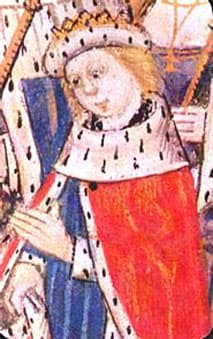
Edward V of England
Emperor · Medieval
47.5Total
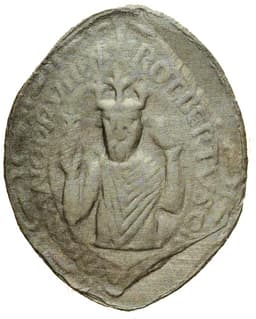
Robert II the Pious
Emperor · Medieval
44.9Total
Basic Information
Born
1470
972
Died
1483
1031
Era
Medieval
Medieval
Nationality
England
France
Occupation
Emperor
Emperor
Civilization
Western
Western
Score Comparison
Military (10%)
16.6
20.0
Political (20%)
68.0
37.9
Influence (20%)
45.5
50.2
Legacy (20%)
37.5
41.7
Leadership (15%)
70.4
65.0
Strategy (15%)
43.0
45.0
TOTAL
47.5
44.9
Edward V of England — Complete Timeline
1483 AD
Accession to the ThronePolitical Action◆ Major
Edward V became king of England at age 12 after the death of his father, Edward IV. His reign was brief and dominated by his uncle Richard, Duke of Gloucester, who acted as Lord Protector.
SuccessionMinor KingYorkist
Impact: national
Deposition by Richard IIIPolitical Action
Edward V was declared illegitimate by Parliament under the Titulus Regius, and his uncle Richard was crowned as Richard III. Edward and his brother Richard were placed in the Tower of London, where they disappeared.
DepositionPrinces in the TowerUsurpation
Impact: nationaltragic
Disappearance of the Princes in the TowerOther◆ Major
Edward V and his brother Richard, Duke of York, vanished from the Tower of London after being declared illegitimate. Their fate remains unknown, but they are widely believed to have been murdered, likely on orders of Richard III.
MysteryMurderPrinces in the Tower
Impact: nationaltragic
Robert II the Pious — Complete Timeline
996 AD
Reign as King of the FranksPolitical Action◆ Major
Robert II succeeded his father Hugh Capet as King of the Franks. His reign was marked by efforts to consolidate royal power, but he faced challenges from powerful nobles and the Church, limiting his authority.
KingshipCapetianReign
Impact: national
998 AD
Excommunication for Marriage to Bertha of BurgundyPolitical Action◆ Major
Robert II was excommunicated by Pope Gregory V for marrying Bertha of Burgundy, his cousin, without papal dispensation. The excommunication was lifted after Robert repudiated Bertha, but it damaged his reputation and strained relations with the Church.
ExcommunicationMarriageChurch Conflict
Impact: nationaltragic
1000 AD
Patronage of the Cluniac ReformsCultural
Robert II supported the Cluniac monastic reforms, which aimed to purify the Church and reduce secular influence. His patronage strengthened the Cluniac movement and enhanced the Church's moral authority in France.
Church ReformClunyPatronage
Impact: regionalconstructive
1002 AD
Conflict with the Duchy of BurgundyWar
Robert II attempted to assert control over the Duchy of Burgundy after the death of Duke Henry I. The conflict lasted several years and resulted in limited success, as Burgundy remained largely independent under its own dukes.
WarBurgundyTerritorial Conflict
Impact: regional
Expert Analysis
Origins
Edward V was born on November 4, 1470, in Westminster, the eldest son of Edward IV and Elizabeth Woodville. His early life was marked by the political turmoil of the Wars of the Roses; his father was briefly deposed when Edward was an infant. He was given the title Prince of Wales in 1471 and was raised under the supervision of his mother's family, the Woodvilles, and his uncle, Anthony Woodville, who provided him with a humanist education. His upbringing was privileged but overshadowed by factional rivalry.
Robert II the Pious was born around 972 in Orléans, the son of Hugh Capet, founder of the Capetian dynasty, and Adelaide of Aquitaine. He was educated at the Abbey of Saint-Denis under the renowned scholar Gerbert of Aurillac (later Pope Sylvester II), receiving a thorough clerical education. He was crowned co-king in 987 at age 15, a practice to secure the succession. His early life was steeped in the ideals of the Cluniac reform movement, which deeply influenced his piety.
Rise to Power
Edward V became king on April 9, 1483, at age 12, after his father's sudden death. His uncle Richard, Duke of Gloucester, was named Lord Protector. However, Richard quickly moved against the Woodville faction, arresting Anthony Woodville and others. On June 22, 1483, Richard declared Edward IV's marriage invalid, making Edward V illegitimate under the Titulus Regius. Edward was deposed on June 26, and Richard was crowned Richard III. Edward's reign lasted only 78 days, the shortest of any English monarch.
Robert II succeeded his father upon Hugh Capet's death on October 24, 996. He had already been co-king since 987, ensuring a smooth transition. His rise was not contested, but his reign was immediately challenged by his conflict with the Church over his marriage to Bertha of Burgundy, which led to his excommunication in 998. This forced him to submit to papal authority, a turning point that shaped his rule.
Leadership & Governance
Edward V never truly governed; his reign was controlled by Richard III. His leadership score of 70.4 reflects potential rather than actual governance, as he was a figurehead. His only recorded act as king was to confirm the appointment of his council. In contrast, Robert II's leadership score of 65.0 is based on his active but often ineffective rule. He faced rebellions from nobles, notably the conflict with the Duchy of Burgundy (1002-1015). He attempted to consolidate royal power but failed to subdue powerful vassals. His political score of 37.9 indicates his limited success in governance.
Triumph & Tragedy
Edward V's greatest triumph is arguably his survival until age 12 in a turbulent court; his tragedy is his disappearance in the Tower of London in 1483, likely murdered on Richard III's orders. His legacy score of 37.5 reflects his lack of achievements.
Robert II's triumph was his support for the Cluniac reforms, which strengthened the Church and reduced secular influence. He also maintained the Capetian dynasty, fathering several sons. His tragedy was his excommunication and his failed marriage policy; his wife Bertha was barren, and he later married Constance of Arles, leading to domestic strife. His military score of 20.0 reflects his inability to expand royal power.
Character & Destiny
Edward V was described as intelligent and well-educated, but his fate was sealed by his youth and the ambition of his uncle. His disappearance made him a symbol of innocence lost, often romanticized in history. Robert II was deeply pious, earning his epithet 'the Pious.' His religious devotion often clashed with political necessity, leading to conflicts with the papacy. His character shaped his destiny: his piety strengthened the Church but weakened his temporal authority.
Legacy
Edward V's legacy is primarily as one of the 'Princes in the Tower,' a mystery that has inspired centuries of speculation. His influence score of 45.5 reflects his cultural impact rather than political achievements. Robert II's legacy is more substantial: he solidified the Capetian dynasty and promoted Cluniac reforms, which influenced the medieval Church. His total score of 44.9 is slightly lower than Edward's 47.5, but his actual impact on history is greater due to his active rule.
Conclusion
While Edward V scores slightly higher overall (47.5 vs. 44.9), his score is inflated by potential and cultural resonance. Robert II, despite lower scores, had a tangible impact on the Capetian monarchy and the Church. Edward V's reign was a historical footnote; Robert II's reign, though troubled, advanced the Cluniac reform and secured the dynasty. Therefore, Robert II the Pious had greater historical impact.
Rankings
🥇
Edward V of EnglandLeader
Mil: 16.6Pol: 68.0Inf: 45.5
47.5
🥈
Robert II the Pious
Mil: 20.0Pol: 37.9Inf: 50.2
44.9
+2.6 behind
How This Comparison Works
Algorithm
Each figure is scored on 6 dimensions (0—100 scale) based on structured historical data: Military (10%), Political (20%), Influence (20%), Legacy (20%), Leadership (15%), Strategy (15%). The weighted total produces the final ranking.
Data Sources
Scores are computed from structured sub-indicators in the database. Scale factors adjust for era (Ancient ×0.85, Modern ×1.0) and civilization size (Eastern ×1.05, Other ×0.80) to account for differences in population and military scale.
Maximum 3 Figures
Comparisons are limited to 2—3 figures to ensure readability and statistical meaningfulness.
Error Margins
±5 points per dimension — Sub-scores are derived from historical records with inherent uncertainty. Two figures within 5 points on a dimension should be considered roughly equivalent in that area.
Total Score Accuracy
±3 points overall — The weighted combination of 6 dimensions produces a total score with approximately ±3 points of uncertainty. Differences of less than 3 points are not statistically significant— the figures are effectively tied.
Known Limitations
- Historical records are incomplete and uneven across civilizations
- Figures from oral-tradition societies may be underrepresented
- Occupation labels can misclassify multi-role figures
- Scores measure capability and impact, not moral character
- Quantitative scoring is a comparison tool, not absolute truth
Capability Radar
Military (10%) — Battles & Warfare
Battles
8
5
Win Rate
11
5
Expansion
9
5
Political (20%) — Governance & Reform
Reform
51
40
Diplomacy
52
30
Economy
56
30
Influence (20%) — Cultural & Global Reach
Cultural
5
30
Global
5
10
Legacy (20%) — Historical Impact
Historical
15
30
Longevity
10
20
Leadership (15%) — Power & Stability
Tenure
46
60
Stability
58
40
Strategy (15%) — Tactics & Innovation
Strategy
14
5
Tactics
19
5
Reform
19
5
Similar Comparisons
Comments & Discussion
No comments yet. Be the first to share your thoughts!