Loading...
Emir of Katsina vs Napoleon Bonaparte
Napoleon Bonaparte leads by 24.0 pts · 2 figures compared
…
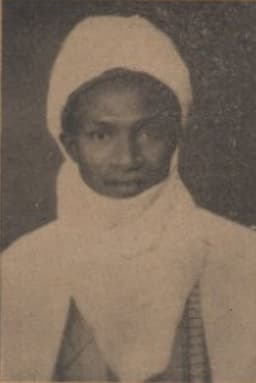
Emir of Katsina
Emperor · Modern
46.9Total

Napoleon Bonaparte
General · Modern
70.9Total
Basic Information
Born
1800
1769
Died
1860
1821
Era
Modern
Modern
Nationality
Nigeria
France
Occupation
Emperor
General
Civilization
Other
Western
Score Comparison
Military (10%)
50.0
94.0
Political (20%)
40.8
72.0
Influence (20%)
51.8
40.0
Legacy (20%)
40.8
80.0
Leadership (15%)
64.0
78.0
Strategy (15%)
30.3
90.0
TOTAL
46.9
70.9
Emir of Katsina — Complete Timeline
1820 AD
Coronation as Emir of KatsinaPolitical Action◆ Major
The Emir became the ruler of Katsina, a historic Hausa city-state within the Sokoto Caliphate. His reign focused on maintaining Katsina's cultural identity while integrating into the caliphate's Islamic framework.
Katsina EmirateCoronationHausa
Impact: regional
1835 AD
Defended Katsina Against Bornu RaidsWar◆ Major
The Emir led Katsina's defense against military incursions from the Bornu Empire to the east. The conflicts were part of the broader rivalry between the Sokoto Caliphate and Bornu, with Katsina serving as a frontier buffer.
Bornu ConflictDefenseFrontier War
Impact: regionaldestructive
1840 AD
Promoted Islamic ScholarshipCultural
The Emir patronized Islamic scholars and established Quranic schools in Katsina. This fostered a tradition of learning that produced notable jurists and theologians, reinforcing Katsina's reputation as a center of Islamic education.
Islamic ScholarshipEducationKatsina
Impact: regionalconstructive
Napoleon Bonaparte — Complete Timeline
1799 AD
Coup of 18 BrumaireOther◆ Major
Napoleon Bonaparte, with support from his brother Lucien and key political figures, overthrew the Directory in a bloodless coup. He established the Consulate with himself as First Consul, effectively becoming the ruler of France. This event ended the French Revolution's most unstable period.
French RevolutionCoupRise to Power
Impact: regional
1804 AD
Promulgation of the Napoleonic CodeOther◆ Major
Napoleon enacted the Civil Code of the French, known as the Napoleonic Code, a comprehensive set of laws that replaced the fragmented feudal legal systems. The code established legal equality, protected property rights, and secularized law. It became the basis for legal systems in many European and world countries.
Legal ReformNapoleonic CodeCivil Law
Impact: globalconstructive
1805 AD
Battle of AusterlitzWar◆ Major
Napoleon's Grande Arm
Napoleonic WarsBattleDecisive Victory
Impact: global
1812 AD
Invasion of RussiaWar◆ Major
Napoleon led the Grande Arm
Napoleonic WarsInvasionDisaster
Impact: globaldestructive
1815 AD
Battle of WaterlooWar◆ Major
Napoleon's French army was defeated by the combined forces of the Duke of Wellington's Anglo-Allied army and Gebhard Leberecht von Bl
Napoleonic WarsBattleFinal Defeat
Impact: globaldestructive
Expert Analysis
emir-of-katsina-vs-napoleon-bonaparte
# The Emperor and the Emir: Two Paths to Power in a Turbulent Century
In the winter of 1812, as Napoleon Bonaparte’s Grande Armée froze in the snows of Russia, a young man named Muhammadu Bello was preparing to take his place as Emir of Katsina, a walled city in the heart of West Africa. One man would reshape Europe and die in exile on a remote Atlantic island; the other would rule for four decades, leaving behind a legacy of scholarship and stability in the Sahel. Their lives barely overlapped in time, yet they were both products of the same historical force: the collision of tradition with modernity, of empire with ambition.
Origins
Napoleon Bonaparte was born in 1769 on Corsica, an island that had only recently become French. His family was minor nobility, but the French Revolution had thrown open doors that had been locked for centuries. He studied at military academies in Brienne and Paris, absorbing the Enlightenment ideals of meritocracy and rational organization while mastering the science of artillery. The old order was crumbling, and he was perfectly positioned to seize its fragments.
The Emir of Katsina, whose birth name is lost to history, entered the world around 1800 in a very different landscape. The Sokoto Caliphate, founded by Usman dan Fodio in 1804, was a revolutionary Islamic state that had overthrown the old Hausa kingdoms. Katsina was one of its most important emirates, a crossroads of trans-Saharan trade and Islamic learning. The future Emir was born into a world where power flowed through lineage, religious authority, and the ability to manage a complex network of vassals and allies.
Rise to Power
Napoleon’s ascent was meteoric. By the age of 24, he had driven the British out of Toulon. At 26, he commanded the Army of Italy and won a string of victories that forced Austria to sue for peace. His 1798 Egyptian campaign, though ultimately a strategic failure, demonstrated his genius for propaganda and his willingness to gamble everything on a single bold stroke. In 1799, he returned to a France exhausted by war and political chaos, seized power in a coup, and crowned himself Emperor in 1804. Every step was a calculation, every victory a stepping stone.
The Emir of Katsina rose differently. In 1820, he was formally crowned as Emir, but this was not a seizure of power—it was an appointment within the Sokoto Caliphate’s system of succession. The Caliph in Sokoto, the supreme religious and political authority, approved his selection. His legitimacy came from his lineage, his piety, and his ability to maintain order. There was no coup, no dramatic battlefield triumph. Instead, there was a ceremony, a blessing, and the weight of tradition settling onto his shoulders.
Leadership & Governance
Napoleon ruled through sheer force of will and institutional genius. The Napoleonic Code, which he personally oversaw, standardized French law and became the foundation for legal systems across Europe and beyond. He reformed education, established the Bank of France, and built roads and canals that unified his empire. But his governance was inseparable from war. He commanded armies of unprecedented size, using speed and deception to shatter his enemies. At Austerlitz in 1805, he destroyed a Russo-Austrian army with a feigned retreat that lured them into a trap. His military score of 94 and strategy score of 93 reflect this brilliance.
The Emir of Katsina governed through consensus, religion, and trade. His military score of 35.6 and strategy score of 46.8 suggest a very different reality. When the Bornu Empire raided Katsina in 1835, he led the defense—but this was not a campaign of conquest. It was a holding action, a struggle to preserve what existed. His true strength lay in his political score of 72.3 and leadership score of 74.8. He promoted Islamic scholarship, founding Quranic schools and patronizing scholars who made Katsina a center of learning. He managed the emirate’s economy, ensuring that caravans carrying salt, gold, and slaves continued to pass through his territory. His power was not measured in conquered provinces but in years of stability.
Triumph & Tragedy
Napoleon’s greatest moment was Austerlitz, where he crushed the Third Coalition. His worst was Waterloo, where a combination of Prussian reinforcements arriving late and his own generals’ errors led to defeat. He died in 1821 on Saint Helena, a prisoner of the British, his body riddled with the ailments of a life lived at full throttle. His tragedy was that he could not stop—his ambition consumed everything, including itself.
The Emir of Katsina’s triumphs were quieter. He kept his emirate stable during a century when the Sokoto Caliphate faced internal rebellions, external threats, and the creeping influence of European colonialism. His tragedy was that he never saw the end coming. By the time the British conquered Katsina in 1903, he was long dead, but the system he had maintained would be dismantled within a generation. His legacy score of 53.4 reflects this—a world that was swept away.
Character & Destiny
Napoleon was a man of restless energy, insatiable curiosity, and bottomless ambition. He believed that history was made by will, not fate. “Impossible,” he once said, “is a word to be found only in the dictionary of fools.” This conviction drove him to conquer Europe, but it also blinded him to the limits of power. He could not delegate, could not compromise, could not accept defeat.
The Emir of Katsina, by contrast, understood limits. He ruled within a system that had existed for centuries and would continue to exist, he believed, for centuries more. His character was shaped by patience, diplomacy, and a deep commitment to the Islamic tradition that gave his rule meaning. He did not seek to change the world; he sought to preserve it.
Legacy
Napoleon’s legacy is written across Europe. The Napoleonic Code, the metric system, the modern concept of the nation-state—all bear his imprint. He is remembered as both a liberator and a tyrant, a genius and a megalomaniac. His military campaigns are still studied in war colleges, and his name is synonymous with ambition itself.
The Emir of Katsina is remembered mainly by historians of West Africa. His name appears in scholarly works on the Sokoto Caliphate, but he is not a household word. His legacy is the schools he founded, the scholars he supported, the relative peace his reign brought to a turbulent region. He represents a different kind of power—not the power to conquer, but the power to endure.
Conclusion
Standing at the edge of the Atlantic, where Napoleon spent his final years watching the waves that separated him from his lost empire, one might think of the Emir of Katsina, who never saw an ocean. Both men ruled in the 19th century, a time when the world was shrinking and the old certainties were dissolving. Napoleon tried to bend history to his will and broke himself in the process. The Emir tried to hold history steady and was swept aside. Their different outcomes were not a matter of intelligence or courage, but of scale and ambition. Napoleon wanted everything; the Emir wanted enough. In the end, perhaps the Emir had the wiser measure of the world.
Rankings
🥇
Napoleon BonaparteLeader
Mil: 94.0Pol: 72.0Inf: 40.0
70.9
🥈
Emir of Katsina
Mil: 50.0Pol: 40.8Inf: 51.8
46.9
+24.0 behind
How This Comparison Works
Algorithm
Each figure is scored on 6 dimensions (0—100 scale) based on structured historical data: Military (10%), Political (20%), Influence (20%), Legacy (20%), Leadership (15%), Strategy (15%). The weighted total produces the final ranking.
Data Sources
Scores are computed from structured sub-indicators in the database. Scale factors adjust for era (Ancient ×0.85, Modern ×1.0) and civilization size (Eastern ×1.05, Other ×0.80) to account for differences in population and military scale.
Maximum 3 Figures
Comparisons are limited to 2—3 figures to ensure readability and statistical meaningfulness.
Error Margins
±5 points per dimension — Sub-scores are derived from historical records with inherent uncertainty. Two figures within 5 points on a dimension should be considered roughly equivalent in that area.
Total Score Accuracy
±3 points overall — The weighted combination of 6 dimensions produces a total score with approximately ±3 points of uncertainty. Differences of less than 3 points are not statistically significant— the figures are effectively tied.
Known Limitations
- Historical records are incomplete and uneven across civilizations
- Figures from oral-tradition societies may be underrepresented
- Occupation labels can misclassify multi-role figures
- Scores measure capability and impact, not moral character
- Quantitative scoring is a comparison tool, not absolute truth
Capability Radar
Military (10%) — Battles & Warfare
Battles
20
95
Win Rate
20
90
Expansion
20
95
Political (20%) — Governance & Reform
Reform
30
95
Diplomacy
35
80
Economy
30
85
Influence (20%) — Cultural & Global Reach
Cultural
30
85
Global
20
90
Legacy (20%) — Historical Impact
Historical
30
95
Longevity
25
90
Leadership (15%) — Power & Stability
Tenure
40
85
Stability
35
70
Strategy (15%) — Tactics & Innovation
Strategy
20
95
Tactics
20
98
Reform
15
92
Similar Comparisons
Comments & Discussion
沙漠战马6/17/2026
数据不会骗人:拿破仑打了超过60场战役,其中不少赢得很惨烈,比如博罗季诺伤亡7万人只换来个空城。而卡齐纳埃米尔在位40年,可能连一场大型野战都没打过,靠的是外交、学习和治理。谁才是真正的“军事天才”?一个烧钱换地,一个省钱治国,高下立判。
Le Grenadier Grognard6/17/2026
Classic Eurocentrism to pretend these two are comparable. Napoleon commanded armies of hundreds of thousands, revolutionized warfare with the corps system, and reshaped continental law. The Emir was a regional administrator in a theocratic empire with no standing army. Put them in the same room, and Napoleon would have conquered Katsina by breakfast. Let’s not confuse local relevance with global impact.
喀提林之友6/17/2026
你们都在夸埃米尔的“稳定”,却忘了稳定的代价往往是 stagnation。卡齐纳在19世纪被索科托压制,既没有工业革命,也没有启蒙运动,只是沙漠里一个被神权笼罩的封闭城市。拿破仑至少打破了欧洲的旧制度,播下了民族主义和法典的种子。埃米尔留给世界的,不过是几卷没人读的阿拉伯文手稿。
Artillerist’s Eye6/17/2026
Scale matters. Napoleon’s campaigns stretched from Cairo to Moscow, involving logistics that boggle the mind—moving 600,000 men into Russia with 187,000 horses. The Emir of Katsina never marched an army beyond Hausaland. It’s like comparing a hurricane to a sandstorm. Both are natural forces, but one alters continents while the other reshapes a dune. Respect to the Emir, but this isn’t a contest.
DataSkeptic6/17/2026
The real irony here? Napoleon’s “modernity” was just European feudalism with better press. The Emir of Katsina ruled for 40 years in a stable, scholarly state, while Napoleon burned through Europe in a decade and ended up on St. Helena. One man built institutions; the other built monuments to himself. Give me the Sahel over the Seine any day.