Loading...
Emperor Gaozong of Tang vs Harald Hardrada
Emperor Gaozong of Tang leads by 1.7 pts · 2 figures compared
…
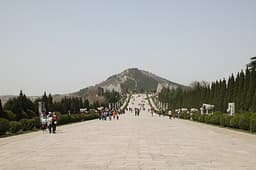
Emperor Gaozong of Tang
Emperor · Medieval
60.4Total
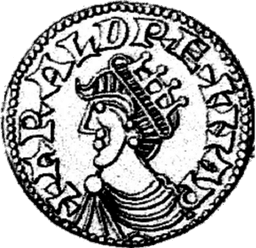
Harald Hardrada
Emperor · Medieval
58.7Total
Basic Information
Born
628
1015
Died
683
1066
Era
Medieval
Medieval
Nationality
China
Norway
Occupation
Emperor
Emperor
Civilization
Eastern
Western
Score Comparison
Military (10%)
72.5
67.3
Political (20%)
62.7
48.0
Influence (20%)
61.0
60.0
Legacy (20%)
50.0
54.0
Leadership (15%)
68.0
64.0
Strategy (15%)
57.5
66.3
TOTAL
60.4
58.7
Emperor Gaozong of Tang — Complete Timeline
657 AD
Conquest of the Western TurksWar◆ Major
Emperor Gaozong's general Su Dingfang defeated the Western Turkic Khaganate, bringing Central Asia under Tang control. This established Tang hegemony over the Silk Road and extended the empire's influence to the Caspian Sea.
ConquestExpansion
Impact: globalconstructive
660 AD
Illness and Regency of Wu ZetianPolitical Action
Emperor Gaozong suffered a stroke that left him partially incapacitated. His wife, Empress Wu Zetian, began to take an active role in governance, eventually becoming the de facto ruler. This marked the beginning of Wu Zetian's rise to power.
SuccessionRegency
Impact: regional
663 AD
Battle of BaekgangWar◆ Major
Tang and Silla forces defeated a combined Baekje-Yamato Japanese fleet at the Battle of Baekgang in Korea. This victory secured Tang control over the Korean peninsula and ended Japanese ambitions in Korea for centuries.
Naval BattleConquest
Impact: regionalconstructive
668 AD
Conquest of GoguryeoWar◆ Major
Emperor Gaozong, with the help of the Silla kingdom, conquered the Korean kingdom of Goguryeo. This victory expanded Tang territory into Manchuria and Korea, establishing a Tang protectorate over the region.
ConquestExpansion
Impact: regionalconstructive
Harald Hardrada — Complete Timeline
1030 AD
Fought at the Battle of StiklestadWar◆ Major
Harald Hardrada fought at the Battle of Stiklestad at age 15, supporting his half-brother Olaf II. The battle ended in defeat and Olaf's death, forcing Harald into exile. This event shaped his later ambition to reclaim power in Norway.
BattleExileNorway
Impact: regionaltragic
1034 AD
Served as a mercenary in the Varangian GuardWar◆ Major
After Stiklestad, Harald Hardrada traveled to Constantinople and served as a commander in the Varangian Guard of the Byzantine Empire. He fought in campaigns in the Mediterranean, Sicily, and the Balkans, amassing wealth and military experience.
MercenaryByzantine EmpireVarangian Guard
Impact: regional
1046 AD
Became King of NorwayPolitical Action◆ Major
Harald Hardrada returned to Scandinavia and claimed the Norwegian throne, initially co-ruling with Magnus the Good. After Magnus's death in 1047, Harald became sole king of Norway, ruling until 1066. His reign was marked by centralization and conflict with Denmark.
CoronationNorwayKingship
Impact: regional
1048 AD
Invaded DenmarkWar◆ Major
Harald Hardrada launched a prolonged war against Sweyn Estridsson of Denmark, seeking to reclaim the Danish throne. The conflict lasted for years with raids and battles, but Harald failed to conquer Denmark, eventually making peace in 1064.
InvasionDenmarkWar
Impact: regional
1066 AD
Invaded England and was killed at the Battle of Stamford BridgeWar
Harald Hardrada invaded England in September 1066, claiming the English throne. He was defeated and killed by King Harold Godwinson's forces at the Battle of Stamford Bridge. His death marked the end of the Viking Age and the last major Viking invasion of England.
BattleViking AgeEngland
Impact: regionaltragic
Expert Analysis
Origins
Emperor Gaozong of Tang (born 628, personal name Li Zhi) was the ninth son of Emperor Taizong, the second Tang emperor. His mother was Empress Zhangsun, a respected consort. Gaozong was raised in the imperial palace, receiving a Confucian education. Initially designated Prince of Jin, he became crown prince after his elder brothers fell from favor. His early life was sheltered, but he witnessed the administrative machinery of the Tang state under his father.
Harald Hardrada (born c. 1015, Harald Sigurdsson) was the half-brother of King Olaf II of Norway. He grew up in the Norwegian countryside, learning martial skills. At age 15, he fought at the Battle of Stiklestad (1030), where Olaf was killed. Forced into exile, Harald fled to Kievan Rus' and then Constantinople. His youth was shaped by violence and displacement.
Rise to Power
Gaozong became emperor in 649 after Taizong's death. His succession was smooth, but he initially relied on advisors from his father's court, such as Zhangsun Wuji and Chu Suiliang. Gaozong asserted his authority by purging these officials in 659, partly influenced by his wife Wu Zetian. He then consolidated power through military campaigns.
Harald Hardrada's rise was more turbulent. After serving as a commander in the Varangian Guard (c. 1034–1042), he amassed wealth from campaigns in the Mediterranean. He returned to Scandinavia in 1045 and allied with his nephew Magnus the Good, co-ruling Norway. Upon Magnus's death in 1047, Harald became sole king. He then fought a long war with Sweyn Estridsson of Denmark (1048–1064), ultimately failing to conquer Denmark.
Leadership & Governance
Gaozong governed through a centralized bureaucracy. He continued Taizong's policies, including the equal-field system and legal code. However, his stroke in 660 left him incapacitated, leading to Wu Zetian's regency. She effectively ruled from 660 onward, while Gaozong remained nominal emperor. His leadership was passive; he allowed Wu to manage state affairs, which stabilized the court but also concentrated power in her hands.
Harald Hardrada ruled Norway as a warrior-king. He centralized royal authority, suppressed local chieftains, and minted coins. His governance was harsh; he levied heavy taxes and used mercenaries to enforce order. He also promoted Christianity, building churches and appointing bishops. However, his constant wars drained resources. His leadership was aggressive but effective in consolidating Norway.
Triumph & Tragedy
Gaozong's greatest triumph was the expansion of Tang territory. In 657, General Su Dingfang defeated the Western Turks, extending Tang control to the Caspian Sea. In 668, Tang conquered Goguryeo, establishing a protectorate in Korea. The Battle of Baekgang (663) crushed Japanese ambitions in Korea. However, these gains were short-lived. After Gaozong's death, Tang lost control of Korea and the Western Regions. His tragedy was his illness, which ceded real power to Wu, leading to her later usurpation of the throne.
Harald Hardrada's triumph was becoming king of Norway and amassing immense wealth from his Varangian service. He also led a successful invasion of Denmark's Jutland in 1062, though he failed to conquer the kingdom. His ultimate tragedy was his death at the Battle of Stamford Bridge (September 25, 1066). Invading England with a large fleet, he was caught off guard by King Harold Godwinson and killed, ending the Viking Age in England.
Character & Destiny
Gaozong was known for filial piety and a mild temperament. He was influenced by his father's legacy but lacked decisiveness. His dependence on Wu Zetian shaped his reign and the dynasty's future. Historians often view him as a transitional figure between Taizong's vigor and Wu's dominance.
Harald Hardrada was ambitious, ruthless, and charismatic. His experiences as a mercenary made him a skilled commander but also greedy. His invasion of England was a gamble that failed due to overreach. His death at Stamford Bridge epitomized the end of Viking expansion.
Legacy
Gaozong's legacy is mixed. His military campaigns expanded Tang influence, but his passivity allowed Wu Zetian to seize power. The Tang dynasty continued, but the seeds of its decline were sown. He is remembered as a capable but overshadowed emperor. His scores reflect this: Military 72.5, Political 62.7, Influence 61.0, Legacy 50.0, Leadership 68.0, Strategy 57.5, Total 60.4.
Harald Hardrada's legacy is more romanticized. He is the last great Viking king, symbolizing the end of the Viking Age. His story is preserved in sagas and chronicles. His scores: Military 67.3, Political 48.0, Influence 60.0, Legacy 54.0, Leadership 64.0, Strategy 66.3, Total 58.7.
Conclusion
Emperor Gaozong had greater impact through the sheer scale of Tang expansion under his reign. Despite his illness, his generals conquered territories from Korea to Central Asia, affecting millions. Harald Hardrada's impact was more localized; his death marked the end of Viking raids on England, but his reign did not fundamentally change Europe. Gaozong's total score of 60.4 versus Hardrada's 58.7 reflects this. Therefore, Emperor Gaozong of Tang had a greater historical impact.
Rankings
🥇
Emperor Gaozong of TangLeader
Mil: 72.5Pol: 62.7Inf: 61.0
60.4
🥈
Harald Hardrada
Mil: 67.3Pol: 48.0Inf: 60.0
58.7
+1.7 behind
How This Comparison Works
Algorithm
Each figure is scored on 6 dimensions (0—100 scale) based on structured historical data: Military (10%), Political (20%), Influence (20%), Legacy (20%), Leadership (15%), Strategy (15%). The weighted total produces the final ranking.
Data Sources
Scores are computed from structured sub-indicators in the database. Scale factors adjust for era (Ancient ×0.85, Modern ×1.0) and civilization size (Eastern ×1.05, Other ×0.80) to account for differences in population and military scale.
Maximum 3 Figures
Comparisons are limited to 2—3 figures to ensure readability and statistical meaningfulness.
Error Margins
±5 points per dimension — Sub-scores are derived from historical records with inherent uncertainty. Two figures within 5 points on a dimension should be considered roughly equivalent in that area.
Total Score Accuracy
±3 points overall — The weighted combination of 6 dimensions produces a total score with approximately ±3 points of uncertainty. Differences of less than 3 points are not statistically significant— the figures are effectively tied.
Known Limitations
- Historical records are incomplete and uneven across civilizations
- Figures from oral-tradition societies may be underrepresented
- Occupation labels can misclassify multi-role figures
- Scores measure capability and impact, not moral character
- Quantitative scoring is a comparison tool, not absolute truth
Capability Radar
Military (10%) — Battles & Warfare
Battles
55
75
Win Rate
60
70
Expansion
65
70
Political (20%) — Governance & Reform
Reform
60
40
Diplomacy
65
50
Economy
60
45
Influence (20%) — Cultural & Global Reach
Cultural
50
55
Global
45
45
Legacy (20%) — Historical Impact
Historical
55
65
Longevity
50
50
Leadership (15%) — Power & Stability
Tenure
70
55
Stability
55
40
Strategy (15%) — Tactics & Innovation
Strategy
55
75
Tactics
50
80
Reform
40
60
Similar Comparisons
Comments & Discussion
No comments yet. Be the first to share your thoughts!