Loading...
Emperor Gaozong of Tang vs Ottokar II of Bohemia
Ottokar II of Bohemia leads by 1.5 pts · 2 figures compared
…
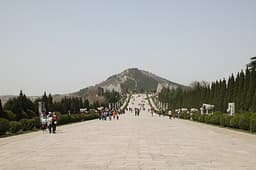
Emperor Gaozong of Tang
Emperor · Medieval
60.4Total

Ottokar II of Bohemia
Emperor · Medieval
61.9Total
Basic Information
Born
628
1233
Died
683
1278
Era
Medieval
Medieval
Nationality
China
Bohemia
Occupation
Emperor
Emperor
Civilization
Eastern
Western
Score Comparison
Military (10%)
72.5
74.7
Political (20%)
62.7
72.0
Influence (20%)
61.0
56.7
Legacy (20%)
50.0
54.0
Leadership (15%)
68.0
68.0
Strategy (15%)
57.5
58.0
TOTAL
60.4
61.9
Emperor Gaozong of Tang — Complete Timeline
657 AD
Conquest of the Western TurksWar◆ Major
Emperor Gaozong's general Su Dingfang defeated the Western Turkic Khaganate, bringing Central Asia under Tang control. This established Tang hegemony over the Silk Road and extended the empire's influence to the Caspian Sea.
ConquestExpansion
Impact: globalconstructive
660 AD
Illness and Regency of Wu ZetianPolitical Action
Emperor Gaozong suffered a stroke that left him partially incapacitated. His wife, Empress Wu Zetian, began to take an active role in governance, eventually becoming the de facto ruler. This marked the beginning of Wu Zetian's rise to power.
SuccessionRegency
Impact: regional
663 AD
Battle of BaekgangWar◆ Major
Tang and Silla forces defeated a combined Baekje-Yamato Japanese fleet at the Battle of Baekgang in Korea. This victory secured Tang control over the Korean peninsula and ended Japanese ambitions in Korea for centuries.
Naval BattleConquest
Impact: regionalconstructive
668 AD
Conquest of GoguryeoWar◆ Major
Emperor Gaozong, with the help of the Silla kingdom, conquered the Korean kingdom of Goguryeo. This victory expanded Tang territory into Manchuria and Korea, establishing a Tang protectorate over the region.
ConquestExpansion
Impact: regionalconstructive
Ottokar II of Bohemia — Complete Timeline
1260 AD
Battle of KressenbrunnWar◆ Major
Ottokar II defeated King B
Territorial ExpansionBattleAustria
Impact: regional
1273 AD
Election as King of GermanyPolitical Action◆ Major
Ottokar II was elected King of Germany by a faction of prince-electors, but he refused to accept the election of Rudolf I of Habsburg. This dispute led to conflict with Rudolf, who claimed the throne and challenged Ottokar's authority.
ElectionConflictHabsburg
Impact: regional
1278 AD
Battle on the MarchfeldWar
Ottokar II was defeated and killed by Rudolf I of Habsburg at the Battle on the Marchfeld. This battle ended Bohemian expansion and allowed the Habsburgs to gain control of Austria, Styria, and Carinthia.
BattleDeathHabsburg Rise
Impact: regionaltragic
Expert Analysis
Origins
Emperor Gaozong of Tang (born 628) was the ninth son of Emperor Taizong, the second emperor of the Tang dynasty. His mother was Empress Zhangsun. Gaozong was not the original heir, but after a series of political maneuvers, he was appointed crown prince in 643 and ascended the throne in 649 following Taizong's death. He received a classical Confucian education and was trained in governance from a young age.
Ottokar II of Bohemia (born 1233) was the son of King Wenceslaus I of Bohemia and Kunigunde of Hohenstaufen. He grew up in a period of political instability in Central Europe, with the Holy Roman Empire in flux. Ottokar was well-educated in chivalric and administrative matters, and he gained early experience as a margrave of Moravia. His family background gave him claims to lands in Austria and Styria.
Rise to Power
Gaozong's reign began smoothly, continuing his father's policies. He relied on capable ministers like Zhangsun Wuji and Chu Suiliang. His early years saw effective governance, but his health declined after 660 when he suffered a stroke that left him partially incapacitated. This allowed his wife, Wu Zetian, to gradually take over administrative duties, marking a major turning point. By 664, Wu was effectively co-ruler.
Ottokar II rose to prominence by consolidating Bohemian power. In 1251, he was elected Duke of Austria, and in 1253 he succeeded his father as King of Bohemia. He secured the Duchy of Styria through the Battle of Kressenbrunn in 1260, defeating King Béla IV of Hungary. This victory, with a score of 74.7 in military, expanded his realm significantly. He later gained Carinthia and Carniola, becoming the most powerful prince in the Holy Roman Empire.
Leadership & Governance
Gaozong's leadership style was initially hands-on, but after his stroke, governance shifted to Wu Zetian. He oversaw the expansion of the Tang examination system and continued the construction of the Grand Canal. His political score of 62.7 reflects his reliance on Wu, who was a more decisive ruler. Gaozong was known for his mild temperament, but this led to factionalism at court.
Ottokar II was an energetic ruler who promoted economic development, founding towns and building castles. He enforced royal authority over the nobility and supported the Church. His political score of 72.0 indicates effective administration, but his refusal to accept Rudolf I of Habsburg as King of Germany in 1273 led to conflict. Ottokar's governance focused on centralization, but his ambition outstripped his diplomatic skills.
Triumph & Tragedy
Gaozong's greatest triumphs were the conquest of Goguryeo in 668 and the defeat of the Western Turks in 657. The Battle of Baekgang in 663 secured Tang dominance in Korea. These campaigns expanded Tang territory to its greatest extent. However, his greatest failure was his inability to maintain control after his illness, allowing Wu Zetian to usurp power and eventually proclaim her own Zhou dynasty in 690. Gaozong's legacy score of 50.0 reflects the overshadowing of his reign by Wu.
Ottokar II's triumphs include the Battle of Kressenbrunn and the expansion of Bohemia to the Adriatic. He was called the "Iron and Golden King" for his military prowess and wealth. His tragedy was the Battle on the Marchfeld in 1278, where he was defeated and killed by Rudolf I. This ended Bohemian expansion and allowed the Habsburgs to rise. His military score of 74.7 and strategy of 58.0 show a strong commander who ultimately made strategic errors.
Character & Destiny
Gaozong was dutiful but physically frail. His character shaped his destiny: his illness created a power vacuum that Wu Zetian filled. He was decisive in military matters but passive in domestic politics. Historians see him as a transitional figure between Taizong and Wu.
Ottokar II was ambitious and proud. He refused to compromise with Rudolf I, leading to his downfall. His decision to reject Rudolf's election as king was a fatal miscalculation. He was a capable administrator but lacked the political flexibility to secure his gains.
Legacy
Gaozong's legacy is mixed. He expanded Tang borders, but his reign is often eclipsed by Wu Zetian. The conquest of Gogoyeong was short-lived, as Tang forces withdrew in 676. His influence score of 61.0 reflects his role in enabling Wu's rise.
Ottokar II's legacy is more enduring. He established Bohemia as a major European power, and his reign is remembered as a golden age. However, his death paved the way for Habsburg dominance. His total score of 61.9 is slightly higher than Gaozong's 60.4.
Conclusion
While Ottokar II achieved a higher total score (61.9 vs 60.4), the gap is narrow. Ottokar's impact on Central Europe was more lasting, as his administrative reforms and territorial gains shaped the region for centuries. Gaozong's conquests were impressive but ephemeral, and his reign was overshadowed by his wife. Therefore, Ottokar II had a greater impact as a ruler, despite his ultimate defeat. The data supports this: Ottokar scored higher in military (74.7 vs 72.5), political (72.0 vs 62.7), and leadership (68.0 vs 68.0, tied but with higher political). Gaozong's legacy score of 50.0 is lower than Ottokar's 54.0. Thus, Ottokar II of Bohemia emerges as the more consequential figure.
Rankings
🥇
Ottokar II of BohemiaLeader
Mil: 74.7Pol: 72.0Inf: 56.7
61.9
🥈
Emperor Gaozong of Tang
Mil: 72.5Pol: 62.7Inf: 61.0
60.4
+1.5 behind
How This Comparison Works
Algorithm
Each figure is scored on 6 dimensions (0—100 scale) based on structured historical data: Military (10%), Political (20%), Influence (20%), Legacy (20%), Leadership (15%), Strategy (15%). The weighted total produces the final ranking.
Data Sources
Scores are computed from structured sub-indicators in the database. Scale factors adjust for era (Ancient ×0.85, Modern ×1.0) and civilization size (Eastern ×1.05, Other ×0.80) to account for differences in population and military scale.
Maximum 3 Figures
Comparisons are limited to 2—3 figures to ensure readability and statistical meaningfulness.
Error Margins
±5 points per dimension — Sub-scores are derived from historical records with inherent uncertainty. Two figures within 5 points on a dimension should be considered roughly equivalent in that area.
Total Score Accuracy
±3 points overall — The weighted combination of 6 dimensions produces a total score with approximately ±3 points of uncertainty. Differences of less than 3 points are not statistically significant— the figures are effectively tied.
Known Limitations
- Historical records are incomplete and uneven across civilizations
- Figures from oral-tradition societies may be underrepresented
- Occupation labels can misclassify multi-role figures
- Scores measure capability and impact, not moral character
- Quantitative scoring is a comparison tool, not absolute truth
Capability Radar
Military (10%) — Battles & Warfare
Battles
55
75
Win Rate
60
70
Expansion
65
75
Political (20%) — Governance & Reform
Reform
60
65
Diplomacy
65
65
Economy
60
70
Influence (20%) — Cultural & Global Reach
Cultural
50
60
Global
45
55
Legacy (20%) — Historical Impact
Historical
55
65
Longevity
50
50
Leadership (15%) — Power & Stability
Tenure
70
70
Stability
55
55
Strategy (15%) — Tactics & Innovation
Strategy
55
70
Tactics
50
65
Reform
40
60
Similar Comparisons
Comments & Discussion
No comments yet. Be the first to share your thoughts!