Loading...
Emperor Shirakawa vs Rudolf of Habsburg
Rudolf of Habsburg leads by 0.8 pts · 2 figures compared
…
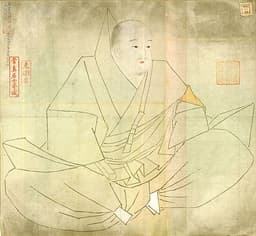
Emperor Shirakawa
Emperor · Medieval
59.4Total
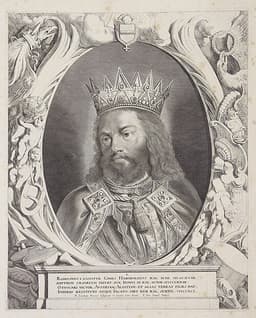
Rudolf of Habsburg
Emperor · Medieval
60.2Total
Basic Information
Born
1053
1218
Died
1129
1291
Era
Medieval
Medieval
Nationality
Japan
Holy Roman Empire
Occupation
Emperor
Emperor
Civilization
Eastern
Western
Score Comparison
Military (10%)
51.4
47.5
Political (20%)
65.0
68.0
Influence (20%)
61.0
61.0
Legacy (20%)
52.0
55.0
Leadership (15%)
62.0
68.0
Strategy (15%)
70.0
60.0
TOTAL
59.4
60.2
Emperor Shirakawa — Complete Timeline
1086 AD
Establishment of the cloistered government (Insei) systemPolitical Action
Shirakawa abdicated the throne but continued to rule from a monastery as a cloistered emperor, creating the Insei system. This allowed retired emperors to wield real political power, bypassing the Fujiwara regents and dominating court politics for decades.
Insei SystemImperial PoliticsHeian Period
Impact: nationalconstructive
Conflict with the Fujiwara over successionPolitical Action◆ Major
Shirakawa forced his son Horikawa to succeed him, overriding Fujiwara preferences. This conflict solidified the cloistered emperor's control over succession and reduced Fujiwara influence, leading to decades of political tension.
Fujiwara RegencySuccessionImperial Politics
Impact: national
1091 AD
Appointment of Taira no Masamori as military governorPolitical Action◆ Major
Shirakawa appointed Taira no Masamori as military governor of Ise Province, elevating the Taira clan's status. This move strengthened the imperial court's military capacity and laid the foundation for the Taira's later rise to power.
Taira ClanMilitary PoliticsHeian Period
Impact: national
1100 AD
Patronage of Buddhist templesCultural
Shirakawa sponsored the construction and renovation of numerous Buddhist temples, including the Hossho-ji and Ensho-ji. This patronage strengthened the imperial family's religious authority and influenced Heian-period Buddhist art and architecture.
BuddhismTemple ConstructionHeian Period
Impact: nationalconstructive
Rudolf of Habsburg — Complete Timeline
1273 AD
Elected King of GermanyPolitical Action
Rudolf of Habsburg was elected King of Germany by the prince-electors, ending the Great Interregnum. His election was supported by the Papacy and marked the beginning of the Habsburg dynasty's rise to power in the Holy Roman Empire.
ElectionGreat InterregnumHabsburg Dynasty
Impact: regionalconstructive
Crowned Holy Roman EmperorPolitical Action◆ Major
Rudolf of Habsburg was crowned Holy Roman Emperor in Aachen. His coronation marked the end of the Great Interregnum and the restoration of imperial authority, though his power was limited to his dynastic lands.
CoronationHoly Roman EmpireGreat Interregnum
Impact: regional
1278 AD
Defeated Ottokar II of Bohemia at the Battle of MarchfeldWar
Rudolf of Habsburg defeated King Ottokar II of Bohemia at the Battle of Marchfeld. This victory secured the Habsburg control over Austria, Styria, and Carniola, which became the core territories of the Habsburg dynasty.
BattleHabsburgAustria
Impact: regional
1282 AD
Invested His Sons with Austria and StyriaPolitical Action◆ Major
Rudolf of Habsburg invested his sons Albert and Rudolf with the duchies of Austria and Styria. This act established the Habsburg dynasty's hereditary claim to these territories, laying the foundation for their future power in Central Europe.
Territorial GrantHabsburgAustria
Impact: regionalconstructive
Expert Analysis
Origins
Emperor Shirakawa was born in 1053 as the third son of Emperor Go-Sanjō. He ascended the throne in 1073 at age 20, inheriting a court dominated by the Fujiwara regents. His early education emphasized Confucian classics and Buddhist texts, shaping his later patronage of temples. Rudolf of Habsburg was born in 1218 in Limburg Castle, the son of Count Albert IV of Habsburg. His family held scattered lands in Swabia and Alsace, with limited political influence. Rudolf's upbringing prepared him for knighthood and local governance, not imperial ambition.
Rise to Power
Shirakawa's rise began with his abdication in 1086 in favor of his son Horikawa. He retired to a monastery but retained authority as a cloistered emperor (Insei), effectively sidelining the Fujiwara regents. By 1096, he had consolidated control over imperial succession and land grants. Rudolf's rise was more dramatic: elected King of Germany in 1273 after the Great Interregnum, a period of 23 years without a stable monarch. His election was brokered by the prince-electors, who saw him as a weak candidate. Rudolf quickly proved them wrong, defeating King Ottokar II of Bohemia at the Battle of Marchfeld in 1278, securing Austria, Styria, and Carinthia for his family.
Leadership & Governance
Shirakawa's governance centered on the Insei system, where he issued edicts and appointed officials from his monastery. He bypassed the Fujiwara by elevating the Taira clan, appointing Taira no Masamori as military governor of Ise Province in 1091. This move strengthened imperial control but sowed seeds for future samurai dominance. Rudolf's leadership focused on restoring imperial authority in the Holy Roman Empire. He invested his sons with Austria and Styria in 1282, establishing the Habsburg hereditary base. He also enforced the Peace of the Land (Landfrieden), suppressing feuds among nobles. Politically, Rudolf scored 68.0, slightly above Shirakawa's 65.0, reflecting his success in ending anarchy.
Triumph & Tragedy
Shirakawa's triumph was the creation of the Insei system, which allowed retired emperors to rule for over a century. He also sponsored major Buddhist temples like Hosshō-ji and Enshō-ji, strengthening religious influence. However, his policies exacerbated factionalism, leading to the Hōgen Rebellion in 1156 after his death. Rudolf's triumph was the defeat of Ottokar II and the acquisition of Austria, which became the Habsburg heartland. His tragedy was the failure to secure the imperial throne for his sons; after his death in 1291, the electors chose Adolf of Nassau, breaking the dynasty's momentum.
Character & Destiny
Shirakawa was calculating and patient, using abdication to wield power without the burdens of ceremony. His decisive action against the Fujiwara showed strategic acumen, scoring 70.0 in strategy. Rudolf was pragmatic and politically astute, with a leadership score of 68.0. He leveraged his modest background to appear non-threatening, then built a power base through marriage and conquest. Both men faced the challenge of dynastic security: Shirakawa's Insei system lasted until 1192, while Rudolf's Habsburgs rose to dominate Europe for centuries.
Legacy
Shirakawa's legacy is the Insei system, which influenced Japanese governance until the Kamakura shogunate. His elevation of the Taira clan contributed to the rise of samurai power. Rudolf's legacy is more enduring: the Habsburg dynasty ruled Austria until 1918. His acquisition of Austria and Styria laid the foundation for a multinational empire. In political influence, both scored 61.0, but Rudolf's legacy score of 55.0 edges Shirakawa's 52.0 due to the longer-lasting impact of his dynasty.
Conclusion
Rudolf of Habsburg had greater impact than Emperor Shirakawa. While Shirakawa's Insei system was innovative, it was a temporary solution within Japan's imperial court. Rudolf's establishment of the Habsburg dynasty created a political entity that shaped European history for over six centuries. His total score of 60.2 against Shirakawa's 59.4 reflects this, but the qualitative difference is larger: Rudolf's actions led to a continental power, whereas Shirakawa's system was confined to Japan and ultimately eclipsed by military governments. Therefore, Rudolf's legacy is more significant in global historical terms.
Rankings
🥇
Rudolf of HabsburgLeader
Mil: 47.5Pol: 68.0Inf: 61.0
60.2
🥈
Emperor Shirakawa
Mil: 51.4Pol: 65.0Inf: 61.0
59.4
+0.8 behind
How This Comparison Works
Algorithm
Each figure is scored on 6 dimensions (0—100 scale) based on structured historical data: Military (10%), Political (20%), Influence (20%), Legacy (20%), Leadership (15%), Strategy (15%). The weighted total produces the final ranking.
Data Sources
Scores are computed from structured sub-indicators in the database. Scale factors adjust for era (Ancient ×0.85, Modern ×1.0) and civilization size (Eastern ×1.05, Other ×0.80) to account for differences in population and military scale.
Maximum 3 Figures
Comparisons are limited to 2—3 figures to ensure readability and statistical meaningfulness.
Error Margins
±5 points per dimension — Sub-scores are derived from historical records with inherent uncertainty. Two figures within 5 points on a dimension should be considered roughly equivalent in that area.
Total Score Accuracy
±3 points overall — The weighted combination of 6 dimensions produces a total score with approximately ±3 points of uncertainty. Differences of less than 3 points are not statistically significant— the figures are effectively tied.
Known Limitations
- Historical records are incomplete and uneven across civilizations
- Figures from oral-tradition societies may be underrepresented
- Occupation labels can misclassify multi-role figures
- Scores measure capability and impact, not moral character
- Quantitative scoring is a comparison tool, not absolute truth
Capability Radar
Military (10%) — Battles & Warfare
Battles
43
45
Win Rate
51
50
Expansion
54
60
Political (20%) — Governance & Reform
Reform
85
55
Diplomacy
70
70
Economy
50
50
Influence (20%) — Cultural & Global Reach
Cultural
55
40
Global
40
55
Legacy (20%) — Historical Impact
Historical
70
70
Longevity
65
75
Leadership (15%) — Power & Stability
Tenure
60
65
Stability
65
60
Strategy (15%) — Tactics & Innovation
Strategy
54
55
Tactics
58
40
Reform
59
30
Similar Comparisons
Comments & Discussion
No comments yet. Be the first to share your thoughts!