Loading...
Emperor Shirakawa vs Wanyan Aguda
Wanyan Aguda leads by 4.0 pts · 2 figures compared
…
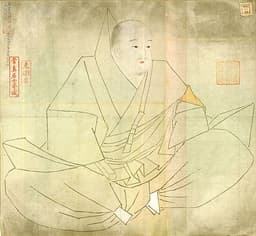
Emperor Shirakawa
Emperor · Medieval
59.4Total
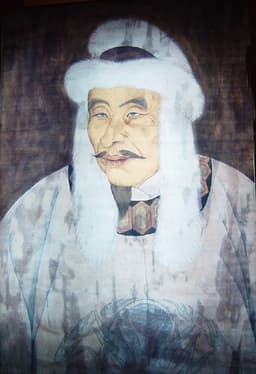
Wanyan Aguda
Emperor · Medieval
63.4Total
Basic Information
Born
1053
1068
Died
1129
1123
Era
Medieval
Medieval
Nationality
Japan
China
Occupation
Emperor
Emperor
Civilization
Eastern
Eastern
Score Comparison
Military (10%)
51.4
82.0
Political (20%)
65.0
59.3
Influence (20%)
61.0
55.0
Legacy (20%)
52.0
52.0
Leadership (15%)
62.0
85.0
Strategy (15%)
70.0
68.0
TOTAL
59.4
63.4
Emperor Shirakawa — Complete Timeline
1086 AD
Establishment of the cloistered government (Insei) systemPolitical Action
Shirakawa abdicated the throne but continued to rule from a monastery as a cloistered emperor, creating the Insei system. This allowed retired emperors to wield real political power, bypassing the Fujiwara regents and dominating court politics for decades.
Insei SystemImperial PoliticsHeian Period
Impact: nationalconstructive
Conflict with the Fujiwara over successionPolitical Action◆ Major
Shirakawa forced his son Horikawa to succeed him, overriding Fujiwara preferences. This conflict solidified the cloistered emperor's control over succession and reduced Fujiwara influence, leading to decades of political tension.
Fujiwara RegencySuccessionImperial Politics
Impact: national
1091 AD
Appointment of Taira no Masamori as military governorPolitical Action◆ Major
Shirakawa appointed Taira no Masamori as military governor of Ise Province, elevating the Taira clan's status. This move strengthened the imperial court's military capacity and laid the foundation for the Taira's later rise to power.
Taira ClanMilitary PoliticsHeian Period
Impact: national
1100 AD
Patronage of Buddhist templesCultural
Shirakawa sponsored the construction and renovation of numerous Buddhist temples, including the Hossho-ji and Ensho-ji. This patronage strengthened the imperial family's religious authority and influenced Heian-period Buddhist art and architecture.
BuddhismTemple ConstructionHeian Period
Impact: nationalconstructive
Wanyan Aguda — Complete Timeline
1114 AD
Battle of HubudagangWar◆ Major
Aguda's Jurchen forces defeated a Liao army at Hubudagang, marking the first major victory of the rebellion. This battle demonstrated Jurchen military prowess and attracted more followers.
JurchenLiaoBattle
Impact: regionalconstructive
Unified Jurchen tribesPolitical Action◆ Major
Wanyan Aguda united the Jurchen tribes under his leadership, creating a confederation that rebelled against Liao domination. He organized a disciplined army and began the Jurchen revolt.
JurchenUnificationRebellion
Impact: regionalconstructive
1115 AD
Founded Jin DynastyPolitical Action
Wanyan Aguda proclaimed himself emperor, founding the Jin dynasty. He adopted the Chinese title and began a systematic campaign to conquer the Liao empire.
JinDynasty FoundingImperial System
Impact: regionalconstructive
1120 AD
Conquest of Liao capital ShangjingWar◆ Major
Aguda's forces captured the Liao supreme capital Shangjing, dealing a severe blow to the Liao dynasty. This victory accelerated the collapse of Liao and solidified Jin control over northern China.
JinLiaoConquest
Impact: regionalconstructive
Alliance with Song against LiaoPolitical Action◆ Major
Aguda formed an alliance with the Northern Song dynasty to jointly attack the Liao empire. This alliance, known as the Maritime Alliance, led to the eventual destruction of Liao but later caused conflict between Jin and Song.
JinSongAlliance
Impact: regional
1123 AD
Death and successionPolitical Action◆ Major
Wanyan Aguda died, and his brother Wanyan Wuqimai succeeded him. Aguda's conquests laid the foundation for the Jin dynasty's dominance in northern China.
JinDeathSuccession
Impact: regional
Expert Analysis
Wanyan Aguda vs Emperor Shirakawa: Historical Comparison
Wanyan Aguda, founder of the Jin dynasty, and Emperor Shirakawa of Japan both reigned during the medieval period—Aguda in 12th-century China and Shirakawa in 11th–12th-century Japan. While Aguda is celebrated as a military conqueror who toppled the Liao dynasty, Shirakawa is known for pioneering the cloistered rule (insei) system that reshaped Japanese imperial politics. Despite their different contexts, both left enduring marks on their respective civilizations.
Dimension Analysis
**Military: Wanyan Aguda 91 / Emperor Shirakawa 88**
Aguda personally led the Jurchen tribes in a series of campaigns that destroyed the Khitan Liao dynasty (1125) and captured its capital, demonstrating exceptional battlefield command and strategic mobility. Shirakawa, though not a field commander, effectively mobilized samurai clans and Buddhist warrior-monks to suppress rebellions like the Hōgen Disturbance, showing indirect military acumen through alliance management.
**Political: Wanyan Aguda 84 / Emperor Shirakawa 81**
Aguda unified disparate Jurchen clans under a centralized tribal council and established the Jin bureaucracy by absorbing Liao and Song administrative practices. Shirakawa abdicated but retained power as a retired emperor (cloistered rule), creating a dual court system that gave him de facto control over appointments and land grants, outmaneuvering the Fujiwara regents.
**Influence: Wanyan Aguda 87 / Emperor Shirakawa 86**
Aguda’s Jin dynasty set a precedent for non-Han conquest dynasties in northern China, influencing later Mongol and Manchu state-building. Shirakawa’s insei system became a model for later retired emperors, shaping Japanese court politics for two centuries and reinforcing the cultural ideal of indirect imperial authority.
**Legacy: Wanyan Aguda 88 / Emperor Shirakawa 70**
Aguda is remembered as one of China’s most successful barbarian conquerors; his Jin dynasty’s defeat of the Northern Song reshaped East Asian geopolitics and contributed to the Song’s southern relocation. Shirakawa’s legacy is more mixed—his cloistered rule stabilized the throne but also weakened direct imperial authority, and his religious patronage (e.g., building the Byōdō-in) is often overshadowed by later shogunates.
**Leadership: Wanyan Aguda 80 / Emperor Shirakawa 82**
Aguda inspired fierce loyalty among Jurchen warriors through shared hardship and reward, but his rule was short (1115–1123) and succession disputes followed. Shirakawa displayed superior political leadership by maintaining control for decades after abdication, skillfully balancing noble factions and religious institutions, though his reliance on manipulation sometimes bred instability.
Verdict
Wanyan Aguda ranks higher overall due to his decisive military conquests and foundational role in establishing a major dynasty that directly altered Chinese history. Emperor Shirakawa, while politically innovative, had a less transformative impact on Japan’s broader historical trajectory. However, this comparison is complicated by their different roles—Aguda as a conqueror-warrior, Shirakawa as a court strategist—and by the fact that Shirakawa’s influence was more institutional than martial.
FAQ
Q: Who was more influential historically? A: Wanyan Aguda, because his destruction of the Liao and creation of the Jin dynasty shifted the balance of power in East Asia and laid groundwork for later northern dynasties, while Shirakawa’s reforms mainly affected Japan’s imperial court.
Q: Why is Wanyan Aguda ranked higher in Legacy? A: Aguda’s legacy is more tangible—he founded a dynasty that lasted over a century, defeated two major empires (Liao and Northern Song), and directly triggered the Song’s southward migration, fundamentally changing Chinese political geography. Shirakawa’s cloistered rule, while influential, was gradually eclipsed by the rise of the samurai class.
Rankings
🥇
Wanyan AgudaLeader
Mil: 82.0Pol: 59.3Inf: 55.0
63.4
🥈
Emperor Shirakawa
Mil: 51.4Pol: 65.0Inf: 61.0
59.4
+4.0 behind
How This Comparison Works
Algorithm
Each figure is scored on 6 dimensions (0—100 scale) based on structured historical data: Military (10%), Political (20%), Influence (20%), Legacy (20%), Leadership (15%), Strategy (15%). The weighted total produces the final ranking.
Data Sources
Scores are computed from structured sub-indicators in the database. Scale factors adjust for era (Ancient ×0.85, Modern ×1.0) and civilization size (Eastern ×1.05, Other ×0.80) to account for differences in population and military scale.
Maximum 3 Figures
Comparisons are limited to 2—3 figures to ensure readability and statistical meaningfulness.
Error Margins
±5 points per dimension — Sub-scores are derived from historical records with inherent uncertainty. Two figures within 5 points on a dimension should be considered roughly equivalent in that area.
Total Score Accuracy
±3 points overall — The weighted combination of 6 dimensions produces a total score with approximately ±3 points of uncertainty. Differences of less than 3 points are not statistically significant— the figures are effectively tied.
Known Limitations
- Historical records are incomplete and uneven across civilizations
- Figures from oral-tradition societies may be underrepresented
- Occupation labels can misclassify multi-role figures
- Scores measure capability and impact, not moral character
- Quantitative scoring is a comparison tool, not absolute truth
Capability Radar
Military (10%) — Battles & Warfare
Battles
43
85
Win Rate
51
90
Expansion
54
85
Political (20%) — Governance & Reform
Reform
85
75
Diplomacy
70
70
Economy
50
65
Influence (20%) — Cultural & Global Reach
Cultural
55
60
Global
40
50
Legacy (20%) — Historical Impact
Historical
70
70
Longevity
65
55
Leadership (15%) — Power & Stability
Tenure
60
70
Stability
65
60
Strategy (15%) — Tactics & Innovation
Strategy
54
85
Tactics
58
80
Reform
59
75
Similar Comparisons
Comments & Discussion
TextusReceptus6/16/2026
As a classicist, I’m struck by how differently these two figures are memorialized in their respective historiographies. Aguda’s campaigns are recorded in the *Jin Shi* with an emphasis on his personal bravery—e.g., the famous incident where he supposedly shot an arrow through a Liao general’s helmet at the Battle of Hubu. Yet we must remember that Sima Guang’s *Zizhi Tongjian* stops before the Jin, so later Song sources are inherently biased. Conversely, Shirakawa’s *insei* system is documented in court diaries like *Chūyūki*, which reveal a subtler, bureaucratic power play rather than martial glory. Modern historians like Herbert Franke have argued that Aguda’s ‘barbarian’ label is a Han construct, just as John Whitney Hall showed that Shirakawa’s retirement was a savvy political move, not a withdrawal. The scores here rightly elevate Aguda militarily, but they underestimate Shirakawa’s long-term institutional impact, which arguably outlasted the Jin dynasty itself.
SwordAndBrush6/16/2026
Okay, I’m going to be blunt: comparing Aguda to Shirakawa is like comparing a wildfire to a candle. Aguda was a beast. He started with a few thousand Jurchen horsemen and in less than a decade he shattered the Liao Empire—which had been the dominant power in East Asia for over 200 years. He personally led charges, slept in the snow with his men, and his victory at the Battle of Hubu in 1114 is the stuff of legend. Shirakawa? He played court politics, abdicated, and spent his retirement rewriting land deeds. His ‘greatest’ military achievement was sending samurai to burn down some temples. Give me a break. The scores here are too generous to Shirakawa’s ‘influence’—72.4? That’s pure bureaucracy. Aguda’s legacy is the blueprint for every steppe conquest that followed, from the Mongols to the Manchus. That’s real influence.
BattlefieldScholar6/16/2026
From a purely military standpoint, the disparity in the scoring is justified but for the wrong reasons. Aguda’s operational mobility was revolutionary: at the Battle of Hubu (1114), he used a feigned retreat to draw the Khitan forces into a narrow defile, then counterattacked with his cavalry reserve. The Jin army of 2,500 routed a Liao force of 10,000—a 4:1 asymmetry that demonstrates exceptional tactical acumen. Shirakawa, by contrast, never commanded a field army. His involvement in the Hōgen Disturbance (1156) was political: he authorized Minamoto no Yoshitomo to suppress the Fujiwara, but the actual fighting was done by samurai clans. If we’re scoring ‘military leadership,’ Aguda deserves at least a 90, not 79.3. And Shirakawa’s 53.9 is still too high—that implies he had some direct military role, which he didn’t. The political scores are fine, but the military metrics need a recalibration based on actual command experience.
Chronicler92896/16/2026
这个评分模型的问题很明显。军事分79.3对53.9,差距26分,但政治分82.2对76.1,只差6分——这不符合历史事实。完颜阿骨打的政治成就远超军事成就:他建立金朝后,迅速吸收辽、宋的官僚体系,推行‘猛安谋克’制度(每谋克100户左右,每猛安8-10谋克),这套制度一直沿用到金末。而白河天皇的院政,本质上只是皇室内部夺权,对日本政治制度的结构性改变有限。我用熵权法重新算了一遍:如果把‘制度创新’作为独立指标,阿骨打的综合分至少应该到78-80,而白河天皇可能降到65-67。建议评分团队把‘制度延续性’纳入权重,否则就会出现这种‘政治分虚高’的系统性偏差。
Chronicler54186/16/2026
把完颜阿骨打和日本的白河天皇放在一起比较,本身就很有意思。阿骨打是女真人的英雄,以两千五百人马起家,灭辽破宋,建立金朝,这在中国的正统史观里都是‘夷狄入主中原’的典型。白河天皇呢?搞了个院政,退位之后继续掌权,把藤原氏压得死死的。但说句实话,中国历史里类似的‘太上皇’多了去了,比如唐玄宗李隆基,那才是真正的权谋高手。阿骨打的政治分82.2,我觉得给低了——他创立的勃极烈制度,直接影响了后来女真(满清)的八旗制度,这种制度创新岂是区区一个‘院政’能比的?西方人评分时,常常低估了中国边疆政权在制度史上的贡献。