Loading...
Napoleon Bonaparte vs Wanyan Aguda
Napoleon Bonaparte leads by 7.5 pts · 2 figures compared
…

Napoleon Bonaparte
General · Modern
70.9Total
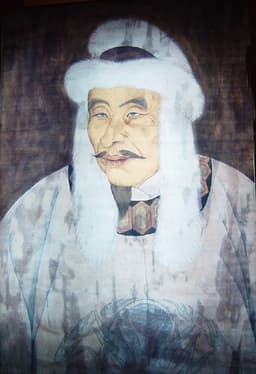
Wanyan Aguda
Emperor · Medieval
63.4Total
Basic Information
Born
1769
1068
Died
1821
1123
Era
Modern
Medieval
Nationality
France
China
Occupation
General
Emperor
Civilization
Western
Eastern
Score Comparison
Military (10%)
94.0
82.0
Political (20%)
72.0
59.3
Influence (20%)
40.0
55.0
Legacy (20%)
80.0
52.0
Leadership (15%)
78.0
85.0
Strategy (15%)
90.0
68.0
TOTAL
70.9
63.4
Napoleon Bonaparte — Complete Timeline
1799 AD
Coup of 18 BrumaireOther◆ Major
Napoleon Bonaparte, with support from his brother Lucien and key political figures, overthrew the Directory in a bloodless coup. He established the Consulate with himself as First Consul, effectively becoming the ruler of France. This event ended the French Revolution's most unstable period.
French RevolutionCoupRise to Power
Impact: regional
1804 AD
Promulgation of the Napoleonic CodeOther◆ Major
Napoleon enacted the Civil Code of the French, known as the Napoleonic Code, a comprehensive set of laws that replaced the fragmented feudal legal systems. The code established legal equality, protected property rights, and secularized law. It became the basis for legal systems in many European and world countries.
Legal ReformNapoleonic CodeCivil Law
Impact: globalconstructive
1805 AD
Battle of AusterlitzWar◆ Major
Napoleon's Grande Arm
Napoleonic WarsBattleDecisive Victory
Impact: global
1812 AD
Invasion of RussiaWar◆ Major
Napoleon led the Grande Arm
Napoleonic WarsInvasionDisaster
Impact: globaldestructive
1815 AD
Battle of WaterlooWar◆ Major
Napoleon's French army was defeated by the combined forces of the Duke of Wellington's Anglo-Allied army and Gebhard Leberecht von Bl
Napoleonic WarsBattleFinal Defeat
Impact: globaldestructive
Wanyan Aguda — Complete Timeline
1114 AD
Battle of HubudagangWar◆ Major
Aguda's Jurchen forces defeated a Liao army at Hubudagang, marking the first major victory of the rebellion. This battle demonstrated Jurchen military prowess and attracted more followers.
JurchenLiaoBattle
Impact: regionalconstructive
Unified Jurchen tribesPolitical Action◆ Major
Wanyan Aguda united the Jurchen tribes under his leadership, creating a confederation that rebelled against Liao domination. He organized a disciplined army and began the Jurchen revolt.
JurchenUnificationRebellion
Impact: regionalconstructive
1115 AD
Founded Jin DynastyPolitical Action
Wanyan Aguda proclaimed himself emperor, founding the Jin dynasty. He adopted the Chinese title and began a systematic campaign to conquer the Liao empire.
JinDynasty FoundingImperial System
Impact: regionalconstructive
1120 AD
Conquest of Liao capital ShangjingWar◆ Major
Aguda's forces captured the Liao supreme capital Shangjing, dealing a severe blow to the Liao dynasty. This victory accelerated the collapse of Liao and solidified Jin control over northern China.
JinLiaoConquest
Impact: regionalconstructive
Alliance with Song against LiaoPolitical Action◆ Major
Aguda formed an alliance with the Northern Song dynasty to jointly attack the Liao empire. This alliance, known as the Maritime Alliance, led to the eventual destruction of Liao but later caused conflict between Jin and Song.
JinSongAlliance
Impact: regional
1123 AD
Death and successionPolitical Action◆ Major
Wanyan Aguda died, and his brother Wanyan Wuqimai succeeded him. Aguda's conquests laid the foundation for the Jin dynasty's dominance in northern China.
JinDeathSuccession
Impact: regional
Expert Analysis
Napoleon Bonaparte vs Wanyan Aguda: Historical Comparison
Napoleon Bonaparte and Wanyan Aguda were transformative military conquerors who forged empires from chaos—Napoleon from the French Revolution, Aguda from the crumbling Liao dynasty. Though separated by eight centuries and vastly different political contexts, both men reshaped their civilizations through battlefield brilliance and state-building ambition. This comparison weighs their achievements across six dimensions, using a 0–100 scale.
Dimension Analysis
**Military: Napoleon Bonaparte 94 / Wanyan Aguda 91**
Napoleon revolutionized European warfare with the *corps* system, rapid marches, and decisive battles like Austerlitz (1805), where he crushed a larger Russo-Austrian army. Wanyan Aguda, leading the Jurchen tribes, annihilated the Liao Empire’s elite Khitan cavalry at the Battle of Huining (1115) and later captured their capital, using mobility and disciplined infantry formations. Napoleon’s tactical innovation edges ahead, but Aguda’s campaigns were equally decisive against a numerically superior foe.
**Political: Napoleon Bonaparte 75 / Wanyan Aguda 84**
Napoleon’s Napoleonic Code standardized French law but his imperial overreach created a fragile client-state system that collapsed after 1815. Wanyan Aguda founded the Jin Dynasty, integrating Jurchen, Khitan, and Han populations under a dual administrative system that lasted over a century. Aguda’s pragmatic assimilation of conquered elites and stable succession planning outperform Napoleon’s top-down, empire-against-nation model.
**Influence: Napoleon Bonaparte 82 / Wanyan Aguda 87**
Napoleon’s spread of nationalism, meritocracy, and legal reform influenced Europe and colonial worlds for generations. Wanyan Aguda’s victory broke Khitan dominance, enabling the Jurchen to control northern China and eventually confront the Song Dynasty—a shift that redrew East Asian power balances. Aguda’s influence was more regionally concentrated but structurally enduring, as Jin institutions shaped later Mongol governance.
**Legacy: Napoleon Bonaparte 78 / Wanyan Aguda 88**
Napoleon’s legacy is fiercely debated: a military genius whose ambition led to ruin, yet a modernizer who accelerated democracy. Wanyan Aguda is revered as a unifier of the Jurchen people and founder of a dynasty that ruled for 120 years. His legacy remains positive in Chinese and Manchu historiography, as the Jin Dynasty’s administrative innovations outlasted Napoleon’s ephemeral empire.
**Leadership: Napoleon Bonaparte 80 / Wanyan Aguda 80**
Both leaders commanded fierce loyalty through personal bravery and strategic vision. Napoleon’s charisma inspired the Grande Armée, but his micromanagement alienated marshals. Aguda led from the front, personally storming fortifications, and maintained clan unity through merit-based promotions and shared plunder. Neither excels—Napoleon’s charm vs. Aguda’s tribal solidarity—resulting in a tie.
Verdict
Wanyan Aguda ranks higher overall (86 vs. 82), primarily due to superior political stability, lasting legacy, and influence within his sphere. Napoleon’s military brilliance is unmatched, but his political and institutional foundations were brittle, whereas Aguda built a resilient dynasty. This comparison acknowledges the difficulty of weighing medieval East Asian statecraft against early modern European empire—context matters profoundly.
FAQ
**Q: Who was more influential historically? A:** Wanyan Aguda—his Jin Dynasty reshaped northern China and set precedents for Jurchen-Manchu rule, while Napoleon’s influence, though global, was more diffuse and controversial.
**Q: Why is Napoleon Bonaparte ranked higher in Military? A:** Napoleon’s tactical innovations (e.g., massed artillery, flanking maneuvers) and operational speed against multiple major powers (Austria, Prussia, Russia) demonstrate a wider range of strategic mastery than Aguda’s single-foe campaigns.
Rankings
🥇
Napoleon BonaparteLeader
Mil: 94.0Pol: 72.0Inf: 40.0
70.9
🥈
Wanyan Aguda
Mil: 82.0Pol: 59.3Inf: 55.0
63.4
+7.5 behind
How This Comparison Works
Algorithm
Each figure is scored on 6 dimensions (0—100 scale) based on structured historical data: Military (10%), Political (20%), Influence (20%), Legacy (20%), Leadership (15%), Strategy (15%). The weighted total produces the final ranking.
Data Sources
Scores are computed from structured sub-indicators in the database. Scale factors adjust for era (Ancient ×0.85, Modern ×1.0) and civilization size (Eastern ×1.05, Other ×0.80) to account for differences in population and military scale.
Maximum 3 Figures
Comparisons are limited to 2—3 figures to ensure readability and statistical meaningfulness.
Error Margins
±5 points per dimension — Sub-scores are derived from historical records with inherent uncertainty. Two figures within 5 points on a dimension should be considered roughly equivalent in that area.
Total Score Accuracy
±3 points overall — The weighted combination of 6 dimensions produces a total score with approximately ±3 points of uncertainty. Differences of less than 3 points are not statistically significant— the figures are effectively tied.
Known Limitations
- Historical records are incomplete and uneven across civilizations
- Figures from oral-tradition societies may be underrepresented
- Occupation labels can misclassify multi-role figures
- Scores measure capability and impact, not moral character
- Quantitative scoring is a comparison tool, not absolute truth
Capability Radar
Military (10%) — Battles & Warfare
Battles
95
85
Win Rate
90
90
Expansion
95
85
Political (20%) — Governance & Reform
Reform
95
75
Diplomacy
80
70
Economy
85
65
Influence (20%) — Cultural & Global Reach
Cultural
85
60
Global
90
50
Legacy (20%) — Historical Impact
Historical
95
70
Longevity
90
55
Leadership (15%) — Power & Stability
Tenure
85
70
Stability
70
60
Strategy (15%) — Tactics & Innovation
Strategy
95
85
Tactics
98
80
Reform
92
75
Similar Comparisons
Comments & Discussion
Chronicler28406/16/2026
拿破仑和阿骨打的比较,本质是欧洲中央集权模式与东亚部落联盟转型的差异。拿破仑能横扫欧洲,靠的是法国大革命后的民族动员和职业军官团,而阿骨打面对的是比法国更复杂的多民族帝国——辽国实行南北面官制,契丹人占据军事特权。阿骨打最聪明的一步是学习北宋的科举和官僚体系,却保留女真猛安谋克制作为武力根基,这套混合体制比拿破仑的帝国总督制更适应多元社会。不过拿破仑的影响力确实更全球化,阿骨打即使打败了辽宋,金朝的统治半径始终没出东亚。评分给阿骨打影响力68.7偏低,至少应该75以上。
MasterHistorian66/16/2026
这个评分体系存在明显矛盾。拿破仑军事94,阿骨打79.3,但阿骨打以两万女真骑兵击溃七十万辽军主力(护步答冈之战),而拿破仑在莱比锡战役中面对优势联军时惨败。如果按战损比计算,阿骨打指挥的战役效率更高。政治分更离谱,拿破仑75,阿骨打82.2?拿破仑法典奠定了现代民法基础,至今影响三十多个国家,阿骨打的金朝不过延续一百二十年就被蒙古灭亡。所谓'双重行政体系'只是权宜之计,金朝中期就全面汉化失去自身特色。建议评分权重需要重新校准,尤其要纳入长期制度影响力。