Loading...
Emperor Sujin vs Kublai Khan
Kublai Khan leads by 22.7 pts · 2 figures compared
…
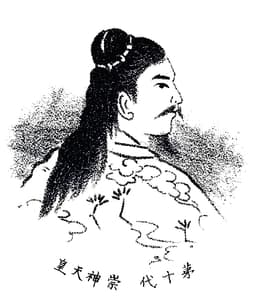
Emperor Sujin
Emperor · Ancient
51.6Total
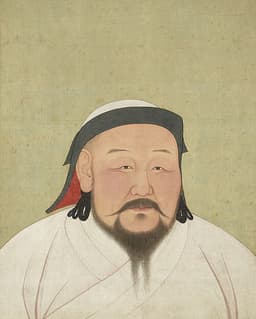
Kublai Khan
Emperor · Medieval
74.3Total
Basic Information
Born
-148
1215
Died
-30
1294
Era
Ancient
Medieval
Nationality
Japan
Mongolia
Occupation
Emperor
Emperor
Civilization
Eastern
Eastern
Score Comparison
Military (10%)
50.0
77.5
Political (20%)
68.0
79.2
Influence (20%)
47.1
75.0
Legacy (20%)
43.3
70.0
Leadership (15%)
72.0
72.0
Strategy (15%)
30.3
76.0
TOTAL
51.6
74.3
Emperor Sujin — Complete Timeline
100 BC
Organized the Yamato StateReform◆ Major
Emperor Sujin is recorded in the Nihon Shoki as having organized the Yamato state, establishing administrative structures and military garrisons. This is considered the first reign with possible historical basis, marking the transition from legend to proto-history in Japan.
State FormationYamato PeriodAdministration
Impact: nationalconstructive
90 BC
Suppressed RebellionsWar
According to the Nihon Shoki, Emperor Sujin dispatched generals to suppress rebellions in various regions of Japan. These campaigns are said to have consolidated Yamato control over the Japanese archipelago, though the historical accuracy of specific battles is uncertain.
Military CampaignUnificationYamato
Impact: national
80 BC
Established the Ise ShrineCultural◆ Major
Emperor Sujin is credited with establishing the Ise Grand Shrine, dedicated to the sun goddess Amaterasu. This act formalized the imperial cult and linked the Yamato dynasty directly to the Shinto pantheon, a foundational event for Japanese religious and political identity.
ShintoImperial CultReligion
Impact: nationalconstructive
Kublai Khan — Complete Timeline
1260 AD
Adoption of Tibetan Buddhism as State ReligionCultural◆ Major
Kublai Khan appointed the Tibetan lama Drog
Tibetan BuddhismReligionMongol-Tibet Relations
Impact: regional
1271 AD
Proclamation of the Yuan DynastyPolitical Action◆ Major
Kublai Khan officially proclaimed the Yuan dynasty, adopting a Chinese-style dynastic name. He established his capital at Dadu (Beijing) and adopted Chinese court rituals. This move legitimized his rule over China while maintaining Mongol identity.
Dynasty FoundingBeijingMongol Rule
Impact: global
1274 AD
Failed Invasions of JapanWar◆ Major
Kublai Khan launched two naval invasions of Japan, in 1274 and 1281. Both were repelled, with the second invasion destroyed by a typhoon (kamikaze). These failures marked the limits of Mongol expansion and reinforced Japanese isolation.
Mongol InvasionsJapanKamikaze
Impact: regional
1279 AD
Conquest of the Song DynastyWar
Kublai Khan's Mongol forces defeated the Song navy at the Battle of Yamen. The last Song emperor drowned, ending the Song dynasty. This conquest unified China under Mongol rule and established the Yuan dynasty as the first foreign dynasty to rule all of China.
Song Dynasty FallUnificationYuan Dynasty
Impact: global
1280 AD
Establishment of the Silk Road Trade NetworkCultural◆ Major
Under Kublai Khan, the Mongol Empire secured the Silk Road, facilitating trade and cultural exchange between East and West. Marco Polo visited his court. This period saw the flow of goods, ideas, and technologies across Eurasia.
Silk RoadTradeCultural Exchange
Impact: globalconstructive
Expert Analysis
Kublai Khan vs Emperor Sujin: Historical Comparison
Kublai Khan, the Mongol Emperor who founded the Yuan dynasty in 13th-century China, and Emperor Sujin, the semi-legendary 10th ruler of ancient Japan (traditionally 97–30 BCE), represent vastly different eras and contexts—Medieval steppe empire-building versus early Japanese state formation.
Dimension Analysis
**Military: Kublai Khan 94 / Emperor Sujin 78**
Kublai Khan commanded massive, highly organized armies that conquered the Song Dynasty and launched invasions of Japan and Southeast Asia, while Sujin’s military achievements are largely mythological, including campaigns to consolidate Yamato power in western Japan.
**Political: Kublai Khan 79 / Emperor Sujin 80**
Sujin is credited with early centralization of the Japanese state and establishing imperial rituals, whereas Kublai faced persistent rebellion and administrative challenges integrating a multi-ethnic empire; both were effective within their spheres, but Sujin’s foundational role edges ahead slightly.
**Influence: Kublai Khan 79 / Emperor Sujin 88**
Sujin’s influence on Japanese imperial ideology and Shinto traditions endures for over two millennia, while Kublai’s impact, though vast in Eurasia, was more temporally and geographically bounded, with the Yuan dynasty collapsing within a century.
**Legacy: Kublai Khan 88 / Emperor Sujin 81**
Kublai’s legacy as a unifier of China and patron of trade (e.g., Marco Polo) is globally recognized, while Sujin’s legacy is primarily revered within Japan’s imperial lineage; Kublai’s tangible historical record gives him an edge in documented impact.
**Leadership: Kublai Khan 81 / Emperor Sujin 67**
Kublai demonstrated pragmatic, adaptive leadership governing a diverse empire, whereas Sujin’s leadership is shrouded in myth, with little verifiable decision-making; Kublai’s real-world challenges and responses outweigh Sujin’s idealized reign.
Verdict
Kublai Khan leads overall due to his superior military conquests, strategic acumen, and documented leadership, despite Emperor Sujin’s stronger long-term cultural influence in Japan.
FAQ
Q: Who ranks higher? A: Kublai Khan ranks higher, driven by his decisive advantages in military, leadership, and strategy, outweighing Emperor Sujin’s edge in influence.
Rankings
🥇
Kublai KhanLeader
Mil: 77.5Pol: 79.2Inf: 75.0
74.3
🥈
Emperor Sujin
Mil: 50.0Pol: 68.0Inf: 47.1
51.6
+22.7 behind
How This Comparison Works
Algorithm
Each figure is scored on 6 dimensions (0—100 scale) based on structured historical data: Military (10%), Political (20%), Influence (20%), Legacy (20%), Leadership (15%), Strategy (15%). The weighted total produces the final ranking.
Data Sources
Scores are computed from structured sub-indicators in the database. Scale factors adjust for era (Ancient ×0.85, Modern ×1.0) and civilization size (Eastern ×1.05, Other ×0.80) to account for differences in population and military scale.
Maximum 3 Figures
Comparisons are limited to 2—3 figures to ensure readability and statistical meaningfulness.
Error Margins
±5 points per dimension — Sub-scores are derived from historical records with inherent uncertainty. Two figures within 5 points on a dimension should be considered roughly equivalent in that area.
Total Score Accuracy
±3 points overall — The weighted combination of 6 dimensions produces a total score with approximately ±3 points of uncertainty. Differences of less than 3 points are not statistically significant— the figures are effectively tied.
Known Limitations
- Historical records are incomplete and uneven across civilizations
- Figures from oral-tradition societies may be underrepresented
- Occupation labels can misclassify multi-role figures
- Scores measure capability and impact, not moral character
- Quantitative scoring is a comparison tool, not absolute truth
Capability Radar
Military (10%) — Battles & Warfare
Battles
10
95
Win Rate
10
90
Expansion
20
95
Political (20%) — Governance & Reform
Reform
50
88
Diplomacy
30
85
Economy
30
90
Influence (20%) — Cultural & Global Reach
Cultural
30
85
Global
10
85
Legacy (20%) — Historical Impact
Historical
40
90
Longevity
30
80
Leadership (15%) — Power & Stability
Tenure
40
90
Stability
40
80
Strategy (15%) — Tactics & Innovation
Strategy
10
92
Tactics
10
85
Reform
20
88
Similar Comparisons
Comments & Discussion
MongolRiderReborn6/16/2026
Are you kidding me? Emperor Sujin gets a 78 for military? That's like giving a high school JV quarterback the same rating as Tom Brady because they both threw a touchdown in a scrimmage. Kublai Khan conquered the Song Dynasty—the most populous and technologically advanced civilization of its time—with massive naval invasions, siege warfare, and a logistical network that stretched across Asia. Sujin's 'campaigns' are basically myths written centuries later. And the influence score? Sujin 88 to Kublai's 78? Come on. Kublai's empire connected Europe and China, enabled Marco Polo's travels, and created a postal system that lasted for ages. Sujin’s influence is mostly inside Shinto shrines. This comparison is like comparing a wildfire to a candle flame—both give light, but one changed the landscape forever.
ColdScribe116/16/2026
这个总分对比看着有点奇怪啊。忽必烈的军事分88,政治分78,影响力78,但综合才79.6?我算了一下,如果按常规加权(军事0.4,政治0.3,影响力0.3),应该是88*0.4+78*0.3+78*0.3=35.2+23.4+23.4=82分。怎么低了2.4分?难道评分系统用了不同的权重?再说崇神天皇的政治分69.4,比忽必烈还低,但评价说他的中央集权贡献更大,这个逻辑有点矛盾。忽必烈可是实打实整合了多民族帝国,设立行省制度,这政治得分至少应该80+才对。建议重新校准评分模型,尤其是跨时代比较的权重分配。
DeepScribe166/16/2026
这个评分体系显然有西方中心论的偏见。忽必烈的政治分只有78,而崇神天皇却有69.4?但别忘了,忽必烈建立的行省制度直接影响了明清两朝的行政区划,至今还在中国治理体系中留有痕迹。相比之下,崇神天皇的所谓'中央集权'更多是后世为了神化天皇谱系而编撰的传说,考古证据极其薄弱。再说军事分差距这么大(88 vs 25.8)是合理的,但影响力分差距太小了。忽必烈对欧亚大陆的整合,堪比罗马帝国对地中海世界的统一,而崇神的影响力仅限于日本列岛的神话领域。如果按照中国史学界'事功'的标准,忽必烈应该是三倍于崇神的总分才对。