Loading...
Emperor Taizu of Liao vs Tamar of Georgia
Tamar of Georgia leads by 4.7 pts · 2 figures compared
…

Emperor Taizu of Liao
Emperor · Medieval
66.8Total
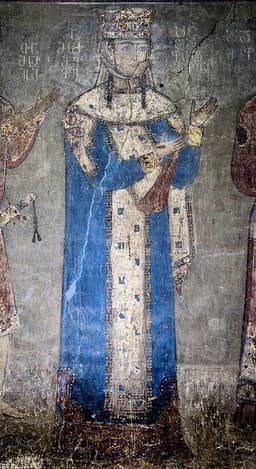
Tamar of Georgia
Emperor · Medieval
71.5Total
Basic Information
Born
872
1160
Died
926
1213
Era
Medieval
Medieval
Nationality
China
Georgia
Occupation
Emperor
Emperor
Civilization
Eastern
Western
Score Comparison
Military (10%)
76.0
78.0
Political (20%)
78.0
72.0
Influence (20%)
72.0
82.0
Legacy (20%)
40.0
55.0
Leadership (15%)
80.0
80.0
Strategy (15%)
75.0
66.3
TOTAL
66.8
71.5
Emperor Taizu of Liao — Complete Timeline
907 AD
Founding of the Liao DynastyPolitical Action
Abaoji, a Khitan chieftain, unified the Khitan tribes and proclaimed himself emperor, founding the Liao dynasty. This established the first major steppe-based dynasty to rule parts of northern China.
Dynasty FoundingUnification
Impact: regionalconstructive
916 AD
Establishment of the Dual Administration SystemReform◆ Major
Emperor Taizu established a dual administration system, with separate institutions for Khitan and Chinese subjects. This allowed the Liao to effectively govern both nomadic and agricultural populations, a model later adopted by other conquest dynasties.
Government ReformAdministration
Impact: regionalconstructive
920 AD
Creation of the Khitan ScriptCultural◆ Major
Emperor Taizu ordered the creation of a Khitan script, based on Chinese characters, to write the Khitan language. This script was used for official documents and inscriptions, promoting Khitan culture and administration.
Writing SystemCultural Development
Impact: regionalconstructive
926 AD
Conquest of the Bohai KingdomWar◆ Major
Emperor Taizu led a campaign that conquered the Bohai Kingdom in Manchuria. This victory expanded Liao territory eastward and eliminated a rival state, securing the Liao's eastern frontier.
ConquestExpansion
Impact: regionalconstructive
Death of Emperor TaizuPolitical Action
Emperor Taizu died during a campaign against the Bohai Kingdom. His death led to a succession struggle among his sons, but his son Yel
DeathSuccession
Impact: national
Tamar of Georgia — Complete Timeline
1184 AD
Coronation as Queen RegnantPolitical Action
Tamar was crowned as the first female ruler of Georgia after her father George III's death. Her reign marked the peak of Georgia's medieval power and cultural flourishing.
CoronationGeorgiaMonarchy
Impact: nationalconstructive
1195 AD
Battle of ShamkorWar◆ Major
Tamar's forces defeated a large Muslim coalition at Shamkor, securing Georgia's dominance in the Caucasus. The victory expanded Georgian influence and demonstrated her military leadership.
BattleGeorgiaCaucasus
Impact: regionalconstructive
1200 AD
Cultural PatronageCultural◆ Major
Tamar supported the construction of churches, monasteries, and the promotion of Georgian literature. Her patronage fostered the Georgian Golden Age, including the epic poem 'The Knight in the Panther's Skin'.
CulturePatronageGeorgia
Impact: nationalconstructive
Expert Analysis
Origins
Emperor Taizu of Liao, born Yelü Abaoji in 872 AD, was a chieftain of the Khitan people, a nomadic tribe in present-day northeastern China. His early life was shaped by tribal warfare and the influence of Tang China, which provided models of statecraft. He rose through the Khitan hierarchy, learning Chinese writing and administration. In contrast, Tamar of Georgia was born around 1160 AD into the Bagrationi dynasty, the daughter of King George III. She received a thorough education in Georgian culture, Orthodox Christianity, and military strategy. Her father prepared her for rule, appointing her as co-ruler in 1178 to secure succession.
Rise to Power
Abaoji unified the Khitan tribes through a combination of military conquest and political maneuvering. In 907 AD, he was elected khagan, but he transformed this into imperial rule, proclaiming himself emperor in 916 AD. He crushed rivals like the Xi and Shiwei tribes, and adopted the Chinese title of Tian Huang (Heavenly Emperor). His turning point was the creation of a centralized state. Tamar, after her father's death in 1184, faced opposition from the Georgian nobility, who questioned female rule. She was crowned queen regnant in 1184 but had to dismiss her first husband, Yuri Bogolyubsky, in 1187 due to his incompetence and rebellion. She then married David Soslan, a loyal prince, who became her military commander. Her rise was secured through political acumen and military success.
Leadership & Governance
Taizu established the Liao dynasty's dual administration system: a northern government for Khitan tribes using traditional tribal law, and a southern government for Chinese subjects modeled on Tang bureaucracy. This allowed effective control over diverse populations. He also commissioned the Khitan script (large and small scripts) to promote cultural identity. His leadership was autocratic but pragmatic, blending steppe and Chinese traditions. Tamar ruled as an autocrat but consulted her royal council (Darbazi). She promoted meritocracy, appointing capable ministers like Anton Gnolistavisdze. She supported the Georgian Orthodox Church and funded construction of monasteries, such as the Gelati Academy. Her governance emphasized cultural patronage, with poets like Shota Rustaveli composing "The Knight in the Panther's Skin." Both leaders adapted foreign models: Taizu from China, Tamar from Byzantium.
Triumph & Tragedy
Taizu's greatest success was founding the Liao dynasty, which lasted over 200 years. He conquered the Bohai Kingdom in 926 AD, expanding Liao territory. However, his death in 926 AD during a campaign led to a succession crisis; his son Yelü Deguang eventually succeeded but not without conflict. His creation of a script was a cultural triumph, but its use declined after the Liao fell. Tamar's triumph was the Battle of Shamkor in 1195 AD, where she defeated a Muslim coalition led by the Eldiguzids, securing Georgian dominance in the Caucasus. She also expanded Georgia's borders to their greatest extent. Her tragedy was her son George IV's early death and the subsequent decline under his sister Rusudan. Tamar's reign was a golden age, but she failed to secure a stable succession.
Character & Destiny
Taizu was calculating and visionary, able to synthesize Chinese and Khitan elements. His decision to adopt Chinese titles and scripts, while maintaining Khitan identity, showed strategic flexibility. His death in the field reflected his warrior ethos. Tamar was described as wise and just, with a strong will. She overcame gender barriers through competence and religious piety. Her character combined diplomatic skill with military resolve. Both leaders faced challenges of succession: Taizu's sons fought for power, while Tamar's children struggled to maintain her legacy. Their characters shaped their fates: Taizu's adaptability built a durable state; Tamar's cultural patronage created a national identity.
Legacy
Taizu's Liao dynasty controlled northern China for two centuries, influencing later dynasties like the Yuan. The dual administration system was a model for later conquest dynasties. However, his legacy is mixed: the Liao eventually fell to the Jin, and his script is now extinct. Tamar's legacy is more enduring: she is a national symbol of Georgia's golden age, canonized by the Orthodox Church. Her reign saw a flourishing of arts and literature that shaped Georgian identity. In historical scores, Tamar scores 71.5 total, higher than Taizu's 66.8, with particular strength in influence (82.0 vs 72.0) and legacy (55.0 vs 40.0). Taizu leads in political (78.0 vs 72.0) and strategy (75.0 vs 66.3) scores.
Conclusion
Tamar of Georgia had greater impact than Emperor Taizu of Liao. While Taizu founded a dynasty that ruled for centuries, his influence was largely confined to northern China and the Khitan people. Tamar's reign defined Georgia's golden age, and her cultural patronage left a lasting legacy that continues to inspire. Her total score of 71.5 exceeds Taizu's 66.8, reflecting her broader influence and higher legacy. Tamar's ability to overcome gender barriers and achieve military and cultural heights makes her the more significant figure.
Rankings
🥇
Tamar of GeorgiaLeader
Mil: 78.0Pol: 72.0Inf: 82.0
71.5
🥈
Emperor Taizu of Liao
Mil: 76.0Pol: 78.0Inf: 72.0
66.8
+4.7 behind
How This Comparison Works
Algorithm
Each figure is scored on 6 dimensions (0—100 scale) based on structured historical data: Military (10%), Political (20%), Influence (20%), Legacy (20%), Leadership (15%), Strategy (15%). The weighted total produces the final ranking.
Data Sources
Scores are computed from structured sub-indicators in the database. Scale factors adjust for era (Ancient ×0.85, Modern ×1.0) and civilization size (Eastern ×1.05, Other ×0.80) to account for differences in population and military scale.
Maximum 3 Figures
Comparisons are limited to 2—3 figures to ensure readability and statistical meaningfulness.
Error Margins
±5 points per dimension — Sub-scores are derived from historical records with inherent uncertainty. Two figures within 5 points on a dimension should be considered roughly equivalent in that area.
Total Score Accuracy
±3 points overall — The weighted combination of 6 dimensions produces a total score with approximately ±3 points of uncertainty. Differences of less than 3 points are not statistically significant— the figures are effectively tied.
Known Limitations
- Historical records are incomplete and uneven across civilizations
- Figures from oral-tradition societies may be underrepresented
- Occupation labels can misclassify multi-role figures
- Scores measure capability and impact, not moral character
- Quantitative scoring is a comparison tool, not absolute truth
Capability Radar
Military (10%) — Battles & Warfare
Battles
75
75
Win Rate
80
85
Expansion
85
75
Political (20%) — Governance & Reform
Reform
90
80
Diplomacy
80
75
Economy
75
85
Influence (20%) — Cultural & Global Reach
Cultural
65
80
Global
60
60
Legacy (20%) — Historical Impact
Historical
75
75
Longevity
70
70
Leadership (15%) — Power & Stability
Tenure
85
85
Stability
70
70
Strategy (15%) — Tactics & Innovation
Strategy
85
80
Tactics
70
70
Reform
90
65
Similar Comparisons
Comments & Discussion
No comments yet. Be the first to share your thoughts!