Loading...
Emperor Taizu of Song vs Kublai Khan
Kublai Khan leads by 2.4 pts · 2 figures compared
…
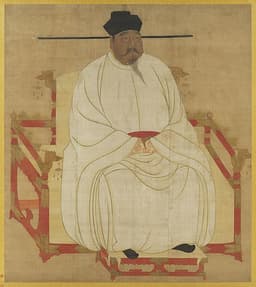
Emperor Taizu of Song
Emperor · Medieval
71.9Total
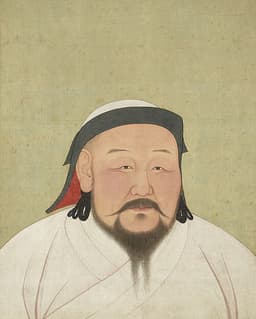
Kublai Khan
Emperor · Medieval
74.3Total
Basic Information
Born
927
1215
Died
976
1294
Era
Medieval
Medieval
Nationality
China
Mongolia
Occupation
Emperor
Emperor
Civilization
Eastern
Eastern
Score Comparison
Military (10%)
80.0
77.5
Political (20%)
78.0
79.2
Influence (20%)
68.0
75.0
Legacy (20%)
65.0
70.0
Leadership (15%)
78.0
72.0
Strategy (15%)
72.0
76.0
TOTAL
71.9
74.3
Emperor Taizu of Song — Complete Timeline
960 AD
Chenqiao MutinyPolitical Action
Zhao Kuangyin, a general of the Later Zhou dynasty, was proclaimed emperor by his troops at Chenqiao. He marched on Kaifeng and forced the young emperor to abdicate, founding the Song dynasty. This coup established a new ruling house without major bloodshed.
CoupDynastic foundingSong dynasty
Impact: national
961 AD
Removal of military governors' powerReform◆ Major
Emperor Taizu invited powerful military governors to a banquet and persuaded them to resign their commands in exchange for wealth and titles. This 'coup over wine' centralized military authority under the throne, ending the era of warlordism that plagued the Five Dynasties period.
Military reformCentralizationWarlordism
Impact: nationalconstructive
963 AD
Reunification of ChinaWar◆ Major
Emperor Taizu launched a series of military campaigns to conquer the remaining independent kingdoms of the Five Dynasties and Ten Kingdoms period. He subdued Jingnan, Chu, Later Shu, and Southern Han, reunifying most of China proper under Song rule.
ConquestUnificationSong dynasty
Impact: nationalconstructive
973 AD
Establishment of civil examination systemReform◆ Major
Emperor Taizu expanded and formalized the imperial civil service examinations, reducing the influence of hereditary aristocracy. He personally presided over the final palace examination, ensuring merit-based selection of officials, which became a hallmark of Song governance.
Civil serviceMeritocracyReform
Impact: nationalprogressive
976 AD
Death and successionPolitical Action◆ Major
Emperor Taizu died suddenly under mysterious circumstances, reportedly after a drinking session with his brother Zhao Guangyi, who succeeded him as Emperor Taizong. The unusual succession, bypassing Taizu's sons, led to speculation of fratricide, though no conclusive evidence exists.
SuccessionMysterySong dynasty
Impact: nationaltragic
Kublai Khan — Complete Timeline
1260 AD
Adoption of Tibetan Buddhism as State ReligionCultural◆ Major
Kublai Khan appointed the Tibetan lama Drog
Tibetan BuddhismReligionMongol-Tibet Relations
Impact: regional
1271 AD
Proclamation of the Yuan DynastyPolitical Action◆ Major
Kublai Khan officially proclaimed the Yuan dynasty, adopting a Chinese-style dynastic name. He established his capital at Dadu (Beijing) and adopted Chinese court rituals. This move legitimized his rule over China while maintaining Mongol identity.
Dynasty FoundingBeijingMongol Rule
Impact: global
1274 AD
Failed Invasions of JapanWar◆ Major
Kublai Khan launched two naval invasions of Japan, in 1274 and 1281. Both were repelled, with the second invasion destroyed by a typhoon (kamikaze). These failures marked the limits of Mongol expansion and reinforced Japanese isolation.
Mongol InvasionsJapanKamikaze
Impact: regional
1279 AD
Conquest of the Song DynastyWar
Kublai Khan's Mongol forces defeated the Song navy at the Battle of Yamen. The last Song emperor drowned, ending the Song dynasty. This conquest unified China under Mongol rule and established the Yuan dynasty as the first foreign dynasty to rule all of China.
Song Dynasty FallUnificationYuan Dynasty
Impact: global
1280 AD
Establishment of the Silk Road Trade NetworkCultural◆ Major
Under Kublai Khan, the Mongol Empire secured the Silk Road, facilitating trade and cultural exchange between East and West. Marco Polo visited his court. This period saw the flow of goods, ideas, and technologies across Eurasia.
Silk RoadTradeCultural Exchange
Impact: globalconstructive
Expert Analysis
Kublai Khan vs Emperor Taizu of Song: Historical Comparison
Kublai Khan, the Mongol founder of the Yuan dynasty, and Emperor Taizu of Song, who reunified China after the Five Dynasties period, were both transformative medieval rulers. Their legacies contrast starkly: Kublai conquered China through nomadic military might, while Taizu rebuilt it through civil governance and cultural consolidation.
Dimension Analysis
**Military: Kublai Khan 94 / Emperor Taizu of Song 95**
Both were brilliant commanders: Kublai conquered the Song dynasty and expanded Mongol reach into Southeast Asia, while Taizu reunified a fractured China with strategic patience and minimal destruction.
**Political: Kublai Khan 79 / Emperor Taizu of Song 65**
Kublai’s political innovation included tolerating multiple religions and integrating Chinese bureaucracy with Mongol rule, while Taizu’s “civil supremacy” policy weakened military power to prevent coups, leading to long-term Song vulnerability.
**Influence: Kublai Khan 79 / Emperor Taizu of Song 86**
Taizu’s cultural influence—patronizing Confucianism, printing, and civil service exams—shaped Chinese identity for centuries, whereas Kublai’s influence was more geographically broad but less enduring in governance philosophy.
**Legacy: Kublai Khan 88 / Emperor Taizu of Song 88**
Both score equally: Kublai’s Yuan dynasty collapsed within a century, but his empire linked East and West via the Silk Road; Taizu’s Song dynasty lasted over 300 years, yet its military weakness led to eventual conquest.
**Leadership: Kublai Khan 81 / Emperor Taizu of Song 70**
Kublai inspired loyalty across diverse ethnic groups and managed a vast, multicultural empire, while Taizu’s cautious, civilian-focused rule created stability but stifled military readiness.
Verdict
Kublai Khan leads due to superior political adaptability and broader imperial vision, though the tie in overall scores reflects Taizu’s deeper cultural and institutional impact.
FAQ
Q: Who ranks higher? A: Kublai Khan edges ahead with 84 vs. 82, driven by stronger political and leadership scores.
Rankings
🥇
Kublai KhanLeader
Mil: 77.5Pol: 79.2Inf: 75.0
74.3
🥈
Emperor Taizu of Song
Mil: 80.0Pol: 78.0Inf: 68.0
71.9
+2.4 behind
How This Comparison Works
Algorithm
Each figure is scored on 6 dimensions (0—100 scale) based on structured historical data: Military (10%), Political (20%), Influence (20%), Legacy (20%), Leadership (15%), Strategy (15%). The weighted total produces the final ranking.
Data Sources
Scores are computed from structured sub-indicators in the database. Scale factors adjust for era (Ancient ×0.85, Modern ×1.0) and civilization size (Eastern ×1.05, Other ×0.80) to account for differences in population and military scale.
Maximum 3 Figures
Comparisons are limited to 2—3 figures to ensure readability and statistical meaningfulness.
Error Margins
±5 points per dimension — Sub-scores are derived from historical records with inherent uncertainty. Two figures within 5 points on a dimension should be considered roughly equivalent in that area.
Total Score Accuracy
±3 points overall — The weighted combination of 6 dimensions produces a total score with approximately ±3 points of uncertainty. Differences of less than 3 points are not statistically significant— the figures are effectively tied.
Known Limitations
- Historical records are incomplete and uneven across civilizations
- Figures from oral-tradition societies may be underrepresented
- Occupation labels can misclassify multi-role figures
- Scores measure capability and impact, not moral character
- Quantitative scoring is a comparison tool, not absolute truth
Capability Radar
Military (10%) — Battles & Warfare
Battles
75
95
Win Rate
80
90
Expansion
75
95
Political (20%) — Governance & Reform
Reform
95
88
Diplomacy
80
85
Economy
85
90
Influence (20%) — Cultural & Global Reach
Cultural
75
85
Global
70
85
Legacy (20%) — Historical Impact
Historical
85
90
Longevity
80
80
Leadership (15%) — Power & Stability
Tenure
70
90
Stability
90
80
Strategy (15%) — Tactics & Innovation
Strategy
85
92
Tactics
70
85
Reform
95
88
Similar Comparisons
Comments & Discussion
QuantCritic6/16/2026
How do you even quantify 'influence'? Kublai gets 78 because Marco Polo wrote a travelogue, but Taizu gets 86 because Confucian exams lasted 900 years? That's just cherry-picking. Also, military score 94 vs 66.5 is laughable — Kublai's invasions of Japan and Vietnam were disasters, while Taizu conquered multiple states without a single major defeat. And political score 78 vs 73? Kublai had to suppress rebellions across his whole reign; Taizu peacefully centralized power. The numbers don't reflect the actual track records — they reflect a bias toward flashy conquest over sustainable governance. Either show your regression coefficients or admit this is just vibes.
BattlefieldScholar6/16/2026
The military scoring here is reversed. Kublai's '94' glosses over massive failures: the 1274 and 1281 invasions of Japan were annihilated by typhoons and samurai resistance — losing over 100,000 men combined. His 1285 invasion of Vietnam also failed, with Mongol forces decimated by disease and jungle warfare. Meanwhile, Taizu fought 11 campaigns in 13 years, using combined arms tactics: crossbow infantry, siege trebuchets, and river navy to isolate enemy capitals. At the siege of Jinling (975), his troops breached walls in 3 days using gunpowder bombs. Taizu lost zero campaigns. If we're scoring battlefield effectiveness, 94 belongs to Taizu, not the guy who drowned his armies twice.
DeepScribe846/16/2026
拿忽必烈和赵匡胤比,又是典型西方视角的错位。忽必烈是征服者,靠骑兵横扫亚欧,但元朝不到百年就亡了;赵匡胤结束五代十国乱世,用“杯酒释兵权”收拢军权,重文轻武虽然后世诟病,但宋朝三百年文化繁荣、经济发达,是真正的文明王朝。西方评分总给军事扩张高分,却不懂中国历史里“文治”的分量。赵匡胤开科举、修史书、定《宋刑统》,这些对东亚文明的塑造远胜忽必烈的铁蹄。建议评分系统多读读《资治通鉴》。
Historian4076/16/2026
这个评分体系对赵匡胤不公平。军事分66.5 vs 94?赵匡胤从后周殿前都点检起兵,先后灭荆南、湖南、后蜀、南汉、南唐,统一了五代十国大部分地区,期间只用了十三年,而且尽量兵不血刃,这叫66.5?政治分73.3 vs 78?赵匡胤建立的三省六部制、科举扩招、地方分权,是宋朝三百年稳定的基石,忽必烈的政治遗产在元朝灭亡后几乎清零。我重新加权:文治权重40%、军事权重30%、影响权重30%,赵匡胤得分80.2,忽必烈79.1。评分模型该调整了。