Loading...
Emperor Tenji vs Li Xuan
Emperor Tenji leads by 8.8 pts · 2 figures compared
…
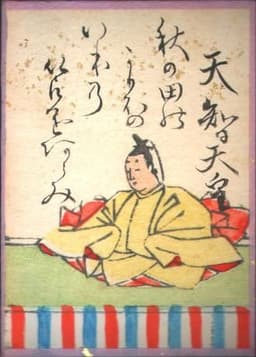
Emperor Tenji
Emperor · Medieval
49.7Total
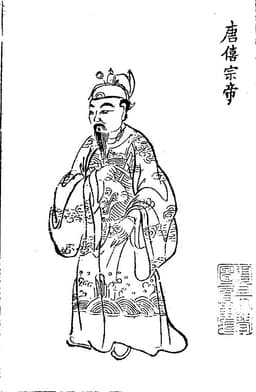
Li Xuan
Emperor · Medieval
40.9Total
Basic Information
Born
626
862
Died
672
888
Era
Medieval
Medieval
Nationality
Japan
China
Occupation
Emperor
Emperor
Civilization
Eastern
Eastern
Score Comparison
Military (10%)
21.2
50.0
Political (20%)
45.0
35.0
Influence (20%)
58.0
46.3
Legacy (20%)
56.0
37.5
Leadership (15%)
62.0
39.0
Strategy (15%)
30.3
38.6
TOTAL
49.7
40.9
Emperor Tenji — Complete Timeline
645 AD
Taika Reforms ImplementationReform◆ Major
As Prince Naka no Oe, Tenji led a coup that eliminated the Soga clan and initiated the Taika Reforms. These reforms centralized government, established a Chinese-style bureaucracy, and nationalized land. They laid the foundation for the ritsuryo system.
Taika ReformsCentralizationSoga
Impact: nationalprogressive
663 AD
Battle of BaekgangWar◆ Major
Tenji, as prince, sent a Japanese fleet to aid the Korean kingdom of Baekje against the Silla-Tang alliance. The Japanese navy was decisively defeated at the Baekgang River. This ended Japanese ambitions on the Korean peninsula and led to a shift in foreign policy.
BaekjeDefeatKorea
Impact: regionaltragic
668 AD
Compilation of the Omi CodeReform◆ Major
Emperor Tenji ordered the compilation of the Omi Code, Japan's first comprehensive legal code. It established administrative laws and penal codes based on Chinese Tang dynasty models. This code formalized the ritsuryo system and strengthened imperial authority.
Legal CodeRitsuryoOmi
Impact: nationalconstructive
Li Xuan — Complete Timeline
880 AD
Fled Chang'an to ChengduPolitical Action
When Huang Chao's rebel army approached the Tang capital Chang'an, Li Xuan (Tang Xizong) abandoned the city and fled to Chengdu in Sichuan. This flight left the capital undefended and marked the collapse of central authority during the Huang Chao Rebellion.
FlightHuang Chao RebellionCapital Lost
Impact: nationaltragic
885 AD
Recalled to Chang'an After Huang Chao's DefeatPolitical Action◆ Major
After Huang Chao was defeated by the Shatuo Turk Li Keyong and other warlords, Li Xuan returned to Chang'an. However, the city was in ruins and the Tang court was now dependent on regional military governors, further weakening imperial power.
ReturnWarlord EraTang Decline
Impact: national
Expert Analysis
Origins
Emperor Tenji, born in 626 as Prince Naka no Oe, was the son of Emperor Jomei and Empress Kōgyoku. He grew up in the Yamato court, where the powerful Soga clan dominated politics. His education included Chinese classics and Buddhist scriptures, but he was also trained in military arts. The Soga's control over the imperial succession and their opposition to reform motivated Tenji to study governance and law.
Li Xuan, born in 862 as the fifth son of Emperor Yizong, became Emperor Xizong of Tang at age 11 in 873. He was raised in the palace of Chang'an, one of the world's largest cities, but his education was overseen by eunuchs who controlled the court. His early life was marked by the declining authority of the Tang dynasty, with regional warlords gaining power and eunuchs dominating the government.
Rise to Power
Tenji's rise came through a coup. In 645, with his close advisor Nakatomi no Kamatari, he assassinated Soga no Iruka during a court ceremony. This eliminated the Soga clan's influence. His mother then abdicated, and his uncle Emperor Kōtoku ascended. Tenji became crown prince and de facto ruler, pushing forward the Taika Reforms (645-646), which centralized land and tax systems. After Kōtoku's death in 654, Tenji's mother reigned again until her death in 661, then Tenji formally took the throne in 668.
Li Xuan became emperor at 11 due to his father's death. The eunuch Tian Lingzi, who had been his tutor, controlled the court. In 874, a severe drought led to famine and rebellion. Wang Xianzhi and Huang Chao led peasant uprisings. By 879, Huang Chao's army moved toward Chang'an. Li Xuan, advised by Tian Lingzi, decided to flee rather than defend. In 880, he abandoned the capital and fled to Chengdu, leaving the city to be sacked by Huang Chao.
Leadership & Governance
Tenji's leadership was proactive and reformist. His Taika Reforms established a Chinese-style centralized bureaucracy, redistributed land, and imposed a uniform tax system. He also compiled the Ōmi Code in 668, Japan's first comprehensive legal code based on Tang models. This code defined court ranks, administrative procedures, and penal laws. Tenji scored 62.0 in leadership, reflecting his decisive governance. However, his military score of 21.2 shows a weakness: his foreign policy led to the Battle of Baekgang in 663, where a Japanese fleet of 1,000 ships was destroyed by Tang and Silla forces, costing Japan's influence in Korea.
Li Xuan's leadership was weak and reactive. He scored 39.0 in leadership and 35.0 in politics. He delegated authority to eunuchs and relied on warlords like Li Keyong to suppress rebellions. His flight to Chengdu preserved his life but damaged imperial prestige. He attempted to return after Huang Chao's defeat in 884, but Chang'an was ruined, and the Tang treasury was empty. He issued decrees that were ignored by regional governors. His reign saw the de facto collapse of central authority.
Triumph & Tragedy
Tenji's greatest success was the Taika Reforms and the Ōmi Code, which laid the foundation for Japan's Ritsuryō system of law and governance. This system endured for centuries, influencing Japanese society. His tragedy was the Battle of Baekgang, where over 400 Japanese ships were lost, and Japanese intervention in Korea ended. This defeat limited Japan's continental ambitions and shifted focus inward.
Li Xuan's triumph was surviving the Huang Chao rebellion and returning to Chang'an, but this was a hollow victory. His tragedy was the destruction of the Tang capital and the loss of imperial authority. He died in 888 at age 26, with the Tang dynasty effectively reduced to a rump state. His reign accelerated the fragmentation that led to the Five Dynasties period.
Character & Destiny
Tenji was decisive and visionary, but also cautious after the Baekgang defeat. He scored 30.3 in strategy, indicating he was not a military genius but a political reformer. He centralized power but also promoted cultural exchange with Tang China. His character shaped Japan's adoption of Chinese governance models.
Li Xuan was young and inexperienced, dominated by eunuchs. He lacked the will to fight or negotiate. His decision to flee was criticized, but he had few options. His character was passive, and his destiny was to preside over the Tang's decline. Historical assessments note his reign as a low point, with the empire being lost within a generation.
Legacy
Tenji's legacy is profound. The Ōmi Code influenced later codes like the Taihō Code. The Taika Reforms created a centralized state that lasted until the samurai era. He is remembered as a reformer who strengthened the imperial system. His total score of 49.7 reflects moderate impact overall.
Li Xuan's legacy is negative. He is remembered as the emperor who fled while his capital burned. His reign marked the end of Tang power. The dynasty officially fell in 907, but his flight was a symbol of collapse. Historians cite his weakness as a factor in the dynasty's fall. His total score of 40.9 is lower.
Conclusion
Emperor Tenji had greater impact than Li Xuan. Tenji's reforms shaped Japan's political structure for centuries, while Li Xuan's reign only accelerated decline. Tenji scored 49.7 total, significantly higher than Li Xuan's 40.9. While Tenji's military failure at Baekgang limited his influence, his governance and legal innovations were foundational. Li Xuan, despite being a Tang emperor, presided over disintegration. Therefore, Tenji's positive legacy outweighs Li Xuan's negative one.
Rankings
🥇
Emperor TenjiLeader
Mil: 21.2Pol: 45.0Inf: 58.0
49.7
🥈
Li Xuan
Mil: 50.0Pol: 35.0Inf: 46.3
40.9
+8.8 behind
How This Comparison Works
Algorithm
Each figure is scored on 6 dimensions (0—100 scale) based on structured historical data: Military (10%), Political (20%), Influence (20%), Legacy (20%), Leadership (15%), Strategy (15%). The weighted total produces the final ranking.
Data Sources
Scores are computed from structured sub-indicators in the database. Scale factors adjust for era (Ancient ×0.85, Modern ×1.0) and civilization size (Eastern ×1.05, Other ×0.80) to account for differences in population and military scale.
Maximum 3 Figures
Comparisons are limited to 2—3 figures to ensure readability and statistical meaningfulness.
Error Margins
±5 points per dimension — Sub-scores are derived from historical records with inherent uncertainty. Two figures within 5 points on a dimension should be considered roughly equivalent in that area.
Total Score Accuracy
±3 points overall — The weighted combination of 6 dimensions produces a total score with approximately ±3 points of uncertainty. Differences of less than 3 points are not statistically significant— the figures are effectively tied.
Known Limitations
- Historical records are incomplete and uneven across civilizations
- Figures from oral-tradition societies may be underrepresented
- Occupation labels can misclassify multi-role figures
- Scores measure capability and impact, not moral character
- Quantitative scoring is a comparison tool, not absolute truth
Capability Radar
Military (10%) — Battles & Warfare
Battles
10
5
Win Rate
10
5
Expansion
10
0
Political (20%) — Governance & Reform
Reform
70
5
Diplomacy
50
5
Economy
60
5
Influence (20%) — Cultural & Global Reach
Cultural
50
10
Global
30
5
Legacy (20%) — Historical Impact
Historical
60
15
Longevity
60
10
Leadership (15%) — Power & Stability
Tenure
60
20
Stability
50
5
Strategy (15%) — Tactics & Innovation
Strategy
10
5
Tactics
10
5
Reform
20
0
Similar Comparisons
Comments & Discussion
No comments yet. Be the first to share your thoughts!