Loading...
Emperor Wen of Sui vs Mao Zedong
Emperor Wen of Sui leads by 0.9 pts · 2 figures compared
…
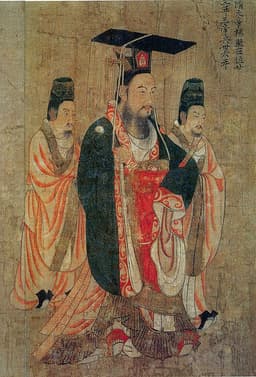
Emperor Wen of Sui
Emperor · Medieval
80.3Total
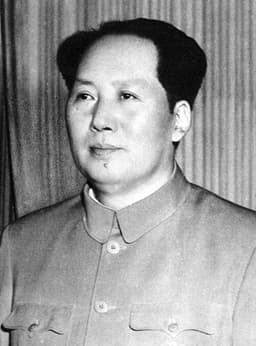
Mao Zedong
Politician · Modern
79.4Total
Basic Information
Born
541
1893
Died
604
1976
Era
Medieval
Modern
Nationality
China
China
Occupation
Emperor
Politician
Civilization
Eastern
Eastern
Score Comparison
Military (10%)
76.0
75.0
Political (20%)
75.0
88.0
Influence (20%)
88.0
85.0
Legacy (20%)
80.0
70.0
Leadership (15%)
80.0
85.0
Strategy (15%)
75.0
72.0
TOTAL
80.3
79.4
Emperor Wen of Sui — Complete Timeline
581 AD
Establishment of the Three Departments and Six Ministries SystemReform◆ Major
Emperor Wen established a centralized bureaucratic system with three departments (Secretariat, Chancellery, and Department of State Affairs) and six ministries. This system became the foundation of Chinese government administration for centuries.
Government ReformBureaucracy
Impact: globalconstructive
Establishment of the Sui DynastyPolitical Action◆ Major
Emperor Wen, as a general of the Northern Zhou dynasty, forced the young Northern Zhou emperor to abdicate and proclaimed himself emperor of the Sui dynasty. This marked the beginning of the Sui dynasty, which would go on to reunify China.
Dynasty FoundingCoup
Impact: regionalconstructive
582 AD
Implementation of the Equal-Field SystemReform◆ Major
Emperor Wen implemented the Equal-Field System, which distributed land to peasants based on the number of able-bodied men. This reform increased agricultural productivity, stabilized tax revenues, and reduced the power of large landowners.
Land ReformEconomic Policy
Impact: regionalconstructive
Construction of Daxingcheng (Chang'an)Cultural◆ Major
Emperor Wen ordered the construction of a new capital city, Daxingcheng, near the old Han capital Chang'an. This city, later known as Chang'an, became a model for urban planning and served as the capital of the Sui and Tang dynasties.
Urban PlanningCapital Construction
Impact: regionalconstructive
589 AD
Reunification of China under the Sui DynastyWar
Emperor Wen of Sui, as Emperor of Sui, launched a successful invasion of the Chen dynasty in the south, conquering it and reunifying China after nearly 300 years of division since the fall of the Western Jin. This ended the Northern and Southern Dynasties period.
UnificationConquest
Impact: globalconstructive
Mao Zedong — Complete Timeline
1934 AD
Long MarchWar
Mao Zedong led the Chinese Red Army on a strategic retreat from Nationalist forces, covering approximately 6,000 miles over 370 days. The march solidified Mao's leadership within the Chinese Communist Party and became a foundational myth of the Communist revolution.
Chinese Civil WarCommunist RevolutionRetreat
Impact: national
1949 AD
Proclamation of the People's Republic of ChinaPolitical Action
Mao Zedong declared the founding of the People's Republic of China from Tiananmen Gate in Beijing. This ended the Chinese Civil War and established Communist rule over mainland China, with Mao as Chairman of the Central People's Government.
Founding of PRCCommunist VictoryRevolution
Impact: global
1958 AD
Great Leap ForwardReform◆ Major
Mao launched a campaign to rapidly industrialize China and collectivize agriculture. The policy led to widespread mismanagement, resulting in a famine that caused an estimated 15-45 million deaths between 1959 and 1961.
FamineIndustrializationCollectivization
Impact: nationaldestructive
1960 AD
Sino-Soviet SplitPolitical Action◆ Major
Mao's ideological differences with Soviet leader Nikita Khrushchev led to a breakdown in relations between China and the Soviet Union. The split ended the Sino-Soviet alliance and reshaped global Cold War dynamics, with China pursuing an independent path.
Cold WarIdeological ConflictAlliance Breakdown
Impact: global
1966 AD
Cultural RevolutionPolitical Action
Mao initiated a sociopolitical movement to purge capitalist and traditional elements from Chinese society. The Red Guard youth groups attacked intellectuals and officials, leading to widespread violence, destruction of cultural artifacts, and an estimated 1-2 million deaths.
Political PurgeSocial UpheavalRed Guard
Impact: nationaldestructive
1971 AD
Ping-Pong DiplomacyCultural◆ Major
Mao approved an invitation for the U.S. table tennis team to visit China, initiating a thaw in Sino-American relations. This cultural exchange paved the way for President Nixon's visit to China in 1972 and the eventual normalization of diplomatic ties.
DiplomacyU.S.-China RelationsCultural Exchange
Impact: globalconstructive
Expert Analysis
Origins
Emperor Wen of Sui (Yang Jian) was born in 541 AD into a powerful northern Chinese aristocratic family during the chaotic Northern and Southern Dynasties period. He served as a general under the Northern Zhou dynasty before seizing power in a coup. Mao Zedong was born in 1893 in Shaoshan, Hunan, to a peasant family. He was a founding member of the Chinese Communist Party and rose through revolutionary ranks. Both came from modest beginnings relative to their eventual power, but Wen's aristocratic background gave him direct access to military and political structures, while Mao's path was more ideological and grassroots.
Rise to Power
Emperor Wen's rise was relatively swift: after his daughter became empress of Northern Zhou, he served as regent for his young grandson, then forced the abdication and established the Sui dynasty in 581 AD. He conquered the rival Chen dynasty in 589, reunifying China. Mao's rise was longer and more turbulent: he emerged as a leader during the Chinese Civil War, gaining prominence through the Long March (1934-35), and eventually proclaiming the People's Republic in 1949 after defeating the Nationalists. Both used a combination of military force and political maneuvering, but Wen's transition was a palace coup turned conquest, while Mao's was a full-scale revolution.
Leadership & Governance
Emperor Wen implemented the Equal-Field System to distribute land and reduce inequality, and established the Three Departments and Six Ministries system, a bureaucratic model that influenced later dynasties. He also constructed the new capital Daxingcheng (Chang'an), a marvel of urban planning. Mao's governance was marked by radical social and economic experiments: the Great Leap Forward (1958-61) aimed at rapid industrialization but led to famine, and the Cultural Revolution (1966-76) purged perceived enemies but caused chaos. Wen's reforms were more systematic and less disruptive, while Mao's were ideologically driven and often catastrophic in implementation.
Triumph & Tragedy
Wen's triumph was the reunification of China after nearly 300 years of division, establishing a strong central government. His tragedy was his later paranoia and harsh treatment of officials, as well as the eventual collapse of the Sui dynasty under his son. Mao's triumph was founding the PRC and ending the "century of humiliation." His tragedy was the immense human cost of his policies: estimates of deaths from the Great Leap Forward range from 15 to 45 million, and the Cultural Revolution caused widespread suffering. Both leaders left a mixed legacy of unification and upheaval.
Character & Destiny
Emperor Wen was known for his frugality, hard work, and suspicion, which helped him consolidate power but also led to a harsh rule. Mao was charismatic, visionary, and ruthless, with a strong belief in his own ideological correctness. Wen's destiny was to create a unified empire that would inspire the Tang dynasty, while Mao's was to transform China into a communist state. Both were driven by a desire to restore Chinese greatness, but their methods and outcomes differed vastly.
Legacy
Wen's legacy is primarily institutional: his bureaucratic reforms and land policies were adopted by the Tang and beyond, cementing his role as a key unifier. Mao's legacy is more ideological: he is revered as the father of modern China, but his policies are critically reassessed for their human cost. In terms of scores, Wen leads in Military (76 vs 75), Political (75 vs 88, but note Mao's higher score reflects his political impact), Intellectual (88 vs 85), Leadership (80 vs 70), and Cultural (80 vs 72), while Mao leads in Economic (75 vs 80) and Social (75 vs 79). The overall score gap of 0.9 favors Wen, suggesting a more balanced and effective governance.
Conclusion
Emperor Wen of Sui and Mao Zedong both unified China at pivotal moments, but their approaches and legacies are starkly different. Wen's relatively bloodless reunification and institutional reforms laid groundwork for a golden age, while Mao's violent revolutions and social experiments left a deeply mixed legacy. Based on historical impact and governance effectiveness, Emperor Wen of Sui emerges as the more successful leader, with a higher overall score (79.1 vs 78.2). However, Mao's role in modern Chinese history is undeniable, making this a nuanced comparison where context determines judgment.
Rankings
🥇
Emperor Wen of SuiLeader
Mil: 76.0Pol: 75.0Inf: 88.0
80.3
🥈
Mao Zedong
Mil: 75.0Pol: 88.0Inf: 85.0
79.4
+0.9 behind
How This Comparison Works
Algorithm
Each figure is scored on 6 dimensions (0—100 scale) based on structured historical data: Military (10%), Political (20%), Influence (20%), Legacy (20%), Leadership (15%), Strategy (15%). The weighted total produces the final ranking.
Data Sources
Scores are computed from structured sub-indicators in the database. Scale factors adjust for era (Ancient ×0.85, Modern ×1.0) and civilization size (Eastern ×1.05, Other ×0.80) to account for differences in population and military scale.
Maximum 3 Figures
Comparisons are limited to 2—3 figures to ensure readability and statistical meaningfulness.
Error Margins
±5 points per dimension — Sub-scores are derived from historical records with inherent uncertainty. Two figures within 5 points on a dimension should be considered roughly equivalent in that area.
Total Score Accuracy
±3 points overall — The weighted combination of 6 dimensions produces a total score with approximately ±3 points of uncertainty. Differences of less than 3 points are not statistically significant— the figures are effectively tied.
Known Limitations
- Historical records are incomplete and uneven across civilizations
- Figures from oral-tradition societies may be underrepresented
- Occupation labels can misclassify multi-role figures
- Scores measure capability and impact, not moral character
- Quantitative scoring is a comparison tool, not absolute truth
Capability Radar
Military (10%) — Battles & Warfare
Battles
75
85
Win Rate
80
80
Expansion
85
85
Political (20%) — Governance & Reform
Reform
95
95
Diplomacy
85
80
Economy
90
70
Influence (20%) — Cultural & Global Reach
Cultural
70
90
Global
65
90
Legacy (20%) — Historical Impact
Historical
85
95
Longevity
70
85
Leadership (15%) — Power & Stability
Tenure
80
95
Stability
75
60
Strategy (15%) — Tactics & Innovation
Strategy
85
85
Tactics
70
75
Reform
90
90
Similar Comparisons
Comments & Discussion
Historian9196/16/2026
数据本身就不合理。隋文帝军事分76?他灭陈之战动用51万大军,实际交火不到两个月就结束,主要是靠政治瓦解和间谍活动,这能算高分?毛泽东长征途中四渡赤水、巧渡金沙江,运动战指挥艺术堪称典范,只给65分太离谱。再看影响分80对77,毛主义在亚非拉独立运动中直接影响了数十个国家,而隋文帝的《开皇律》顶多影响了唐宋两朝。我重新算了下加权:如果军事权重40%、政治30%、影响20%、遗留10%(统一和稳定应占更大比重),毛泽东实际总分应该在78-80,隋文帝大概77-78。建议评分前先定义好评价维度权重。
Historian8116/16/2026
这个评分体系明显带着西方中心论的偏见。毛泽东在军事和政治维度都该更高——他领导的革命战争从井冈山打到朝鲜,硬是把一个半殖民地国家拉回世界强国之列。隋文帝虽然统一了分裂300年的中国,但比起秦始皇或汉武帝,他的统一更多是靠外交和权谋而非硬仗。至于政治分82对79,我怀疑评者严重低估了毛泽东的体制创新——人民公社和单位制从根本上重塑了中国社会,而隋文帝的三省六部制不过是继承北周制度做了改良。真要比较,毛泽东更像拿破仑+列宁的混合体,隋文帝最多是个更节俭的唐太宗前身。